Apr 27, 2017 | News
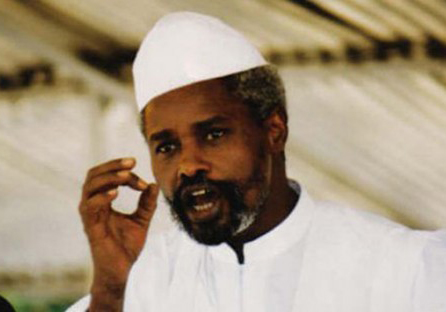
An appeals court’s confirmation of the conviction for crimes against humanity, war crimes and torture of Hissène Habré, the former president of Chad, is a vindication of the decades-long campaign waged by his survivors, the ICJ and two human rights groups supporting the victims said today.
Habré’s May 2016 conviction was upheld by the appeals chamber of the Extraordinary African Chambers in the Senegalese court system on April 27, 2017.
The appeals court also confirmed the life sentence handed down by the trial court and ordered Habré to pay over 82 billion CFA francs (approximately 123 million euros) to his victims.
“This is a crowning victory for Hissène Habré’s victims, who for 26 years never gave up fighting to bring him to justice” said the ICJ Commissioner Reed Brody, who has worked with the survivors since 1999.
“His life sentence is a wake-up call to tyrants everywhere that if they engage in atrocities they will never be out of the reach of their victims,” he added.
The appeals court also upheld the decision to order compensation to Habré’s victims and said that a trust fund created by the African Union (AU) should be tasked with searching for and recovering Habré’s assets.
A summary of the decision was read out in court by chief judge Ougadeye Wafi, a judge of the Supreme court of Mail, who shared the bench with two senior Senegalese judges.
Habré, who ruled Chad from 1982 to 1990, was not in court for the judgment. He did not recognize the chambers’ authority and sat silently throughout the trial.
His court-appointed lawyers filed the appeal on his behalf.
Hissène Habré fled to Senegal in 1990 after being deposed by the current Chadian president, Idriss Déby Itno. Although Habré was first arrested and indicted in Senegal in 2000, it took a long campaign by his victims before the Extraordinary African Chambers were inaugurated by Senegal and the AU in February 2013 to prosecute crimes under international law committed in Chad during Habré’s rule.
“I have been fighting for this day since I walked out of prison more than 26 years ago,” said Souleymane Guengueng, who nearly died of mistreatment and disease in Habré’s prisons, and later founded the Association of Victims of Crimes of the Regime of Hissène Habré (AVCRHH). “Today I finally feel free.”
Habré’s trial was the first in the world in which the courts of one country prosecuted the former ruler of another for alleged human rights atrocities.
“At long last, after so many years of fighting, so many years of setbacks, we have achieved what we set out to do,” said Jacqueline Moudeina of Chad, the victims’ chief lawyer and president of the Chadian Association for the Promotion of Human Rights (ATPDH).
The appeals court said that while it accepted the credibility of the witness Khadidja Hassan Zidane who stated that Habré personally raped her on four occasions, it could not convict Habré of personal having committed rape because the charge was not included in the individual indictment.
In the ruling upheld today, the trial court awarded each survivor of rape and sexual slavery 20 million CFA francs (approximately 30,489 Euros, US$32,702), each survivor of torture and arbitrary detention and each mistreated former prisoner of war 15 million CFA francs (22,867 Euros, US$24,526), and family members of victims 10 million CFA francs (15,244 Euros, US$16,350).
It said that 7,396 victims were eligible for reparations and that 3,489 others who had not produced sufficient proof could apply to the trust fund.
The court has already frozen some assets belonging to Habré including a house in an upscale Dakar neighborhood believed to be worth about 680,000 Euros as well as some small bank accounts. Habré is thought to have much more extensive assets.
“Money will never bring back my friends,” said Clément Abaïfouta, who as a prisoner was forced to bury other detainees in mass graves, and is now president of the AVRCHH. “But money is important to heal the wounds, to take victims out of poverty, and to show that we have rights that must be recognized.”
“With this verdict, we can now try to locate and seize Habré’s assets and make sure the victims are compensated,” said lawyer Moudeina.
Contact
Reed Brody, ICJ Commissioner, t: +221-76-618-79-10 (in Dakar) or +1-917-388-6745 ; e: reedbrody(a)gmail.com
The full text of the press release can be downloaded in English and in French below:
Chad-HisseneHabre Conviction Upheld-News-Press Releases-2017-ENG (English, PDF)
Tchad-Hissene Habre peine confirmee-News-Press Releases-2017-FRE (Français, PDF)
Apr 27, 2017 | News
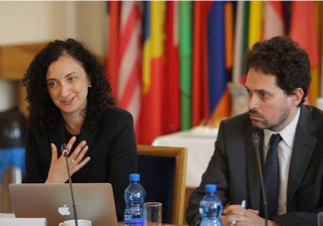
An expert meeting organized by the OSCE Office for Democratic Institutions and Human Rights (ODIHR) in Warsaw focused on the human rights-compliant implementation of legislation and policies to counter the foreign terrorist fighter phenomenon. The ICJ partnered in the event.
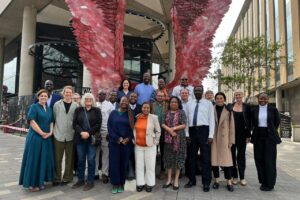
The two-day meeting (25-26 April) brought together 21 participants (11 men and 10 women) – including experts from international and national organizations, civil society, academia and OSCE staff – to reflect on experiences and human rights challenges in responses aimed at countering the threat posed by foreign terrorist fighters.
“Human rights compliance is essential both for the short and the long-term effectiveness of any measure to address the phenomenon,” said Omer Fisher, Head of the ODIHR Human Rights Department. “Jeopardizing human rights protection in the course of responding to the threat will not solve, but rather exacerbate the problem, because human rights violations provide fertile ground in which terrorism can thrive.”
Over the past few years, OSCE participating States have taken a wide range of administrative and criminal law measures to prevent the movement of terrorists or terrorist groups, to suppress the provision of support for them, and to counter the incitement and recruitment of foreign terrorist fighters.
“Broadly defined criminal offences and administrative measures based on vague definitions – including of terrorism and related offences – are open to abusive, arbitrary or discriminatory application,” said Róisín Pillay, Director of the Europe Programme of the ICJ.
“Legislation criminalizing acts such as travel for the purpose of terrorism must, therefore, be narrowly defined, clear and accessible, and provide for appropriate legal and procedural safeguards,” she added.
The expert meeting will inform a policy guidance document, which ODIHR will prepare in the coming months to assist OSCE participating States in the human rights-compliant and gender sensitive implementation of legislation and policies to address the phenomenon of foreign terrorist fighters.
Apr 26, 2017 | News
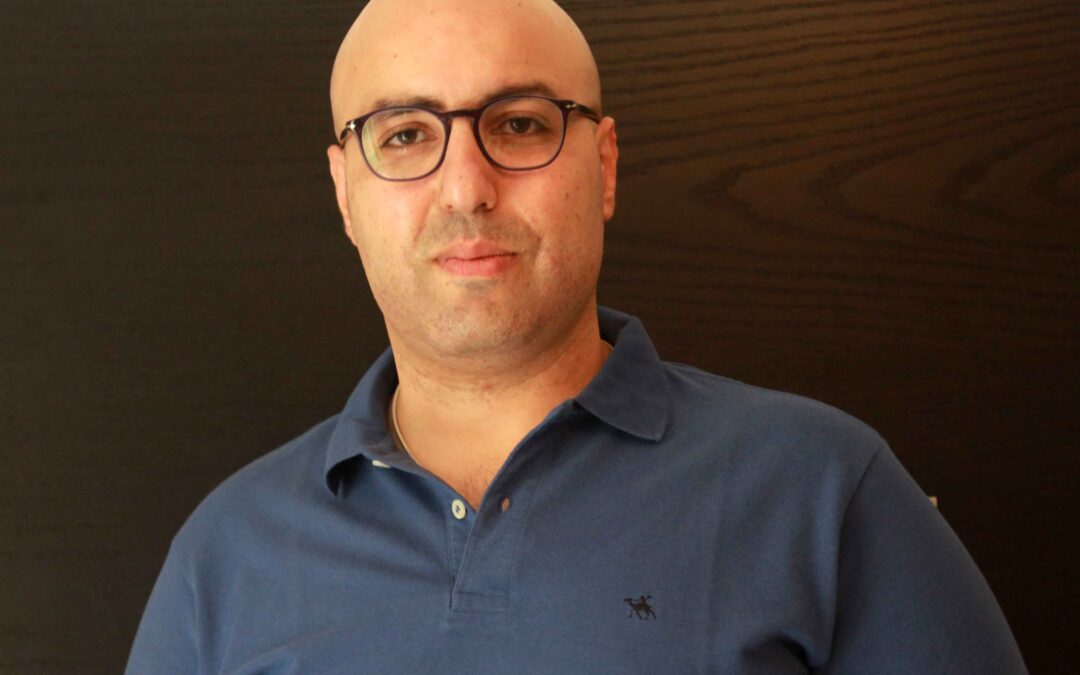
Mohamed Zaree (Egypt, photo), FreeThe5KH (Cambodia) and Karla Avelar (El Salvador) will compete for this prestigious award given to human rights defenders who have shown deep commitment and face great personal risk. The ICJ is member of the MEA Jury.
Selected by the International Human Rights Community (members of the jury are the ICJ, Amnesty International, Human Rights Watch, Human Rights First, International Federation for Human Rights, World Organisation Against Torture, Front Line Defenders, EWDE Germany, International Service for Human Rights and HURIDOCS), the final nominees for the Martin Ennals Award for Human Rights Defenders (MEA) are known:
- Mohamed Zaree is the Egypt Country Director for the Cairo Institute for Human Rights Studies (CIHRS), responsible for CIHRS’s legal research, media outreach and national advocacy. CIHRS’s work was influential in the Arab world particularly Egypt, which resulted in death threats to its director. This forced the CIHRS executive director and regional staff to move abroad to continue their work. Mohamed chose to stay and is now banned from travel. He is a legal scholar coordinating research to challenge laws designed to limit NGOs activities working on human rights, such as freedom of expression and assembly. He is widely seen a unifying figure bringing together the human rights community in Egypt to advocate with a common approach.
- FreeThe5KH are five Human Rights Defenders who have been in pre-trial detention for almost one year. This is linked to their work with the Cambodian Human Rights and Development Association (ADHOC). International bodies like the UN Working Group on Arbitrary Detention and UN Special Rapporteurs have repeatedly called for their immediate and unconditional release, and a stop to judicial harassment of human rights defenders in Cambodia based on their legitimate human rights work. This comes in the context of an increasingly severe crackdown on civil society and the political opposition in Cambodia.
- Karla Avelar, a transgender woman in El Salvador, grew up on the streets of San Salvador, suffering discrimination, violence, exploitation, and rape. She was imprisoned when she defended herself, and then regularly abused by fellow prisoners with the knowledge and even participation of the prison authorities. With three others, she founded COMCAVIS TRANS, which was created to represent, defend, and promote the human rights of LGBTI persons, with a focus on those living with HIV, as she does. She works to change legislation and the authorities’ practices, by holding them publicly to account.
Mohammed Zaree said: “Our hopes were high following the Egyptian revolution in 2011; we don’t know how the situation has instead deteriorated to such an extent. Today, we are battling human rights violations that are worse than before 2011, and challenging the normalization and acceptance of these atrocities.”
“Killing almost 1000 citizens in few hours, arresting almost 40,000 others, innocents dying in Egyptian prisons; is not the norm and we will not allow it to become so. We human rights defenders are fighting these abuses at risk of indefinite imprisonment,” he added.
The main award of the human rights movement, and as such labelled as the Nobel Price for human rights, the Martin Ennals Award aims to protect human rights defenders through increased visibility.
The Award will be presented on 10 October 2017 at a ceremony hosted by the City of Geneva.
Contact
Olivier van Bogaert, Director Media & Communications, ICJ representative in the MEA Jury, t: +41 22 979 38 08 ; e: olivier.vanbogaert(a)icj.org
Michael Khambatta, Director, Martin Ennals Foundation, t: +41 79 474 8208 ; e: khambatta(a)martinennalsaward.org
Background information
Egypt-MEA Finalists 2017 MZaree Bio-2017-ENG (Mohammed Zaree bio, in PDF)
Cambodia-MEA 2017 Finalists FreeThe5KH Bio-2017-ENG (FreeThe5KH backgrounder, in PDF)
Salvador-MEA 2017 Finalists KAvelar Bio-2017-ENG (Karla Avelar bio, in PDF)
Apr 26, 2017 | News, Training modules
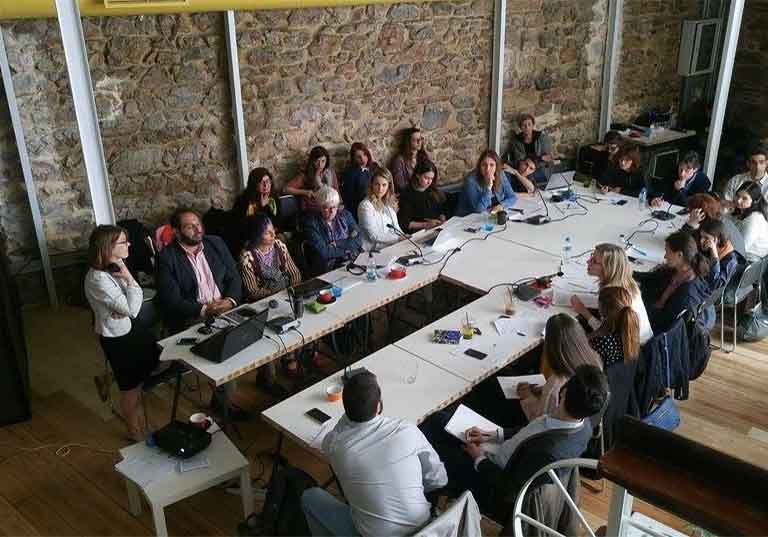
Today, the ICJ and Greek Council for Refugees are holding a training for lawyers on the rights of migrant children and on accessing international human rights mechanisms in Athens.
The training aims to support the strategic use of national and international mechanisms to foster migrant children’s access to justice.
The training will take place over the course of two days: 26-27 April 2017.
The training will focus on accessing the international mechanisms in order to protect and promote the rights of migrant children, the child’s procedural rights including the right to be heard and immigration detention.
A practical case analysis will be part of the training. Trainers include experts from the AIRE Center, UNICEF, UNHCR, Greek Ombudsman, the ICJ and experienced NGO lawyers.
The training is based on draft training materials prepared by the ICJ (to be published in the second half of 2017) and the ICJ Practitioners Guide no. 6: Migration and International Human Rights Law.
It is organized as part of the FAIR project co-funded by the Rights, Equality and Citizenship Programme of the European Union and OSIFE.
As part of the project, this training follows the trainings on the rights of migrant children in Spain, Italy, Bulgaria and Malta. Trainings in Ireland and Germany will follow later this year.
Download the agenda in Greek here: Greece-FAIRtraining-Event-agenda-2017-ENG (PDF)

Apr 26, 2017 | News
The ICJ today condemned the conviction and sentencing of Siti Noor Aishah Atam for possessing twelve books allegedly associated with terrorist groups, an act which is criminal under Malaysia’s Penal Code.
The ICJ calls for her immediate release from detention and for the authorities to take steps to quash or reverse her conviction.
The Kuala Lumpur High Court found Siti Noor Aishah Atam guilty under Section 130JB(1)(a) of the Penal Code which prohibits any “possession, custody or control of any item associated with any terrorist group or the commission of a terrorist act” and sentenced her to five years of imprisonment.
Siti Noor Aishah Atam contended that she was using the supposedly proscribed books for her thesis as a graduate student at Universiti Malaya, where she majored in Islamic Studies.
The High Court indicated, however, that they were applying the standard of strict liability to this case, meaning that the particular reason a person may have of possessing the books should not be taken into account.
If a person is found to have these books in their possession, for whatever reason, he or she will be penalized under the provision.
“The prosecution and conviction of Siti Noor Aishah Atam by Malaysian authorities is a violation of her right to freedom of expression, which includes the right to seek, receive, and impart information,” said Emerlynne Gil, ICJ’s Senior International Legal Adviser for Southeast Asia.
The ICJ notes that while the right to freedom of expression is not absolute, any restriction must be provided by law and be strictly necessary for a limited number of purposes, such as national security.
Any restriction must also be formulated with sufficient precision to enable an individual to regulate his or her conduct accordingly.
“The law under which Siti Noor Aishah Atam had been convicted is overly vague, since nobody would know what books or other material would be impermissible. The law is also certainly overbroad – having the effect of preventing potentially important academic research,” said Gil.
The twelve books found in the possession of Siti Noor Aishah Atam have not been specifically banned by the Malaysian government.
Indeed, these books may easily be bought at any number of bookstores in the country.
This unjust verdict illustrates the need for urgent legal reform, including the repeal or modification of Section 130JB(1)(a) of the Penal Code.
The ICJ also noted with profound concern that Siti Noor Aishah Atam has been subjected to prolonged detention under multiple laws, namely the Security Offences (Special Measures) Act 2012 (SOSMA) and Prevention of Crime Act 1959 (POCA).
“The Malaysian authorities appear to be abusing SOSMA and POCA by invoking them alternately to keep Siti Noor Aishah Atam in detention. This constitutes a denial of her right to be free from arbitrary detention,” Gil said.
The ICJ had previously called for the abolition of SOSMA, POCA, and similarly abusive laws.
Contact:
Emerlynne Gil, ICJ’s Senior International Legal Adviser, t: +66 840923575 ; e: emerlynne.gil(a)icj.org
Background
Siti Noor Aishah Atam is a former graduate student at Universiti Malaya, majoring in Usuluddin (Akidah) or Islamic Studies.
On 22 March 2016, the police raided the residence of Siti Noor Aishah Atam and arrested her.
She was taken into custody and detained for 28 days under SOSMA at an undisclosed detention facility while her trial was ongoing.
On 25 July 2016, she pleaded not guilty and stated that the books were used for her thesis on terrorism.
On 29 September 2016, the Kuala Lumpur High Court acquitted Siti Noor Aishah Atam.
The High Court had pointed to the Ministry of Home Affairs’ failure to ban the twelve books as one of the key reasons behind the acquittal.
On the day of her acquittal, she was again arrested and detained under POCA for 60 days and was subsequently ordered to be put under house arrest for two years.
In March 2017, the prosecution appealed the High Court’s decision. This allowed authorities to subject Siti Noor Aishah Atam to continued remand under SOSMA.
She was then detained in Kajang Prison until her conviction and sentencing today.
Apr 20, 2017 | News
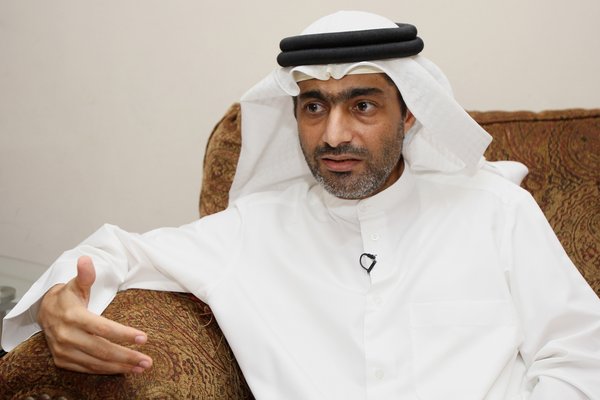
Authorities in the United Arab Emirates should immediately release Ahmed Mansoor, an award-winning human rights defender who is facing charges that violate his right to freedom of expression, a coalition of 18 human rights organizations, including the ICJ, said today, one month after his arrest.
Mansoor, who received the prestigious Martin Ennals Award for Human Rights Defenders in 2015, has been in detention since March 20, 2017 facing speech-related charges that include using social media websites to “publish false information that harms national unity.”
On March 28, a group of United Nations (UN) human rights experts called on the UAE government to release him immediately, describing his arrest as “a direct attack on the legitimate work of human rights defenders in the UAE.”
“Ahmed Mansoor has an unimpeachable record as a defender of rights and freedoms, and every day he remains in prison will constitute a black mark on the UAE’s human rights record,” said the organizations.
Mansoor was arrested at his home in Ajman in the pre-dawn hours of March 20.
Security officers conducted an extensive search and took away all of the family’s mobile phones and laptops, including those belonging to his young children.
His family had no information on his whereabouts until authorities issued an official statement on March 29, saying he was in detention in the Central Prison in Abu Dhabi.
The signatories understand that Mansoor’s family have been allowed only one short supervised visit with him which took place two weeks after his arrest on April 3, when authorities moved him from where he was being held, believed to be a detention facility adjacent to Al-Wathba Prison, to a prosecutor’s office in Abu Dhabi.
Informed sources told rights groups that Mansoor is being held in solitary confinement and has not spoken to a lawyer.
The UAE’s official news agency, WAM, said on March 20 that Mansoor had been arrested on the orders of the Public Prosecution for Cybercrimes and detained pending further investigation.
It said that he is accused of using social media websites to: “publish false information and rumors;” “promote [a] sectarian and hate-incited agenda;” and “publish false and misleading information that harm national unity and social harmony and damage the country’s reputation.”
The statement classified these as “cybercrimes,” indicating that the charges against him may be based on alleged violations of the UAE’s repressive 2012 cybercrime law, which authorities have used to imprison numerous activists and which provides for long prison sentences and severe financial penalties.
In the weeks leading up to his arrest, Mansoor had called for the release of Osama al-Najjar, who remains in prison, despite having completed a three-year prison sentence on charges related to his peaceful activities on Twitter.
Mansoor had also criticized the prosecution of Dr. Nasser bin-Ghaith, a prominent academic and economist, who was sentenced to 10 years in prison on March 29, for charges that included speech-related offenses, including peaceful criticism of the UAE and Egyptian authorities.
Mansoor had also used his Twitter account to draw attention to human rights violations across the region, including in Egypt and those committed by the Saudi-led coalition in Yemen.
He had also signed a joint letter with other activists in the region calling on leaders at the Arab Summit in Jordan at the end of March to release political prisoners in their countries.
“Ahmed has worked tirelessly, at great personal cost to himself, to advocate for human rights in the UAE and the wider region. He should be immediately released and the authorities should end their harassment of him once and for all,” the organizations added.
Signatories
ARTICLE 19
Amnesty International
Arabic Network for Human Rights Information
CIVICUS
FIDH, under the Observatory for the Protection of Human Rights Defenders
Front Line Defenders
Gulf Centre for Human Rights
Human Rights First
Human Rights Watch
Index on Censorship
International Commission of Jurists
International Service for Human Rights
Martin Ennals Foundation
PEN International
Reporters Without Borders (RSF)
Scholars at Risk
Vigilance for Democracy and the Civic State, Tunisia
World Organisation Against Torture (OMCT), under the Observatory for the Protection of Human Rights Defenders
UAE-Joint statement AMansoor-News-Press releases-2017-ENG (full statement in English, PDF)