Nov 14, 2016 | News
The Philippines government must immediately halt its initiative to restore the death penalty to the country after abolishing the practice a decade ago, said the ICJ today.
The ICJ received reports that the Sub-Committee on Judicial Reform of the House of Representatives of the Philippines has commenced hearings on a bill bringing back the death penalty into Philippine domestic laws.
The first hearing reportedly occurred on 8 November 2016.
It took place without adequate notice, preventing important stakeholders from participating or giving input.
“President Rodrigo Duterte’s administration seems to be hell-bent on returning to the bad old days of executing people,” said Sam Zarifi, ICJ’s Asia director.
“Reinstating the death penalty would breach the Philippines’ international legal obligations and would constitute an all-out assault on decades of global advances in protecting the right to life through abolition of this barbarous practice,” he added.
Under international standards, including the International Covenant on Civil and Political Rights, States may not reintroduce the death penalty once it has been abolished.
The ICJ considers that the death penalty constitutes a violation of the right to life and the prohibition on cruel, inhuman or degrading punishment.
“There appears to be a deliberate strategy on the part of the House of Representatives to circumvent meaningful consultations and a full debate on this unconscionable measure,” said Zarifi.
“The ramifications on the Philippines’ obligations under international law appear not to have been properly considered by legislators who proposed the measure bringing back the death penalty.”
Until now the Philippines had set an example of regional and global best practice on the abolition of the death penalty.
It abolished the death penalty in 2006 and became the first member of the Association of Southeast Asian Nations (ASEAN) to become party to the 2nd Optional Protocol to the ICCPR on the abolition of the death penalty.
The 2nd Optional Protocol provides for no possibility of denunciation or withdrawal and the Human Rights Committee has affirmed that States Parties may not withdraw from this treaty.
Moreover, the Committee has stressed that under the ICCPR, no abolitionist State may lawfully reintroduce the death penalty under Article 6 on the right to life, whether or not they are party to the 2nd Optional protocol.
“The Philippines Congress must perform its role as an equal branch of the government and stop such a horrific move backwards for the country,” Zarifi added.
“Filipino legislators must question the government as to why it’s even considering such an action, especially at a time when the country is facing an outbreak of extrajudicial executions with apparent government complicity.”
On 31 May 2016, the ICJ wrote to President Rodrigo Duterte underscoring that the death penalty was not only an affront to human rights, but that it had no demonstrable deterrent effect on addressing serious crime.
The ICJ pointed out that investing in improved investigation techniques and capacity, and making other needed reforms to the criminal justice system would be the best way to reduce crime.
Contact:
Emerlynne Gil, ICJ’s Senior International Legal Adviser for Southeast Asia, t: +66840923575 ; e: emerlynne.gil(a)icj.org
Nov 11, 2016 | News
The ICJ today condemned efforts by a group of States led by the African Group of the UN Members States to halt the work of the UN Independent Expert charged with protecting people from discrimination and violence based on sexual orientation and gender identity (SOGI).
The organization said that the move constituted an unwarranted interference with the independence and capacity of the Human Rights Council to discharge its mandate for the promotion and protection of all human rights and fundamental freedoms for all, without discrimination.
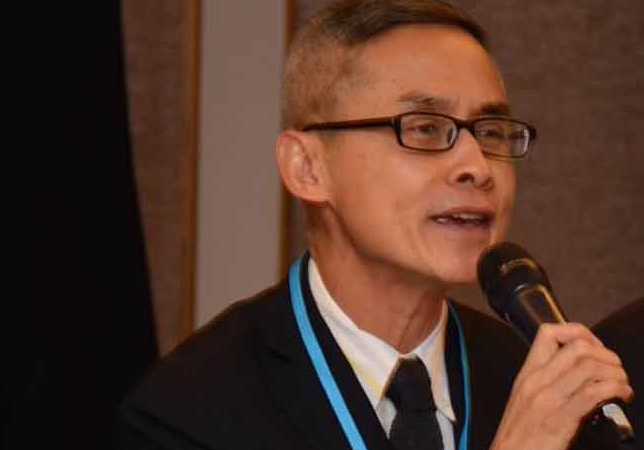
On 3 November 2016 Botswana on behalf of the African Group introduced a draft resolution before the Third Committee of the UN General Assembly in New York questioning the authority for the mandate of the Independent Expert Vitit Muntarbhorn (photo) and deferring action indefinitely on confirming the mandate’s establishment.
The ICJ is calling on the African Group to withdraw its draft resolution.
If a vote on the resolution does go ahead, the ICJ said that States must resoundingly reject it and send a signal to the world that the rights of all persons must be protected on an equal basis and that the UN Human Rights Council is capable of acting to secure such protection.
The ICJ considers that adoption of the resolution would represent a dramatic setback to the Human Rights Council’s efforts to tackle violence and discrimination based on SOGI.
Each year, the Third Committee of the UN General Assembly considers the Human Rights Council’s annual report.
This year, that report contains Human Rights Council resolution 32/2 on Protection against violence and discrimination based on sexual orientation and gender identity.
The Human Rights Council’s adoption of resolution 32/2 on 30 June 2016 made history by establishing the first-ever mandate of an Independent Expert of the Human Rights Council on protection against violence and discrimination based on SOGI.
In September this year the Human Rights Council appointed Prof. Vitit Muntarbhorn of Thailand to discharge this mandate.
Since then, Prof. Muntarbhorn has duly taken up his position and has begun fulfilling this work.
The draft resolution that the African Group has tabled at the Third Committee questions the basis in international law for the establishment of the Independent Expert’s mandate on SOGI and seeks to defer action on Human Rights Council resolution 32/2 indefinitely.
Since the Human Rights Council was set up in 2006, none of its resolutions mandating the establishment of a Special Procedure has ever been challenged by the General Assembly.
The ICJ considers that the adoption of the African Group’s resolution would set an extremely detrimental and regressive precedent by blocking the Human Rights Council from carrying out its own mandate.
It would undermine the UN’s preeminent human rights body’s overall authority by sapping its independence and ability to fulfil its mandate for the promotion and human rights for all without discrimination as it sees fit.
Contact
Livio Zilli, ICJ Senior Legal Adviser and UN Representative, t: +41 22 979 38 23 ; e: livio.zilli(a)icj.org
Read also
What is the Future of the SOGI Mandate and What Does it Mean for the UN Human Rights Council?
Nov 11, 2016 | Agendas, Events
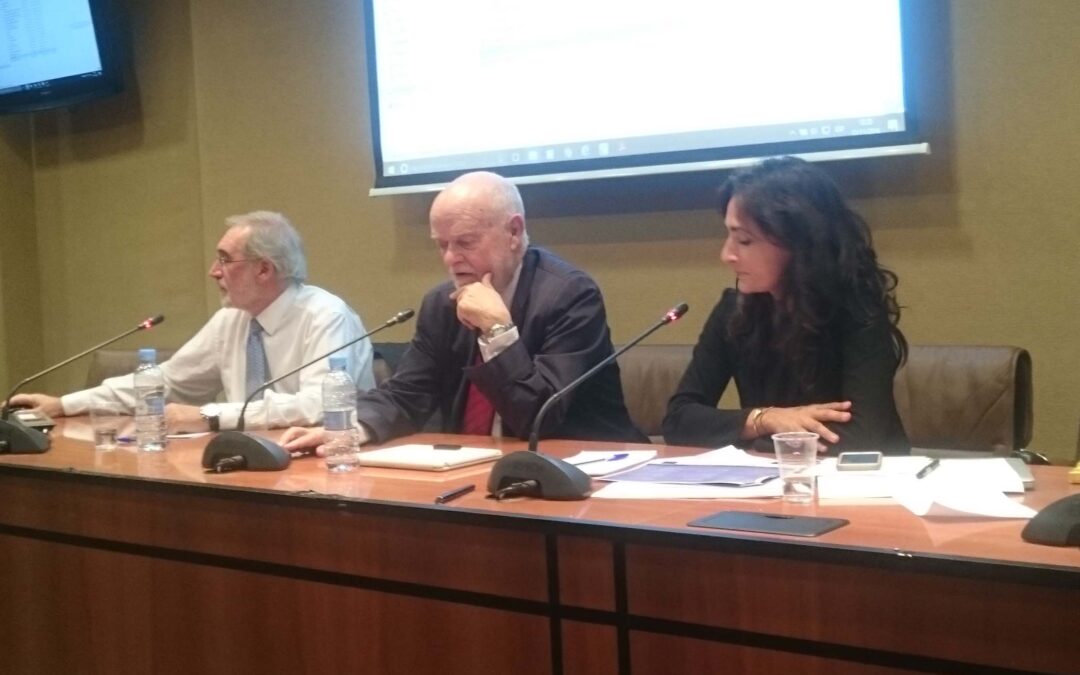
The ICJ and Foundation Raices are holding a training on the rights of migrant children and on accessing international human rights mechanisms from 11 to 12 November in Madrid (Spain).
The training aims to support the strategic use of national and international mechanisms to foster children’s access to justice.
The training will focus on accessing the international mechanisms in order to protect and promote the rights of migrant children, the child’s right to be heard and related procedural rights, the best interests of the child, age assessment and the presumption of minority.
Trainers will include representatives of the ICJ and Foundation Raices, as well as experts from the Committee on the Rights of the Child, the Spanish Constitutional Court and the office of the Spanish Ombudsman.
The training is based on draft training materials prepared by the ICJ (to be published in the second half of 2017) and the ICJ Practitioners Guide no. 6: Migration and International Human Rights Law.
The training is organized as part of the FAIR project co-funded by the Justice and Equality Programme of the EU and OSIFE.
Download the agenda of the training here:
spain-fair-training-events-agenda-2016-eng (in PDF)
Nov 9, 2016 | News
The ICJ welcomes the judgment of the European Court of Human Rights in Schukurov v Azerbaijan, finding that the right to petition the Court had been violated by the search of a lawyer’s premises and seizure of documents.
The ICJ submitted a third party intervention in the case, outlining international law and standards relevant to legal professional privilege and the seizure of legal documents.
The case files were seized as part of a criminal investigation opened against the lawyer, Intigam Aliyev, who was representing the applicants in the case. The Court found that the search and seizure by the Azeri authorities had violated article 34 of the Convention, which stipulates that States must not hinder in any way the effective exercise of the right of individual application to the Court.
The ICJ notes that the Court’s judgment follows its earlier finding of a violation of article 34 in the case of Annagi Hajibeyli v Azerbaijan, which arose from the same incident.
The ICJ stresses that these searches of lawyers’ premises are contrary to international standards on the role of lawyers. It is particularly worrying that they form part of a pattern of harassment of lawyers in Azerbaijan, including abusive disciplinary proceedings and criminal prosecutions. Such harassment damages the ability of lawyers to protect human rights through the judicial process, and undermines the independence of the legal profession.
The decision of the Court should now be fully and promptly executed, the ICJ said.
Nov 8, 2016 | News
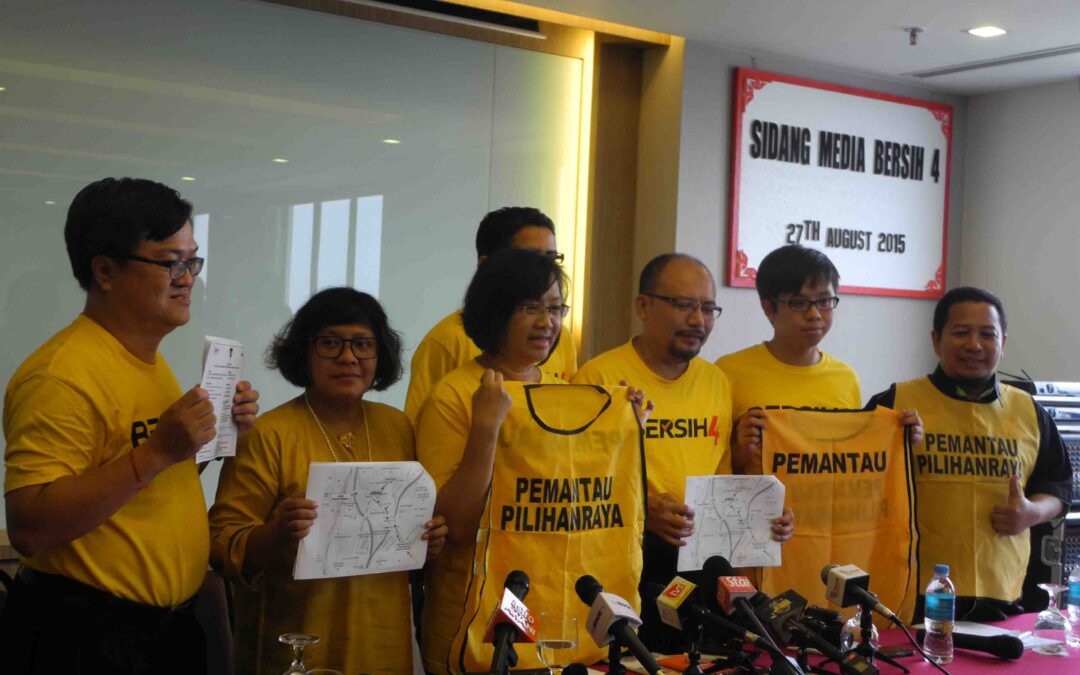
The Malaysian government must act to stop and redress the ongoing harassment, and death threats against the organizers of the Bersih 5.0 protest rally, scheduled for 19 November 2016, said the ICJ today.
The ICJ is calling on the authorities to conduct a thorough, impartial investigation into unlawful acts of intimidation against the organizers with a view to identifying and bringing to account those responsible.
The Bersih (or Gabungan Pilihanraya Bersih dan Adil) is a coalition formed in 2006 by Malaysian non-governmental organizations to call for free, clean and fair elections.
“The Malaysian government has the obligation to respect the right to freedom of expression and freedom of assembly,” said Sam Zarifi, ICJ’s Asia Director. “These rights are not only guaranteed under the Malaysian Constitution, but also under international human rights law.”
The ICJ recently received reports that Bersih leaders Maria Chin Abdullah, Mandeep Singh, and former Chairperson Ambiga Sreenevasan received death threats from unknown individuals.
Family members of Maria Chin Abdullah also received similar threats.
On 29 October 2016, police arrested Maria Chin Abdullah for distributing flyers promoting the forthcoming public assembly.
She was investigated on suspicion of having violated Section 11 of the Printing Presses and Publications Act 1984, which requires every publication printed or published within Malaysia to bear the name and address of the printer and publisher. Maria Chin Abdullah was subsequently released.
On 1 October 2016, men wearing the customary red shirts of ‘anti-Bersih’ groups and riding motorbikes tailed the convoy in Perak, kicked the cars and punched the vehicles’ side mirrors, while on 8 October 2016, unknown persons smashed the windows and slashed the tires of cars participating in a Bersih convoy in Sabah state.
Last week, police authorities launched investigations under Section 124C of the Penal Code against Bersih and other Malaysian NGOs that are alleged to have received foreign funding. Section 124C penalizes persons who are found to “attempt to commit activity detrimental to parliamentary democracy.”
“Section 124C is impermissibly vague and ambiguous, and allows authorities to engage in arbitrary prosecution, conviction, and punishment of people who are exercising their right to freedom of speech and assembly,” Zarifi said. “These claims against Bersih seem to be the latest effort by the Malaysian government, which is facing allegations of massive corruption, to repress political opposition.”
Contact
Emerlynne Gil, ICJ’s Senior International Legal Adviser, t: +66 840923575 ; e: emerlynne.gil(a)icj.org
Background
Over the years, Bersih has been organizing peaceful assemblies attended by thousands of Malaysians in Kuala Lumpur and other parts of the country.
Last year, monitors from the ICJ observed Bersih 4.0 and reported that it had been a peaceful assembly, in exercise of the right to freedom of assembly and that the organizers took careful measures to keep it orderly and free from violence. The ICJ will again be sending observers to this year’s Bersih rally in Kuala Lumpur.
Under Article 10(1)(b) of the Malaysian Constitution, “all citizens have the right to assemble peaceably and without arms.” Furthermore, the right to peaceful assembly is also guaranteed under several international human rights instruments, including the Universal Declaration of Human Rights.
In his 2012 report, the UN Special Rapporteur on the rights to freedom of peaceful assembly and of association emphasized that States “have a positive obligation to actively protect peaceful assemblies”. This State obligation includes “protection of participants of peaceful assemblies from individuals or groups of individuals, including agents provocateurs and counter-demonstrators who aim at disrupting or dispersing such assemblies.”
With regard to the use of Section 124C of the Penal Code to commence investigations against Bersih and other non-governmental organizations, the ICJ has emphasized that the ambiguity and vagueness of this provision makes it inconsistent with the principle of legality, a basic tenet of law. The principle of legality in the criminal law context requires that any offense must be established in law and defined precisely and unambiguously so as to enable individuals to know what acts will make them criminally liable.
Nov 5, 2016 | News
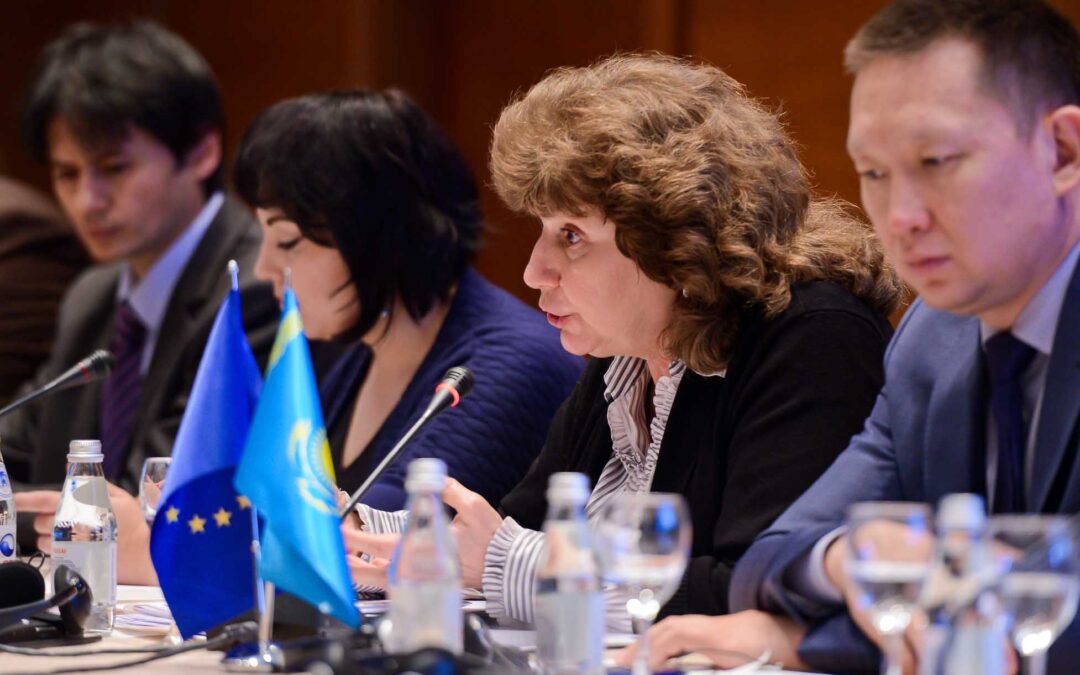
Today the ICJ, in partnership with the National Collegium of Advocates of Kazakhstan, hosts a major regional conference in Almaty, Kazakhstan, on the role and independence of the legal profession in Central Asia.
Bringing together bar associations and lawyers from across Central Asia, as well as representatives of bar associations from European countries and international experts, the conference explores how associations of lawyers can strengthen the role of lawyers in the justice system.
Participants will discuss the organization and self-governance of the profession in each of the countries of Central Asia; will analyse the obstacles lawyers face in protecting the rights of their clients; and will debate standards and good practices in protecting the integrity of the profession through codes of ethics, disciplinary proceedings and professional training.
“Across Central Asia, every day, lawyers do vital work to protect the human rights of their clients. But they can only do this effectively when their independence is protected in law and in practice, and when high ethical and professional standards are enforced by self-governing associations of lawyers.” said Róisín Pillay, Director of the ICJ Europe and CIS programme
“At a time when the organization of the profession is being renewed in several countries of the region, this conference aims to ensure that lawyers work together to learn from each others’ experiences, and from international law and standards, to strengthen associations of lawyers in upholding the vital role of the profession,” she added.
Download the agenda in English and Russian here:
central-asia-agenda-conference-legal-prof-news-web-stories-2016-rus-eng (in PDF)