Jul 7, 2016 | News
Following reports that Saif al Islam Gadhafi has been released from prison in Libya, the ICJ today called for him to be promptly arrested and surrendered to the International Criminal Court (ICC).
Saif al Islam Gadhafi was convicted by the Tripoli Criminal Court in July 2015 and sentenced, along with eight other former officials of the Moammar Gadhafi regime, to the death penalty.
At the time, the ICJ expressed its concern that the trial had not been fair, expressed its opposition to the death penalty, and called on the Libyan authorities to surrender Saif al Islam Gadhafi to the ICC.
In 2011, the ICC issued an arrest warrant for Gadhafi, who faces two counts of Crimes against Humanity including murder and persecution of civilians, allegedly conducted as part of an orchestrated campaign against demonstrators during the uprising in Libya in 2011.
Gadhafi was reportedly released from a prison in Zintan in April 2016, following instructions from the Minister of Justice to the city’s chief prosecutor. The instructions were reportedly based on a general amnesty law that was promulgated by the Libyan House of Representatives in August 2015.[1]
“Granting amnesty for crimes such as those for which Saif al Islam Gadhafi was allegedly responsible is totally incompatible with the rule of law, the right of victims to justice, and Libya’s international human rights obligations”, said Said Benarbia, Director of the MENA programme at the International Commission of Jurists.
“Instead of shielding him from accountability, the Libyan authorities should ensure that all those responsible for past and ongoing gross violations of international human rights law and serious violations of international humanitarian law are brought to justice in fair and effective criminal trials. A first step in this direction would be for the Libyan authorities to arrest Saif al Islam Gadhafi and surrender him to the ICC as a matter of urgency.”
The ICJ believes that impunity for gross human rights violations and war crimes, including impunity resulting from amnesties, is not conducive to peace, political stability and national reconciliation in Libya.
Indeed, such impunity may be perceived by those who continue to systematically violate rights and freedoms as a signal that they may never be criminally held to account.
At the same time, the ICJ absolutely opposes the death penalty, which it considers inherently to violate the right to life and the right not to be subjected to cruel, inhuman or degrading punishment.
Gadhafi would not face the death penalty in any ICC trial.
Saif al Islam Gadhafi’s lawyer has reportedly indicated that he will argue to the ICC that it should drop its proceedings, on the basis of article 20 of the Statute of the ICC, which addresses the circumstances in which a person who has already been tried for certain conduct by another court, may subsequently be tried by the ICC.
The ICJ stresses that any hearing to consider such arguments should not in any way suspend Libya’s obligation immediately to implement the ICC arrest warrant and to surrender Saif al Islam Gadhafi to the ICC.
“Libya should comply with its obligations under international law and dismantle the structural impunity that continues to prevail in the country, including by putting an end to politicized judicial proceedings and ensuring that prosecutors carry out their functions independently, impartially, and in defence of human rights,” added Benarbia.
[1] Law No. 6 of 2015
Contact
Doireann Ansbro, Associate Legal Adviser, ICJ Middle East and North Africa Programme, t: +216 71 841 701, e: doireann.ansbro(a)icj.org
Libya-Saif al Islam Gadhafi-News-Press Releases-2016-ARA (full press release in Arabic, PDF)
Jul 5, 2016 | E-bulletin on counter-terrorism & human rights, News
 Read the 103rd issue of ICJ’s monthly newsletter on proposed and actual changes in counter-terrorism laws, policies and practices and their impact on human rights at the national, regional and international levels.
The E-Bulletin on Counter-Terrorism and Human Rights provides hyperlinks to full texts of reports, statements, laws, court judgments and legal analysis. It aims at fostering an informed debate on the implications of counter-terrorism measures for the promotion and protection of human rights.
AFRICA & MIDDLE EAST
Egypt: Presidential decree expands military jurisdiction
Israel: Anti-terrorism reforms passed by Knesset
AMERICAS
USA: Virginia appeals court rules that tracking location data is not a 4th Amendment search
USA: Mass shooting at gay Orlando nightclub by alleged terrorist
USA: CIA declassifies documents related to its detention and interrogation programme
USA: Government watchdog report on FBI face recognition technology
USA: Administration releases its drone strikes casualties figures
Canada: Pressure on Government for inquest into complicity in torture in Afghanistan
Canada: Court orders Iran’s assets to be handed over to victims of terrorism
ASIA – PACIFIC
New Zealand: Man jailed for spreading images of IS violence
Pakistan: ICJ briefing paper on trials of civilians in military courts
Pakistan: ICJ calls on Government no to extent Protection of Pakistan Act
EUROPE & COMMONWEALTH OF INDEPENDENT STATES
UK: No charges against MI6 for rendition to Libya of dissidents
Denmark: Man stripped of citizenship following conviction for inciting terrorism
Germany: Cabinet signs off on reforms to intelligence agency
Hungary: Constitutional amendment grants Government extended powers in case of terrorist attacks or threats
Poland: New anti-terrorism provisions give authorities sweeping powers
Russian Federation: New anti-terrorism provisions approved
Spain: European Court of Human Rights judgment in Beortegui Martinez v Spain
Sweden: First trial begins under new counter-terrorism legislation
Turkey: Journalists arrested on charges of “terrorist propaganda”
Turkey: Parliament expands military authority
UNITED NATIONS & REGIONAL ORGANIZATIONS
UN: Committee on the Rights of the Child reviews Pakistan
Council of Europe: European Court of Human Rights hearing in rendition cases
EU: Sharpston Opinion in case concerning refugee application after terrorism conviction
EU: European Parliament calls for investigation of CIA torture sites
EU: Dialogue on counter-terrorism with Turkey
E-BULLETIN no. 103
AFRICA & MIDDLE EAST
Egypt: Presidential decree expands military jurisdiction
On 8 June, President al-Sisi issued a decree that empowers the armed forces to be the executive entity responsible for the supervision of State-owned land located within two kilometres on either side of the national network of roads. The decree entails a further expansion of military jurisdiction over civilians, as it entitles the armed forces to remove all illegal constructions built on State land and bring violators before military courts.
Media Report
Israel: Anti-terrorism reforms passed by Knesset
On 15 June, the Knesset passed a series of sweeping anti-terrorism reforms, expanding the State’s counter-terrorism powers and its definitions of terrorist organizations and terrorist acts. The omnibus law creates new vaguely defined terrorist offences, including identifying with a terrorist organization, incitement to terrorism and failure to prevent a terrorist act. For the first time, the use of various means to combat terrorism are now enshrined in law rather than through emergency regulations. Among other things, these include administrative detention and orders barring individuals from leaving the country; an authorization for law enforcement officials to hold suspects for up to 48 hours without charge before they are brought before a judge; and the possibility for the Shin Bet security service, on approval of the Prime Minister, to conduct computerized surveillance of those suspected of having a connection to terrorist activity. Adalah, a Palestinian legal organization in Israel, says that the law would effectively import into Israel many of the draconian military orders currently used against Palestinians under occupation.
Media Report
Media Report
Media Report
AMERICAS
USA: Virginia appeals court rules that tracking location data is not a 4th Amendment search
On 30 May, the 4th Circuit Court of Appeals sitting en banc in USA v Graham upheld the third-party doctrine in a case concerning a request by law enforcement for mobile phone records to track location data in an investigation. According to the Court, this does not constitute a search under the Fourth Amendment to the Constitution, as the consumer knowingly and willingly surrenders the information to its provider and therefore has “no reasonable expectation of privacy” in that information. The ruling realigns the 4th Circuit with the 5th, 6th and 11th Circuits, which have reached the same conclusion. In the same case, a three-judge panel of the 4th Circuit had ruled in August 2015 that obtaining phone-site records in bulk did constitute a search triggering a warrant requirement, in an opinion relying heavily on the mosaic theory, which argues that even if one instance of evidence gathering does not count as a search, asking for a large number of data points can eventually amount to one. In the case, the Government obtained 221 days’ worth of phone records belonging to a robbery suspect.
Judgment
Media Report
USA: Mass shooting at gay Orlando nightclub by alleged terrorist
On 12 June, a mass shooting was carried out by Omar Mateen, killing 49 people and wounding 53 others inside a gay nightclub in Orlando, Florida. Mateen, who was shot and killed by Orlando police after a three-hour standoff, had made a 9-1-1 call shortly after the attack began, in which he swore allegiance to the leader of the Islamic State (IS). He had told a hostage negotiator that he undertook the attack because of American bombing campaigns in Iraq and Syria. The massacre was described by some officials, including Orange County Sheriff, as a domestic act of terror. Subsequent investigations by the Federal Bureau of Investigation and Central Intelligence Agency have so far found no evidence linking Mateen to IS and have cautioned that the attack may have been IS-inspired without being IS-directed.
Media Report
Media Report
Media Report
USA: CIA declassifies documents related to its detention and interrogation programme
On 14 June, the Central Intelligence Agency (CIA) declassified fifty documents related to its rendition, detention and interrogation programme, pursuant to a Freedom of Information Act request filed by the American Civil Liberties Union (ACLU). The documents describe the CIA’s treatment of terrorism suspects after the 9/11 attacks and include detailed descriptions of the inner workings of the CIA black site prisons. The ACLU stated they “underscore the cruelty of the methods used in… secret, overseas black sites”.
NGO Statement
Blog Post
Media Report
Media Report
Media Report
Media Report
USA: Government watchdog report on FBI face recognition technology
On 15 June, the Government Accountability Office (GAO) released its report on the Federal Bureau of Investigation’s (FBI) face recognition technology. The report for the first time revealed the extent of the programme, showing the FBI has access to more than 411 million photos from sources including driver’s licenses and passport and visa applications, which it cross-references with photos of criminal suspects using facial recognition software, the accuracy of which is largely untested. The report asserts that the FBI has done little to ensure that its search results do not include photos of innocent people, and it has not taken any steps to determine whether the face recognition systems of its external partners are sufficiently accurate. The GAO also found that the FBI did not disclose the database’s impact on public privacy until it audited the Bureau in May.
GAO Report
NGO Statement
Media Report
USA: Administration releases its drone strikes casualties figures
On 1 July, the Director of National Intelligence (DNI) released an internal assessment of the number of civilians killed by drone strikes in nations where the USA are not officially at war. According to the report, between 64 and 116 civilians were killed in Pakistan, Yemen, Somalia and Libya during the two terms of the Obama Administration. That figure is lower than any estimates of independent groups. Only aggregate data was released, making meaningful scrutiny difficult. The release was accompanied by an Executive Order, instructing the Office of the DNI to release a similar report on a yearly basis. It also says that the families of civilians killed by the USA should receive condolence payments.
DNI Report
Blog Post
Blog Post
Blog Post
Media Report
Canada: Pressure on Government for inquest into complicity in torture in Afghanistan
On 7 June, a group of human rights advocates, legal experts, politicians and diplomats urged the Government of Canada to launch a public inquiry into the alleged torture of hundreds of Afghan detainees who were transferred from the Canadian military to Afghan authorities notwithstanding clear and credible risks of torture, adding to the pressure put on the Trudeau Administration by an e-petition that demanded a wide-ranging probe into unresolved questions related to the issue. On 17 June, the Government responded that it “does not believe an independent judicial commission is necessary”.
Open Letter
Government Response to E-Petition
Media Report
Media Report
Canada: Court orders Iran’s assets to be handed over to victims of terrorism
On 9 June, the Ontario Superior Court ordered Iran’s non-diplomatic assets in Canada to be handed over to victims of Hamas and Hezbollah, dismissing the Iranian Government’s arguments. The 13-million-dollar case was the first challenge of the Justice for Victims of Terror Act, a 2012 law that allows victims to obtain damages from State sponsors of terror groups.
Judgment
Media Report
ASIA – PACIFIC
New Zealand: Man jailed for spreading images of IS violence
On 23 June, a New Zealand man was sentenced to three years and nine months’ imprisonment by an Auckland court after he admitted to making, distributing and possessing videos depicting ISIS violence. The sentence was the first on an objectionable material charge related to violence, which to date has only been used in relation to indecent child images.
Media Report
Pakistan: ICJ briefing paper on trials of civilians in military courts
On 23 June, the ICJ released a new Briefing Paper on the hearing by military tribunals of civilians charged with terrorism-related offences. In the report, the ICJ examines the performance of these opaque tribunals since the 21st Amendment was passed in January 2015, which operate in violation of national and international fair trial standards and fail to deliver justice as well as the promised “quick results”.
ICJ Briefing Paper
Pakistan: ICJ calls on Government no to extent Protection of Pakistan Act
On 30 June, the ICJ called on the Government of Pakistan not to extend the Protection of Pakistan Act, which was enacted in July 2014 for a period of two years and which gives military and law enforcement authorities sweeping powers to detain individuals in contravention of Pakistan’s international human rights law obligations. Amongst other things, the law has created special courts that do not meet international standards for fair trials.
ICJ Statement
EUROPE & COMMONWEALTH OF INDEPENDENT STATES
UK: No charges against MI6 for rendition to Libya of dissidents
On 9 June, the Crown Prosecution Service (CPS) stated there is insufficient evidence to bring criminal charges against anyone in the Secret Intelligence Service for its involvement in the rendition and alleged ill-treatment of Abdel Hakim Belhadj and Sami Al Saadi and their respective families in South East Asia to Libya in 2004. In its conclusions, the CPS’s Special Crime and Counter Terrorism Division notes that “it has been understandably difficult to piece together events from over 10 years ago with enough precision or for witnesses to recall matters in sufficient detail to prove the elements of the alleged offences”.
CPS Statement
Blog Post
Media Report
Denmark: Man stripped of citizenship following conviction for inciting terrorism
On 8 June, the Danish Supreme Court stripped the citizenship from Said Mansour, a Danish-Moroccan bookseller jailed for inciting terrorism, upholding the lower court’s judgment. He is the first person to be stripped of Danish citizenship due to a crime. In 2013, he was arrested and put on trial for Facebook posts praising Osama bin Laden and calling on his followers to join al-Nusra Front. He was also accused of helping to publish books by Abu Qatada, a Jordanian cleric who was deported from Britain. Mansour moved to Denmark in 1983 and gained citizenship in 1988.
Media Report
Media Report
Germany: Cabinet signs off on reforms to intelligence agency
On 28 June, Merkel’s cabinet signed off on reforms to the country’s foreign intelligence agency (Bundesnachrichtendienst – BND), after a scandal over improper collusion with the US National Security Agency (NSA) that had in late April already led to the replacement of the head of the BND. The reforms, which now require parliamentary approval, include an overhaul of the list of duties the BND carries out for the NSA and increased oversight by an external watchdog panel composed of two judges and one representative of the prosecution services.
Media Report (German)
Media Report
Hungary: Constitutional amendment grants Government extended powers in case of terrorist attacks or threats
On 7 June, the Hungarian Parliament approved a constitutional amendment that grants the Government extended powers in case of terrorist acts or threats, including deploying the armed forces. The law adds a new legal concept, the “terrorism state of emergency”, to the Constitution and grants the Government the ability to introduce extraordinary measures for up to 15 days before requiring confirmation from a two-thirds parliamentary majority. The amendment took effect on 1 July.
Media Report
Media Report
Media Report
Poland: New anti-terrorism provisions give authorities sweeping powers
On 22 June, President Duda signed into law new anti-terrorism provisions that give the authorities sweeping new powers. Among other things, in case of terror alert level three or four (the highest), public meetings and other mass events may be banned by the Interior Minister, and foreigners can be placed under unlimited surveillance or be expelled if they are deemed a threat. Persons who are suspected of being a threat to the State may be detained for up to 14 days without charge, and the Government may introduce temporary border closures. Earlier in the month, on 15 June, the Council of Europe’s Commissioner for Human Rights published a report critical of “far-reaching changes to Poland’s legal and institutional framework”, noting among other things that “the new law on surveillance activities… raises serious concerns of incompatibility with international human rights law”. That same law was the subject of an Opinion by the Council of Europe’s Venice Commission published on 10 June, in which the Commission criticized Poland’s surveillance powers as too broad.
Commissioner for Human Rights Report
Venice Commission Press Release
Blog Post
Blog Post
NGO Statement
Media Report
Media Report
Russian Federation: New anti-terrorism provisions approved
On 24 June, the lower house of the Russian Federation’s Parliament approved the “Yarovaya law”, a package of amendments that would, among other things, introduce prison sentences for failure to report a grave crime. It would also oblige telephone and Internet providers to store all communications for six months and all metadata for three years, and to help intelligence agencies decode encrypted messages. Furthermore, the law would ban proselytizing, preaching and praying outside officially recognized religious institutions. The maximum punishment for extremism, a charge increasingly used against critical social media users, would increase from four to eight years. Earlier in the legislative process, lawmakers removed a proposed clause that would have stripped Russian citizenship of individuals working for foreign intelligence or those guilty of terrorist offences. On 29 June, the upper house approved the legislative package. If signed into law by President Putin, the laws will enter into force in 2018.
Blog Post
Media Report
Media Report
Media Report
Spain: European Court of Human Rights judgment in Beortegui Martinez v Spain
On 31 May, the European Court of Human Rights found a violation of the procedural aspect of Article 3 of the European Convention on Human Rights (prohibition of torture and inhuman or degrading treatment or punishment), in a case concerning the failure to investigate an allegation by Beortegui Martinez that he was ill-treated by Guardia Civil officers while detained incommunicado in police custody on suspicion of belonging to a terrorist organization. The Court also reiterated the importance of adopting the measures recommended by the European Committee for the Prevention of Torture (CPT) with a view to improving the quality of forensic medical examinations of individuals held incommunicado in police custody and urged the Spanish authorities to draw up a clear code of conduct for officers responsible for supervising such individuals as to the procedures for questioning them and for ensuring their physical integrity.
Judgment
Sweden: First trial begins under new counter-terrorism legislation
On 2 June, the Attunda District Court started the trial of a 25-year old man suspected of planning to travel to Syria to join al-Nusra Front. The man had been arrested at Stockholm’s airport, returning from a day-trip to Turkey. He is the first to stand trial under the country’s new counter-terrorism legislation, introduced on 1 April, which foresees two-year prison sentences for those convicted of travelling to another country to seek training or to commit a terrorist act.
Media Report
Turkey: Journalists arrested on charges of “terrorist propaganda”
On 20 June, Turkish authorities arrested journalist and Reporters Without Borders representative Erol Önderoglu, forensic doctor and head of Human Rights Foundation Turkey Sebnem Korur Fincani and journalist and writer Ahmet Nesin on charges of “terrorist propaganda”. The charges arise from their participation in a solidarity campaign, in which journalists and activists have been taking turns acting as co-editors of the Kurdish newspaper Özgür Gündem to protest the persistent harassment of the newspaper by judicial authorities. All three had been released from pre-trial detention by 30 June. The indictments against Önderoglu and Financi were accepted by Istanbul’s 13th Heavy Penal Court, with the first hearing in the trial scheduled for 8 November. No decision has been issued yet regarding Nesin. On 23 June, a court acquitted British scholar Chris Stephenson, who had been accused of “making propaganda for a terrorist organization” and who was deported from Turkey in March after being found with invitations for Kurdish New Year celebrations. Stephenson was one of the thousand scholars who signed a declaration denouncing military operations against Kurdish rebels in southeast Turkey.
NGO Statement
Media report
Media report
Media report
Media report
Media report
Turkey: Parliament expands military authority
On 23 June, the Turkish Parliament passed a law that significantly expands military authority by amending Law 5442 of Provincial Governance, which stipulates that if provincial governors cannot control disturbances in cities by using local police, they can ask for military assistance. Among other things, the new provisions grant immunity to armed forces conducting counter-terrorism measures, requiring authorization from either the military or Government before prosecution can take place.
Blog Post
Media Report
UNITED NATIONS & REGIONAL ORGANIZATIONS
UN: Committee on the Rights of the Child reviews Pakistan
On 3 June, the UN Committee on the Rights of the Child published its concluding observations following the consideration of the fifth periodic report of Pakistan on its implementation of the Convention on the Rights of the Child. Among other things, the Committee’s experts expressed concern about the large number of children killed by counter-terrorism activities and acts of terrorism. The experts deplored the worsening situation of juvenile justice and expressed serious concern about the sentencing to death and lengthy prison sentences of children for terrorism related crimes by special courts.
Concluding Observations
OHCHR Press Release
Council of Europe: European Court of Human Rights hearing in rendition cases
On 29 June, the European Court of Human Rights held separate public hearings in the cases of Abd al-Rahim al-Nashiri and Abu Zubaydah, who are currently held at Guantánamo Bay detention camp. They accuse the Romanian and Lithuanian Governments of allowing their incommunicado detention and torture at secret facilities of the US Central Intelligence Agency and facilitating their transfer in and out of Romania and Lithuania.
Court Press Release
Court Press Release
NGO Statement
EU: Sharpston Opinion in case concerning refugee application after terrorism conviction
On 31 May, Advocate General Sharpston of the Court of Justice of the European Union delivered her opinion in Case C-573/14, a request for a preliminary ruling from the Belgian Council of State in a case concerning Mostafa Lounani, who was convicted of participation in a terrorist group in 2006 by a Brussels criminal court and applied for refugee status in 2010. His application was refused, and the subsequent appeal proceedings gave rise to the referral of several questions to the Court of Justice. Among other things, Sharpston concludes that a previous conviction for being part of a terrorist organization may not automatically lead to the exclusion from international protection, although a final conviction for a terrorist offence in a EU Member State court should be given significant weight in the individual assessment, which should include an examination of whether the person shares personal responsibility and the implications of the group’s activities for international peace and security.
AG Opinion
EU: European Parliament calls for investigation of CIA torture sites
On 8 June, the European Parliament passed a non-binding resolution condemning the “apathy shown by member states and EU institutions” over the “multiple fundamental rights violations and torture” that took place as part of the US Central Intelligence Agency (CIA) rendition programme in Europe between 2001 and 2006. The Members of the European Parliament (MEPs) call on the member states to “investigate, ensuring full transparency, the allegations that there were secret prisons on their territory in which people were held under the CIA programme”, and expressed concern that “undue classification of documents” had lead to “de facto impunity for perpetrators of human rights violations”. The MEPs furthermore expressed regret that the US Government has failed to cooperate with EU member states in their investigations of the rendition programme.
Resolution
European Parliament Press Release
EU: Dialogue on counter-terrorism with Turkey
On 8 June, Turkey and the European Union held a counter-terrorism dialogue as part of their regular exchanges on the topic. They agreed to explore ways of enhancing collaboration on information sharing, law enforcement and judicial cooperation, including cooperation in the field of terrorism related deportations and the financing of terrorism. It was also agreed to step up cooperation to prevent radicalisation and recruitment and to address the root causes of these problems.
EEAS Press Release
Find this E-Bulletin and more information about the ICJ, the rule of law and human rights on our website: www.icj.org. Please send feedback about the E-Bulletin to icjcounter-terrorism@icj.org.
Jul 1, 2016 | Feature articles, News
A feature article by U Hayman Oo, ICJ Legal Researcher in Yangon, Myanmar.
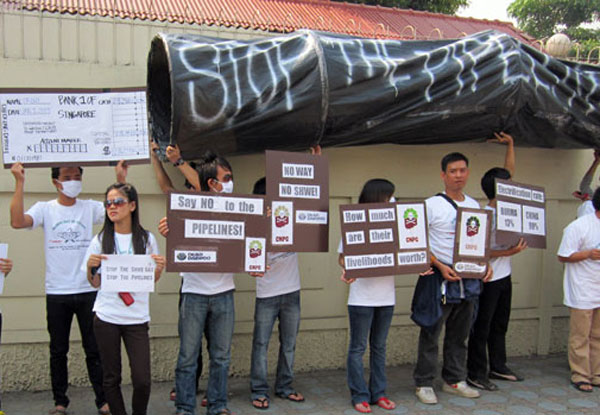
In a recent meeting with Chinese ambassador to Myanmar and villagers, organized in Kyauk Phyu, a villager from Gone Shein Village asked the ambassador to help address the damages caused to their farmland by the Shwe Gas Pipeline Project that began five years ago.
She also expressed doubts that the Kyauk Phyu Special Economic Zone (Kyauk Phyu SEZ) would benefit villagers amid all the unresolved disputes.
Given such disputes, local people are not optimistic about the upcoming development of the Kyauk Phyu SEZ.
They perceive that the project will be a ‘loss’ rather than a ‘gain’ for them.
Most of the local population of farmers fear that the project will be a disaster to their livelihood along with massive land losses.
On a recent trip to Kyauk Phyu by the International Commission of Jurists (ICJ), community members, including local MPs and lawyers, reported their concerns that a second round of such abuses will be experienced, this time even worse, during development of the Special Economic Zone planned for the area, despite promises from the Government that the development will be environmentally sustainable and bring socio-economic benefits to the region.
In fact, Special Economic Zone can contribute to the country’s economy and help benefit the welfare of its people – but only if sound policies of sustainable development in compliance with human rights are in place.
Otherwise, massive economic projects of this kind risk large-scale adverse environmental, social and human rights impacts.
Kyauk Phyu residents know very well how foreign investments can be harmful for the community when investors fail to comply with local laws as well as international standards, because of their experience with the Shwe Gas Project, a Myanmar-China pipeline.
The Gas Pipeline project was notorious for reported labour abuses, and claims of inadequate compensation for land confiscation, arrest and detention of community leaders and loss of community livelihoods and environmental degradation.
Villagers still frequently take to the street demanding for the damages caused to their farmland to be addressed, in the absence of a proper grievance mechanism.
With these prevailing experiences in mind, local residents were alarmed when authorities reportedly measured about 250 acres for the SEZ around Kathapray, Krat Tein, and Thaing Chaung village tracts in Kyauk Phyu, raising more concerns of land acquisition and compensation.
Locals complain that there was no transparent discussion over compensation for this potential land acquisition.
Villagers from Pyai Sate Kay village reportedly lost about 40 acres of farmland to the construction of a reservoir.
Although, the compensation were made for 5.1 acre of farmland, the rest of grazing land was not compensated according to a report from a villager.
There were also complaints that the compensation was neither a current market price nor a sufficient amount of money for them to be able to buy a similar size of land for cultivation.
He also complained that the Government promised to provide replacement land, but that this has not yet happened.
A total of over 70 acres of land was also apparently acquired for another reservoir under construction near Thai Chaung village.
Compensation was only paid for the farmland acreas occupied for the construction excluding land affected by the access to the reservoir.
“We were compensated but the land we lost were not measured properly. The amount paid was only on the basis of approximation. The land we lost should have been measured carefully to pay for the compensation,” said Ko Tun Nu from Thaing Chaung village.
It is reported that these reservoirs were constructed with the purpose of water supply for the SEZ project.
Furthermore, villagers from Ohn Taw and Pyai Sate Kay also reportedly lost a total of 220 acres of land when it was allocated for construction of a police station between the villages.
Although generally the purpose of the security force stationed there is for the security of the township, local people suspect that this increased security presence is instead in preparation to meet the security demands for the planned SEZ project.
There has apparently been no discussion over compensation. It is also questionable whether this volume of land is necessary for the construction of a police station.
According to the Special Economic Zone Law 2014, the Ministry of Home Affairs is responsible for land acquisition in the area of a SEZ in accordance with existing laws and regulations.
It also imposes duties on the investors and developers to bear the expenses of compensation and relocation and to ensure that the standard of living of affected persons does not fall below their original living standard.
The new NLD-led Government has inherited ample land-related problems and has prioritized dealing with these issues.
On May 5th, the Government formed the ‘Central Committee for the Review of the Acquisition of Farmland and Other Land’ in order to combat nation-wide land disputes.
The Committee’s responsibilities include investigation of compliance with existing laws by relevant authorities.
The President has also instructed that all land acquisition cease until all existing land disputes are resolved.
In addressing those issues, it is important that international standards such as Basic Principles and Guidelines on Development Based Eviction and Displacement are integrated into national policies and regulations.
Only then will such projects ensure the protection of the rights and livelihood of communities and the promotion of responsible business in the country.
Myanmar-Kyauk Phyu SEZ-News-Op-eds-2016-BUR (Full text in Burmese, PDF)
Jun 30, 2016 | News
The United Nations Human Rights Council, in a defining vote, adopted a resolution on 30 June 2016, on “Protection against violence and discrimination based on sexual orientation, and gender identity,” to mandate the appointment of an independent expert on the subject.
It is a historic victory for the human rights of anyone at risk of discrimination and violence because of their sexual orientation or gender identity, a coalition of human rights groups said today. This resolution builds upon two previous resolutions, adopted by the Council in 2011 and 2014.
The Core Group of seven Latin American countries – Argentina, Brazil, Chile, Colombia, Costa Rica, Mexico, Uruguay – and 41 additional countries jointly presented the text.
The resolution was adopted by a vote of 23 in favor, 18 against and six abstentions.
“This is truly momentous,” said Micah Grzywnowicz, of the Swedish Federation for LGBTQ Rights (RFSL). “This is our opportunity to bring international attention to specific violations and challenges faced by transgender and gender non-conforming persons in all regions. It’s time for the international community to take responsibility to ensure that persons at risk of violence and discrimination because of gender identity are not left behind.”
“It’s a historic resolution,” said Josefina Valencia, of the International LGBTI Association for Latin America and the Caribbean, ILGA LAC. “Latin America has played a very important role to build a common course for the advancement of our human rights. We are proud of the international solidarity and the commitment shown by States for equality.”
The positive vote responds to a joint campaign of a record 628 nongovernmental organizations from 151 countries calling on the Human Rights Council to adopt the resolution and create the independent expert.
“It is important to note that around 70 percent of the organizations are from the global south,” said Yahia Zaidi of MantiQitna Network. “This is a powerful cross-regional message of strength to the UN to protect the rights of LGBTI persons. The independent expert will be a focal point for all violations based on SOGI and hence help grassroots organizations to better utilize the otherwise complex labyrinth of the UN system.”
The expert will be tasked with assessing implementation of existing international human rights law, identifying best practices and gaps, raising awareness of violence and discrimination based on sexual orientation and gender identity, engaging in dialogue and consultation with states and other stakeholders, and facilitating provision of advisory services, technical assistance, capacity-building, and cooperation to help address violence and discrimination on these grounds.
“To have an independent expert can be a ‘game-changer’ in counteracting violence which fuels the HIV epidemic in key populations and more specifically in LGBT communities,” said Alain Kra of Espace Confiance.
“It will ease the work of all human rights defenders and it is essential for our governments and people to have the knowledge on how to protect LGBT communities from any violence and discrimination they face,” added Joleen Mataele of the Tonga Leiti’s Association.
Although a number of hostile amendments seeking to introduce notions of cultural relativism were adopted into the text by vote, the core of the resolution affirming the universal nature of international human rights law stood firm.
The International Commission of Jurists believes that the UN Human Rights Council made history by creating a mandate empowering a UN Independent Expert specifically to address human rights violations perpetrated against people in all regions of the world because of discrimination against their real or imputed sexual orientation or gender identity.
Results of the vote
Voting in favor of the resolution
Albania, Belgium, Bolivia, Cuba, Ecuador, El Salvador, France, Georgia, Germany, Latvia, Macedonia, Mexico, Mongolia, Netherlands, Panama, Paraguay, Portugal, Republic of Korea, Slovenia, Switzerland, United Kingdom, Venezuela, Vietnam
Voting against the resolution
Algeria, Bangladesh, Burundi, China, Congo, Cote d’Ivoire, Ethiopia, Indonesia, Kenya, Kyrgyzstan, Maldives, Morocco, Nigeria, Qatar, Russia, Saudi Arabia, Togo, United Arab Emirates
Abstaining on the resolution
Botswana, Ghana, India, Namibia, Philippines, South Africa
Organizations supporting this statement:
- Access Chapter
- AIDES France
- Amnesty International
- ARC International
- Clóset de Sor Juana AC
- Egale Canada Human Rights Trust
- Espacio de Mujeres Lesbianas Salvadoreñas por la Diversidad (ESMULES)
- Federatie van Nederlandse Verenigingen tot Integratie van Homoseksualiteit – COC Nederland (Netherlands)
- Foundation for SOGI Rights and Justice (FORSOGI), Thailand
- FRI, the Norwegian Organisation for Sexual and Gender Diversity
- GALANG Philippines
- GATE – Global Action for Trans* Equality
- Human Rights Law Centre
- Human Rights Watch
- Iranti-org (South Africa)
- International Commission of Jurists
- ILGA LAC, Asociación Internacional de Lesbianas, Gays, Bisexuales, Trans e Intersexuales para América Latina y el Caribe
- International Lesbian, Gay, Bisexual, Trans and Intersex Association (ILGA)
- Lesbians, Gays and Bisexuals of Botswana (LEGABIBO)
- LGBT Denmark – the National Organization for Gay Men, Lesbians, Bisexuals and Transgendered People
- MantiQitna Network
- OutRight Action International
- Pacific Sexual Diversity Network
- Pan Africa ILGA
- Proyecto Arcoiris, colectivo anticapitalista e independiente
- Samoa Faafafine Association
- Swedish Federation for LGBTQ Rights (RFSL)
- TLF Share Collective – Philippines
- Tonga Leitis Association

Jun 30, 2016 | News
The Pakistani Government should not extend the oppressive and ineffective Protection of Pakistan Act (POPA), which is set to expire on 15 July 2016, said the International Commission of Jurists (ICJ) today.
POPA was enacted in July 2014 for a period of two years to combat “waging of war or insurrection against Pakistan” and to provide “speedy trial” for offences “threatening the security of Pakistan”.
Earlier this week, the Ministry of Interior confirmed that it planned to renew POPA for another two years.
“In these two years, not one suspect has been convicted under POPA, so we can conclude that the law doesn’t really protect people in Pakistan from terrorism and other violent acts, but instead it undermines their basic human rights protections,” said Sam Zarifi, ICJ’s Asia director.
“The Government’s plan to renew this hastily drafted law is a classic case of supposedly ‘temporary’ departures from normal legal processes and human rights protections on the basis of ‘exceptional” circumstances’ becoming a permanent part of the legal system.”
In a statement issued shortly after the Protection of Pakistan Act was enacted, the ICJ warned that POPA gives military and law enforcement authorities sweeping powers to detain individuals in contravention of Pakistan’s international human rights law obligations.
The law allows prolonged preventive administrative detention without adequate safeguards; retrospectively authorizes otherwise arbitrary or unlawful arrests or detentions; authorizes secret and unacknowledged detention; and gives law enforcement agencies broad powers to “shoot at sight”.
In addition, the law creates “special courts” to try scheduled offences under the Act. Procedures for the operation of these “special courts” allow for secret hearings and do not meet international standards for fair and public criminal proceedings before a competent, independent and impartial tribunal.
According to Government officials, the Ministry of Interior has cleared “hundreds of cases of peace disrupting elements” for trial before the “special courts” constituted under POPA.
The five “special courts” remained non-functional for many months because of lack of staff and other facilities. The courts are now functional, but have so far not concluded a single trial.
“POPA is not only an oppressive law, it has also proven to be completely ineffective,” added Zarifi. “Instead of renewing the law, the Government should focus on strengthening the existing criminal justice system, which is suffering because of years of neglect.”
Political groups, including the Muttahida Qaumi Movement (MQM) and the Pakistan People’s Party (PPP), have alleged that the unfettered powers given to civilian and military law enforcement agencies under POPA are being used to target their workers for political activity and association. They say the law has been used to arbitrarily detain dozens of their activists.
“Pakistan faces a genuine threat from militant groups engaging in acts of terrorism, and the Pakistani Government has an obligation to protect all people from such attacks,” said Zarifi. “International law gives governments reasonable flexibility to combat terrorism, without contravening human rights obligations, and claims of ‘threats to national security’ can never be used as a justification for the practice of extrajudicial killings, secret detention, and enforced disappearance.”
The ICJ urges the Pakistani authorities not to extend POPA.
It further calls on the authorities to review all national security legislation to ensure it is fully compatible with international human rights law and standards.
Contact:
Sam Zarifi, ICJ Asia Pacific Regional Director (Bangkok), t: +66 807819002; e: sam.zarifi(a)icj.org
Reema Omer, ICJ International Legal Adviser for Pakistan (London), t: +44 7889565691; e: reema.omer(a)icj.org
Jun 24, 2016 | News
The ICJ conducted a research mission to Azerbaijan on 20-23 June, to assess the situation of lawyers in the country, in light of concerns about recent criminal and disciplinary proceedings against lawyers.
During the mission the ICJ met with lawyers and legal experts to discuss the governance of the legal profession, including questions of access to the profession, the need for sufficient numbers of qualified lawyers to provide effective access to justice, and the role of the bar association in protecting lawyers against harassment or interference in their work.
In the course of the mission the ICJ met with several lawyers against whom disciplinary proceedings had been initiated, or who had faced criminal or other sanctions. Many of these lawyers have been prominent in bringing human rights cases before the national and international courts.
On 23 June, ICJ representatives observed a hearing in the case of lawyer Alaif Ghasanov before the Baku Administrative Economic Court no.1, in which he is challenging his disbarment.
The ICJ will publish a report of the mission with recommendations to address harassment of lawyers and for reform of the governance of the legal profession.