Dec 22, 2015 | News
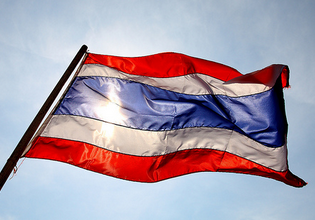
The upcoming Supreme Court verdict in the case of Somchai Neelapaijit is an important test of Thailand’s treatment of cases of enforced disappearance, the ICJ said today.
The Supreme Court is expected to rule on whether the Court of Appeal was correct in overturning the conviction of one police officer for coercion and upholding the acquittals of four other police officers, and whether Somchai Neelapaijit’s family should be permitted to participate in the proceedings as plaintiffs.
The case concerns the 2005 trial of five police officers for coercion and gang-robbery after Somchai Neelapaijit, a leading Thai lawyer and human rights defender, was last seen on 12 March 2004 being pushed into a car by several men in Bangkok.
In March 2014, the ICJ published a report in Thai and English, which summarises the history of the case and provides a background to the upcoming decision, which will be delivered in Bangkok on 29 December 2015.
“This decision is an important milestone in the long and torturous history of this case,” said Sam Zarifi, the ICJ’s Regional Director for Asia and the Pacific.
“But whatever the result, Thailand must not waver from its repeated commitments to promptly and effectively investigate this enforced disappearance, to seek to identify those responsible and bring them to justice, and to provide the family with full remedies and reparation,” he added.
The police never charged the five police officers with more serious crimes – despite the statements of numerous officials, including past Prime Minister Thaksin Shinawatra, expressing certainty about his death – as Somchai Neelapaijit’s body or remains were never found.
The Department of Special Investigations (DSI), often described as the FBI of Thailand, is still conducting an investigation into his fate or whereabouts.
Angkhana Neelapaijit, Somchai Neelapaijit’s wife and now Commissioner of the Thai Human Rights Commission, told the ICJ: “Ensuring that all victims of enforced disappearance have their rights fully recognised by the Thai courts is equally important to me as seeking justice in my own case. My long battle through Thailand’s justice system has shown me Thailand’s laws are currently inadequate to deal with cases of enforced disappearance and that significant reforms are needed before the rights of victims are fully recognized.”
Contacts
Sam Zarifi, Regional Director, Asia-Paicific Programme, sam.zarifi(a)icj.org, +66 (0) 80 781 900
Kingsley Abbott, International Legal Adviser for Southeast Asia, Asia-Pacific Programme, kingsley.abbott(a)icj.org, +66 (0) 94 470 1345
Additional information:
On 11 December 2015, the ICJ published an English version of its Practitioners Guide “Enforced Disappearance and Extrajudicial Execution: Investigation and Sanction”, originally published in Spanish in March 2015.
Thailand-Somchai Verdict-News-Press releases-2015-ENG (full text, in PDF)
Dec 18, 2015 | Events, News
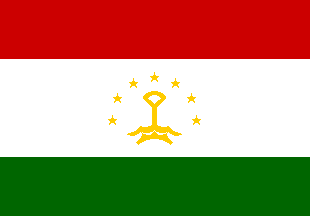
Today the ICJ held a round table “Organisation and operation of the Legal Profession: International Comparative Perspective” in Dushanbe, Tajikistan.
The ICJ invited experts to speak about comparative experiences from their countries to inform the national debate about the reform of the legal profession currently underway in Tajikistan.
Experts contributing to the discussion included: Tamara Morschakova, an ICJ Commissioner and former Justice of the Constitutional Court of the Russian Federation; Olga Swartz, a legal scholar from the Russian Federation; Daniyar Kanafin, a lawyer from Kazakhstan; Gulniza Kozhomova, President of the Bar Association of the Kyrgyz Republic; Almaz Osmanova, Member of the Board of the Bishkek Bar Association (Kyrgyz Republic); Jeroen Brower, Chair of the Ethics Commission of the Dutch Bar Association; and lawyers and other stakeholders from Tajikistan.
Participants discussed the principles and practice of the independence and self-governance of bar associations, as well as other issues of significance for the independence of lawyers, including the qualification process and disciplinary action.
Programme of the event in English and in Russian:
Tajikistan_roundtable_ agenda_Eng (PDF, English)
Tajikistan_roundtable_ agenda_Rus (PDF, Russian)

Dec 17, 2015 | News, Publications, Reports
With the signing of the political agreement on a national unity government today, the next step in Libya’s transition will be to ensure that its new Constitution fully conforms to international rule of law and human rights standards, the ICJ said today.
The statement came as the ICJ released its new report The Draft Libyan Constitution: Procedural Deficiencies, Substantive Flaws.
In the report, the ICJ calls on the Libyan Constitution Drafting Assembly (CDA) to substantially revise the Draft Constitution published in October with a view to ensuring its full compliance with Libya’s obligations under international human rights law and international standards.
Libyan authorities, including the CDA, should also put in place effective mechanisms to ensure that the drafting process is inclusive, participatory, and fully reflects the views of a broad range of stakeholders, including civil society and minority groups.
The report concludes that the Draft Constitution, in many key respects, does not conform to Libya’s obligations under international human rights law or to international rule of law standards.
“The new Constitution provides a crucial opportunity to depart from decades of authoritarianism under Moammar Ghadafi’s regime. It must therefore provide for a strong foundation upon which the rule of law, including the separation of powers, the independence of the judiciary and civilian oversight over military and armed groups, can be established and upheld,” said Said Benarbia, Director of the ICJ MENA programme.
The Draft Constitution should also be amended to provide for a comprehensive set of human rights and protections that fully accord with international human rights law, including provisions relating to non-discrimination, the right to life, the right to liberty and security, the prohibition on torture and other cruel, inhuman or degrading treatment or punishment, protections for minorities, the right to freedom of thought, conscience and religion, fair trial rights, and a range of economic, social and cultural rights.
“The Libyan Constitution must at a minimum conform to the definition and scope of the rights contained within the human rights treaties to which Libya is a state party. Any scope for limitation of rights must conform to the criteria for such limitations under international law and, in particular, only as are provided for by law, are proportionate, and are demonstrably necessary in a free and democratic society,” Benarbia added.
Contact:
Doireann Ansbro, Associate Legal Advisor of the ICJ Middle East and North Africa Programme, tel: +216 71 841 701, email: doireann.ansbro(a)icj.org
Libya-Draft Constitution Flaws Deficiencies-Publications-Reports-2015-ENG (full report in PDF, English)
Libya-Constitution Flaws Report-News-Press releases-2015-ARA (full press release in Arabic, PDF)
Libya-Draft Constitution Flaws Deficiencies-Publications-Reports-2015-ARA (full report in PDF, Arabic)

Dec 17, 2015 | News
The decision of the High Court of Singapore ordering blogger Roy Ngerng to pay damages to Prime Minister Lee Hsien Loong following a civil defamation suit brought in 2014 constitutes a major blow for freedom of expression in the country, said the ICJ today.
In a judgment released on 17 December 2015, the High Court ordered Roy Ngerng to pay SG$100,000 in general damages (approximately US$70,667) and SG$50,000 (approximately US$35,330) in aggravated damages.
This decision comes approximately six months after a three-day hearing on assessment of damages took place.
“Under international standards, individuals must not be the target of defamation actions over comments made about public figures, particularly where the subject matter is of public interest,” said Sam Zarifi, ICJ’s Regional Director for Asia and the Pacific.
“This decision sends a clear message that the people of Singapore are not in fact free to express their opinions about matters of public interest,” he added.
This suit against Roy Ngerng was brought by Prime Minister Lee who argued that Roy Ngerng, in his blog, suggested that the Prime Minister bore responsibility for criminal misappropriation of the Central Provident Fund (CPF), the social security savings plan of the citizens of Singapore.
In a summary judgment delivered in November 2014, the High Court found Roy Ngerng liable for defaming the Prime Minister. Roy Ngerng was later ordered by the court to pay Prime Minister Lee SG$29,000 (approximately US$22,300) for the legal fees and related expenses incurred pertaining the application for the summary judgment. Roy Ngerng did not appeal the High Court’s decision.
“The government’s ongoing use of defamation proceedings to silence critics is a deplorable practice that undermines the rule of law. It is very concerning to see measures imposed in the region that cast a chilling effect on freedom of expression of activists and human rights defenders,” said Zarifi.
The findings in this decision are inconsistent with international standards on freedom of opinion and expression that establish that pecuniary awards should be conferred only when non-pecuniary remedies, including apology, rectification and clarification are insufficient.
Background:
Roy Ngerng maintains a blog called The Heart Truths to discuss social issues. Many of the posts on his blog advocate for more transparency in the management of the Central Provident Fund.
On 15 May 2014, Ngerng published the allegedly defamatory post on his blog. A few days later, he was asked by the Prime Minister’s lawyers to take down the post, apologize and make a written offer of damages and costs, which Ngerng did within the following five days.
Despite these actions, the Prime Minister proceeded to sue the blogger for defamation. Prime Minister Lee later applied to the High Court to enter interlocutory judgment for damages to be assessed. The court ruled in his favor.
The hearing on the assessment of damages took place from 1-3 July 2015. At the end of the hearing, the High Court directed the parties to file written submissions to address issues that were raised during the three-day hearing.
In June 2015, the ICJ submitted a legal opinion to the High Court in support of certain aspects of the defendant’s position.
Contact:
Emerlynne Gil, ICJ’s Senior International Legal Adviser for Southeast Asia, t: +668 4092 3575 ;
e: emerlynne.gil(a)icj.org
Dec 16, 2015 | Events, News, Video clips
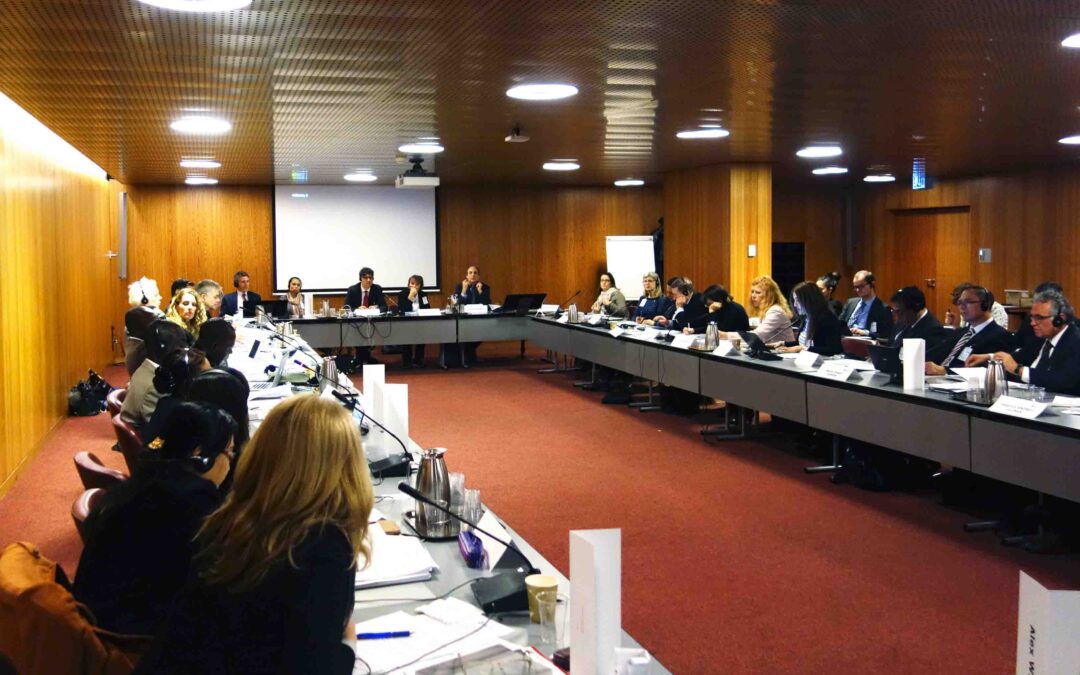
More than 40 senior judges and lawyers from all parts of the world have made an important contribution to efforts to hold judges accountable for involvement in human rights violations and judicial corruption, by participating in the sixth annual ICJ Geneva Forum of Judges & Lawyers.
The Geneva Forum is organized annually by the ICJ’s Centre for Independence of Judges & Lawyers (CIJL) and brings together judges, lawyers and prosecutors from around the world, together with UN officials and representatives from international professional associations of legal professionals, as well as academics and other experts.
This year’s Geneva Forum (14-15 December) formed part of a larger CIJL project to promote judicial accountability, through sharing of knowledge about relevant international standards and international and national good practices, between the judiciary, other legal actors, and governments and civil society around the world.
The focus of the project is on judicial involvement in human rights violations such as unjust executions, prolonged arbitrary detention including imprisonment after deliberately unfair trials, judges providing impunity to perpetrators or enforced disappearance and torture, as well as judicial corruption that leads to human rights violations.
Victims of such violations have the right to remedy and reparation, including in relation to the role of judges, and society as a whole should be able to be confident that those responsible for such judicial misconduct will be held to account.
The two days of intense and detailed discussion and debate, at times practical and at times passionate, identified wide areas of agreement amongst participants, as well as areas of divergence and questions requiring further study and deliberation. Topics covered included:
- the composition and character of accountability bodies (and particularly, the importance of judge-led processes that at the same time may benefit from involvement of representation of the legal profession, legal academia, and general public – while excluding undue influence from the Executive or Legislative branches of government);
- the practicalities of bringing criminal proceedings against judges;
- the role of national, regional and international professional associations;
- possible options in situations of transition to democracy where the judiciary on the whole may have been an instrument of repression of the prior regime, or situations of pervasive corruption, or conflict or post-conflict situations;
- particular considerations in relation to judicial accountability in developing countries;
- the powers and methods for gathering of evidence of judicial misconduct;
- the rights of individual judges and of alleged victims of judicial misconduct;
- the role of publicity and transparency in judicial accountability processes;
- the inclusion of safeguards against the abuse of judicial accountability mechanisms for ulterior motives, including political interference that undermines the independence of the judiciary;
- and practical means for ensuring that mechanisms and procedures, once established, operate effectively and fairly in practice.
The Forum follows a smaller expert consultation meeting convened in Tunisia in October focussing on judicial accountability in developing countries where, it is widely recognized, the negative impacts of corruption on human rights are deepest and most widespread. A report of the Tunis consultation is available here.
The Geneva Forum and Tunisia consultation are an opportunity for direct sharing of experience and expertise between practitioners, strengthening their capacity to carry out effective judicial accountability work in their own regional and national contexts, and to further disseminate this knowledge to others.
It is also an opportunity to discuss possible global strategies for promoting more effective and fair judicial accountability mechanisms and procedures.
The exchanges between leading judges and lawyers at the Geneva Forum and Tunis consultation will also directly feed into an ICJ Practitioners Guide on Judicial Accountability, with global legal, policy and practical guidance, to be published in June 2016. (Update 7 June 2016 – the Guide has now been published and is available here.)
The Practitioners Guide will be printed, published electronically, and distributed as a foundation for subsequent work by the ICJ and others at the national and regional level, from 2016 onwards, including in development-assistance recipient countries. It will join a series of Practitioners Guides published by the ICJ (nine to date, no. 10 and 11 to be published very soon), which have proved to be leading reference guides and training materials in the field of legal protection of human rights and the rule of law.
The developing countries consultation in Tunisia, and participation of practitioners from developing countries in the global Geneva Forum, will help to ensure that the Practitioners Guide is relevant to and has impact in ODA recipient countries.
The ultimate aim of the work of the CIJL, including the 2015 Geneva Forum on judicial accountability and the eventual Practitioners Guide, is to improve access to independent and impartial justice for victims of human rights violations, corruption and similar abuses, including when the judiciary itself has been involved in the wrongdoing.
The 2015 Geneva Forum, and the earlier Tunisia consultation, have been made possible with the support of the Republic and Canton of Geneva, as well as the Ministry of Foreign Affairs of Finland. The ICJ is also grateful for the assistance of the Geneva Welcome Centre (CAGI).
The list of participants to this year’s Geneva Forum is available here: Participants list (public)
The report of the Tunis consultation is available here: Universal-Tunis Consultation-Publications-Seminar and Conference Report-2016-ENG
Information about previous years’ events and publications is available here: Geneva Forum Homepage
A 2000 CIJL Yearbook focussing on Judicial Corruption is available here: 2000 CIJL Yearbook Judicial Corruption
Voices from the Geneva Forum:
Dec 16, 2015 | Advocacy, Events
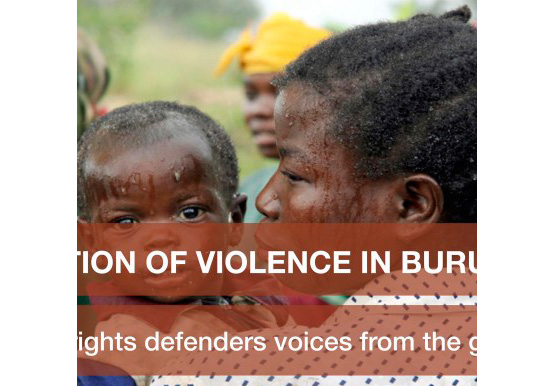
The ICJ joins other non-governmental organisations in co-sponsoring “Escalation of Violence in Burundi: Human rights defenders voices from the ground”, a side event to the Human Rights Council’s special session on Burundi, 17 December 2015.
The event will take place Thursday 17 December – 9.00-10.00 am in Room XII, Palais des Nations, Geneva
Panelists:
Mr Pierre Claver Mbonimpa, Association for the Protection of Human Rights and Incarcerated Persons (APRODH)
Ms Margaret Barankitse, Maison Shalom
Mr Anschaire Nikoyagize, Ligue ITEKA
Ms Carina Tertsakian, Human Rights Watch
The event will be moderated by Nicolas Agostini of FIDH.
The event will be webcast live by the International Service for Human Rights (ISHR).
Follow on twitter using the hash-tag #BurundiHRDs
A flyer for the event is available here: Burundi-UNHRC-Advocacy-SideEvent-2015