Oct 7, 2014 | Multimedia items, News, Video clips
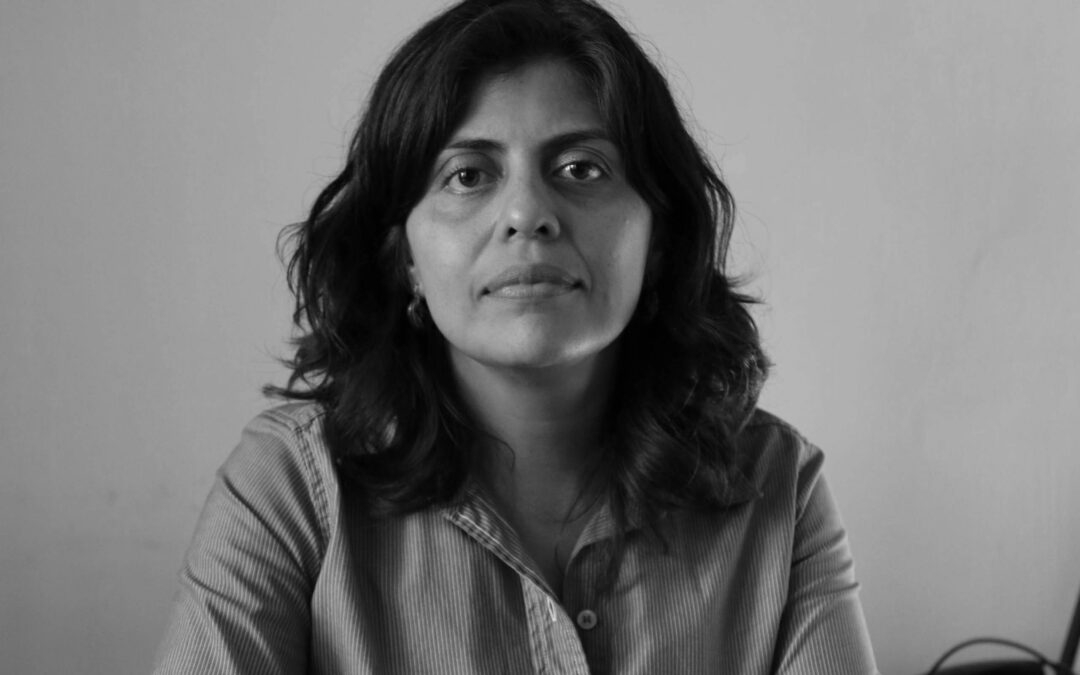
Alejandra Ancheita, founder and Executive Director of ProDESC, is one of the pioneers in seeking accountability for transnational companies in Mexican courts when local communities’ rights are not taken into account.
Alejandra Ancheita has worked with migrants, workers, and indigenous communities for over 15 years to protect their land and labour rights vis a vis transnational mining and energy companies.
These disputes have included violent attacks on those she is trying to protect.
In Mexico, there is a clear pattern of attacks, threats, criminalization, and murders of human rights defenders.
Alejandra Ancheita and ProDESC have been subjected to surveillance, a defamation campaign in the national media, and a break in at their offices.
“This recognition calls attention to the increasing violence being suffered by human rights defenders in Mexico, particularly women defenders,” she said. “I hope that it will provide better conditions and increased security not just for me, but for all human rights defenders in my country.”
“The ICJ is extremely pleased by the decision to pay tribute to the work of Alejandra Ancheita, not only because of her outstanding commitment and courage as an individual, but also because of the recognition that this award will provide to the area of human rights work that she has been dedicating herself to for many years,” said Olivier van Bogaert, ICJ Director of Media and Communications, and ICJ Representative on the MEA Jury.
The ICJ which also developed a longstanding work on economic, social and cultural rights, and on business and human rights, will devote the 2014 edition of its Geneva Forum for judges and lawyers to the role of courts in protecting economic, social and cultural rights.
The two other finalists, Cao Shunli (China) and Adilur Rahman Khan (Bangladesh), received Martin Ennals Prizes.
Cao Shunli, who died in in detention in March 14th after being denied medical attention for known health conditions had vigorously advocated for access to information, freedom of speech, and freedom of assembly.
She disappeared in September 2013 shortly before boarding a flight order to participate in the Human Rights Council.
Chinese authorities only acknowledged her detention months later.
A special foundation is planned in her honor.
Since the 1990’s, Adilur Rahman Khan worked on a wide range of human rights issues, such as illegal detention, enforced disappearances, and extra-judicial killings.
Personally he is facing criminal prosecution for documenting the extrajudicial deaths of 61 people during demonstrations against the government.
His organization, Odhikar, is one of the few independent voices left in Bangladesh.
It is facing closure as donor funds destined for Odhikar are being blocked by the Prime Minister’s Office.
The “Nobel Prize of Human Rights”, the Martin Ennals Award for Human Rights Defenders (MEA) is a unique collaboration among ten of the world’s leading human rights organizations to give protection to human rights defenders worldwide.
Strongly supported by the City of Geneva, the award is given to Human Rights Defenders who have shown deep commitment and face great personal risk. Its aim is to provide protection through international recognition.
The Jury is composed of the following NGOs: ICJ, Amnesty International, Human Rights Watch, Human Rights First, Int’l Federation for Human Rights, World Organisation Against Torture, Front Line Defenders, EWDE Germany, International Service for Human Rights, and HURIDOCS.
Contact:
Michael Khambatta, Director Martin Ennals Foundation, t: +41 79 474 8208, e: khambatta(a)martinennalsaward.org
Olivier van Bogaert, ICJ Director of Media and Communications, and ICJ Representative on the MEA Jury, t: +41 22 979 38 08, e: olivier.vanbogaert(a)icj.org
Multimedia gallery:
Livestreaming of the Martin Annals Award 2014 Ceremony
Alejandra Acheita film:
Cao Shunli film:
Adilur Rahman Kahn film:

Oct 7, 2014 | News
It was with great sadness that the ICJ learned of the passing of Dr. Rudolf Machacek who died yesterday, 6 October 2014, at the age of 87.
Dr. Machacek was an Honorary Member of the ICJ having previously served as an ICJ Commissioner from 1976-1991 and on the ICJ’s Executive Committee from 1985-1991.
He was a distinguished figure in constitutional justice and human rights. During his career he held positions in the Austrian Constitutional Court, on the Council of Europe’s Committee for the Prevention of Torture and as an Adjunct Professor of Constitutional Jurisdiction and Fundamental Rights at the Johannes Kepler Universitat in Linz, Austria.
Our thoughts and condolences are with his family.