Bangladesh: Abdul Quader Mollah death sentence violates international law

Bangladesh: Abdul Quader Mollah death sentence violates international law

The ICJ said that the death sentence handed down today by Bangladesh’s Supreme Court against Abdul Quader Mollah is incompatible with international principles of fair trial.

If carried out, the sentence would violate his right to life and freedom from cruel, inhuman, or degrading punishment.

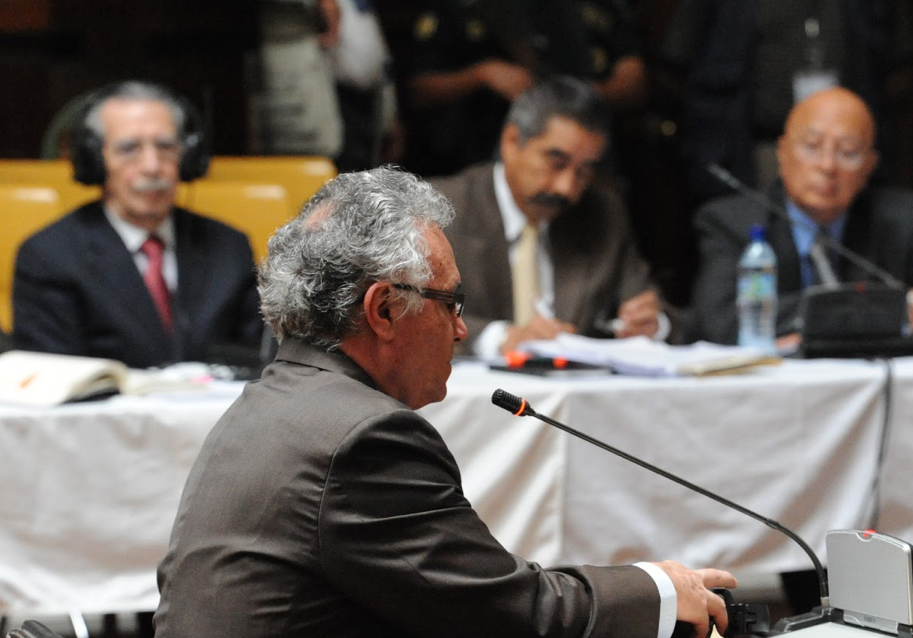
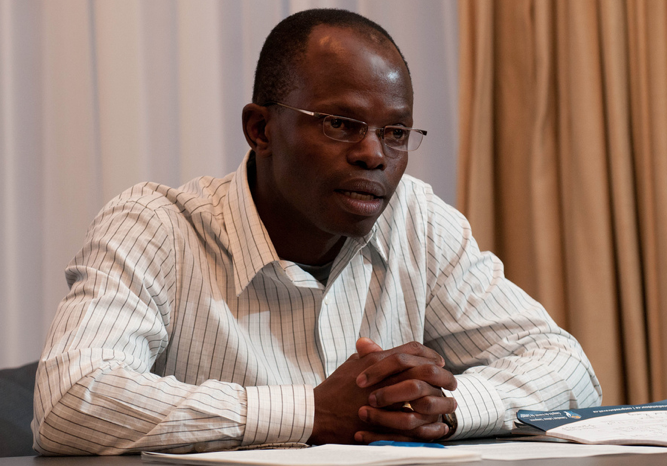
On 17 September 2013, the Appellate Division of the Supreme Court of Bangladesh upheld the prosecution’s appeal to impose the death sentence on Abdul Quader Mollah (photo), the assistant Secretary-General of Jamaat-I-Islami.

Abdul Quader Mollah had received a life sentence on February 5, when the International Crimes Tribunal (ICT) convicted him on five counts, including murder and rape.

“The prosecution’s appeal to impose the death sentence on Abdul Quader Mollah was based on a law that was not in force when he was first convicted, and applying that law retroactively, especially for the death penalty, violates international law,” said Sam Zarifi, ICJ’s Asia-Pacific Director.

On 17 February 2013, Parliament passed an amendment to the International Criminal (Tribunals) Act 1973 to enable prosecutors to appeal a life sentence and seek the death penalty.

Before this amendment, the prosecution was only allowed to appeal if the accused was acquitted.

The ICJ says the retrospective application of the amendment in Abdul Quader Mollah’s case is incompatible with Bangladesh’s obligations under the International Covenant on Civil and Political Rights (ICCPR), including Article 15, which prohibits the imposition of a heavier penalty than provided for at the time the criminal offence was committed.

“Judgments such as these highlight the serious problems with the war crimes tribunal that undermine its legitimacy,” Zarifi further said. “The wounds of war can only be healed through a fair and transparent trial process that meets international standards of fair trial and due process of law.”

“It is essential that those responsible for committing atrocities during the Bangladeshi war of liberation are prosecuted and brought to justice,” Zarifi added. “But the death penalty perpetuates the cycle of violence and is a perversion of justice, and all the more so when it is imposed in violation of due process.”

The ICJ considers the death penalty in all cases to constitute a violation of the right to life and the right not to be subjected to cruel, inhuman or degrading punishment.

The ICJ calls on Bangladesh to join the great majority of States around the world in rejecting the use of the death penalty.

To that end, Bangladesh should impose a moratorium on the practice and take steps towards its abolition, as prescribed by repeated United Nations General Assembly Resolutions.

Contacts:

Sam Zarifi, ICJ Asia-Pacific Regional Director, (Bangkok), t:+66 807819002; email: sam.zarifi(at)icj.org

Sheila Varadan, ICJ Legal Advisor, South Asia Programme (Bangkok), t: +66 857200723; email: sheila.varadan(a)icj.org


Kyrgyz Republic: ICJ welcomes judicial decision to drop disciplinary charges against lawyers

Kyrgyz Republic: ICJ welcomes judicial decision to drop disciplinary charges against lawyers

The ICJ welcomes the decision of the Osh Regional Court to overturn an intermediate ruling to initiate disciplinary proceedings against two lawyers representing the interests of a victim of sexual assault.

The ICJ sent a mission to observe today’s hearing. The mission raised no issues of concern regarding the conduct of the proceedings observed.

On 3 July 2013, the Osh City Court issued an intermediate ruling to initiate disciplinary proceedings against two lawyers, Valerian Vakhitov, Khusanbai Saliyev, for taking procedural steps provided for under Kyrgyzstan law, including filing motions to the upper judicial instances or filing motions to recuse the judge during and not before the trial.

Today, the Osh Regional Court upheld lawyers’ appeal and overturned the decision to initiate disciplinary proceedings against the lawyers.

The case concerns charges against a teacher in a religious institution for sexual acts with one of his students, a nine-year-old boy.

The representatives of the defendant alleged that he is not criminally responsible by reason of insanity – a proposition contested by the lawyers of the victim. The main trial is ongoing.

The trial was observed by an ICJ trial observation mission: Oleg Levytskyy (Ukraine) and Almaza Osmanova (Kyrgyz Republic).

The observers met with the court, the prosecutor, representatives of the victims and the defendant.

“We welcome the decision to overturn the ruling to initiate disciplinary proceedings against these lawyers,” said Róisín Pillay, Director of the ICJ Europe Regional Programme. “In accordance with international standards, it is the lawyers’ duty to assist their clients in every appropriate way and take legal action to protect their interests. Therefore punishing lawyers for their diligent work would run contrary to the obligation of the state to guarantee that lawyers can carry out their functions without intimidation, hindrance, harassment or improper interference.”

Contacts

Róisín Pillay, Director, ICJ Europe Programme, roisin.pillay(a)icj.org

Temur Shakirov, Legal Adviser, ICJ Europe Programme, temur.shakirov(a)icj.org

Kyrgyzstan-Osh_Lawyers_Trial Observation-news-web story-2013-rus (full text in pdf)


India: executing perpetrators of Delhi Gang Rape Case ‘counterproductive to preventing sexual violence’

India: executing perpetrators of Delhi Gang Rape Case ‘counterproductive to preventing sexual violence’

The ICJ denounced the death sentences handed down in the Delhi gang rape and murder case and urged the Indian Government to take steps to abolish the death penalty in law and practice.

A special fast-track court today sentenced to death four men convicted for the gang rape and murder of a 23-year-old student on 16 December 2012.

The fifth accused, who was a minor at the time he committed the crime, was convicted and sentenced to three years in a reform home by a juvenile court on 31 August 2013.

“Women’s rights groups in India have taken a firm stance against the death penalty and strongly believe that the death penalty is counterproductive in every way to preventing and curtailing sexual violence against women,” said Vrinda Grover, leading human rights lawyer and ICJ’s South Asia advocate.

The ICJ considers the death penalty to constitute a violation of the right to life and the right not to be subjected to cruel, inhuman or degrading punishment.

“Those who commit acts of violence against women must be prosecuted and brought to justice,” said Sheila Varadan, ICJ’s South Asia Legal Advisor. “But the sentence and the administration of the death penalty constitutes a perversion of justice.”

“Instead of giving in to the vengeful demand for killing the perpetrators of this horrific crime, the Indian Government must take concrete steps to prevent, investigate and punish acts of violence against women,” Varadan added.

A high level commission constituted to reform Indian law on violence against women, led by the late Chief Justice of the Indian Supreme Court Justice J.S. Verma, recommended that the death penalty should not be used in rape cases.

“In demanding and securing the death penalty, Indian authorities have created a spectacle that distracts from their responsibility for systemic change in the legal system which alone will create deterrence in law,” said Vrinda Grover.

The ICJ calls on India to join the great majority of States around the world in rejecting the use of the death penalty.

To that end, India should impose a moratorium on the practice and take steps towards its abolition, as prescribed by repeated United Nations General Assembly Resolutions, the ICJ says.

Contacts:

Sheila Varadan (Bangkok), ICJ South Asia Legal Advisor, t: +66 857 200 723 (mobile); email: sheila.varadan(a)icj.org

Ben Schonveld (Kathmandu), ICJ South Asia Director, t: +977 980 459 6661  (mobile); email: ben.schonveld(a)icj.org

Additional Information

The United Nations has adopted various instruments in support of the call for the worldwide abolition of the death penalty. In 2007, the UN General Assembly adopted a resolution emphasizing that ‘that the use of the death penalty undermines human dignity’ and calling for the establishment of a moratorium on the use of the death penalty ‘with a view to abolishing the death penalty.’ The resolution was reaffirmed in 2008, 2010, and most recently in December 2012, when a large majority of UN Member States voted in favor of a worldwide moratorium on executions as a step towards the death penalty’s abolition.

Currently, 150 countries worldwide, including 30 states in Asia and the Pacific region, have abolished the death penalty in law or in practice.

Rape and other forms of sexual violence against women are pervasive in India. According to the National Crime Records Bureau, 24,923 rape cases were registered in India in 2012. Experts believe that the actual number is much higher, as rape is vastly under-reported. In most cases, however, victims and survivors get no justice from a criminal justice system that has been widely characterized as gender-insensitive, under-resourced and corrupt.

Photo: PTI


Malaysia: ICJ sends eminent jurist to observe hearing of appeal against Anwar Ibrahim’s acquittal for sodomy

Malaysia: ICJ sends eminent jurist to observe hearing of appeal against Anwar Ibrahim’s acquittal for sodomy

Justice Elizabeth Evatt AC (photo), will be observing the hearing of the appeal of Anwar Ibrahim’s case from 17 to 18 September 2013 at the Court of Appeal in Putrajaya.

Justice Evatt is the first female judge to be appointed to an Australian Federal Court, a former member of the United Nations Human Rights Committee, and a commissioner of the ICJ.

Anwar Ibrahim is a Malaysian politician and is currently the leader of the opposition party, Parti Keadilan Rakyat, and the opposition alliance known as Pakatan Rakyat.

The appeal hearing that Justice Elizabeth Evatt will be observing emerged from the 2008 charges filed against Anwar Ibrahim immediately after the general elections held that year.

He was charged for allegedly committing sodomy, which is a crime under Section 377B of the Penal Code and carries the penalty of up to 20 years of imprisonment and whipping.

The High Court acquitted Anwar Ibrahim on 9 January 2012.

This is the second time that Anwar Ibrahim is facing sodomy charges after his dismissal from the Malaysian Cabinet in 1998.

In 2004, The ICJ also sent a representative to observe the sodomy trial of Anwar Ibrahim, where the Federal Court overturned the High Court decision to convict him.

The ICJ called the Federal Court’s ruling “a step in the right direction in upholding the rule of law”.

Justice Evatt’s mandate as ICJ’s high-level observer to the appeal hearing includes monitoring the fairness of the proceedings against Anwar Ibrahim in the light of relevant international standards.

These standards include, among others the UN Basic Principles on the Independence of Judges, which set out standards on the independence and impartiality of judges, and the UN Guidelines on the Role of Prosecutors, which set out standards on the independence of prosecutors.

Justice Evatt will also be evaluating whether the prosecution under Section 377B of the Malaysian Penal Code is being used in this case to suppress political dissent, contrary to the right to freedom of expression.

“The right to observe trials stems from the general right to promote and secure the protection and realization of human rights. Trial observation is a key tool in monitoring the respect for human rights and the rule of law. It is an effective method to examine the level of independence and impartiality of a country’s criminal justice system,” said Emerlynne Gil, ICJ’s International Legal Adviser on Southeast Asia. “Trial monitoring also serves to promote better compliance with both domestic law and international standards that aim to ensure protection of human rights, including the rights to fair trial and due process.”

Contact:

Emerlynne Gil, International Legal Adviser for the ICJ Asia & Pacific Programme, t +662 6198477 ext. 206; email: emerlynne.gil(a)icj.org

Side event: promoting accountability through human rights mechanisms in Geneva

Side event: promoting accountability through human rights mechanisms in Geneva

Yesterday, during the 24th session of the UN Human Rights Council, the ICJ and TRIAL (Swiss Association against Impunity) jointly held a parallel event on promoting accountability through human rights mechanisms in Geneva.

The event was co-sponsored by the Permanent Missions of Switzerland, Estonia and Costa Rica to the United Nations Office at Geneva.

A corresponding report produced by ICJ and TRIAL was also launched at this event in two versions, one aimed at civil society and another aimed at States.

Panellists at this event included Ian Seiderman of the ICJ, Gabriella Citroni of TRIAL and Theo van Boven, former Special Rapporteur on torture and other cruel, inhuman or degrading treatment or punishment and ICJ Honorary Commissioner.

Mona Rishmawi of the Office of the High Commissioner for Human Rights (OHCHR) chaired the event.

The main topic of this event was the ICJ-TRIAL report, which reviews the legal framework for promoting accountability and suggests possible action by civil society and States to engage with the human rights mechanisms in Geneva to better promote and achieve accountability for human rights violations.

The role of national mechanisms, such as national human rights institutions, working in cooperation with the UN mechanisms was also highlighted.

The report focuses specifically on the Human Rights Council and its subsidiary bodies, such as the Universal Periodic Review and the special procedures mechanisms.

OHCHR’s role was further emphasised in regards to sharing best practices as well as ensuring follow-up to issues of accountability as they come to the attention to the UN.


Translate »