Mar 18, 2014 | News
The arbitrary arrest and detention of prominent human rights defenders is an attempt to silence criticism and divert the spotlight from ongoing abuses, leading global and Asian human rights monitors said today in a joint statement.
The statement was issued by Amnesty International, Forum Asia, Human Rights Watch, the International Crisis Group, and the International Commission of Jurists.
Ruki Fernando of the Colombo-based INFORM and Father Praveen Mahesan, a Catholic priest, were arrested in Kilinochchi on March 16, and are believed to be detained without formal charges under Sri Lanka’s notoriously draconian Prevention of Terrorism Act (PTA).
“The Sri Lankan authorities need to release Fernando and Father Praveen, and end the ongoing state harassment of human rights defenders,” said David Griffiths, Amnesty International’s deputy director for Asia Pacific. “How can the international community take Sri Lanka’s claims to respect rights seriously when rights defenders continue to face intimidation and criminal charges for demanding accountability and human rights protection?”
The police Terrorism Investigation Division (TID) detained and questioned Ruki Fernando and Father Praveen after they sought to ensure the welfare of 13-year-old Balendran Vithushaini, who had been ordered into probationary care following the arrest of her mother, Balendran Jeyakumari, on March 13. Both mother and daughter are active opponents of enforced disappearances in Sri Lanka and have been prominently featured in international media coverage of demonstrations by families of the disappeared, most recently in Jaffna in November 2013 during a visit by British Prime Minister David Cameron.
Fernando and Father Praveen were questioned separately in two different buildings for more than three hours by several TID officers. Lawyers acting on their behalf were given contradictory information about the arrests and the reasons for their detention. The most recent information is that Fernando and Father Praveen have been taken to police Terrorism Investigation Division headquarters in Colombo, and their lawyers are still seeking access to them.
Fernando and Father Praveen have not been charged to date, but according to Sri Lankan Police spokesperson Senior Superintendent Ajith Rohana, they will be charged with “attempting to create instability among communities” and “allegedly promoting separatism” under the Prevention of Terrorism Act.
The PTA has been widely criticized by Sri Lankan civil society, international monitoring organizations, and United Nations bodies. In its report, Authority without Accountability: The Crisis of Impunity in Sri Lanka, the International Commission of Jurists documents how provisions of the PTA have resulted in arbitrary detention, contravened suspects’ right to a fair trial and due process, and facilitated torture and other ill-treatment and enforced disappearances
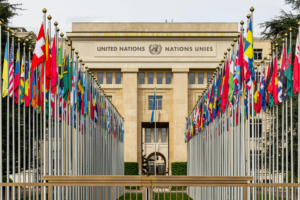
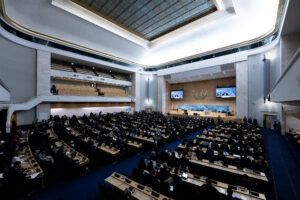
The human rights groups said that the arrests are particularly disturbing since a resolution on Sri Lanka’s failure to address accountability is under discussion and will be voted on soon at the ongoing Human Rights Council (UNHRC) sessions in Geneva. The international community has long called for Sri Lanka to take meaningful steps to end its culture of impunity.
“This ongoing campaign of reprisals against those speaking out against human rights violations shows the extent of the government’s impunity,” said Sam Zarifi, Asia director at the International Commission of Jurists. “The international community, through its voting at the Human Rights Council, must judge Sri Lanka not by its promises, but by its actions.”
In spite of two prior resolutions by the UNHRC in 2012 and 2013, Sri Lanka has taken no measurable steps towards ensuring justice for the victims of its civil war, and has instead launched an aggressive campaign against those who advocate for accountability. Human rights defenders, activists, journalists, and civil society members who are critical of the government have regularly been threatened and harassed. Those who have an international profile, such as Fernando, face particular government hostility.
“Sri Lankan authorities systematically clamp down on those who seek to reach out to the international community, especially around significant events such as the Human Rights Council sessions or the Commonwealth Heads of Government Meeting,” said Evelyn Balais-Serrano, the executive director of Forum-Asia. “Instead of protecting human rights defenders, the latest arrests show the Sri Lankan government is stepping up its aggressive stance towards those seeking justice and answers.”
The arrests also call into question the Sri Lankan government’s stated commitment to improving respect for human rights since the end of the armed conflict with the Liberation Tigers of Tamil Eelam in 2009, the groups said.
“Arresting peaceful activists known for their work with victims of rights violations from all ethnic communities is not a way to build trust and restore relationships damaged by the war,” said Jonathan Prentice, the International Crisis Group’s chief policy officer. “If sustainable peace is to be more than an illusion, the rights of Sri Lanka’s victims and human rights defenders to speak freely and safely must be protected.”
The organizations stressed that Fernando and Father Praveen should be given full rights while they remain in detention. Under international law, including the International Covenant on Civil and Political Rights, to which Sri Lanka is a state party, people deprived of their liberty must be promptly informed of the reasons for their detention, be given prompt and regular access to lawyers, and be promptly brought before a judge or judicial officer.
“Human Rights Council members should demand the immediate release of Fernando and Father Praveen and be clear that this will not deter them from adopting a necessary resolution on Sri Lanka,” said Brad Adams, Asia director at Human Rights Watch. “The arrest of these human rights defenders shows just how important it is for the international community to stand up for human rights in Sri Lanka.”
Signed by:
- Amnesty International
- FORUM-ASIA
- International Commission of Jurists
- International Crisis Group
- Human Rights Watch
For more information, please contact:
In London, for Amnesty International
In Bangkok, for International Commission of Jurists, Sam Zarifi: +66-857-200-723; orsam.zarifi@icj.org
In Bangkok, for International Commission of Jurists, Sheila Varadan: +66-857-200-723; or sheila.varadan@icj.org
Mar 12, 2014 | News
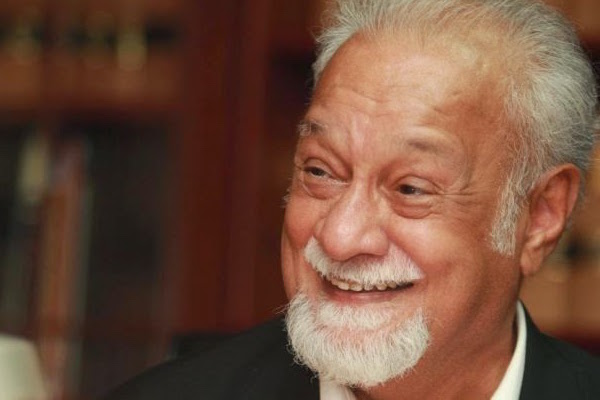
The ICJ condemned the High Court decision sentencing prominent Malaysian lawyer and chairman of the opposition Democratic Action Party Karpal Singh with a criminal sanction. He was found guilty of sedition on 21 February 2014.
The sanction amounts to RM 4,000 fine (approximately US$1,220).
The High Court’s decision was based on a statement made by Karpal Singh at a press conference on 6 February 2009 that Sultan Azlan Shah’s decision to remove the Perak’s state Chief Minister from office in 2009 could be challenged in a court of law.
“The Malaysian government is brazenly utilizing a draconian and outdated sedition law to restrict freedom of expression in the country by lawyers and public figures,” said Emerlynne Gil, ICJ’s International Legal Adviser on Southeast Asia.
The Malaysian government on 21 July 2012 announced that it planned to repeal the colonial-era 1948 Sedition Act, but has been slow to act on its announcement.
“Public discussion, including debates on the interpretation of laws, are an integral part of the nature of the legal process and a crucial step in the strengthening of a country’s democracy and rule of law,” said Gil. “A lawyer’s right to freely and independently engage and express their views on the law fulfills an important aspect of their professional role.”
In June 2010, the High Court initially ruled that the prosecution had failed to prove a prima facie case and acquitted Karpal Singh. The prosecution, however, later appealed, and the Court of Appeal reversed the High Court’s decision and ordered a retrial.
Pursuant to article 48(e) of the Federal Constitution, Karpal Singh now risks losing his Parliamentary seat unless the High Court’s decision is overturned during appeal.
Karpal Singh was the lead counsel for opposition leader Anwar Ibrahim during his Sodomy II appeal from 6 – 7 March 2014, which saw the Court of Appeal overturn his acquittal and sentenced him to five years in prison.
Karpal Singh is expected to appeal both the conviction and the sentence to the Court of Appeal.
Contact:
Emerlynne Gil, ICJ International Legal Adviser for Southeast Asia, t +66 2 619 8477; email: emerlynne.gil(a)icj.org
Craig Knowles, ICJ Media Consultant, t +66 81 9077653; email:craig.knowles(a)icj.org
Mar 10, 2014 | Agendas, Events
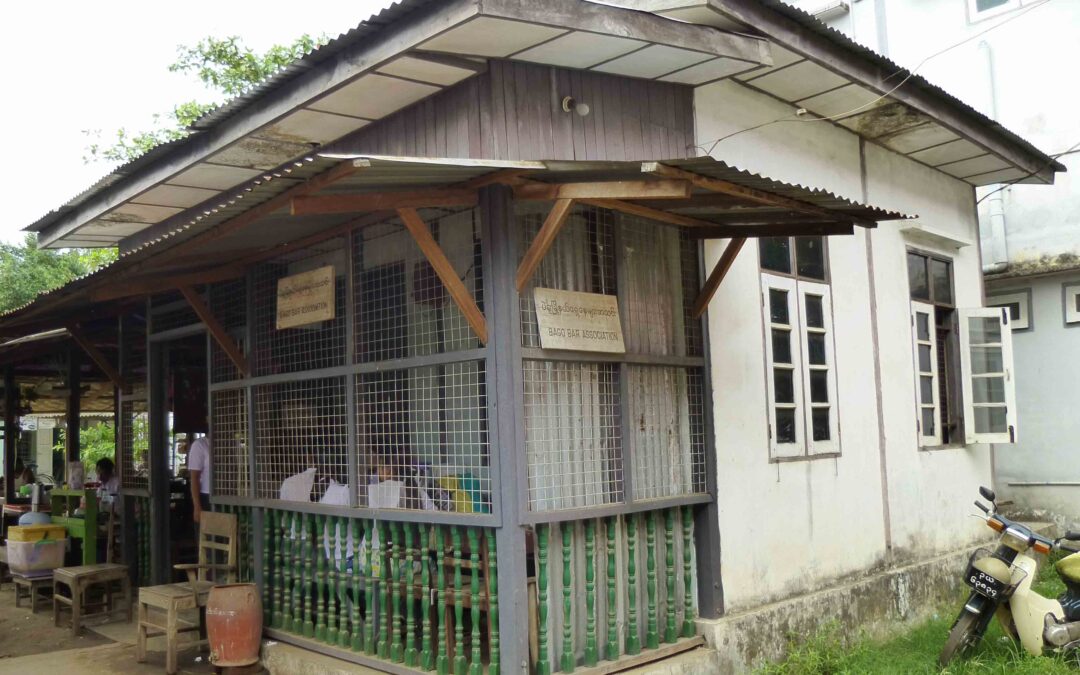
This side event to the 25th Human Rights Council session will take place on Wednesday, 12 March 2014, 16.00 – 18.00 pm, in Geneva, Palais des Nations, Room XXII.
The members of this panel are in a unique position to highlight on-going challenges to the rule of law in Myanmar and their impact on the enjoyment of human rights.
They will provide personal insight into the important international presence for human rights monitoring, practical challenges facing lawyers concerning the rule of law, and link these issues to sustainable economic development on the ground in Myanmar today.
This panel argues that it is crucial to maintain a robust engagement with the UN human rights mechanisms in order to support and facilitate the reform process in Myanmar and improve the country’s human rights situation.
Speakers:
Tomás Ojea Quintana, UN Special Rapporteur on the situation of human rights in Myanmar
Kyaw Min San, Myanmar lawyer, Pyoe Pin and Justice For All
Daniel Aguirre, International Commission of Jurists, Myanmar
Chair/moderator:
Carlos Lopez, International Commission of Jurists
The presentations by panellists will be followed by an open interaction with the audience. Copies of the recent ICJ report Right to Counsel: The Independence of Lawyers in Myanmar will be available.
Myanmar – HRC25 Side event – March 2014
Mar 8, 2014 | News
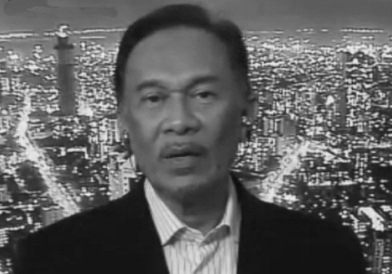
The ICJ today condemned as a miscarriage of justice, Malaysian opposition leader Anwar Ibrahim’s conviction on sodomy charges.
The ICJ said the overturning of his 2012 High Court acquittal — following an appeal by the Malaysian government — by a Court of Appeal panel contravenes international human rights standards and the rule law.
“The ICJ condemns the use of the colonial-era Article 377B of the Malaysian Penal Code, which prohibits consensual same-sex sexual conduct, in conflict with international standards regarding respect for the right to privacy,” said Sam Zarifi, ICJ’s Regional Director for Asia and the Pacific.
“This article is seldom used in Malaysia, but this is the second time it has been used to convict Anwar, and both times its use seemed clearly motivated to hobble his ability to challenge the government as a politician.”
The sodomy charges against Anwar, which date back to 2008, were dismissed by the High Court on 9 January 2012, but the Court of Appeal today overturned that acquittal and instead sentenced Anwar to five years’ imprisonment. The Court of Appeal ruling took less than two hours.
The ICJ has been observing the proceedings in what has been called Anwar’s ‘Sodomy 2’ trial. ICJ Commissioner Justice Elizabeth Evatt AC, from the Australian High Court and a former member of the United Nations Human Rights Committee, was at the Court of Appeal today on behalf of the ICJ.
“This decision certainly casts doubts on the independence and impartiality of the Malaysian judiciary and tarnishes the reputation of the country’s legal system,” said Zarifi.
The judgement means Anwar will not be able to run for election in a local state seat later this month.
After sentencing, Anwar’s lawyers were successful in arguing for a stay in execution and bail, pending appeal.
CONTACT
Sam Zarifi, ICJ Asia-Pacific Regional Director, (Bangkok), t:+66 807819002, e-mail: sam.zarifi(a)icj.org
Craig Knowles, ICJ Media & Communications, (Bangkok), t:+66 819077653, e-mail: craig.knowles(a)icj.org

Mar 7, 2014 | News
The ICJ expressed concern at the arrest and detention, on 28 February, of lawyer Taisiya Baskayeva, who represents a significant number of victims of human rights violations before the European Court of Human Rights.
Taisiya Baskayeava was arrested on charges of large-scale fraud under article 159.3 of the Russian Criminal Code, based on allegations by investigators that she misappropriated reparations awarded to victims she represented in the case of Salkazanov and others v. Russia before the European Court.
The arrest followed repeated attempts by the investigator to place her in detention in connection with the case.
A previous request to the Court by the investigator for her arrest, on 14 February, had been based partly on the allegation that she was in hiding in the United Arab Emirates and the fact that she had been “put on an international missing list.”
However the Court on that occasion denied the request, saying that it “received no reliable information that Baskayeva T.S. had left the territory of Russia” and that she had sent an urgent telegram from the Moscow region to prove her presence in the territory of Russia.
Taisiya Baskayeva was detained in Moscow region while undergoing a medical check and driven some 1200 km in a car to North Osetia.
At a hearing on 4 March 2014 the Soviet District Court of Vladikavkaz decided to grant the motion to detain the lawyer for two months pending trial. The Court ruled out other less restrictive measures.
The ICJ has received information indicating that the investigation presented no evidence that Taisiya Baskayeva had left Russia, except for an allegation made by the investigator in the motion for her arrest.
The ICJ is unaware of the reasons for declaring the lawyer missing, since her whereabouts were clearly known.
Moreover, the fact that she was detained while undergoing a medical check, of which the investigative authorities were duly informed by the Central City Hospital, contradicts her inclusion on a “international missing list”.
According to the official letter of the Deputy Head Physician at the disposal of the ICJ, the schedule of her visits was also made known to the investigative authorities.
The ICJ is concerned at that the detention may be arbitrary, and may have been ordered for the improper motive of subjecting Taisiya Baskayeva to persecution, harassment or intimidation in regard to her representation of her clients before the European Court of Human Rights.
If so, the Russian Federation would be in breach of obligations in respect of the right to liberty under article 9 of the International Covenant on Civil and Political Rights and article 5 of the European Convention on Human Rights.
The ICJ recalls that for lawyers to be able to fulfill their role and duties effectively, and independently, the State authorities must ensure that they are able to discharge their functions without any intimidation, harassment or improper interference.
According to the UN Basic Principles on the Role of Lawyers, lawyers must not be threatened with prosecution or any other form of sanctions for any action taken in accordance with professional duties or standards and ethics (Principle 16).
Under these principles when lawyers are threatened as a result of discharging their functions, the state authorities must take adequate steps to protect them (Principle 17).
The ICJ is concerned that the detention may constitute a form of a reprisal for an effective representation of the interests of a significant group of victims before the European Court of Human Rights.
Any such reprisal would be incompatible with Russia’s obligations under article 34 of the European Convention for Human Rights guaranteeing an effective exercise of the right to bring lodge applications claiming violations under the ECHR.
Approximately 200 other cases submitted by Ms. Baskayeva are currently pending before the European Court of Human Rights.
The ICJ will continue to monitor the criminal prosecution of lawyer Taisiya Baskayeva.
Contacts:
Róisin Pillay, Director, Europe Programme, t + 32 273 48 46, roisin.pillay(a)icj.org
Temur Shakirov, Legal Adviser, Europe Programme, t + 41 22 979 38 32, temur.shakirov(a)icj.org
Russia-Concerns over Baskayeva-news-web story-2014-rus (full text in pdf)

Mar 7, 2014 | News
The ICJ expressed concern at today’s arrest of Fakhriddin Zokirov, a prominent defence lawyer who had represented the former Minister of Industry, Zaid Sayidov.
The former Minister was recently convicted for a number of crimes including polygamy, receiving a bribe, rape, fraud, illegal confinement and sentenced to 26 years of imprisonment.
The ICJ is concerned at reports that the arrest of the lawyer may be related to his active and robust defence of the former Minister in court.
Lawyer Zokirov was arrested by the State Finance Control and Anti-Corruption Agency on charges of fraud in banking transactions, which allegedly took place several years ago.
Two other lawyers who defended the former Minister, Shukhrat Kudratov and Iskhok Tabarov, announced at a press conference that they had recently faced various threats and intimidation in connection with the case.
The lawyers reported that the pressure on them had significantly increased in relation to a lawsuit which they brought against the head of the State Finance Control and Anti-Corruption Agency, Fattokh Sayidov.
They alleged that the head of the Agency threatened that if they did not drop the case, they would “share the dock” with their client, the former Minister.
“Abusive prosecutions of lawyers and threats against them in connection with their work are contrary to international standards on the independence of lawyers and undermine the integrity of the justice system”, Róisín Pillay, Director of the Europe Programme, said today. “In the exercise of their profession, lawyers must remain free from intimidation, harassment, fear and arbitrary prosecution and arrest. The ICJ calls on the authorities of Tajikistan to ensure that lawyers’ integrity is protected, and that the criminal justice system is not misused to intimidate them.”
Under the UN Basic Principles on the Role of Lawyers, lawyers must not be identified with their clients’ causes, and must be protected against attacks and intimidation, including prosecutions or administrative or other sanctions for action taken in accordance with their recognized professional duties.
Contacts:
Róisin Pillay, Director, Europe Programme, t + 32 273 48 46, roisin.pillay(a)icj.org
Temur Shakirov, Legal Adviser, Europe Programme, t + 41 22 979 38 32, temur.shakirov(a)icj.org
Tajikistan-arrest of lawyer-news-web story-2014-rus (full text in pdf)