Nov 26, 2013 | News
The ICJ is calling on the Malaysian Government to immediately drop the criminal charge against human rights defender Lena Hendry for screening the film ‘No Fire Zone: the Killing Fields of Sri Lanka.’
The case has been fixed for case management and the defence lawyers filed an application to set aside, permanently stay or quash the charges against Lena Hendry.
“Subjecting Lena Hendry to criminal prosecution simply for screening a documentary violates her rights and contravenes Malaysia’s obligations to uphold freedom of expression,” said Sam Zarifi, ICJ’s Asia-Pacific Regional Director.
On 3 July 2013, Pusat Komas, a Malaysian human rights advocacy organization where Lena Hendry works, and Kuala Lumpur and Selangor Chinese Assembly Hall Civil Right Committee (KLSCAH CRC) screened the film “No Fire Zone”, a documentary on the war crimes and human rights abuses allegedly committed at the end of the Sri Lankan civil war in 2009.
Immediately following the screening, 30 officers from the Malaysian Ministry of Home Affairs and the police entered the hall and recorded the identity of all persons who attended the event.
The authorities then arrested Lena Hendry and two colleagues, Anna Har and Arul Prakash, and interrogated them for three hours at Dang Wangi police station.
On 19 September 2013, Lena Hendry was charged under section 6(1)(b) of the Film Censorship Act 2002 for showing a film that had not been approved by the Board of Censors.
If found guilty, she could be fined up to RM30,000 (approximately USD 9,322) and sentenced to up to three years imprisonment.
“The Malaysian government told the UN Human Rights Council during its universal periodic review that it maintains a ‘strong commitment to the rule of law, to upholding respect for human rights, and…widening the democratic space”, said Sam Zarifi. “That commitment is inconsistent with prosecuting human rights defenders for disseminating documentary human rights information.”
Under international law and standards, Malaysia must respect the right to freedom of expression of all persons, including the right to seek and impart information of all kinds.
In the case of human rights defenders, the UN Declaration on Human Rights Defenders imposes a special duty on States not only to respect this right, but also to protect those who exercise this right through their exposure of human rights violations.
The ICJ calls on the Malaysian Government to safeguard freedom of expression and uphold the right of individuals to expose and disseminate information on human rights questions, including the documentation of human rights abuses.

Nov 25, 2013 | Agendas, Events
This is the title of a book to be launched on Monday 2 December at the UN in Geneva, in partnership with the Permanent Mission of Ecuador, and the ICJ.
Do the ‘Respect, Protect, and Remedy Framework and the Guiding Principles on Business and Human Rights adequately address the challenges concerning the human rights obligations of business?
This book engages critically with these important developments. The chapters in the book revolve around four key issues: the process and methodology adopted; the source and justification of corporate human rights obligations; the nature and extent of such obligations; and the implementation and enforcement thereof.
In addition to highlighting several shortcomings of the Framework and the Guiding Principles, the contributing authors also outline a vision for the twenty first century in which companies have obligations to society that go beyond the responsibility to respect human rights.
Ian Seiderman, ICJ’s Legal and Policy Director, will be one of the discussants.
Invitation UNOG Business-event-2013 (full text in pdf)
Nov 24, 2013 | News
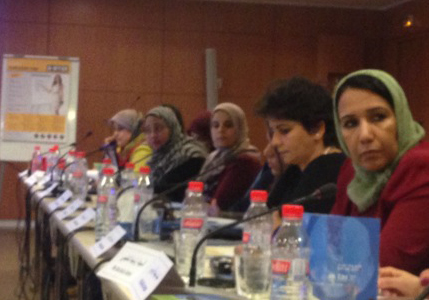
Women judges and lawyers from across the Middle East and North Africa participated in the ICJ Colloquium on Women and the Judiciary in MENA on 22 and 23 November in Tunis.
The event brought together women of different generations from a range of countries including Bahrain, Egypt, Kuwait, Libya Morocco, Palestine and Tunisia.
They discussed the significant personal and professional challenges faced by women judges and lawyers in the region.
Sharing their personal testimonies and experiences, participants underscored the specific challenges which arise for women judges and lawyers in situations of transition, conflict and occupation or in contexts where women’s participation in the judiciary is not possible or subject to significant restrictions.
They identified recommendations for change and highlighted the need for increased cross-regional support networks and opportunities for dialogue and joint action.
The Colloquium marks the initial phase of an ICJ initiative to support women judges, lawyers and human rights defenders in the Middle East and North Africa as agents of change.
Nov 18, 2013 | News
Following its mission to Tajikistan on 10-13 November, the ICJ called on the Tajikistan authorities to reconsider provisions of a draft law which could undermine the independence of the legal profession.
The draft Law on Lawyers’ Activities and Advokatura would allow the Ministry of Justice a significant role in regulating entry to the profession.
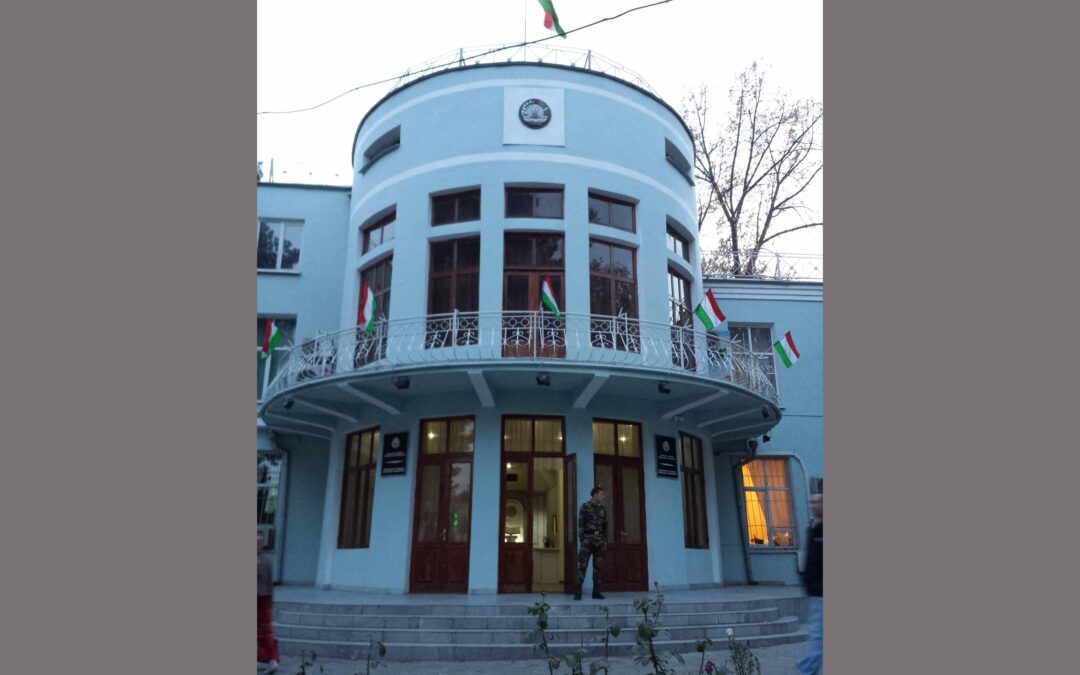
In particular, the Qualification Commission for lawyers, which would be responsible for access to the profession, would operate under the Ministry of Justice (picture).
It would be chaired by a deputy Minister, and would also include five lawyers, one representative of Parliament, one legal academic, and one other representative of the Ministry of Justice.
It is particularly worrying that all lawyers would be required to go through a new qualification process, carried out by this Commission, within one year of the new law coming into force.
“The draft law would bring welcome reforms, unifying a divided profession under a single, independent, Union of Lawyers. However, the value of these reforms would be undermined, since every lawyer would have to go through a new qualification process, the nature of which is not yet clear, administered by a body under the Ministry of Justice,” said Judge Egbert Myjer, Commissioner of the ICJ.
“The procedure would risk cleansing the profession of independent lawyers and leading to de facto domination of the profession by the Ministry of Justice, contrary to the UN Basic Principles on the Role of Lawyers,” he added.
Under international standards on the role of lawyers, independent self-governing professional associations of lawyers should be established, and should have sufficient powers to regulate the profession, including control of the qualification of lawyers.
The ICJ emphasized that at present there is a lack of consistency in the varied qualification procedures in the different sections of the legal profession in Tajikistan, which impedes high professional standards.
This should be addressed through a unified, independent and rigorous qualification process administered by the profession itself, in line with international standards, and as recommended by the UN Human Rights Committee, the International Bar Association and the ICJ.
The ICJ heard consensus from lawyers’ associations in Tajikistan that the proposed role of the Ministry of Justice would impair the effective and independent work of lawyers.
The lawyers’ associations added that these concerns were not taken into account in the drafting process.
In response to criticism by the UN Human Rights Committee earlier this year, the Minister of Justice stated that the Qualification Commission would only be placed under the Ministry for Justice for a transitional period.
This is not reflected in the current draft law. However, the authorities reassured the ICJ that the role of the Ministry of Justice in qualification was not intended to be permanent.
The ICJ mission to Tajikistan took place from 10 to 13 November. It was led by Justice Egbert Myjer, an ICJ Commissioner and former judge of the European Court of Human Rights, and also included ICJ staff members Róisín Pillay, Director of the Europe Programme of the ICJ, and Temur Shakirov, Legal Advisor of the Europe Programme.
The mission included a roundtable discussion with lawyers’ associations of Tajikistan, as well as meetings with representatives of the judiciary, the Ombudsman, and the National Legislative Centre and NGOs.
On 14 November, ICJ staff members met with the first deputy Minister of Justice.
The ICJ mission followed its report on the Independence of the Legal Profession in Central Asia, which analysed the law and practice of each of the five Central Asian states, including Tajikistan, in light of international law and standards, and made recommendations on the principles that should guide reform of the legal profession.
Contact:
Róisín Pillay, Director, ICJ Europe Programme, roisin.pillay(a)icj.org
Temur Shakirov, Legal Adviser, ICJ Europe Programme, temur.shakirov(a)icj.org
Tajikistan-ICJ Mission-news-web story-2013 (full text in pdf)
Tajikistan-ICJ Mission-news-webs story-2013-rus (full text in pdf)
Nov 15, 2013 | News
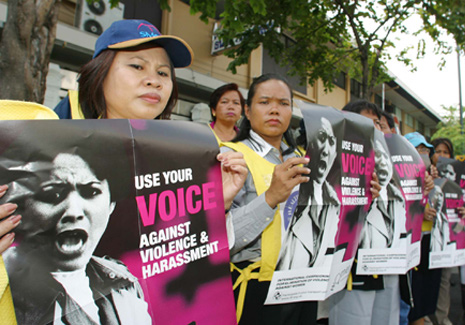
The ICJ and Amnesty International urge the Association of Southeast Asian Nations (ASEAN) to increase efforts to protect the rights of women and children.
ASEAN must act in light of the newly adopted Declaration on the Elimination of Violence against Women and Elimination of Violence against Children, which was recently adopted at the 23rd ASEAN Summit in Bandar Seri Begawan, Brunei Darussalam, the rights groups said.
The Declaration states the commitment of all 10 ASEAN member states to further “prevent and protect [women and children] from and respond to all forms of violence, abuse and exploitation of women and children particularly for those who are in vulnerable situations”.
AI and ICJ welcome this commitment, which allows for no exceptions or discrimination, while expressing concern that no explicit mention was made of lesbian, bisexual, transgender and intersex women and children in the non-exhaustive list of those requiring particular protection from discrimination and violence that follows this general statement.
The Declaration details a wide array of measures that Member States should take, within “a holistic, multi-disciplinary approach”, in order to eliminate violence against women and children.
These include changes to legislation, policies and practices; training and education; investigation, prosecution, punishment and where appropriate rehabilitation of perpetrators; creating an enabling environment for the participation of women and children; and the development of strategies for the elimination of harmful practices.
AI and ICJ pointed out that the Declaration suffers from some serious deficiencies in substance, as well as in the process of its adoption.
In terms of process, most ASEAN Member states failed to meaningfully consult with national civil society in the elaboration of the Declaration.
Only Philippines, Indonesia, Thailand and Vietnam held consultations, which in some of these states were limited.
This problem was compounded once the ACWC had finalised its draft, as the discussions and approval processes thereafter were completely shrouded in secrecy.
This final draft was never circulated to women’s and children’s groups in the region, despite written requests from several civil society groups calling for its release.
This unacceptable lack of transparency violates international guidelines on consultation with civil society, the ICJ and AI stressed.
AI and ICJ also deplore the fact that the Declaration reaffirms the General Principles of the discredited ASEAN Human Rights Declaration (AHRD), some of which are wholly incompatible with international law and allow for impermissible restrictions on human rights.
The two organizations reiterate their call to revise the AHRD, particularly by repealing or substantially amending General Principles 6-8, so as to bring it into line with international human rights law and standards.
AI and the ICJ further underline that international law allows no justification for violence against women and children and requires States to comply with their obligations to prohibit, prevent, investigate, punish and ensure reparations for victims of such violence in all circumstances.
Nothing in the Declaration may be construed to circumvent ASEAN Member States’ obligation to eliminate “prejudices and customary and all other practices” as well as “harmful and discriminatory traditional practices” that amount to, result in or perpetuate violence against women and children.
In addition, a significant omission of the Declaration is the lack of a reference to economic barriers to protection, assistance and justice faced by women and children in situations of violence.
ASEAN Member States should ensure that financial means do not impede access to justice, particularly of those living in poverty.
The rights groups also highlighted that ACWC rejected the proposal from women and children groups to have two separate declarations.
Although both women and children share similar vulnerabilities necessitating for additional protection, there remains certain rights, approaches and differing needs that are specific to each groups that could only be adequately addressed by having two separate declarations.
AI and the ICJ stated that ASEAN’s determination to end violence against women and children will ultimately be measured only by effective implementation of the Declaration in a manner which complies with their international obligations.
The Declaration tasks the ACWC to promote the implementation of the Declaration and review its progress.
AI and the ICJ call on the ACWC to actively implement this mandate, and for ASEAN Member States to cooperate with the ACWC in fulfilling this role.

Nov 14, 2013 | News
The International Bar Association’s Human Rights Institute (IBAHRI) and the ICJ urge the Commonwealth Heads of States meeting in Colombo this week to make Sri Lanka accountable to Commonwealth values.
The IBAHRI and the ICJ recall that the Commonwealth Charter, passed in March 2012, sets out 16 core values, which include safeguarding the independence of the judiciary, protecting the rule of law, respecting the separation of powers and promoting democratic rule.
But the two organizations point out numerous examples where these values have not been respected by the Government of Sri Lanka.
The IBAHRI and the ICJ were holding a press conference in Bangkok Thailand today after a high-level IBAHRI delegation was blocked from entering Sri Lanka late last week to attend a conference on the rule of law and independence of the legal profession hosted by the Bar Association of Sri Lanka.
Giving a statement remotely, Gabriela Knaul, UN Special Rapporteur on the Independence of Judges and Lawyers, expressed “serious concerns about acts of reprisals against judges, prosecutors, lawyers and other actors of the judicial system who cooperate, or seek to cooperate, with UN and regional human rights mechanisms.”
“Reprisals against judicial actors and legal professionals are a kind of attack to their institutional and functional independence,” she added.
Earlier this year, the IBAHRI conducted a remote fact-finding mission on the politically motivated impeachment of Chief Justice Banadranayake in January 2013, after being denied entry into Sri Lanka.
The IBAHRI Mission concluded that the Chief Justice’s removal was unlawful, undermined public confidence in the rule of law and threatened to eviscerate the country’s judiciary as an independent guarantor of constitutional rights.
In an open letter signed by 56 eminent jurists and senior judges from around the world, the ICJ also expressed its grave concern over the disregard for international standards on the independence of the judiciary and the removal of judges.
“This weakening of rule of law and independence of the judiciary is accompanied by an equally deteriorating human rights situation,” said Sheila Varadan, ICJ Legal Adviser for South Asia.
The United Nations High Commissioner of Human Rights, Navi Pillay, in her recent visit to Sri Lanka expressed concern over the curtailment or denial of personal freedoms and human rights, the persistent impunity and the failure of rule of law.
“The state of affairs in Sri Lanka sits uneasily with the aspirations set out in the Commonwealth Charter,” said Human Rights Barrister and IBAHRI Sri Lanka Mission Rapporteur, Sadakat Kadri. “The Government of Sri Lanka has spent years undermining the values and principles of the Commonwealth.”
“If the Commonwealth is to remain a relevant and effective international organization, it is paramount that those heads of State who have chosen to attend this week’s summit take measures to make Sri Lanka accountable to the core values and principles of the Commonwealth,” said IBAHRI Senior Programme Lawyer Alex Wilks.
Contact:
Sheila Varadan, ICJ Legal Advisor, South Asia Programme (Bangkok), t: +66857200723; email: sheila.varadan(a)icj.org
Notes:
- The IBAHRI delegation blocked from entering Sri Lanka included UN Special Rapporteur on the Independence of Judges and Lawyers, Ms Gabriela Knaul, former UN Special Rapporteur on the Independence of Judges and Lawyers and ICJ Commissioner Dato’ Param Cumaraswamy, and IBAHRI senior programme lawyer Alex Wilks, had intended to travel to Colombo to attend a conference on the rule of law and independence of the legal profession hosted by the Bar Association of Sri Lanka. IBAHRI Mission Rapporteur Sadakat Kadri was also unable to enter Sri Lanka as he was denied a visa.
- The Bar Association of Sri Lanka with the International Bar Association’s Human Rights Institute had planned a conference for 13 November 2013 on ‘Making Commonwealth values a reality: the rule of law and independence of the legal profession’. The 13 November 2013 conference was cancelled when the Government of Sri Lanka revoked visas for the UN Special Rapporteur and the IBAHRI delegation on 7 November 2013.
- In March 2013, a delegation of the IBAHRI undertook a remote fact-finding mission to investigate the impeachment proceedings of Chief Justice Bandaranayake, the independence of the legal profession and rule of law in Sri Lanka. The mission was conducted remotely following the cancellation of visas by the Government of Sri Lanka for the IBAHRI delegation. A report was released in April 2013 A Crisis of Legitimacy: The Impeachment of Chief Justice Bandaranayake and the Erosion of the Rule of Law in Sri Lanka.
- The ICJ released a report, Authority without Accountability: The crisis of impunity in Sri Lanka in November 2012 documenting the systemic erosion of rule of law and accountability mechanisms in Sri Lanka. The ICJ report described how decades of Emergency rule and legal immunities granted to the President and other government officials weakened the checks and balances in the Sri Lankan government, while political interference has increasingly led to attacks on the independence of the judiciary and rule of law.