Aug 29, 2013 | News
The Pakistani government should affirm its commitment to end enforced disappearances by ratifying the International Convention for the Protection of All Persons from Enforced Disappearance.
The call by the ICJ and Human Rights Watch comes on the eve of the third annual United Nations International Day of the Victims of Enforced Disappearances (30 August 2013).
“Ratifying the Convention against Disappearances is a key test for Prime Minister Nawaz Sharif’s new government,” said Ali Dayan Hasan, Pakistan director at Human Rights Watch. “The government would send a clear political message that it’s serious about ending ‘disappearances’. And it would show its commitment to ensuring justice for serious human rights violations.”
Pakistan’s participation in the United States-led “war on terror” since 2001 has resulted in hundreds and perhaps thousands of individuals being “disappeared.”
In addition to those arbitrarily detained in counter-terrorism operations, journalists, human rights activists and alleged members of separatist and nationalist groups, particularly in Balochistan province, have been and continue to be forcibly disappeared.
“Pakistan’s failure to hold even a single perpetrator of enforced disappearances to account perpetuates the culture of impunity in Pakistan,” said Sam Zarifi, Asia-Pacific Regional Director of ICJ. “The prevalence of gross violations of human rights in the country today is partly a legacy of this impunity.”
Despite repeated denials by Pakistan’s security agencies, the Supreme Court of Pakistan has acknowledged and human rights groups have documented evidence of the involvement of intelligence and security agencies in enforced disappearances.
In July, Pakistan’s attorney general admitted that more than 500 “disappeared” persons are in security agency custody.
“In Balochistan and beyond, Pakistani security forces have forcibly disappeared, tortured, and unlawfully killed people in the name of counter-terrorism,” Hasan added. “Pakistan has a responsibility to arrest and prosecute militants acting outside the law, but abuses against suspects cannot be explained away as a way to end terrorism.”
“All disappeared persons must be released or, if charged with recognizable crimes, brought without further delay before a court to see if their continuing detention is legal,” Zarifi concluded. “The government should also fully investigate and prosecute those who are responsible for ordering, participating or carrying out enforced disappearances.”
The UN Working Group on Enforced or Involuntary Disappearances in its 2012 report on Pakistan found that the country’s anti-terrorism laws, in particular the Anti-Terrorism Act 1997, and the FATA/PATA Action (in aid of civil powers) Regulations 2011, allowed arbitrary deprivation of liberty, which has enabled enforced disappearances.
Under international law, a state commits an enforced disappearance when its agents take a person into custody and then deny holding the person, or conceal or fail to disclose the person’s whereabouts.
Family members and legal representatives are not informed of the person’s whereabouts, well-being, or legal status.
“Disappeared” people are often at high risk of torture, a risk even greater when they are detained outside of formal detention facilities such as prisons and police stations.
An enforced disappearance removes an individual from the protection of the law, leaving the individual without protection from theirs.
It violates many of the rights guaranteed under the International Covenant on Civil and Political Rights, which Pakistan ratified in 2010.
The UN General Assembly has repeatedly described enforced disappearance as “an offence to human dignity” and “a grave and flagrant violation” of international human rights law.
The ICJ and Human Rights Watch called on the Pakistani government to carry out a full review of security-related legislation and ensure that all laws conform to Pakistan’s international law obligations to prevent such violations.
Contact:
Sam Zarifi, ICJ Asia-Pacific Regional Director, t: +66 807 819 002 (mobile); email: sam.zarifi(at)icj.org
Read also:
Justice for Pakistan’s “disappeared”

Aug 23, 2013 | News
The ICJ is calling on the Bangladesh authorities to immediately withdraw contempt of court charges against Human Rights Watch.
“Bangladesh must not impose contempt of court charges to restrict the important work carried out by human rights defenders, including international human rights groups,” said Alex Conte, Director of the ICJ’s International Law and Protection Programmes. “The contempt charges are inconsistent with Bangladesh’s obligations as a party to the International Covenant on Civil and Political Rights to respect freedom of expression.”
On 20 August 2013, prosecutors for the International Crimes Tribunal (ICT) in Bangladesh charged Human Rights Watch with contempt of court for allegedly “scandalizing the judiciary” after the group had expressed concern that the trial of Ghulam Azam, former head of the Islamist group Jamaat-e-Islami Azam’s trial was “deeply flawed” and did not meet international fair trial standards.
The group stated, based on credible media reports, that “judges improperly conducted an investigation on behalf of the prosecution” and that there was “collusion and bias among prosecutors and judges”.
“It is paramount that those responsible for committing atrocities – notably unlawful killings and the widespread and systematic use of rape as a form of torture – during Bangladesh’s war of liberation in 1971, should be prosecuted before competent, independent and impartial courts in proceedings that meet international fair trial standards,” Conte added. “Muzzling voices that highlight the deficiencies of the ICT and prosecutions before it distract from that enormously important task.”
The ICJ, as well as several Bangladeshi and international observers, have expressed similar concerns that the International Crimes Tribunal does not adhere to international standards of a fair trial.
“The charges against Human Rights Watch are an abuse of prosecutorial discretion to attack a highly respected human rights group for pointing out serious and well-documented problems with the Bangladeshi International Crimes Tribunal. Attacking the messenger does not address nor resolve the very real concerns about the operations of the ICT,” said Conte.
Under international norms, judges and the judicial process are not immune from public criticism. The Bangalore Principles on Judicial Conduct clarify that “since judicial independence does not render a judge free from public accountability, and legitimate public criticism of judicial performance is a means of ensuring accountability subject to law, a judge should generally avoid the use of the criminal law and contempt proceedings to restrict such criticism of the courts”.
Similarly, the Commonwealth (Latimer House) Principles on the Accountability of and the Relationship Between the Three Branches of Government also stress that “criminal law and contempt proceedings should not be used to restrict legitimate criticism of the performance of judicial functions”.
The charges against Human Rights Watch were preceded by the arrest on 10 August 2013, of Adilur Rahman, Secretary of the human rights group Odhikar for allegedly “distorting information” on a police operation on a Hefazat-e Islam rally in May this year. Odhikar reported that 61 people had been killed in the police crackdown on the rally. The Government disputed the number of casualties.
“We are deeply concerned that the contempt of court charges against Human Rights Watch and the charges against Adilur Rahman, are expressly intended to silence dissent and discourage individuals and organizations from raising legitimate concerns about human rights violations and the rapid deterioration of the rule of law in Bangladesh,” Conte further said. “Rather than charging them with contempt, the authorities should investigate the allegations of rights violations made by Human Rights Watch and Adilur Rahman”.
The UN Declaration on Human Rights Defenders underscores that “everyone has the right, individually and in association with others, to promote and to strive for the protection and realization of human rights and fundamental freedoms at the national and international levels”.
The Declaration also highlights that human rights defenders have the right to “freely to publish, impart or disseminate to others views, information and knowledge on all human rights and fundamental freedoms” and to hold opinions and draw public attention to the observance of human rights.
“We urge the Bangladesh authorities to immediately drop the charges against Human Rights Watch and Adilur Rahman, which are being used to restrict the legitimate exercise of the right to freedom of expression, and allow human rights defenders to freely carry out their work,” said Conte.
Contact:
Alex Conte, Director, International Law & Protection Programmes (Geneva), t: +41 79 957 2733; email: alex.conte(a)icj.org
Aug 22, 2013 | News
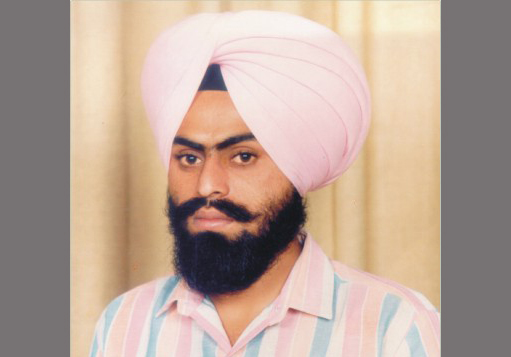
The ICJ called upon the Indian Government to halt the imminent execution of Professor Devinderpal Singh Bhullar.
In August 2001, Professor Bhullar was sentenced to death under the Terrorist and Disruptive Activities (Prevention) Act following his conviction on charges related to the bombing of the All Indian Youth Congress in New Delhi in 1993.
“Those who commit acts of terrorism should be prosecuted before competent, independent and impartial courts that meet international due process standards”, said Ben Schonveld, ICJ’s South Asia Director.
“However, while those responsible for such acts must be held to account, the ICJ opposes the death penalty in all circumstances, without exception as it is an inherently cruel and irreversible punishment that violates the right to life.”
“Furthermore, there are serious questions about whether Professor Bhullar’s trial was in accordance with the requirements of international law”, Schonveld added. “His conviction and death sentence are based solely upon an alleged confession he made in police custody, which he later retracted, claiming it was extracted under torture.”
The ICJ says that the execution of an individual in these circumstances would violate India’s obligations under the International Covenant on Civil and Political Rights to respect the right to life, the right to a fair trial and the absolute prohibition of torture.
In May 2011, President Pranab Mukherjee rejected Professor Bhullar’s petition for clemency. The Supreme Court rejected his earlier plea on 12 April 2013 to commute the sentence to life imprisonment, and upheld its decision on 14 August 2013.
India ended an eight-year moratorium on the death penalty with the executions of Ajmal Kasab on 21 November 2012 and Mohammad Afzal Guru on 9 February 2013.
“The resumption of the death penalty by India is contrary to the global and regional movement towards the abolition of the death penalty”, said Schonveld.
The ICJ reminds that 150 countries worldwide, including 30 states in the Asia-Pacific region, have abolished the death penalty in law or in practice.
The ICJ urges the Indian Government to immediately reinstate the moratorium on the death penalty, with a view to abolishing the death penalty permanently and acceding to the Second Optional Protocol to the International Covenant on Civil and Political Rights on the abolition of the death penalty.
Over the years, the member states of the United Nations have adopted various instruments in support of the call for the worldwide abolition of the death penalty. In 2007, the UN General Assembly adopted a resolution emphasizing that “that the use of the death penalty undermines human dignity” and calling for the establishment of a moratorium on the use of the death penalty “with a view to abolishing the death penalty”.
The resolution was reaffirmed in 2008, 2010, and most recently in December 2012, when and overwhelming majority of 110 UN Member States voted in favor of a worldwide moratorium on executions as a step towards abolition of the death penalty.
Contact:
Ben Schonveld, ICJ South Asia Director, (Kathmandu); t: +977 9804596661; email: ben.schonveld(a)icj.org

Aug 21, 2013 | News
The ICJ today called on the government of the Kyrgyz Republic to take urgent measures to prevent repeated attacks on lawyers.
The call followed reliable reports of an assault on two lawyers in a court in the south of the country.
On 20 August 2013, lawyers Dinara Medetova and Kubanychbek Zhoroyev were physically attacked following a hearing in the Osh Regional Court.
This is the latest in a series of such attacks, which have threatened the lives and safety of lawyers, have hindered lawyers in defending the rights of their clients, and have undermined the fairness of trials.
The ICJ understands that the Ministry of Interior has denied that the attack on the lawyers took place. However this attack is confirmed by the accounts of reliable witnesses.
The ICJ is concerned that, in the face of repeated attacks of this kind, the government and law enforcement authorities have consistently failed to take effective measures to prevent them, or to ensure that they are effectively investigated and the perpetrators brought to justice.
“Denying that these attacks take place can only perpetuate the problem,” said Róisín Pillay, Director of the ICJ Europe Regional Programme. “What is needed is an independent, impartial and thorough investigation into the incident.”
“The government must work with the law enforcement authorities to ensure that the safety of lawyers, witnesses and defendants in criminal trials is ensured throughout the country, and that the Krygyz Republic protects the right to a fair trial, as required by its international legal obligations,” she added.
The two lawyers were defending Makhamatkir Bizurukov, an ethnic Uzbek, in a trial related to the 2010 ethnic clashes in the south of the country.
According to information available to the ICJ, the lawyers were repeatedly interrupted, insulted and threatened by members of the public in the course of the hearing, creating an atmosphere of intimidation which prevented the lawyers from effectively defending their client.
During the hearing, the lawyers also received death threats to which the judge did not respond.
After the hearing, reports indicate that around ten women, supporters of the victims in the case, physically attacked the lawyers.
“If it hadn’t been for my colleague who helped me to escape, I could have been very seriously injured or even dead”, lawyer Medetova told the ICJ. The lawyer later returned to Bishkek due to her fear of further attacks.
This attack took place despite an earlier written request by the defence lawyers in the case submitted to the local Police Department, President of the Court and the Osh Regional Prosecutor that security measures be taken during the hearing, in light of attacks on the accused, witnesses and lawyers at a previous hearing in the same case.
The ICJ understands that the head of the Police Department and the Prosecutor had assured lawyer Medetova that measures would be taken to guarantee the safety of the lawyers.
In the event however, the police took no action to prevent or halt the attacks on the lawyers in the courtroom.
Following the attack, the police reportedly told the lawyers that they could not protect them, as the supporters of the victim would consider such protection as bias in favour of the accused.
The ICJ recalls that international standards, including the UN Basic Principles on the Role of Lawyers, require that “where the security of lawyers is threatened as a result of discharging their functions, they shall be adequately safeguarded by the authorities”.
The ICJ urges the government to unequivocally and publicly condemn these attacks and to ensure that effective measures are taken to investigate them and bring those responsible to justice.
CONTACTS:
Róisín Pillay, Director, ICJ Europe Programme, roisin.pillay(a)icj.org
Temur Shakirov, Legal Adviser, ICJ Europe Programme, temur.shakirov(a)icj.org
Kyrgyzstan-Attack on lawyers-news-press release-2013-ENG (full text in pdf)
Kyrgyzstan-Attack on lawyers-news-press release-2013-RUS (full text in pdf)
Aug 15, 2013 | News
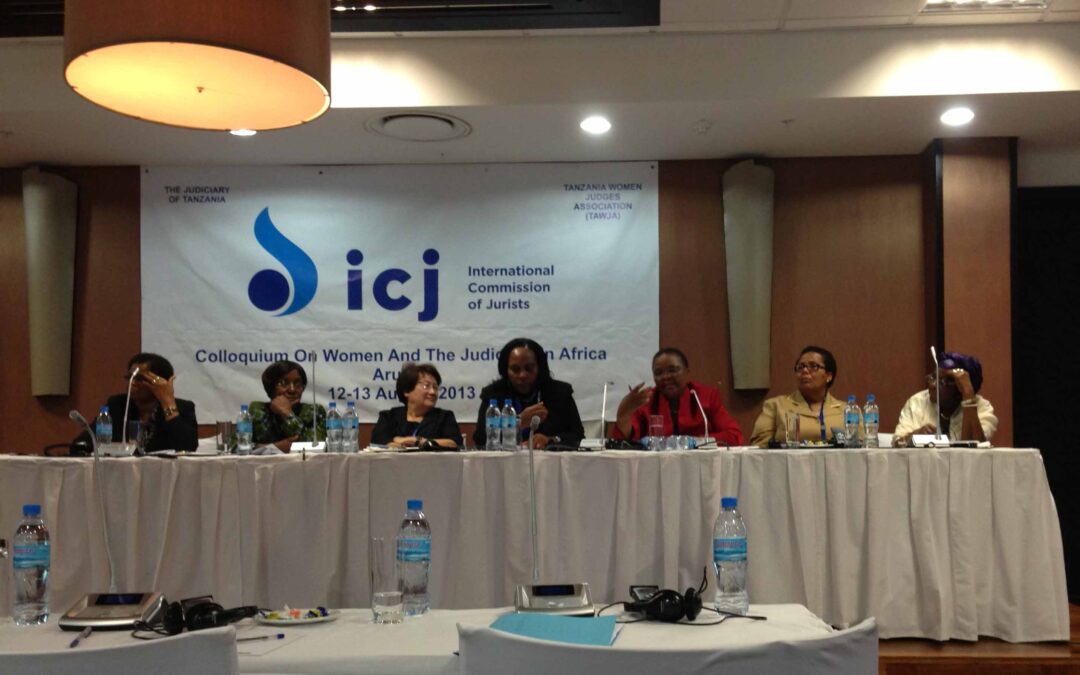
Women judges from across Africa participated in the first ICJ Colloquium on Women and the Judiciary on 12 and 13 August in Arusha, Tanzania.
The Arusha Colloquium, was opened by the Chief Justice of Tanzania and was hosted in collaboration and partnership with the Tanzania Women Judges Association and the Judiciary of Tanzania.
It enabled thirty five senior women judges from over fifteen African jurisdictions to come together to share their stories and reflect on and discuss their personal and professional experiences and challenges as women within the judiciary.
They were joined by over 15 women human rights defenders and lawyers.
Colloquium themes included the importance and role of women within the judiciary, independence and impartiality issues effecting women judges, appointment and promotion procedures, education and training needs and the role of women judges associations.
Discussions also addressed the role of the judiciary in advancing gender equality, women’s access to justice and protection of women human rights defenders.
The Colloquium marks the beginning of an ICJ multi-year initiative on women judges, lawyers and human rights defenders as agents of change.

Aug 13, 2013 | News
The ICJ today called on the Nepalese Government to release the body of Tibetan Monk Karma Nyidon Gyasto to the Tibetan community to carry out his last rites in accordance with Nepal’s laws and international obligations.
“We are deeply concerned about this rejection of Nepal’s laws and its international obligations,” said Asia Director Sam Zarifi.
On 5 August 2013, a Tibetan refugee, Karma Nyidon Gyasto self-immolated at the Boudha Stupa, in Kathmandu. He was taken to Tribhuvan University Teaching Hospital, where he was later declared dead. His body is apparently being held in the hospital’s mortuary.
On 12 August 2013, the Tibetan Refugee Welfare Office, registered an application to the Office of the Chief District Officer in Kathmandu to perform funeral rites. The Tibetan Refugee Welfare Office is acting on behalf of Gyatso given the lack of clear legal status of the resident Tibetan refugee community.
This is the second protest by self-immolation in Nepal. The first was in February 2013. In that case the government refused to hand over the body for funeral rites.
The refusal to hand over the body contravenes Nepal’s national laws.
The Interim Constitution, under Article 23 guarantees the right to religion, including the right to practice and perform religious rites.
Furthermore Article 17 provides that every community in Nepal has the right to preserve and promote its culture.
The action also contravenes Nepal’s international obligations.
Article 18 of the International Covenant on Civil and Political Rights (ICCPR) provides for the right to a religion or belief of his choice, and freedom, either individually or in community with others and in public or private, to manifest his religion or belief in worship, observance, practice and teaching.
Furthermore, General Comment No 22 on Article 18 of the ICCPR states that this right includes ritual and ceremonial acts.
Under the Covenant, the Government of Nepal is obliged to respect and ensure the religious and cultural rights of the Tibetan refugee community, who have a legitimate right to receive the body and hold a funeral according to their religion and culture.
CONTACT:
Sam Zarifi, ICJ Asia-Pacific Director, (Bangkok), t: +66 807819002; email: sam.zarifi(a)icj.org