Sep 4, 2013 | News
The ICJ calls on Egyptian authorities to conduct a thorough, effective, independent and impartial investigation into the unlawful and excessive use of force by security and armed forces, in particular during the dispersal of the Rabaa Al-Adawyia and Annahda pro-Morsi sit-ins on 14 August.
The statement comes as the ICJ concluded a high-level mission on 29 August to assess the human rights and rule of law situation in Egypt following the ouster of President Mohamed Morsi by the armed forces.
The use of live ammunition to disperse the sit-ins and against pro-Morsi protesters has resulted in the deaths of more than 1000 individuals, most of which appear to amount to unlawful killings.
The investigation should also examine violent attacks by some pro-Morsi supporters, including the use of firearms, against security officers, police stations, and bystanders, and attacks on religious minorities, in particular Christians, their churches, buildings, and homes.
“The Egyptian authorities should investigate the unlawful use of live ammunition against protesters with a view to holding the perpetrators to account, providing remedy and reparation to the victims, and ending the impunity the security and armed forces have enjoyed over human rights abuses,” said ICJ Commissioner Kalthoum Kennou. “In policing demonstrations, security must act to safeguard the right to life, in particular by ensuring that the decision to use lethal firearms is made only when strictly unavoidable in order to protect life.”
The ICJ is also concerned that following the crackdown, thousands of people were arrested under conditions that violate due process guarantees, in particular the rights to have access to a lawyer and to family members.
Hundreds are also reportedly missing and the ICJ fears many of them have been subjected to enforced disappearance.
Hearings for renewing pre-trial detentions orders are conducted in prisons and, as a result of the large number of detainees, most are either not represented by legal counsel, or are not able to have access to and to consult with their lawyers. Many of the detainees are being held arbitrarily under administrative detention, the ICJ further notes.
“The Egyptian authorities must ensure the rights of those arrested to liberty, security of person, to have access to lawyers and family members and to challenge the lawfulness of their detention, ” said ICJ Commissioner Shawan Jabarin ” the Egyptian authorities must fully communicate the list of all the detainees, their places of detentions and the fate and whereabouts of the hundreds who are reportedly missing. They must also comply with their legal obligations under international law and ensure that no one is subjected to enforced disappearance.”
The Office of the Public Prosecutor has charged thousands of individuals who were arrested following the ouster of president Morsi and the dispersal of the sit-ins, including with “ attempted murder”, “opposing authorities”, “attacking law enforcement officials”, “causing disorder”, “blocking roads” and “throwing Molotov cocktails at the police”.
The office also charged President Morsi and his advisers, including leaders of the Muslim Brotherhood, with, among other charges, “inciting followers to commit premeditated murder, use of force, use of firearms and illegal attacks on authorities.”
Moreover, seventy-five judges who called for the reinstatement of former President Morsi have been investigated by an investigating judge, appointed by the Minster of Justice, for “backing a particular political party and deviating from judicial traditions and its values of neutrality, impartiality and non-partisanship.”
The ICJ notes, however, that neither the Office of the Public Prosecutor nor the Minister of Justice have so far investigated, ordered the investigation, or brought criminal action for the unlawful killings of protesters by armed and security forces following the ouster of President Morsi.
In meetings with the ICJ delegation, state officials, including the Minister of Justice, argued that the use of live ammunition and lethal force to disperse sit-ins was legitimate and in line with both national and international standards.
“In times of crisis, judges and prosecutors must safeguard and uphold the rule of law, not curtail the enjoyment of fundamental rights and freedoms,” said Said Benarbia, ICJ Senior Legal Advisor for the Middle East & North Africa Programme.
“The Egyptian authorities must therefore ensure that the Office of the Public Prosecutor and courts are not politicized or used as a means to crackdown on political opponents and protesters, or to shield armed and security officials responsible of human rights abuses from accountability,” Benarbia added.
Contact:
Said Benarbia, ICJ Senior Legal Adviser of the Middle East and North Africa Programme, tel: 41 22 979 38 17, e-mail: said.benarbia(a)icj.org
Additional information:
The ICJ delegation was led by Justice Kalthoum Kennou, judge at the Tunisian Cassation Court and ICJ Commissioner, and Mr. Shawan Jabarin, ICJ Commissioner and General Director of Al-Haq, an ICJ affiliate in the occupied Palestinian territories. The delegation met with Minister of Justice Adel Abdelhamed Abdullah, Minister of Transitional Justice and National Reconciliation Amin El Mahdi, members of the judiciary, including President of the Judges Club Ahmed El Zend, lawyers, civil society, and families of victims of human rights violations after the dismissal of former President Mohamed Morsi.

Sep 3, 2013 | News
The ICJ today expressed its serious concern at the continued detention of lawyer Zinaida Mukhtorova in a psychiatric facility.
In its statement, the ICJ expressed concern that this detention may amount to an act of harassment or reprisal for Zinaida Mukhtorova’s legitimate exercise of her professional functions. Furthermore, the ICJ is concerned at reports that her detention may have been extended today as a reprisal for her challenging the detention through the courts.
Sep 2, 2013 | News
The ICJ today called on the Bangladesh authorities to immediately withdraw the contempt of court notice issued against the international human rights organization Human Rights Watch.
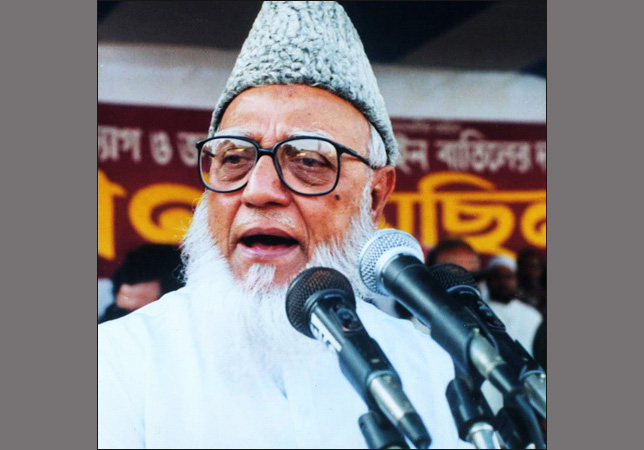
The charges are in response to well documented concerns by Human Rights Watch that the trial of Ghulam Azam (photo), former head of the Islamist group Jamaat-e-Islami Azam’s trial was “deeply flawed” and failed to meet international fair trial standards.
“Silencing voices that highlight the shortcomings of the International Crimes Tribunal impede rather than advance the enormously important task of ensuring that those responsible for committing atrocities during Bangladesh’s war of liberation are brought to justice in a process that complies with international law and standards”, said Alex Conte, Director of the ICJ’s International Law and Protection Programmes.
On 2 September 2013, the International Crimes Tribunal (ICT) in Bangladesh issued a show cause notice asking Human Rights Watch to explain why contempt of court proceedings should not be initiated against it for its allegedly ‘biased’, ‘scandalous’ and ‘inaccurate’ statements about the ICT. Human Rights Watch has to respond within three weeks, or possibly face trial and conviction in absentia.
“Assessing the conduct of administration of justice in judicial proceedings, including where it entails criticism of judicial performance is an important means of ensuring accountability,” said Conte. “Judges and prosecutors should defend the right to freedom of expression, not use their discretionary powers to muzzle criticism”.
Contact:
Alex Conte, Director, International Law & Protection Programmes, t: +41 79 957 2733; email: alex.conte(a)icj.org
Additional information:
The Bangalore Principles on Judicial Conduct clarify that “since judicial independence does not render a judge free from public accountability, and legitimate public criticism of judicial performance is a means of ensuring accountability subject to law, a judge should generally avoid the use of the criminal law and contempt proceedings to restrict such criticism of the courts”.
The Commonwealth (Latimer House) Principles on the Accountability of and the Relationship Between the Three Branches of Government also stress that “criminal law and contempt proceedings should not be used to restrict legitimate criticism of the performance of judicial functions”.
The UN Declaration on Human Rights Defenders underscores that “everyone has the right, individually and in association with others, to promote and to strive for the protection and realization of human rights and fundamental freedoms at the national and international levels”.
The Declaration also highlights that human rights defenders have the right to “freely to publish, impart or disseminate to others views, information and knowledge on all human rights and fundamental freedoms” and to hold opinions and draw public attention to the observance of human rights.
Aug 30, 2013 | News
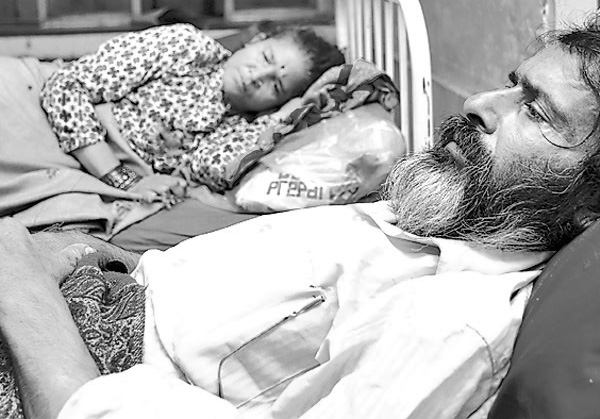
The ICJ is highly concerned by the deteriorating health of Nanda Prasad and Gangamaya Adhikari who are on hunger strike, protesting the failure of the state to investigate and prosecute the 2004 killing of their son Krishna by Maoist insurgents.
Ben Schonveld, the South Asia Director of ICJ said: ” Mr and Mrs Adhikari are just one of thousands of families in Nepal who are asking for something very simple: justice. They are not looking for more commitments or words. They are asking the State of Nepal to obey its own laws and investigate and punish very serious crimes (committed by both sides to the conflict) that violate international human rights law; laws that Nepal has repeatedly committed itself to uphold.”
Contact:
Ben Schonveld, South Asia Director, t: +977 9804596661; email: ben.schonveld(a)icj.org
Photo by eKantipur.com
Aug 30, 2013 | News
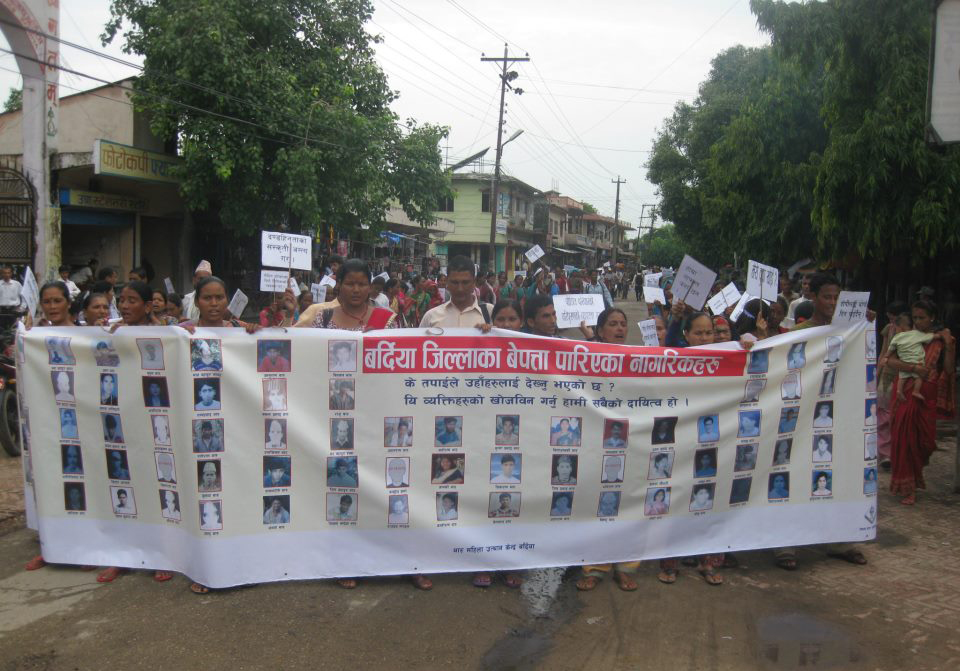
On the 30th annual International Day of the Disappeared, the ICJ urged the Nepali Government to act immediately to disclose the fate and whereabouts of “disappeared” persons and to provide accountability for the perpetrators of these gross violations of human rights.
The systematic practice of enforced disappearance during Nepal’s 1996-2006 armed conflict was among the worst anywhere in the world, the ICJ says.
The fate and whereabouts of more than 1,300 possible victims of enforced disappearance are still unknown.
To date, not one individual suspected of criminal responsibility for serious human rights violations or crimes under international law committed during the conflict has been brought to justice.
“The Government must meet its human rights obligations”, said Ben Schonveld, ICJ’s South Asia Director. “Ending impunity, ensuring accountability, and strengthening the rule of law are essential for a durable transition from armed conflict to sustainable peace in Nepal”.
On 21 November 2006, the Government of Nepal and Communist Party of Nepal (Maoist) signed the Comprehensive Peace Agreement (CPA), committing to investigate and reveal the fate of those killed or disappeared during the armed conflict within 60 days.
Both parties promised they would “not protect impunity” and vowed to safeguard the rights of families of the “disappeared.”
Almost seven years later, the promises made in the CPA have still not been fulfilled, the ICJ says.
Instead, the Government has actively protected and even promoted those suspected of committing human rights violations.
On 14 March 2013, Nepal’s President promulgated an Ordinance to establish a Commission on Investigation of Disappeared Persons, Truth and Reconciliation to investigate human rights violations committed during the armed conflict.
However, the establishment of the commission was temporarily halted after the Supreme Court issued a stay order in April following legal challenges.
The proposed commission is not in compliance with international law and standards on commissions of inquiry to effectively discharge Nepal’s duty to provide remedy and reparation to victims in a number of respects.
First, the process of the appointment of the Chairperson of the Commission does not ensure independence and impartiality.
Second, the Commission has wide discretion to recommend amnesty for crimes under international law, including enforced disappearance, to those who repent.
When combined with the fact that the crime of enforced disappearance is not yet a distinct offence punishable under the law of Nepal, there are grounds for real concern that impunity for the hundreds of enforced disappearances carried out during the course of the conflict will continue.
“The framework for the Commission set out in the Ordinance was the result of a bargain between the political parties”, Schonveld added. “The Commission seems designed to enable those suspected of criminal responsibility to avoid accountability for human rights violations and crimes under international law committed over the course of Nepal’s decade-long conflict”.
The ICJ urges the Government of Nepal to:
1. Withdraw the Ordinance, or establish a mechanism for its review and amendment, which includes inclusive consultation with victims of conflict related human rights abuses and representatives of civil society, with the aim of ensuring that the Commission established is consistent with international law and standards;
2. Promptly accede to the UN International Convention for the Protection of All Persons from Enforced Disappearance;
3. Ensure that enforced disappearance, as defined under the International Convention for the Protection of All Persons from Enforced Disappearance, is included as a distinct offence and is punishable by penalties that are proportionate with its gravity criminalized under domestic law;
4. Respect court orders calling on the police to investigate human rights violations and crimes under international law and, if there is sufficient admissible evidence, prosecute those suspected of criminal responsibility in trials that meet international due process standards;
5. Ensure that victims of enforced disappearance, other human rights violations and crimes under international law have access to effective remedies and receive adequate reparation, including appropriate compensation, restitution, rehabilitation and measures of satisfaction;
Contact:
Ben Schonveld, ICJ South Asia Director, (Kathmandu); t: 977 9804596661; email: ben.schonveld(at)icj.org
NOTES:
Enforced disappearance occurs when a person is arrested, detained or abducted by an agent of the State and then officials refuse to acknowledge the deprivation of liberty or conceal the fate or whereabouts of the “disappeared” person.
These acts remove an individual from the protection of the law, leaving the individual at the mercy of his or her captors.
Enforced disappearance violates many rights of the victims and their families alike, which are guaranteed under the under the International Covenant on Civil and Political Rights (ICCPR), which Nepal, as a State Party, is obliged to respect.
The UN General Assembly has described enforced disappearances ‘an offence to human dignity’ and a grave and flagrant violation of international human rights law.

Aug 29, 2013 | News
También la CIJ solicita audiencia temática a la comisión interamericana de derechos humanos.
La CIJ condenó los ataques que se han venido dando en contra de defensores de derechos humanos en Guatemala.
Por tal razón, conjuntamente con organizaciones sociales y campesinas como el Comité de Unidad Campesina (CUC), Asociación para la Promoción y el Desarrollo de la Comunidad (CEIBA), WAQIB´KEJ y otras organizaciones sociales de Guatemala, solicitaron a la Comisión Interamericana de Derechos Humanos una audiencia temática sobre el fenómeno de la criminalización de la protesta social el pasado viernes.
El objeto de la misma es, además de proporcionar información sobre el fenómeno de la criminalización de la protesta social, identificar patrones de represión en contra de líderes sociales en Guatemala.
Según la CIJ, este fenómeno es un claro retroceso del proceso democrático de Guatemala.
En efecto, se han identificado patrones de represión estatal, utilizando el derecho penal para reprimir las libertades de pensamiento, expresión y reunión de sus actores.
En este contexto, la CIJ nota con preocupación varios patrones de ataque en contra de defensores y defensoras de Derechos Humanos de Guatemala, que preocupan profundamente y que se expresan en detenciones ilegales, campañas de difamación y acusaciones falsas, ataques directos que han quitado la vida a cuatro periodistas en los últimos meses y falta de investigación pronta y eficiente, que identifique quien está detrás de estos hechos y si hay presencia de estructuras criminales organizadas que cometen estos crímenes para evitar la defensa de los derechos de los Pueblos Indígenas y de sus territorios.
Ramón Cadena, Director de la CIJ para Centroamérica expresó: “Pedimos a las autoridades del Sistema de Justicia que investiguen estos ataques. La impunidad de estos hechos sigue siendo alarmante. Por esta razón, la Organización de las Naciones Unidas debería nombrar cuanto antes al futuro representante de la Comisión Internacional contra la Impunidad (CICIG), quien debería ser un Fiscal con experiencia para continuar la lucha en contra de cuerpos ilegales y aparatos clandestinos de seguridad.”