Jan 22, 2013 | CIJL Newsletter, News
This newsletter informs you on recent activities and ongoing situations related to the ICJ’s work on the independence of the legal profession.
EDITORIAL
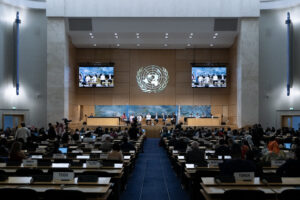
Annually the ICJ’s Centre for the Independence of Judges and Lawyers organizes the Geneva Forum for Judges and Lawyers, aiming to stimulate reflection among the international legal community on judicial independence issues and on the role of the legal profession in the protection of human rights. The 2012 Geneva Forum for Judges and Lawyers (last December) centred on the role of the domestic court in improving access to justice for victims of human rights violations. The participants reflected inter alia on ways to support and reinforce the use of international human rights norms in the domestic court.
A wide range of legal, political, socio-economic and cultural factors that influence the domestic court’s application of international human rights law were discussed. Legal knowledge and integrity emerged as crucial to the use of international human rights norms by the domestic judge. That is, it is essential to domestic proceedings judges and lawyers know well the substance of international human rights law and that they are aware of techniques to overcome real or ‘invented’ obstacles in its application, on the one hand, and that judges are willing to hear arguments based on international human rights law and comprise them in their reasoning, on the other.
Forum participants outlined three avenues to build legal capacity and stimulate judges to exercise the choice based on integrity. Firstly, both judges and lawyers require education on human rights law; moreover, this training should not be limited to one specific course on international human rights law, but be integrated into criminal law and other courses too. Next, participants adhered much value to the “inter-judicial dialogue”, which allows judges to exchange views and get acquainted with foreign decisions they can use to support their own reasoning. Lastly, this dialogue can be turned into pressure, as judges generally wish to be respected by their peers and accordingly will be more reluctant to exercise the choice that lacks integrity, if they are aware their colleagues are watching.
The ICJ is well placed to put this assessment into action and to contribute to improving access to justice to victims of human rights violations. Active in all regions of the world and building on sixty years of experience, we make use of three concrete tools in this respect: the organization of trainings that build capacity, of forums and workshops that bring together judges and legal professionals and stimulate dialogue, and of trial observations that put specific proceedings in the spotlight.
This newsletter too aims at stimulating discussion and exchange of information. Your feedback on the content of the newsletter is welcome.
OBITUARY
Arthur Chaskalson mourned
The ICJ mourns the death of its former President, Arthur Chaskalson, at the age of 81 on 1 December 2012. Chaskalson, a renowned human rights lawyer and tenacious opponent of the Aparheid regime, was part of Nelson Mandela’s defence team in the 1963 Rivonia Trial. He then helped establish the Legal Resources Centre, a non-profit organization seeking to use the law to pursue justice and human rights, leading the organization from 1978 to 1993. From 1994 to 2001, Justice Chaskalson presided over South Africa’s new Constitutional Court, serving as Chief Justice from 2001 until his retirement in 2005. Chaskalson was elected as ICJ Commissioner in 1995 and served as the organization’s President from 2002 to 2008. From 2005 to 2008, he chaired the Eminent Jurists Panel, which investigated the impact of counter-terrorism laws and practice on human rights globally. The Panel’s report, to which Justice Chaskalson was a major contributor, has proven to be an important reference during the post-9/11 era.
IN ACTION
High-level mission and National Consultation Conference, South Sudan
3 – 6 September: The ICJ undertook a high-level mission in South Sudan in order to analyze the situation and assess avenues for progress, particularly with respect to the state of the independence of the judiciary and legal profession in the country. The delegation met with a broad group of stakeholders in Juba, collecting information and soliciting views from the judiciary, prosecutorial services and legal profession, as well as from high-ranking members of the executive, legislature and civil society. A report is forthcoming. The mission was followed by a national consultation conference, organized in partnership with the South Sudan Law Society. The conference brought together key South Sudanese actors in the administration of justice for a discussion on judicial and legal professional independence and accountability.
Evaluation visit, Guatemala
3 – 6 September: The ICJ undertook a mission to Guatemala, meeting with judges, prosecutors, lawyers and members of civil society to collect information on the smear strategy employed against judges and prosecutors fighting impunity, and on judicial action undertaken to investigate and punish those responsible for crimes committed during the internal armed conflict.
Conference on the independence of the judiciary, Egypt
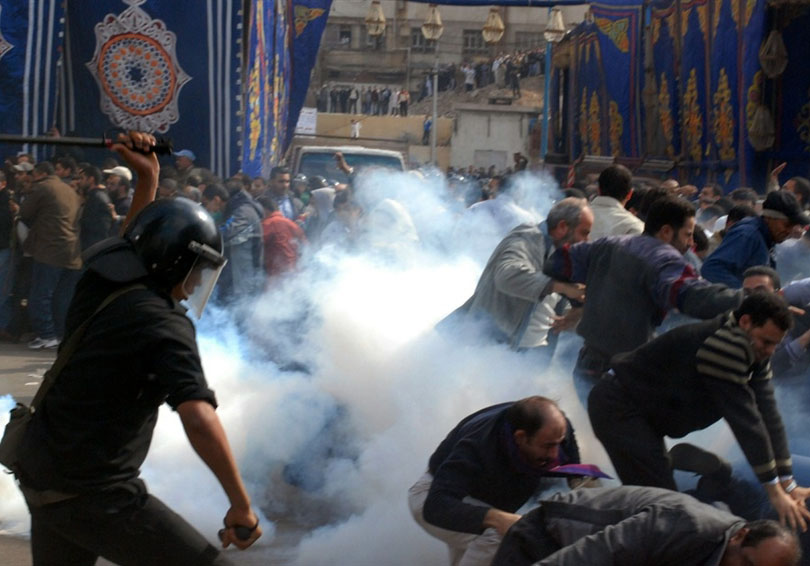
9 – 10 September: The ICJ, Hisham Mubarak Law Centre and the Egyptian Organization for Human Rights organized a conference, attended by national and international experts, on the independence of the judiciary in Egypt in light of the constitutional reform process and international standards.
Participation in “Open Dialogue with Civil Society”, Tunisia
14 – 15 September: The ICJ participated in the Tunisian “Open Dialogue with Civil Society,” organized by the National Constituent Assembly, taking advantage of the opportunity to present key recommendations to ensure constitutional and other legal guarantees for an independent, impartial and accountable judiciary. The ICJ also submitted its legal memorandum, The Reform of the Judiciary in Tunisia, to the National Constituent Assembly.
Workshop on the right to fair trial, South Sudan
22 – 24 October: The ICJ, in collaboration with the South Sudan Law Society, held a workshop in Juba on access to justice and the right to fair trial. A delegation consisting of experts and ICJ staff led the training and debate sessions, which were aimed at judges, prosecutors, lawyers and legal staff in the Ministry of Justice working in Juba and in the different South Sudanese States.
Report: ‘The Crisis of Impunity’, Sri Lanka
1 November: The ICJ released a comprehensive report entitled, Authority without Accountability: The Crisis of Impunity in Sri Lanka, which documents how and why it has become nearly impossible for people who have suffered serious human rights violations to receive justice. The ICJ urged the Sri Lankan government to immediately cease its assault on the independence of the judiciary and respect its international obligations to investigate human rights violations by bringing the perpetrators to justice through prosecution and providing victims with effective remedies and adequate reparations.
Seminar for lawyers from Central Asia, Switzerland
5 – 9 November: The ICJ organized a five-day seminar in Geneva for lawyers from Central Asian countries on the role of international human rights law in the criminal justice process. The seminar covered to the rights to fair trial, life, liberty, and freedom from torture and cruel, inhuman and degrading treatment. It provided a forum for detailed and practical discussion of international human rights law and its application to national systems.
Report: ‘Securing Justice’, Russian Federation
4 December: Following a mission to the Russian Federation in April 2012, the ICJ released a report entitled, Securing Justice: the Disciplinary System for Judges in the Russian Federation, which focuses on disciplinary action against judges, particularly dismissals, and considers how this affects the independence of judges. The report notes an inability to ensure fair judicial procedure and stresses that a deeper culture of respect for the judiciary and its independence, as well as a sense of autonomy and empowerment within the judiciary itself, is necessary to prevent further abuses. The report makes recommendations that include legal and procedural reforms.
Third ICJ Geneva Forum for Judges and Lawyers, Switzerland
13 December: The third ICJ Geneva Forum for Judges and Lawyers explored the role of the domestic court in improving access to justice. In three brainstorming sessions, the participants focused on the impact of national legal, political and cultural particularities on the operations of domestic courts; on the role of the lawyer in strengthening the protection of international human rights norms through domestic litigation; and on the way judges assess the national integration of international human rights norms. A report is forthcoming.
MONITORING ALERTS
The case of Shirani Bandaranayake, Sri Lanka
The ICJ condemned the decision of Sri Lanka’s parliament to impeach the country’s Chief Justice, Shirani Bandaranayake. The impeachment defied the rulings of the country’s Supreme Court and Court of Appeal and followed a procedure widely criticized for ignoring international standards and practice. The impeachment comes against the backdrop of increased tensions between the judiciary and the government.
Attacks against judicial independence, Central America
Concerned by developments in 2012 in Honduras, El Salvador and Guatemala, the ICJ urged the pertinent governments to abstain from interfering with judicial independence and to take necessary measures to guarantee judicial independence, by establishing protection mechanisms for judges, prosecutors and other legal professionals and by creating or reinforcing judicial careers, in line with their international obligations. The strengthening of the judicial sector must ensure the effective protection of human rights, including the fight against impunity.
Suspension of the SADC Tribunal, Southern Africa
The Pan African Lawyers Union and the Southern African Litigation Centre, with the support of inter alia the ICJ, has lodged a request for an advisory opinion with the African Court on Human and People’s Rights, seeking a pronouncement on the legality of the suspension of the Southern African Development Community Tribunal by the region’s leaders.
The case of Judge Zhumasheva, Kazakhstan
The ICJ has expressed its concern over disciplinary sanctions and threats of criminal prosecution against Judge Aliya Zhumasheva, following her refusal to abide by improper demands of senior colleagues and the Prosecutor’s Office to issue convictions in two criminal cases. The ICJ called on the Kazakh authorities to initiate a prompt, thorough and independent investigation into this alleged interference with the administration of justice.
Attack on Manjula Tillekaratne, Sri Lanka
The ICJ urged the Sri Lankan government to immediately provide justice for the physical assault of Manjula Tillekaratne, the Secretary of the Judicial Service Commission, who was assaulted by unidentified persons on 7 October. Furthermore, the ICJ called on the Sri Lankan authorities to cease public efforts to undermine the independence of the country’s judiciary.
Violation of the independence of the Bar Association and persecution of Bâtonnier Mbuyi Mbiye Tanayi, DR Congo
The ICJ expressed its grave concern over reports that the National Director of Public Prosecutions in DRC instructed senior members of the Bar Association to dismiss Bâtonnier Mbuyi Mbiye Tanayi, who is a known and vocal advocate of judicial independence. The ICJ urged the National Director to desist from interfering in the affairs of the Bar Association and to put an end to persecutions against Bâtonnier Mbuyi Mbiye.
Activists convicted without fair trial, Bahrain
The ICJ called upon the Bahraini authorities to immediately and unconditionally release 13 human rights defenders and political activists convicted by the Criminal Court of Appeal in Bahrain; the ruling upheld convictions and sentences handed down last year by the National Safety Court and the National Safety Court of Appeal. The ICJ deems the retrial before the civilian court a failure, in that it did not remedy the inadequacies of the initial trials before military courts, which did not meet international standards of fair trial.
CONTACTS AT CIJL:
Ilaria Vena, ICJ Associate Legal Adviser, t +41 22 979 3827, ilaria.vena@icj.org
Laurens Hueting, ICJ Associate Legal Adviser, t +41 22 979 3848, laurens.hueting@icj.org
Jan 22, 2013 | News
The ICJ today expressed its concern at further delays in the trial of President Desiré Delano Bouterse and 24 others, who are accused of the murder of thirteen civilians and two military personnel in 1982.
The ICJ further expressed its dissatisfaction with the continued uncertainty on the applicability of an Amnesty Law that could threaten the status of the trial.
No public statement has been made by the Suriname Military Court since the judges hearing the matter decided to suspend the trial of President Bouterse in May 2012 and leave it to the public prosecutor and an undesignated court to decide whether President Bouterse and the other accused should benefit from the country’s Amnesty Law.
“It is unacceptable that there have been no pronouncements in this case since the last hearing over eight months ago,” said ICJ Secretary-General Wilder Tayler. “Justice has been denied for more than three decades and it is in everyone’s interests, both the accused and the families of the victims, that this trial should proceed without further delay”.
President Bouterse had been accused of having been present on 8 December 1982 at the military barracks of Fort Zeelandia, where 15 political opponents were allegedly executed.
Reports published by various organizations at the time, including by an ICJ affiliate, indicated that several of the victims had also been subjected to torture. At the time, Bouterse was leading a military government in Suriname.
On 19 July 2010, Desiré Delano Bouterse was elected President of Suriname, taking up office on 12 August 2010. On 4 April 2012, despite some contestation, an amendment to the existing Amnesty Law of 1989 was adopted by the country’s Parliament, purportedly granting amnesty to President Bouterse and others for the murders that allegedly took place in 1982.
As the ICJ noted in its report of 29 May 2012, there are a number of unresolved questions regarding the legality of the Amnesty law.
Read also:
Suriname: independent observation mission to the trial of President Desiré Delano Bouterse
Jan 21, 2013 | News
The ICJ calls on the ASEAN Intergovernmental Commission on Human Rights (AICHR) to take an active role in determining the fate and whereabouts of Sombath Somphone, a community leader in Laos.
The ICJ also calls on the AICHR to fulfill its mandate under Article 4, paragraph 1.11 of its Terms of Reference, and develop a common position and strategy for tackling the serious problem of enforced and involuntary disappearances in the ASEAN region.
This position must aim towards hastening the resolution of cases of enforced and involuntary disappearances in the region, as well as effectively preventing these violations in the future.
Sombath Somphone is the founder and former director of the Participatory Development Training Center (PDTC) and 2005 recipient of the prestigious Ramon Magsaysay Award for Community Leadership.
He also led Laos’ civil society groups in participating at the Asia-Europe People’s Forum (AEPF) held in October 2012.
He was last seen being stopped by local police at the Thadeau police station on 15 December 2012, at around 5:00pm.
His family has no information on his fate or whereabouts to this day.
“It should be an urgent concern for the AICHR to give sustained priority to this case and it should vigorously encourage the government of Laos to make every effort to locate him,” said Sam Zarifi, Regional Director of the ICJ for Asia and the Pacific.
“The AICHR should seize this case as a chance to address the issue of enforced and involuntary disappearances in the ASEAN,” Zarifi added. “It should use its mandate to formulate a common position on this issue, to push governments to resolve cases of enforced and involuntary disappearances in the region.”
Following his “disappearance”, the AEPF requested ASEAN parliamentarians to conduct a mission to Laos to investigate the case.
To that end, three parliamentarians from the Philippines, Indonesia, and Malaysia traveled to Laos from 13 to 15 January 2013 and spoke to high-level representatives of government about the “disappearance” of Sombath Somphone.
One of the parliamentarians, Mr. Charles Santiago, observed that the government of Laos had evinced no political will to resolve this case.
He noted the half-hearted efforts of police in investigating this case, as illustrated by the fact that they had only called in twice Ng Shui Meng, Sombath Somphone’s wife, since her husband had been missing.
On both occasions, she was asked questions irrelevant to the case, such as how long they had been married, whether or not they had children, and where they reside.
The parliamentarians made it clear that finding Sombath Somphone, a well-known civil society leader, is crucial.
As pointed out in a public statement by Mr. Walden Bello, the parliamentarian from the Philippines, “the immediate surfacing of Mr. Sombath is in the interest of all parties, of Mr. Sombath and his family, of the Lao PDR, and of the ASEAN.”
The ICJ recalls that all States, including Laos, have an obligation to conduct a prompt, thorough and independent investigation wherever there are reasonable suspicions of enforced or involuntary disappearance.
The ICJ also emphasizes that resolving the case of Sombath Somphone is important not only for Laos, but also for the ASEAN as a region.
His citation for the Ramon Magsaysay Award for Community Leadership indicates he is recognized for “his hopeful efforts to promote sustainable development in Laos by training and motivating its young people to become a generation of leaders.”
His work not only benefits the people of Laos, but also contributes to the aspiration of ASEAN as expressed in its Charter, which is that of ensuring “sustainable development for the benefit of present and future generations and to place the well-being, livelihood and welfare of the peoples at the center of the ASEAN community building process.”
Sombath Somphone is the kind of leader integral to the realization of this vision of the ASEAN.
Contact:
Emerlynne Gil, International Legal Advisor, International Commission of Jurists, Bangkok; m: +66 840923575, email: emerlynne.gil@icj.org
Jan 17, 2013 | News
The ICJ expresses great concern over the recent pattern of attacks on human rights defenders in Zimbabwe by the Law and Order Section of the Zimbabwe Republic Police (ZRP).
The ICJ says the systematic assault on human rights defenders has taken the form of arbitrary arrests of human rights practitioners, unjustifiable raids on their offices and interference with their meetings amongst other forms of harassment.
Such attacks have been a continuous source of international concern, including when raised by United Nations Human Rights Council in its Universal Periodic Review of Zimbabwe in 2011.
There has been a failure on the part of the Zimbabwe judiciary to exercise its responsibility of judicial oversight over these abuses, the ICJ adds.
“Government officials including the ZRP are using repressive laws to harass and intimidate human rights defenders and NGOs with the aim of causing them to abandon their work in promoting and defending human rights in Zimbabwe,” said Martin Masiga, Deputy Director of the Africa Regional Programme of the ICJ. “It is deplorable that the government has contrived to fabricate charges against its own citizens to discredit, delegitimize and frustrate their lawful civic activities.”
The ICJ underscores the reports of the arrest of Zimbabwe Human Rights Association (ZimRights) Director Okay Machisa (photo) on Monday, 14 January 2013 in Harare on charges of allegedly “conspiring to commit voter registration fraud and publishing or communicating falsehoods”.
The magistrate in this matter denied bail for reasons inconsistent with international fair trial standards and which appeared to be politically motivated.
The arrest of Okay Machisa follows the detention of his deputy, Leo Chamahwinya and three other staff members of ZimRights in December 2012 on the same charges.
These arrests occurred just a few weeks after ZimRights [publicly] denounced the trend of increasing police brutality across Zimbabwe and called for urgent action by competent authorities to address these human rights violations.
The Zimbabwean Constitution, the African Charter on Human and Peoples’ Rights and the International Covenant on Civil and Political Rights, to which Zimbabwe is a state party, guarantees the right to the freedom of opinion, expression and association.
The UN Declaration on Human Rights Defenders, which articulates universal standards for the protection of those working to protect human rights, affirms that “everyone has the right, individually and in association with others, to promote and to strive for the protection and realization of human rights and fundamental freedoms at the national and international levels “.
Accordingly, Zimbabwe has a legal obligation to protect those persons and organisations that strive for the protection and promotion of human rights.
Zimbabwe reportedly will hold national elections in 2013, the first since the formation of the Government of National Unity following the tragic events of the 2008 national election.
The ICJ insists it is essential for the people of Zimbabwe and for the advancement of Zimbabwe in the arena of constitutional democracy that State officials exercise their responsibility to protect human rights activists instead of attacking them.
The ICJ urges the Government of Zimbabwe to respect regional and international human rights standards, and to call upon its law enforcement agencies to cease the harassment and intimidation of HRDs in Zimbabwe.
The ICJ calls on the Zimbabwean judiciary to exercise its responsibility to uphold international fair trial standards and the constitutional provisions of Zimbabwe in adjudicating the matters relating to human rights defenders, including the officials of ZimRights.
Contact:
Martin Okumu-Masiga, Deputy Director of the ICJ Africa Regional Programme, t: +27110248268; e-mail: martin.okumu-masiga(at)icj.org
Jan 15, 2013 | News
In particular, the Court recognizes that preventing sexual orientation discrimination is an important and legitimate purpose that justifies restrictions on freedom of religion.
In its judgment in Eweida and Others v. United Kingdom, issued on 15 January, the European Court of Human Rights affirmed that the right to act in accordance with one’s religion may be limited in order to protect others from discrimination based on sexual orientation. The ICJ, the European Region of the International Lesbian, Gay, Bisexual, Trans and Intersex Association (ILGA-Europe) and the International Federation for Human Rights (FIDH) welcome this decision.
Two of the four applications that were considered jointly in Eweida and Others concerned employees who refused to provide services to same-sex couples because of their personal religious beliefs.
The other two applications concerned employer-imposed restrictions on wearing visible crosses at work.
Lillian Ladele was employed by the London Borough of Islington as a marriage registrar.
She had refused to perform same-sex civil partnership ceremonies as part of her job because she believed that civil partnerships were equivalent to marriage and that same-sex unions were contrary to God’s will.
Following her refusal, she was disciplined and ultimately dismissed.
The Court held that Ladele’s employer’s decision not to make an exception for her religious beliefs was both legitimate and proportionate, in light of the Court’s own case-law concerning the right to be free from discrimination on the basis of sexual orientation and the need for same-sex couples to have legal recognition and protection of their relationships.
There was thus no violation of her right to be free from discrimination on the basis of religion.
Gary McFarlane was employed by Relate Federation, a private organisation providing sex therapy and relationship counselling.
He objected to treating same-sex couples and was dismissed.
The Court found that the right balance had been struck between McFarlane’s right to manifest his religious belief and “the employer’s interest in securing the rights of others.”
There was no violation of his right to freedom of religion, either separately or in conjunction with the right to be free from discrimination.
“Article 9 of the European Convention protects the right to manifest one’s religion in public, but this right is not unlimited,” stated Alli Jernow, Senior Legal Advisor of the International Commission of Jurists. “With today’s judgment, the Court upholds the importance of protecting others from discrimination.”
“This is a very timely decision, and particularly important in view of the fact that similar refusals to perform marriages and partnerships of same-sex or refusal to provide services to same-sex couples is a frequent occurrence in other European jurisdictions. This decision should help to guide national governments on the balance between freedom of religion and the right to non-discrimination on the ground of sexual orientation,” stated Evelyne Paradis, ILGA-Europe’s Executive Director.
“The Court’s reaffirmation that same–sex couples are in a similar situation to different-sex couples as regards their need to recognition and protection is an important step forward; that fundamental human right principle should guide all European states in the future,” concluded Souhayr Belhassen, FIDH President.
The ICJ, ILGA-Europe and FIDH had submitted a joint third-party intervention
See also:
European Court of Human Rights’ press release
European Court of Human Rights’ judgment in the case of Eweida and Others v. United Kingdom (Applications nos. 48420/10, 59842/10, 51671/10 and 36516/10) 15 January 2013
Jan 15, 2013 | News
The appointment of former Attorney General Mohan Peiris (photo) as Sri Lanka’s new Chief Justice raises serious concerns about the future of the Rule of Law and accountability in the country, the ICJ said today.
Mohan Peiris has served in a variety of high-level legal posts in the past decade, always playing a key role in defending the conduct of the Sri Lankan government.
He served as Sri Lanka’s Attorney-General from 2009 to 2011. Since then he has served as the legal adviser to President Mahinda Rajapakse and the Cabinet.
“During his tenure as Attorney-General and the government’s top legal advisor Mohan Peiris consistently blocked efforts to hold the government responsible for serious human rights violations and disregarded international law and standards,” said Sam Zarifi, ICJ’s Asia director.
“Mohan Peiris’ appointment as the new Chief Justice, after a politically compromised and procedurally flawed impeachment, adds serious insult to the gross injury already inflicted on Sri Lanka’s long suffering judiciary.”
The International Commission of Jurists, in its recent report on impunity in Sri Lanka, highlighted Mohan Peiris’ lack independence as Attorney-General, noting the alarming number of cases involving prominent politicians that were withdrawn during his tenure.
In November 2011, as Attorney General, Peiris told the UN Committee Against Torture in Geneva that political cartoonist Prageeth Ekneligoda, believed to have been subjected to enforced disappearance in January 2010, had actually left Sri Lanka. In June 2012, Peiris admitted to a court in Colombo that this claim was groundless.
“ICJ condemns this appointment as a further assault on the independence of the judiciary and calls on the Sri Lankan government to reinstate Chief Justice Shirani Bandaranayake. If there are grounds for questioning the Chief Justice’s actions, they should be pursued following due process and a proper impeachment process.”
CONTACT:
Sam Zarifi, ICJ Asia-Pacific Regional Director, Bangkok, t:+66 807819002; email: sam.zarifi(at)icj.org
Sheila Varadan, ICJ Legal Advisor, South Asia Programme, Bangkok, t: +66 857200723; email: sheila.varadan(at)icj.org
NOTE:
In a statement today (see below), Justice Bandarayanake strongly denied all the charges against her and asserted her status as the legal Chief Justice of Sri Lanka’s supreme court. She said: “The accusations leveled against me are blatant lies. I am totally innocent of all charges…Since it now appears that there might be violence if I remain in my official residence or my chambers I am compelled to move…”
Sri Lanka-CJ final speech-2012 (full statement, in pdf)
Read also:
ICJ condemns impeachment of Sri Lanka’s Chief Justice
Sri Lanka’s Parliament should reject motion to impeach Chief Justice
Impeachment of Sri Lankan Chief Justice: Government must adhere to international standards of due process