
Bahrain: authorities to fully cooperate with UN Mechanisms and implement recommendations of Commission of Inquiry
The Bahrain authorities must fully cooperate with the UN mechanisms and implement the recommendations of the Bahrain Independent Commission of Inquiry (BICI) set up by the Government of Bahrain in June 2011.
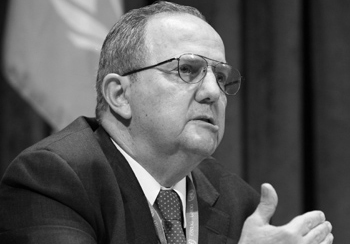
The ICJ further calls on the Bahrain authorities to ensure that the recommendations from the UN Universal Periodic Review process in September 2012 are implemented in full and in good faith and, to this end, immediately extend an invitation with specific dates to the UN Special Rapporteur on torture, Juan E. Méndez (photo).
The statement comes as the authorities in Bahrain effectively cancelled a visit of the Special Rapporteur for the second time, a previous visit in March 2012 also having been postponed at the last minute.
“As a former member of the BICI, I find it extremely disappointing that Bahrain has taken this decision for the second time. It keeps dangling the possibility of a visit when it is under pressure to do something about implementing the BICI recommendations,” said Sir Nigel Rodley, President of the ICJ. “One does not have to be a cynic to infer that once the pressure eases – for example, because the Human Rights Council has concluded its review of Bahrain’s human rights performance or the Formula One race is over – it can then withdraw its invitation. I hope the international community will take account of this pattern, when reacting to positive assurances from the authorities. Promises are no substitute for implementation.”
The report of the BICI, published in November 2011, documented numerous cases of torture and ill-treatment.
It further made crucial recommendations for reform so as to prevent these and other violations in the future, including effective investigations into all cases of torture and ill-treatment by an independent and impartial body; the establishment of a standing independent body to examine all complaints of torture or ill-treatment, excessive use of force or other abuses at the hands of the authorities; and the compensation and provision of remedies for all victims.
“The BICI’s recommendations included ones to address the serious problem of torture in Bahrain, a problem I had identified in the 1990s when I held the mandate Juan Mendez now discharges with consummate professionalism. One may perhaps be pardoned for considering that the only threat posed by the visit to the political situation is the fear of what information would be uncovered by the visit,” Sir Nigel Rodley concluded.
Contact:
Said Benarbia, ICJ Senior Legal Adviser of the Middle East and North Africa Programme, t: +41 22 979 3817, e-mail: said.benarbia(a)icj.org
UN Photo/Rick Bajornas
Egypt: ICJ calls on authorities to end impunity for gross human rights violations and guarantee victims’ rights to a remedy and to reparation
The ICJ calls on the Egyptian authorities to take immediate steps to guarantee the rights of victims of human rights violations to an effective remedy and to reparation for the serious harm many have suffered.
The authorities should initiate, as a matter of the highest priority, prompt, thorough, independent and impartial investigations into past and ongoing human rights abuses, including cases of arbitrary detention, torture and ill-treatment, and extrajudicial and other unlawful killings.
The statement comes as the ICJ concludes a high-level mission to address the human rights situation in Egypt and to examine the measures being taken by the authorities to address both the legacy of human rights abuses and to ensure accountability for them.
“The Egyptian authorities should ensure that the pattern of widespread and systematic human rights violations committed under the former regime is not repeated. This will involve the comprehensive reform of State institutions and the revision of the national legal framework with a view to ensuring that the rights of victims are safeguarded in line with international standards,” said Justice Kalthoum Kennou, ICJ Commissioner and member of an ICJ mission to Egypt. “Such reforms should target the police and security forces, the Office of the Public Prosecutor, the Forensic Medicine Office and the judicial system as a whole, including by restricting the jurisdiction of the military justice system to exclude civilians and all cases involving human rights violations.”
The ICJ notes that current reparation programmes, established by the government, have a restricted mandate, which has resulted in the arbitrary exclusion of numerous victims and their families from these programmes. They also do not ensure the accessibility of the range of reparations required under international law. Most importantly, such programmes have failed so far to ensure accountability for past and ongoing human rights violations.
“The very few proceedings against State officials have resulted in acquittals or sentences that are not commensurate with the gravity of the crimes committed. In order to end this cycle of impunity, the Egyptian authorities must hold those responsible for gross human rights violations accountable through criminal prosecutions,” said Alejandro Salinas, a Chilean lawyer and member of the ICJ mission. “They should also establish a transitional justice mechanism with sufficient guarantees of independence and with a comprehensive mandate to address the legacy of past and present human rights abuses, while ensuring that impunity does not become entrenched.”
The delegation was led by ICJ Commissioner, Justice Kalthoum Kennou, and Alejandro Salinas, and was supported by ICJ legal advisers, Alice Goodenough and Marya Farah. The delegation met with the then Minister of Justice, Ahmed Mekki, Justice Adel Omar Sherif of the Supreme Constitutional Court, the President and Secretary-General of the National Council for Human Rights, Hossam Al Gheryani and Abdallah El Ashaal, the Director of the National Council for the Care of the Revolution’s Martyrs, Families and Wounded, Khaled Badwy, the Vice President of the Court of Cassation and Secretary General of the High Judicial Council, Justice Mohamed Mahgoub, Chairman of the Human Rights Committee of the Shura Council, Ehab Kharrat, members of the judiciary, the legal profession and civil society, as well as a number of victims, and the families of victims of human rights violations committed before and after the departure of former President Mubarak.
Contact:
Said Benarbia, ICJ Senior Legal Adviser of the Middle East and North Africa Programme, tel: 41 22 979 38 17, e-mail: said.benarbia(a)icj.org
Egypt-ICJ calls auhorities-Press release-2013-Arabic (full text in PDF)
Final nominees of the 2013 Martin Ennals Award announced
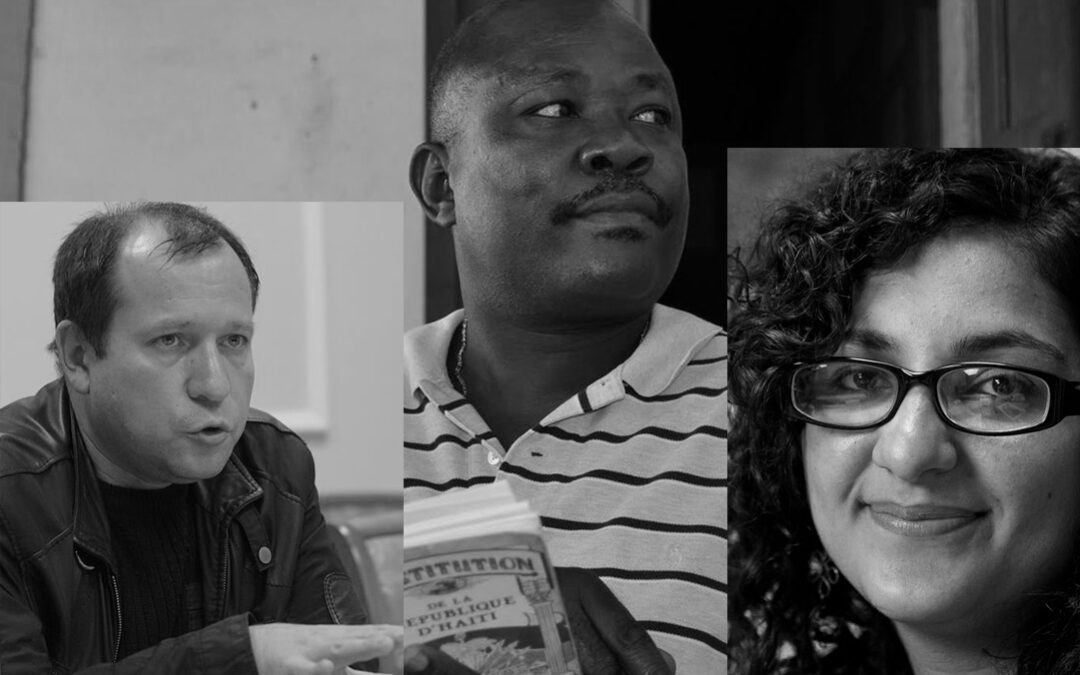
The three final nominees for the Martin Ennals Award for Human Rights Defenders are Mona Seif (Egypt), Joint Mobile Group (Russia) and Mario Joseph (Haiti). The ICJ is one of the ten members of the jury.
The Martin Ennals Award is given to Human Rights Defenders who have shown deep commitment and face great personal risk. The aim of the award is to provide protection through international recognition.
Selected by ten leading human rights organizations (ICJ, Amnesty International, Human Rights Watch, Human Rights First, International Federation of Human Rights, Front Line Defenders, HURIDOCS, Diakonie – German Protestant Welfare, World Organization Against Torture and International Service for Human Rights) it is the world’s most important Human Rights Prize.
The 2013 Award will be presented on Oct. 8th at a ceremony hosted by the City of Geneva.
Mona Seif (Egypt) is the core founder of the” No To Military Trials for Civilians”, a grassroots initiative which is trying to stop military trials for civilians.
Since February 25, 2011, Mona has brought together activists, lawyers, victims’ families, local stakeholders and started a nationwide movement against military trials.
As part of the recent crackdown on the Freedom of Speech in Egypt she has been charged along with other Human Rights activists.
She noted that “International solidarity, and I mean people’s support not governments, empowers us to continue our battle and stop military trials for civilians“.
After the murder of several human rights activists working in Chechnya, Igor Kalyapin started the Joint Mobile Group. To reduce the risk they send investigators on short missions to Chechnya to document Human Rights abuses.
This information is then used to publicise these abuses to seek legal redress. Igor Kalyapin speaking of the effect of international publicity said “… when the international community is watching us it is more difficult for the authorities to take steps against us…”
Mario Joseph, Haiti’s most important Human Rights lawyer, has worked on some of the most important cases in Haiti, including the current case against the former dictator Jean-Claude “Baby Doc” Duvalier.
His family received asylum in the United States in 2004, while he chose to return to Haiti. He has faced threats and harassment for much of his 20 years as a lawyer although it has intensified in recent months.
He says: “this recognition from the Ennals Award shines a vital spotlight on my work, and on the work of everyone who is fighting for human rights in Haiti. That spotlight will make our work safer and more effective.”
MEA-Short Summary-2013 (read the pdf)
MEA-MONA SEIF bio-2013 (read the pdf)
MEA-JOINT MOBILE GROUP bio-2013 (read the pdf)
MEA-MARIO JOSEPH bio-2013 (read the pdf)

CIJL Newsletter – N°3
This newsletter informs you on recent activities and ongoing situations related to the ICJ’s work on the independence of the legal profession.

ICJ condemns Taiwan’s imposition of the death penalty
The ICJ today condemned the execution by the Government of Taiwan of six prisoners, convicted on charges of murder, on 19 April 2013. It follows the earlier execution of six convicted persons in December 2012.
Twenty-one executions have been carried out in Taiwan since April 2010, shattering a de facto moratorium of the death penalty that had been respected by the Government since December 2005.
“The Government of Taiwan’s execution of 12 people in the last six months constitutes a serious and unacceptable assault on the right to life and human dignity”, said Alex Conte, Director of the ICJ International Law & Protection Programmes. “These executions also place Taiwan at odds with the international community, which has adopted with increasingly large majorities since December 2007 the UN General Assembly resolutions calling for a worldwide moratorium on executions”, Conte added.
This new round of executions are especially lamentable in light of the encouraging step recently taken by the country to invite an international group of experts to review the measures adopted by the Government to promote and protect human rights. The recommendations to the Government of Taiwan, formulated by those experts, and welcomed by the ICJ and other rights groups, included intensifying efforts towards the abolition of capital punishment and the recommendation that Taiwan “as a first and decisive step, immediately introduces a moratorium on executions in accordance with the respective resolutions of the UN General Assembly”.
The ICJ believes that the use of the death penalty constitutes a violation of the right to life and the right not to be subjected to cruel, inhuman or degrading punishment.
ICJ and other rights groups encourage Taiwan on domestic implementation of human rights (see ICJ and other rights groups’ statement on Taiwan’s human rights review process)
Recent News
 Thailand: Three draft anti-SLAPP laws must deliver comprehensive protection23 Oct 2026
 Egypt’s Matsda2sh case: end the crackdown on media workers with fake “terrorism” charges19 Oct 2026
 Joint Letter: Addressing Human Rights Abuses During Vietnam’s To Lam’s Visit16 Oct 2026
 Joint Letter: Urgent diplomatic action to halt further executions in eastern Libya13 Oct 2026