May 6, 2020 | Advocacy, News, Publications
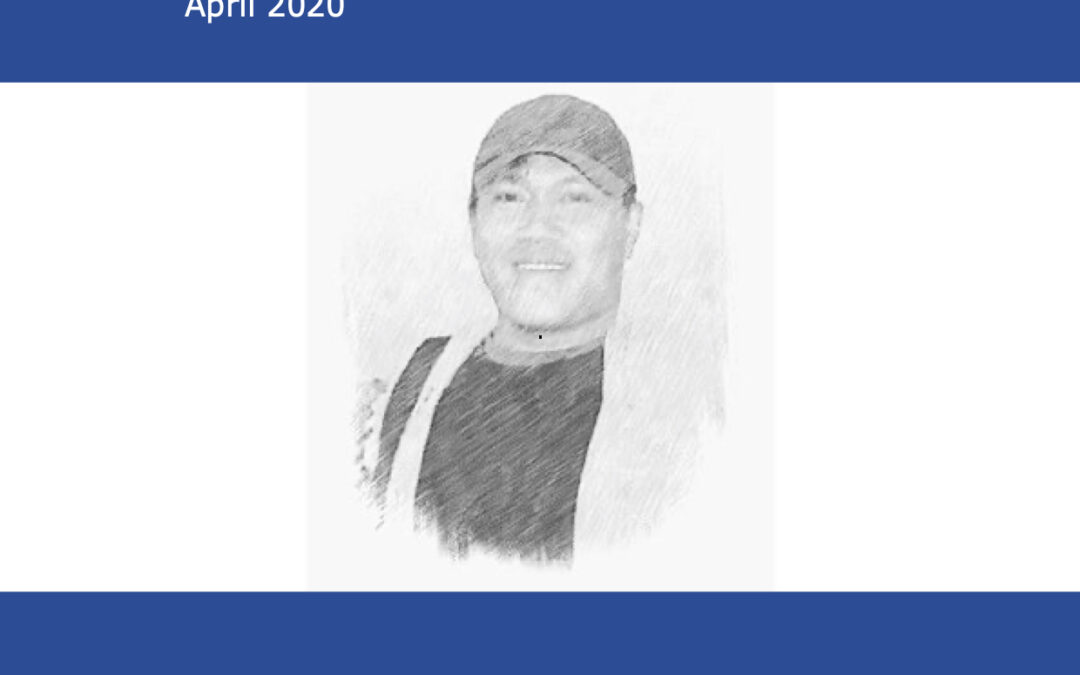
In a report published today, the ICJ called on the police and prosecutorial authorities in Myanmar to re-open the investigation into the death of journalist Ko Par Gyi in military custody in September 2014.
The report documented the many barriers that have prevented justice from being served in this case, as well as other cases of gross human rights violations in Myanmar.
The ICJ called on the Union Parliament to repeal or amend the 1959 Defence Services Act and other legislation that effectively provides immunity to military personnel accused of serious crimes. These and other barriers have been described at length in the ICJ’s 2018 report on Achieving Justice for Gross Human Rights Violations.
“More than three years ago, the police abruptly ended their formal inquiry into the killing of Ko Par Gyi, without providing any justifiable legal rationale for its closure,” said Frederick Rawski, ICJ Asia Pacific Director. “In the intervening years, we have seen what happens when this culture of military impunity goes unaddressed.”
In the report, An unlawful killing: How Ko Par Gyi’s death highlights barriers to justice in Myanmar, the ICJ evaluated the various investigations into the death and identified three key obstacles to justice in the case:
- the existence and operation of national laws like the 1959 Defence Services Act that shield security forces from public criminal prosecutions, serving to deny victims and their families the right to truth about violations;
- sub-standard investigative practices that are vulnerable to political pressure and lacked independence, and simultaneous, separate and uncoordinated investigations that resulted in an unsystematic and ineffective approach to investigating the case; and
- a lack of transparency that denied the family their right to access information concerning the violations and accountability processes.
Ko Par Gyi was detained by police in Mon State and transferred to military detention on 30 September 2014. He died four days later in military custody. A deeply flawed inquiry carried out in military courts, pursuant to the 1959 Defence Services Act, resulted in the acquittal of the soldiers allegedly involved. Those same provisions are commonly used to transfer cases involving military personnel from civilian to military court. Under international standards, military courts should not be used to try military personnel or others for gross human rights violations and crimes under international law.
“It is no surprise that an international investigative mechanism has been established to look into alleged serious human rights violations in Rakhine and elsewhere in Myanmar,” said Rawski. “Myanmar’s legal framework does not provide adequate safeguards to ensure independent investigation into and prosecution of serious human rights violations. What happened to Ko Par Gyi’s case illustrates that all too clearly.”
The UN Human Rights Council has established an Independent Investigative Mechanism for Myanmar (IIMM) to collect evidence and prepare files for criminal prosecution of the most serious international crimes and violations of international law committed in Myanmar since 2011.
Key recommendations in the report include:
- To the Executive and the Union Parliament: amend the 1959 Defense Services Act to align it with democratic principles, the constitutional guarantee of equal legal protection, and the State’s international law obligation to protect the right to life, including by prosecuting serious violations.
- To the Tatmadaw: apply standards and procedures in military courts that conform to international law, ensure all crimes perpetrated against civilians are tried in the civilian judicial system, and reform rules of engagement to explicitly instruct soldiers to protect life, consistent with international law.
- To the Myanmar Police Force and the Union Attorney General’s Office: align investigative procedures and practices with international law and standards.
- To the Myanmar National Human Rights Commission: take an active and broad interpretation of the MNHRC mandate to address serious human rights violations including those which have gone before courts.
- To UN Member States and international organizations: ensure any organizational support to security forces is contingent on and enables demonstrable commitments to prevent and punish violations by its members.
This report was produced as part of the ICJ’s Global Accountability Initiative, which aims at combatting impunity and promoting redress for gross human rights violations around the world through the entrenchment of the rule of law
Download
An unlawful killing: How Ko Par Gyi’s death highlights barriers to justice in Myanmar in English and Burmese.
Press statement with additional background information on Ko Par Gyi in English and Burmese.
Contact:
Frederick Rawski, ICJ Asia Pacific Regional Director, (Bangkok), t:+66 64 4781121, e: frederick.rawski@icj.org
Kingsley Abbott, Coordinator of the ICJ’s Global Accountability Initiative, t: +66 94 470 1345; e: kingsley.abbott(a)icj.org
May 1, 2020 | News
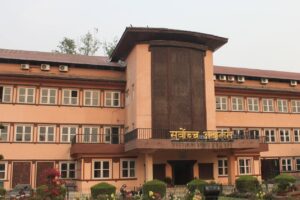
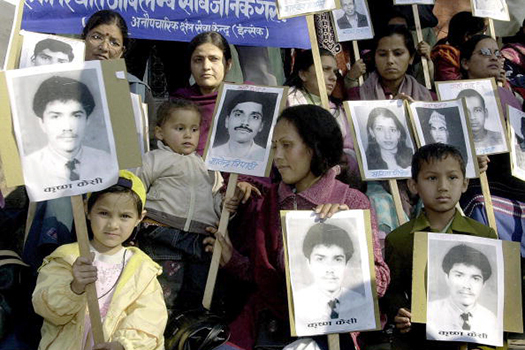
The decision by Nepal’s Supreme Court to reject a petition by the government asking that it review its 2015 ruling against amnesties for grave conflict-era crimes is an important step in securing truth, justice and reparations for the thousands of victims of the country’s decade-long conflict, the ICJ and other groups said today.
The armed conflict between Maoist and government forces ended in 2006, but victims of serious abuses by both sides are still awaiting justice, accountability and reparations.
The ICJ, Amnesty International, TRIAL International, and Human Rights Watch called upon the Government to revise the 2014 Transitional Justice Act and ensure its implementation in accordance with the Supreme Court’s judgments, so as to assure access to justice for the victims of conflict-era abuses.
Nepal’s transitional justice law, which was passed by Parliament in April 2014, established a Truth and Reconciliation Commission and a Commission of Investigation on Enforced Disappeared Persons.
However, it contained provisions that could allow for amnesties even for crimes such as torture, including rape and other sexual violence and ill-treatment and enforced disappearance.
On 26 February 2015, the Supreme Court struck down the amnesty provisions and ordered the act to be amended accordingly. However, the government immediately petitioned to overturn the ruling. That petition was rejected by the court on April 27, 2020.
“With the Supreme Court’s decision, there can be no further excuse for government backsliding on ensuring truth, justice, reparations and guarantees of non-recurrence. The government should immediately amend the Enforced Disappearances Enquiry, Truth and Reconciliation Commission Act, 2014 in line with the Supreme Court’s orders and its own international obligations,” said Biraj Patnaik, South Asia Director at Amnesty International.
With its latest ruling the Supreme Court has upheld the principle that there can be no amnesties for those suspected of criminal responsibility for crimes under international law and human rights violations. More than 13 years since the Comprehensive Peace Agreement of November 2006 promised justice to the victims, no one has been made accountable for any conflict era crimes.
“The request filed by the Nepal Government to review the decision of the Supreme Court was another attempt to evade the real issue: accountability for mass human rights violations. We are delighted that the Supreme Court held its ground and reaffirmed the importance of fair and efficient transitional justice mechanisms,” said Cristina Cariello, the Head of Nepal Program at TRIAL International.
Amnesty International, the ICJ, Human Rights Watch and TRIAL International have repeatedly expressed concerns about the faltering transitional justice process. Besides the failure to amend the law to uphold basic principles of justice, there have been long delays and repeated political interference in appointments to the two transitional justice commissions.
“Over the past decade, the Supreme Court of Nepal has produced some of the most human rights compliant jurisprudence in South Asia. This petition cynically sought to have the Court undermine its own judgement, so that the government could sidestep its responsibility to provide accountability for conflict-related human rights violations,” said Frederick Rawski, ICJ Asia Pacific Director. “The government has no excuse for not immediately amending the transitional justice legal framework so that it is consistent with the Court’s jurisprudence and Nepal’s international legal obligations.”
An effective transitional justice system requires strong legal foundations consistent with international law and standards, and the political will to address the demands of victims of the conflict, the organizations said.
“When Nepal stood for election to the United Nations Human Rights Council the government promised to uphold its human rights obligations, but 3 years later, as it seeks re-election, there has been nothing but impunity and evasion on transitional justice,” said Meenakshi Ganguly, South Asia director at Human Rights Watch. “These are crimes under international law, subject to universal jurisdiction, and if justice is denied at home victims may take their cases abroad.”
Contact
Frederick Rawski, ICJ Asia-Pacific Director, frederick.rawski(a)icj.org, +66644781121
Download
English
Nepali

Apr 28, 2020 | News
The ICJ today urged Taiwan to decriminalize adultery as soon as possible.
Echoing the UN Human Rights Committee, the UN the Committee on the Elimination of Discrimination against Women and the UN Working Group on discrimination against women in law and practice, the ICJ stated that the criminalization of people who are not married to each other for engaging in consensual sexual relations is a violation of the right to be free from discrimination; the right to equality before the law and equal protection of the law without discrimination; and the right to privacy, among other rights. The criminalization of adultery also often leads to discrimination and violence against women.
The Constitutional Court of Taiwan is currently deliberating on the constitutionality of Article 239 of the Criminal Code, which provides that, “a married person who commits adultery with another shall be sentenced to imprisonment for not more than one year; the other party to the adultery shall be subject to the same punishment.” On 31 March 2020, Taiwan’s Constitutional Court heard oral arguments on the constitutionality of Article 239 after several judges requested an interpretation of the law. The Court is expected to release its opinion on the matter at the end of May.
“In many ways, the ongoing criminalization of adultery leads to dire consequences for women’s human rights in Taiwan,” said Emerlynne Gil, Senior International Legal Adviser of the International Commission of Jurists.
“The enforcement of criminal adultery provisions often leads to discrimination and violence against women. In Taiwan, for example, women are disproportionately the target of adultery lawsuits. While male adultery enjoys greater tolerance in Taiwan, women are being targeted because of harmful gender stereotypes and rigid constructions of femininity.”
The ICJ notes that women are twenty percent more likely to be convicted than men in adultery cases in Taiwan. Furthermore, to secure a conviction on adultery charges in Taiwan, given the criminal law standard of proof, there has been a resort to photographic evidence of the two accused individuals engaging in sexual acts in some cases. As a result, an entire industry of private investigators, often engaging in illegal behaviour, has developed in response to “market” demand for “evidence” capable of making criminal adultery charges stick.
Taiwan is not a Member State of the UN, but in 2009 it introduced legislation aimed at incorporating the International Covenant on Civil and Political Rights (ICCPR) as a matter of domestic law. In 2013, an International Review Committee composed of independent human rights experts working in their personal capacities recommended that Taiwan should take steps to abolish the adultery provision in its Criminal Code as it was not in conformity with Article 17 of the ICCPR.
“Continuing to criminalize adultery goes against the image that Taiwan wants to portray of itself, that it is a beacon of democracy and human rights in Asia,” Emerlynne Gil said. The ICJ urges Taiwan to decriminalize adultery as soon as possible by removing the above mentioned provision from its Criminal Code.
Additional Information
There have been several challenges in the past to the constitutionality of Article 239 of Taiwan’s Criminal Code. In 2002, in one of such challenges, the Constitutional Court issued Interpretation 554, holding that the freedom of sexual behavior was inseparably related to the personality of individuals, and every person was free to decide whether or not and with whom to have sexual affairs. However, the Court went on to say that such freedom was legally protected only if it was not detrimental to “the social order or public interest”, as provided in Article 22 of the Constitution and, therefore, “the freedom of sexual behavior” was subject to the restriction that marriage and the institution of the family imposed on it.
Download the statement in Mandarin Chinese here.
Contact
Boram Jang, ICJ Legal Adviser – Access to Justice for Women, Asia & the Pacific Programme, e: boram.jang(a)icj.org

Apr 27, 2020 | News
Today, the ICJ and Lawyers’ Rights Watch Canada (LRWC) jointly submitted a legal brief (amicus curiae) to the Court of Appeal in criminal defamation proceeding against Thai journalist Suchanee Rungmuanporn (Cloitre).
The journalist is being charged after making a post on Twitter highlighting labour rights violations by Thammakaset Company Limited. The post detailed an order by Thailand’s Court of Appeal for Specialized Cases for Thammakaset to provide compensation to its 14 former employees from Myanmar, with the word “slavery” included in the post. This inclusion is the basis for defamation claim.
On 24 December 2019, Suchanee was sentenced to two years’ imprisonment by Lopburi Provincial Court.
The intervention reviews the nature and scope of Thailand’s international legal obligations relating to the right to freedom of expression. It makes clear that the imposition of harsh penalties such as imprisonment has a “chilling effect” on the exercise of freedom of expression, which Thailand is bound to protect pursuant to its international legal obligations. It particularly undermines the work of journalists and human rights defenders seeking to bring to light these violations and whose activities must be protected.
The brief underscores that under international law and standards, criminal sanction involving imprisonment must never be imposed for defamation.
Criminal defamation, under sections 326 of the Criminal Code, carries a maximum sentence of one year of imprisonment, a fine of up to 20,000 Baht (approx. USD 640) or both. Section 328 criminalizes defamation “by means of publication” with up to two years’ imprisonment and a fine of up to 200,000 Baht (approx. USD 6,400).
This case is one of 36 cases brought by Thammakaset against several individuals who have expressed views and conducted advocacy on or released information relating to labour rights violations alleged to have been committed by Thammakaset. These include criminal defamation complaints against human rights defenders, including Mr. Nan Win, Ms. Sutharee Wannasiri, Ms. Ngamsuk Rattanasatiean, Ms. Angkhana Neelapaijit, Ms. Puttanee Kangkun, and Ms. Thanaporn Saleephol.
Download
Legal brief (amicus curiae) to the Court of Appeal in Thai and English.
Apr 24, 2020 | News
On 24 April 2020, the ICJ, Thai Lawyers for Human Rights (TLHR) and the Cross Cultural Foundation (CrCF) made a joint supplementary submission to the UN Human Rights Committee on Thailand’s implementation of its human rights obligations under the International Covenant on Civil and Political Rights (ICCPR).
In their submission, the ICJ, TLHR and CrCF detailed their concerns in relation to Thailand’s failure to implement the Committee’s recommendations, including the ongoing human rights shortcomings of the country’s Constitutional and legal framework; the continued lack of domestic legislation criminalizing torture, other ill-treatment and enforced disappearance; and reports of torture and other ill-treatment. In addition, the three human rights organizations expressed concern over the use of the Emergency Decree on Public Administration in Emergency Situation to combat the COVID-19 outbreak, and measures imposed under the Decree that may constitute a blanket restriction on fundamental freedoms, including the rights to free expression, opinion, information, privacy and freedom of assembly and association, with no opportunity for the courts to review these extraordinary measures.
The organizations’ submission also describes human rights concerns with respect to the following:
Constitution and legal framework
- Head of the NCPO Order No. 22/2561; and
- Head of the NCPO Order No. 9/2562
Extrajudicial killings, enforced disappearances and torture
- continued lack of domestic legislation criminalizing torture, other ill-treatment and enforced disappearance;
- reports of extrajudicial killings, torture, other ill-treatment, enforced disappearances, and the progress and results of investigations;
- the application of security-related laws; and
- threats and reprisals against persons working to bring to light cases of alleged torture, ill–treatment and enforced disappearance.
Download
Thailand-UN-Human-Rights-Committee-Supplementary Submission-2020-ENG (English, PDF)
Thailand-UN-Human-Rights-Committee-Supplementary Submission-2020-THA (Thai, PDF)
Background
On 23 March 2017, during its 119th Session, the Human Rights Committee adopted its Concluding Observations on the second periodic report of Thailand under article 40 of the ICCPR.
Pursuant to its rules of procedure, the Committee requested Thailand to provide a follow up report on its implementation of the Committee’s prioritized recommendations made in paragraphs 8 (constitution and legal framework) 22 (extrajudicial killings, enforced disappearances and torture) and 34 (conditions of detention), within one year of the adoption of its Concluding Observations – i.e., by 23 March 2018.
On 18 July 2018, Thailand submitted its follow-up report to the Committee. The report was published on 9 August 2018.
On 27 March 2018, the ICJ, TLHR and CrCF made a joint follow-up submission to the UN Human Rights Committee. However, since then, there have been several developments that the three organizations wish to bring to the attention of the Committee through this supplementary submission.
The UN Human Rights Committee will review Thailand’s implementation of the prioritized recommendations during its 129th Session, in June/July 2020.
Further reading
ICJ and TLHR, Joint submission to the UN Human Rights Committee, 13 February 2017
ICJ, TLHR and CrCF, Joint follow-up submission to the UN Human Rights Committee, 27 March 2018

Apr 22, 2020 | Advocacy, News
The ICJ based on the consultations with the participants of the Regional Forum of Lawyers held in Dushanbe, Tajikistan, published recommendations on the Independence of Legal Profession and Role of Lawyers in Justice Systems of the Central Asian States.
The recommendations draw attention of State and non-State actors in the Central Asian countries to the urgency in ensuring in law and practice the independence of the lawyers’ professional associations and individual lawyers.
“Lawyers play a critical role in strengthening the rule of law and protection of human rights in the justice systems of all countries of the world, including in Central Asia,” Temur Shakirov, ICJ Senior Legal Adviser said.
“We hope that these recommendations, which are based on consultations and international law and standards on the role of lawyers, will contribute to strengthening the independence lawyers and Bar Associations in Central Asia”.
The recommendations, apart from the lawyers’ communities themselves, are addressed to national professional associations of lawyers, Parliaments, and Governments, and specifically Ministries of Justice that continue in some countries of Central Asia to exercise formal and informal influence over the national Bar Association, including by imposing control in regard to access to the profession and disciplinary proceedings.
“The ICJ calls on these institutions to adopting urgent and effective measures legal and policy measures to safeguarding lawyers’ ability to carry out their professional duties in an atmosphere free from any other improper interference, institutional or personal, in each of the countries of the Central Asian region,” Shakirov added.
Background:
On 9 November 2018, the ICJ facilitated the Regional Forum on the Independence in Justice Systems of the Central Asian States in Dushanbe, Tajikistan. This was the first regional event hosted by the Union of Lawyers of Tajikistan, a professional association of lawyers that was established in 2014. The Forum brought representatives of the National Bar Associations of the Republic of Kazakhstan, the Kyrgyz Republic, the Republic of Tajikistan and the Republic of Uzbekistan. The event was also supported by Legal Policy Research Centre (LPRC), a think tank from Almaty, Kazakhstan, that works on the reform of legal profession in the region.
The participants of the Forum highlighted the continuing and renewed attempts to undermine the independence of the professional associations of lawyers in countries of Central Asia, including targeted disbarment and harassment of individual lawyers for fulfilment of professional duties towards their clients. The participants also discussed the emerging practice of the establishment of specialized bodies for the protection of the rights of lawyers within the professional associations of lawyers to counter negative trends in Central Asian countries, affecting the legal profession.
Recommendations, in PDF: Central Asia-Recommendations-Advocacy-2020-ENG