Jun 16, 2020 | News
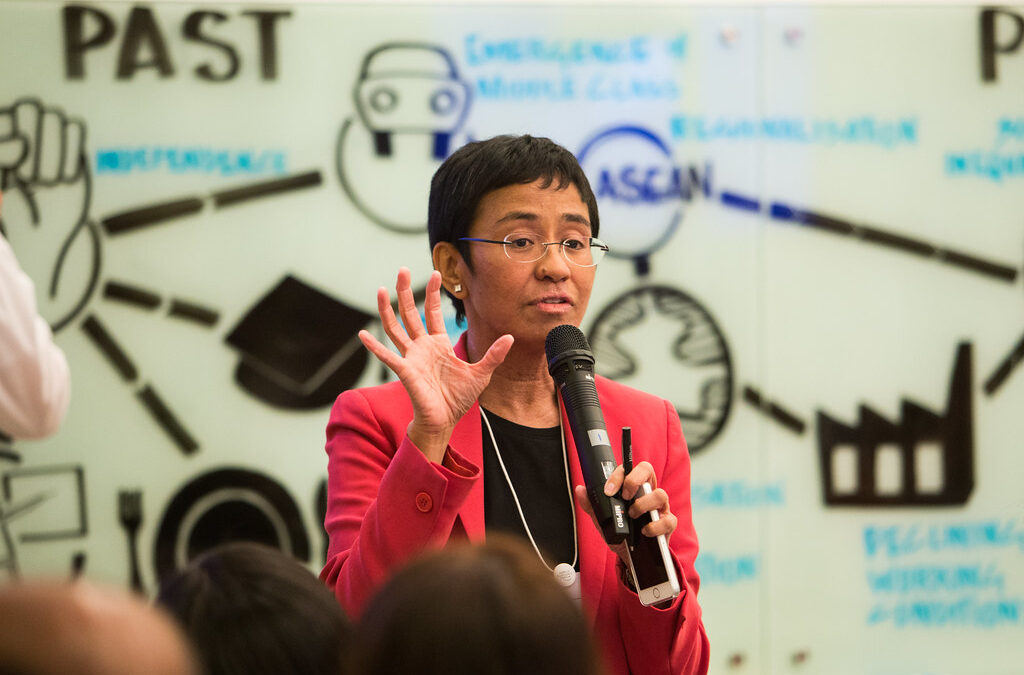
Today, the ICJ condemned the prosecution and conviction of journalists Maria Ressa and Reynaldo Santos, Jr. after the Manila Regional Trial Court found them guilty of cyber-libel for an article published on the news website Rappler. The ICJ called for the judgment to be reversed on appeal.
The ICJ also called on the Philippines to reform its laws to remove the possibility of criminal sanction for defamation and libel offenses, in line with its international legal obligations. The ICJ recalled that imprisonment for such offenses is never permissible.
“The guilty verdict is a new low for the Duterte administration, and adds to an atmosphere of intimidation that creates a chilling effect on online expression, especially for journalists seeking to hold the government to account,” said Frederick Rawski, ICJ Asia-Pacific Director.
“The conviction is not only a miscarriage of justice in this particular case; it also sets a terrible precedent for the use of criminal defamation laws to prosecute speech online in the Philippines and elsewhere in the region.”
Ressa and Santos were convicted pursuant to Section 4(c)(4) of the 2012 Cybercrime Prevention Act (CPA), and sentenced to imprisonment of up to six years and a fine of PhP 200,000 (approx. USD 4,000). Ressa is the executive editor of Rappler while Santos was the author of the article. Ressa’s conviction comes after years of legal harassment, forming part of a pattern of attacks upon the press by the Duterte government and placing the Philippines in violation of the right to freedom of expression under the International Covenant on Civil and Political Rights (ICCPR), to which the Philippines is a party.
The charges involved an article first published in May 2012 on the Rappler website, months before the CPA was enacted in September 2012. The article reported on businessman Wilfredo Keng’s alleged involvement in “human trafficking and drug smuggling.” Keng initiated the criminal proceedings against Ressa and Santos in October 2017, five years after the article was published.
However, the trial court considered the article to have been “republished” on 19 February 2014 when Rappler updated the article on its website to fix a typographical error. Further, since the CPA does not expressly mention the prescriptive period, the trial court held that Republic Act No. 3326 applies, which provides a 12-year prescriptive period for offenses punished under a ‘special law’ such as the CPA. In contrast, ordinary libel under the Revised Penal Code carries a one-year prescriptive period.
“Regardless of the merits of the case, criminal sanction involving imprisonment must never be imposed for defamation,” said Rawski.
“On top of this general consideration, the judgment even sets a dangerous precedent by expanding the prescriptive period and ‘publication’ requirement for the crime of libel, contradicting well-established protections against ex post facto laws and that any ambiguity in penal laws must be resolved in favor of the accused.”
The right to freedom of expression under Article 19 of the ICCPR extends to political discourse, commentary on public affairs and journalism. The UN Human Rights Committee, the supervisory body for the ICCPR, has called on States to abolish existing criminal defamation laws and reserve defamation for civil liability. The Committee concluded in 2012 that the Philippines’ criminalization of defamation, including under the CPA, breaches its obligations under the ICCPR. Article 15 of the ICCPR also prohibits the prosecution of persons for acts that were not considered a crime at the time of commission.
The Committee and the UN Human Rights Council have affirmed that these safeguards apply online as well as offline, as Article 19 protects expression regardless of frontiers and through any media of one’s choice. The UN Special Rapporteur on freedom of expression has consistently called for decriminalization of defamation as a criminal offence, which is inherently harsh and encourages self-censorship.
Contact
Emerlynne Gil, Senior International Legal Adviser, +662 619 8477 (ext. 206), emerlynne.gil(a)icj.org
Download
Philippines-Maria-Ressa-Press-Release-2020-ENG (PDF)
Related work
Report: Curtailing Free Expression, Opinion and Information Online in Southeast Asia
Philippines: order to major media outlet to stop airing violates freedom of expression and access to information
Jun 5, 2020 | News
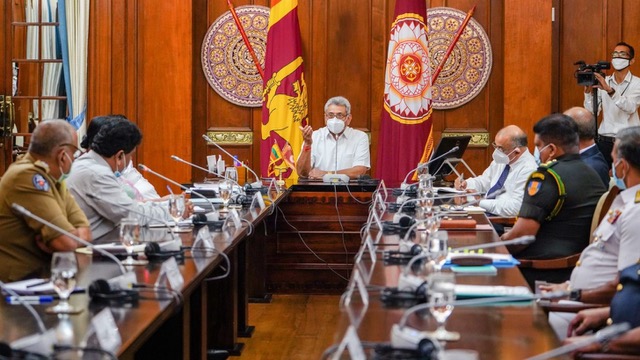
The ICJ today condemned the proclamation by the Sri Lankan president to establish a Presidential Task Force dominated by the security forces and called for the proclamation to be rescinded.
On June 2, 2020, Sri Lankan President Gotabaya Rajapaksa issued an extraordinary gazette establishing a 13-member “Presidential Task Force to build a Secure Country, Disciplined, Virtuous and Lawful Society.” The Task Force is composed entirely of military, intelligence and police officials. It is to be headed by Defence Secretary, Retired Major General Kamal Gunaratne.
“This Presidential Task Force constitutes another act of over-reach by a government seeking to take advantage of the COVID-19 pandemic to further expand its powers,” said Frederick Rawski, ICJ’s Regional Director for Asia and the Pacific. “Its mandate is overbroad, and it empowers its military and police membership – including alleged war criminals – at a time when strong, independent, civilian-led policy-making is what is needed.”
The Task Force is given a sweeping mandate which includes:
- “taking necessary immediate steps to curb the illegal activities of social groups which are violating the law”
- “taking measures for prevention of the drug menace…”
- “taking legal action against persons responsible for illegal and antisocial activities conducted in Sri Lanka while locating in other countries”
- “investigating and preventing any illegal and antisocial activities in and around prisons.”
The task force also has the power to “conduct investigations and to issue directions as may be necessary in connection with the functions entrusted to it.” This includes issuing instructions to government officials to comply with its directives or be reported to the President.
The ICJ raised concerns that the task force has not been established on proper legal foundations. It is apparently pursuant to the broad, but ill-defined presidential powers under Article 33 of the Constitution.
The ICJ said that the task force could effectively usurp the powers and functions normally reserved for civilian authorities, under rule of law principles and as established by the Constitution and relevant enabling legislations.
Article 42 (1) of the Constitution provides that the “Cabinet of Ministers shall be charged with the direction and control of the Government.” Law enforcement and public officials under the direction of the relevant Minister have been designated under existing laws to specifically address drug-related offences and any other illegal and/ or criminal activity that seemingly fall within the mandate of this Task Force. The independence of public officials will be compromised if they are compelled to report to a military-dominated body. The Gazette provides no detail on how this reporting process would operate, or the legal consequences of refusing to act as instructed.
“Few doubt that this task force will be used as another tool to suppress speech and target critics of the Sri Lankan government. It is disturbing that such a potentially consequential body has been formed pursuant to broad presidential powers, with no reference to judicial or parliamentary oversight,” said Rawski. “Vague and overbroad language such as ‘anti-social activities’ could effectively criminalize expression protected under international law. Such provisions are inconsistent with the rule of law and contravene the principle of legality.”
The task force’s military and police membership follows a pattern of recent military appointments to civil administrative positions by the incumbent President. The military personnel appointed include officials credibly accused of war crimes. Chairman Major General Kamal Gunaratne was the commander of the 53rd division and Major General Shavendra Silva was the commander of the 58th Division of the Sri Lankan Army. Both units were identified by multiple UN investigatory bodies as having been involved in the commission of serious crimes and human rights violations during the last stages of Sri Lanka’s decades-long armed conflict which ended in 2009.
The ICJ called upon President Gotabaya Rajapaksa to rescind the extraordinary gazette establishing the Presidential Task Force. The role of the military in public life must be strictly circumscribed and matters pertaining to civil administrcation should be executed by elected and public officials in respect of the rule of law and principles of democratic governance.
Contact
Frederick Rawski, ICJ’s Asia Pacific Regional Director, t: +66 2 619 84 77; e: frederick.rawski(a)icj.org
Jun 2, 2020 | Advocacy, News
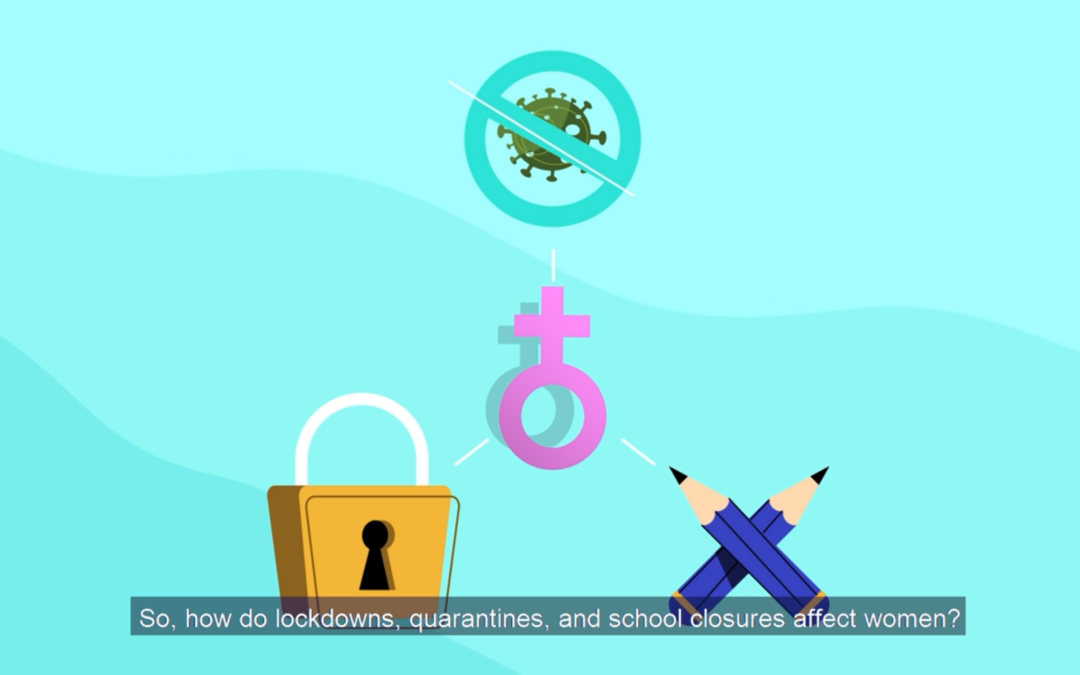
At a webinar hosted on 26 May, the ICJ heard from women human rights defenders (WHRDs) from Asia, Africa, and the Middle East discussed the adverse impact on women of lockdowns and other measures imposed by governments around the world as a response to the COVID-19 pandemic.
Reports from around the world indicate a rise in the number of cases of domestic violence and new challenges faced by women victims in accessing justice.
“Support or assistance for women experiencing domestic violence was not classified as an essential service that may continue when the country went on lockdown,” said Nonhlanhla Dlamini who is the Director of Swaziland Action Group Against Abuse (SWAGAA) in Eswatini. Still, SWAGAA and other NGOs in Eswatini persisted in their work to lobby the government to classify their work as an essential service. The government later provided authorization to allow SWAGAA’s staff to move more freely in order to assist women experiencing gender-based violence during the lockdown.
Theresia Iswarini, Commissioner of Indonesia’s National Commission on Violence Against Women (KOMNAS Perempuan), observed that because of the limited movement during the lockdown, NGOs are having a hard time reaching women experiencing domestic violence who do not have phones or any devices to access the internet.
NGOs also face the challenge of placing these women in safehouses because they need to first present a certificate that they are COVID-free before they are accepted in the safehouse and such certificates are almost impossible to secure during the pandemic.
The WHRDs assisting women experiencing gender-based violence often also need psychosocial support, as “they also have to deal with the additional burdens of overseeing the homeschooling of their children and caring for family members who may have also fallen ill.”
In Sri Lanka, Mariam Dawood who is the Legal Adviser from Women in Need (WIN), noted that “women in Sri Lanka have always faced this problem and [of being] ignored when they report gender-based violence to police authorities.”
She also shared that while courts had started to operate on a limited basis in the country, women in maintenance cases risk being exposed to infection because they have to appear in court at least every month to get an order from the judge to compel their spouses to pay alimony or child support.
These orders were not automatically renewable and must be obtained by women every month from the court.
ICJ Commissioner and Member of the UN Committee on the Elimination of Discrimination against Women Nahla Haidar asked participants to think about how civil society could mobilize other stakeholders in pandemics to give an ethical call on how behaviors can change at home.
“Who is responsible? We have been trying to speak to faith leaders, especially women faith leaders [in the MENA region]. I am wondering how these channels can be used, as well as within traditional leadership channels in Africa,” Haidar said.
ICJ Senior Legal Adviser, Emerlynne Gil, noted that many of the issues raised showed that even during the pandemic, governments reproduced patriarchal approaches to public polices which effectively saw women as subordinate to men.
“This inequality underlines many of the actions taken by governments around the world to curb the pandemic,” said Emerlynne Gil. She added: “This means that it is all the more important for groups like the ICJ to continue its work eliminating gender stereotypes and discriminatory practices in the work of justice actors around the world.”
During the webinar, the ICJ launched an animation calling on States to adopt gender-sensitive responses to the COVID-19 pandemic. Watch the animation here:
The webinar was live streamed on ICJ Asia’s facebook. Watch the livestream here:
May 26, 2020 | News
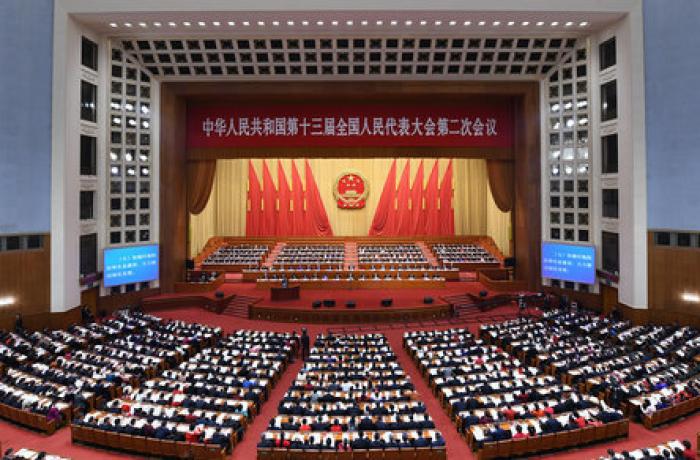
The ICJ today expressed its grave concern over the National People’s Congress (NPC)’s draft Decision on establishing and improving the legal system and enforcement mechanisms for the Hong Kong Special Administrative Region (HKSAR) to safeguard national security (“the Decision“).
The ICJ called upon the NPC to withdraw the Decision and to protect human rights, including freedom of expression and association, in accordance with its international human rights obligations and its longstanding commitment to respect the right to political participation of the people of Hong Kong.
The call comes after the NPC presented a decision at the third annual session of the 13th NPC on 22 May, 2020 which paves the way for legislation that would, “prevent, stop and punish any act occurring in the HKSAR to split the country, subvert state power, organize and carry out terrorist activities and other behaviours that seriously endanger national security as well as activities of foreign and external forces to interfere in the affairs of the HKSAR” and would allow the central government to set up “security organs” in the territory.
The ICJ stressed that while the precise contents of the proposed National Security Law have not been publicized, the language of the Draft Decision is troubling given how categories of “terrorist activities” and “subversion” have been abused in the past.
“There is a well-substantiated fear that the new security law will be used to suppress freedom of expression and curtail the activities of human rights defender in violation of the rights of the people of Hong Kong guaranteed under its Basic Law and international human rights standards,” said Frederick Rawski, Asia & the Pacific Director of the ICJ. “We have already witnessed, many times over, how other deeply flawed laws like the Public Order Ordinance, have been abused to criminally charge peaceful protesters.”
It is expected that the NPC’s Decision will be added to Annex III of the Basic Law. Under the Article 18 of the Basic Law, Chinese national legislation only has effect in Hong Kong if it is listed in Annex III of the Basic Law and related to defence, foreign affairs or other matters outside the limits of the HKSAR’s autonomy. Once added to Annex III, the law can be promulgated by the Hong Kong Chief Executive by issuing a legal notice in the Government Gazette.
In 2003, the HKSAR government attempted and failed to enact a similar national security bill, after an estimated half a million people took to the streets to oppose the legislation.
“It is especially alarming that the central government has decided to take such a top-down, and anti-democratic approach to imposing this law by bypassing Hong Kong’s Legislative Council. There are no winners from such an approach, which will provoke a massive public response and a return to the unlawful use of force by the police,” said Rawski.
The ICJ stressed that legislation that seeks to address genuine national security concerns must comply with rights protections in the Basic Law, the International Covenant on Civil and Political Rights (ICCPR), which is applicable to Hong Kong, and other international human rights standards and should be subject to genuine public consultation and debate.
The NPC is expected to vote on the resolution at the end of the annual session, likely on May 28, 2020. The NPC decision will delegate the Standing Committee to draft the actual details of the new legislation for Hong Kong, which would then be included in Annex III of Hong Kong’s Basic Law. The new law will be introduced in Hong Kong through either promulgation or local legislation.
Contact
Frederick Rawski, ICJ’s Asia Pacific Regional Director, t: +66 2 619 84 77; e: frederick.rawski(a)icj.org
Boram Jang, ICJ Legal Adviser, Asia & the Pacific Programme, e: boram.jang(a)icj.org
See also
Joint Statement: Hong Kong arrests of pro-democracy figures condemned by international legal community
China (Hong Kong): Authorities must protect right of peaceful assembly and end legal harassment of activists and journalists
China (Hong Kong): ensure police do not use excessive force against protesters
May 22, 2020 | News
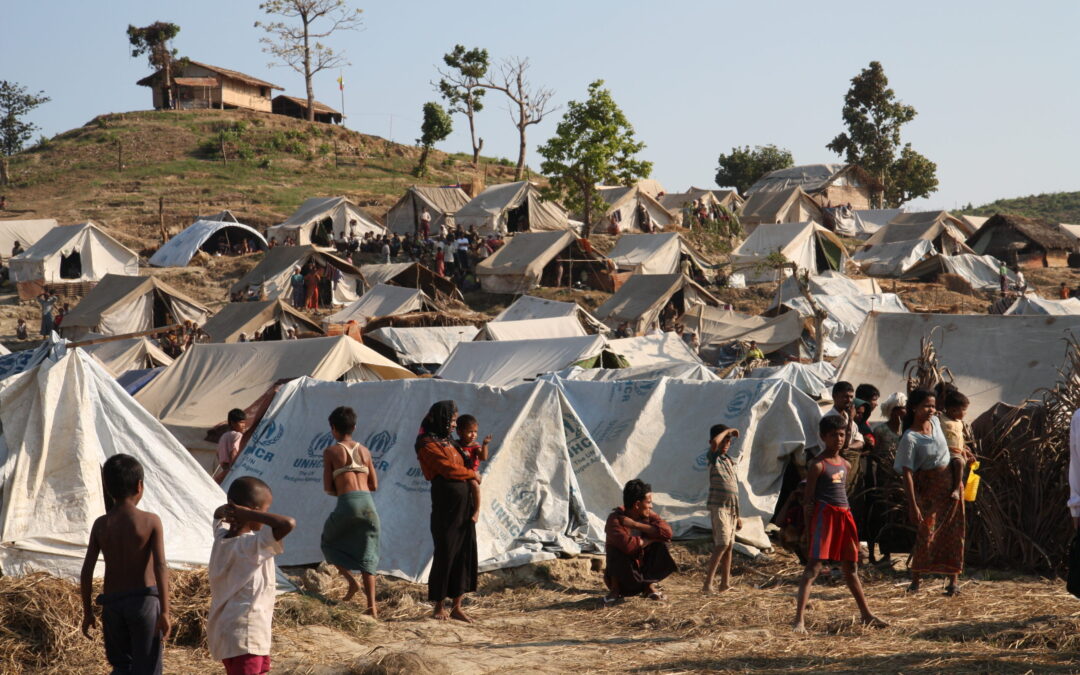
In order to comply substantially with the International Court of Justice’s provisional measures Order in the case of The Gambia v. Myanmar, Myanmar should carry out legal reforms and cooperate with international accountability processes, said the ICJ today.
The Gambia has accused Myanmar of violations of the 1948 Genocide Convention in respect of its treatment of Rohingya population, characterized by acts of widespread killing and displacement of the population.
The call comes as Myanmar is scheduled to report on “all measures taken” to give effect to the provisional measures Order (Order) issued by the Court on 23 January 2020.
“Myanmar has not taken ‘all measures within its power’ to prevent acts of genocide until it implements comprehensive legal and constitutional reforms,” said Sam Zarifi, Secretary General of the International Commission of Jurists. “Accountability lies at the heart of prevention, and so long as the Tatmadaw remains unaccountable to the civilian authorities the cycle of impunity for criminal atrocities within the country will continue.”
Since the Order, Myanmar has taken a limited number of steps linked to its compliance with the Order, including issuing three Presidential Directives encouraging anti-hate speech activities, and ordering compliance with the Genocide Convention and the preservation of evidence of human rights and related violations in Rakhine.
Myanmar has also asserted that the findings of the Government-commissioned Independent Commission of Inquiry (ICOE), which made selective admissions including that war crimes may have been committed during the 2017 “clearance operations” in Rakhine, have been transmitted to the Attorney General and the Commander-in-Chief of the Tatmadaw and that action would be taken “in conformity with military justice procedures if there is credible evidence of any commission of offence by members of the Tatmadaw.”
However, the Government has yet to amend or repeal key laws that facilitate discrimination against the Rohingya, including the 1982 Citizenship Law, 2015 Race and Religion Protection Laws and 2014 Myanmar National Human Rights Commission Law. On 6 May 2020, the International Commission of Jurists published a report on the killing of a journalist, Ko Par Gyi, in September 2014, which condemned the fundamentally flawed “military justice procedures” used to address allegations of serious human rights violations. The report highlighted the many deficiencies in ensuring to accountability for serious human rights violations in Myanmar under its prevailing legal framework, including:
- that several provisions of national laws facilitate impunity for serious human rights violations by soldiers against civilians, shield security forces from public criminal prosecutions and deny victims and their families of the right to truth about violations;
- investigations into unlawful killings routinely lack the independence, impartiality and effectiveness necessary to establish the truth and to provide accountability and redress; and
- the rights of victims and their families are rarely respected, including the right to access information concerning the violations and accountability processes, and the right to remedies and reparations.
The UN Human Rights Council has established an Independent Investigative Mechanism to look at allegations of genocide, crimes against humanity and other atrocities in Myanmar, but the government has failed to extend its cooperation with the mechanism.
“Myanmar’s inability to prevent serious human rights violations under the existing legal framework underscores the need for it to cooperate with international justice processes, including the UN’s Independent Investigative Mechanism for Myanmar – and for the UN Security Council to refer the situation to the International Criminal Court,” added Zarifi.
Download the statement with detailed background information here.
Contact
Sam Zarifi, Secretary General of the International Commission of Jurists, t: +41 79 726 4415; e: sam.zarifi(a)icj.org
Kingsley Abbott, Coordinator of the ICJ’s Global Accountability Initiative, t: +66 94 470 1345; e: kingsley.abbott(a)icj.org
Related work
Report: Remove barriers to justice for killing of journalist Ko Par Gyi
Statement: Why law reform is urgent and possible
Statement: Implement International Court of Justice provisional measures Order without delay
Briefing Paper: Four immediate reforms to strengthen the Myanmar National Human Rights Commission
Briefing Paper: Myanmar’s discriminatory citizenship laws can and must be reformed

May 8, 2020 | News
The ICJ today denounced the decision on 5 May 2020 by the Philippines’ National Telecommunications Commission (NTC) to issue an order to ABS CBN Corporation, one of the leading media outlets in the country, to cease its on-air operations.
The ICJ asserted that the action against ABS CBN violates the right to freedom of opinion and expression, which includes the rights of the media to operate without censorship or restraint and the public’s right to access information. This right is guaranteed under Article 19 of the International Covenant on Civil and Poliitical Rights (ICCPR). The Philippines is a State Party to the ICCPR.
“A free and unhindered media is essential in any society to ensure freedom of opinion and expression and other human rights. It is one of the cornerstones of a democratic society,” said Emerlynne Gil, ICJ’s Senior International Legal Adviser.
The NTC’s basis for issuing the order is that ABS CBN’s legislative franchise has expired on 4 May 2020 and action has yet to be taken on its renewal by the House of Representatives. The ICJ fears that the reasons for this delay may be politically motivated.
Given the stakes for freedom of expression, the ICJ urges NTC to follow its own precedents whereby it has allowed broadcast and telecommunications companies to operate beyond their franchise expiry dates, pending the renewal.
“Limitations imposed on the right to freedom of opinion and expression have to pass the general tests, including that of necessity and proportionality, which do not appear to have been met here,” Gil added.
The action taken against ABS CBN is part of a pattern of harassment of independent media by governmental authorities in the Philippines. President Rodrigo Duterte has, in the past, expressed resentment towards ABS CBN for allegedly refusing to air his political ads when he ran for office in 2016. The network is also known to have aired views critical of his administration’s murderous ‘war on drugs’.
In December 2019, President Duterte said that he would make sure that ABS CBN’s franchise would not be renewed. This is not the first time that he has sought to silence a media outlet critical of his administration.
There are at least 11 bills seeking the renewal of the franchise currently pending at the House of Representatives, with the earliest filed in July 2019.
“It is taking the House of Representatives an inordinately long period of time to approve the renewal of ABS CBN’s franchise,” said Gil. “It appears that the allies of this administration in the House are holding the franchise renewal like a sword over ABS CBN’s head to chill it from airing critical views about the government.”
The UN Human Rights Committee, the ICCPR’s supervisory body, has said that States must avoid imposing onerous licensing conditions on broadcast media, and that the criteria for the application of these conditions should be reasonable, objective, clear, transparent, and non-discriminatory.
This action against ABS CBN comes in the middle of the state of public health emergency in the Philippines when access to information is vital in the country’s response to the COVID-19 crisis. The ICJ had earlier raised its concerns on abuses occurring during the lockdown in the Philippines.
The ICJ calls on the Philippine government to uphold and respect freedom of opinion and expression, and ensure that a free press can operate without censorship or restraint.
The ICJ also reminds the government that the public’s access to information is vital to ensure public health and safety during the COVID-19 crisis.
Contact
Emerlynne Gil, Senior International Legal Adviser, t: +662 619 8477 (ext. 206) or e: emerlynne.gil(a)icj.org