Mar 1, 2016 | Advocacy, News, Non-legal submissions
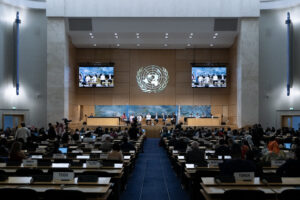
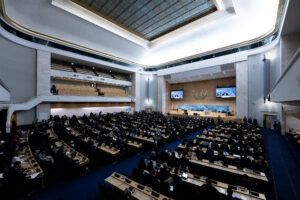
The ICJ joined today other prominent human rights organizations in urging the European Union and its Member States to respect and protect human rights and the rule of law in countering terrorism.
In their joint statement, the thirteen human rights organizations stressed the implications of Eu counter-terrorism laws and policies for human rights and the rule of law with regard to the right to be free from torture and cruel, inhuman or degrading treatment or punishment, the principle of non-refoulement, the right to liberty and security of the person, the right to a fair trial, the principle of legality, the principle of non-discrimination, the rights to freedom of expression and peaceful assembly, the right to privacy, the rights of asylum-seekers and migrants, the freedoms of movement, of religion or belief and other dimensions.
The human rights organizations that signed up to this statement are, apart from the International Commission of Jurists, the European Network Against Racism (ENAR), Amnesty International, the International Federation of Human Rights (FIDH), the Open Society European Policy Institute, the World Organisation Against Torture (OMCT), Fair Trials, European Digital Rights (EDRi), the Forum of European Muslim Youth and Student Organisations (FEMYSO), the International Federation of Action by Christians for the Abolition of Torture (FIACAT), the International Rehabilitation Council for Torture Victims (IRCT), the Association for the Prevention of Torture (APT), and the European Association for the Defense of Human Rights (AEDH).
EU-counter-terrorism&humanrights-jointstatement-2016-ENG (download the joint statement)
Dec 18, 2015 | Events, News
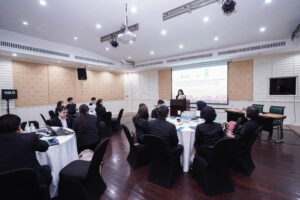
Today the ICJ held a round table “Organisation and operation of the Legal Profession: International Comparative Perspective” in Dushanbe, Tajikistan.
The ICJ invited experts to speak about comparative experiences from their countries to inform the national debate about the reform of the legal profession currently underway in Tajikistan.
Experts contributing to the discussion included: Tamara Morschakova, an ICJ Commissioner and former Justice of the Constitutional Court of the Russian Federation; Olga Swartz, a legal scholar from the Russian Federation; Daniyar Kanafin, a lawyer from Kazakhstan; Gulniza Kozhomova, President of the Bar Association of the Kyrgyz Republic; Almaz Osmanova, Member of the Board of the Bishkek Bar Association (Kyrgyz Republic); Jeroen Brower, Chair of the Ethics Commission of the Dutch Bar Association; and lawyers and other stakeholders from Tajikistan.
Participants discussed the principles and practice of the independence and self-governance of bar associations, as well as other issues of significance for the independence of lawyers, including the qualification process and disciplinary action.
Programme of the event in English and in Russian:
Tajikistan_roundtable_ agenda_Eng (PDF, English)
Tajikistan_roundtable_ agenda_Rus (PDF, Russian)
Nov 18, 2015 | Events, News
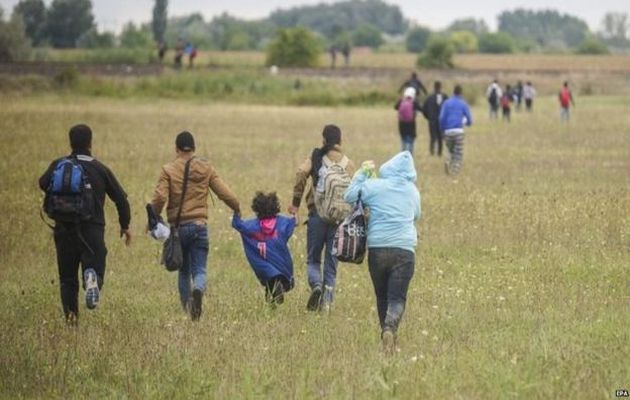
The ICJ, OSCE and Group 484 are holding a training on migration and international human rights law starting on Tuesday 17 November in Vrnjačka Banja (Serbia).
The training has been organised by the Organisation for Security and Cooperation in Europe (OSCE) and the Serbian NGO “Group 484” and will be given by the International Commission of Jurists.
It will focus on international protection of migrants and asylum seekers, access to territory and asylum and the principle of non-refoulement, in light of the current migrants and refugee crisis and drawing from the jurisprudence of the European Court of Human Rights, of the UN human rights systems and from EU law.
The training will be centred on the ICJ Practitioners Guide no. 6: Migration and International Human Rights Law.
Serbia-JointTrainingMigrationHR-Events-2015-ENG (download the agenda in English)

Nov 16, 2015 | News
The International Commission of Jurists (ICJ) deplores the devastating criminal attacks carried out in Paris on 13 November, leading to the loss of at least 129 lives and many serious injuries. The ICJ extends its condolences to the victims and their families.
The attacks were calculated to cause the greatest possible arbitrary destruction of lives and of human rights.
Those responsible for these heinous crimes must now be investigated and brought to justice, in a manner that ensures strict compliance with human rights and the rule of law.
Oct 2, 2015 | News
The ICJ is concerned at the recent disbarment of lawyer Andriy Vishnevsky, Director of the Coordination Centre of Legal Aid of the Ministry of Justice of Ukraine.
The ICJ considers that his disbarment, which resulted from his public comments critical of the Ukrainian bar association, interferes with his capacity to freely discharge his professional functions as a lawyer.
Furthermore, it constitutes a violation of his right to freedom of expression, and risks unduly constraining lawyers in legitimate participation in public debate.
The ICJ calls on the Ukrainian bar association to reinstate Andriy Vishnevsky to the bar so that he can resume his status as an accredited lawyer.
Andriy Vishnevky was disbarred on 10 September, following a hearing before the Qualification-Disciplinary Commission of Kiev Region Advokatura. Disciplinary proceedings were initiated based on two separate complaints: one submitted by the Ukrainian national bar association on 24 June 2015; and the other by Ukrainian Parliament Member Rybalka S.V. on 22 June 2015.
The complainants alleged that Andriy Vishnevsky “humiliated the bar, every lawyer, destroyed respect of the society to the bar in the State, in contradiction with the European standards”.
They cited his comments made at a conference on 15 June 2015 at the premises of the Supreme Court of Ukraine, where he presented his report “The bar and free legal aid: approaches to the reform”.
He made a number of comments critical of the legal profession.
These included his assessment that the bar association was “in a dire state”; a reference to “low ethical standards and professional level of the bar”, including that lawyers are “the main corruption element”; and a claim that “the phenomenon of police lawyers is not counteracted by the national bar association and not commented upon in any way”.
The decision quoted him as saying that “if the bar is not reformed as soon as possible in accordance with the principles and standards of the Council of Europe, it can become a hindrance to the implementation of the judicial reform”.
The Disciplinary Chamber came to the decision that the statements of Andriy Vishnevsky were contrary to the law and the Code of Lawyers’ Ethics and that he should therefore be disbarred for the statements made during the conference.
The ICJ considers the Chamber’s decision to contravene fundamental and universal principles on the independence of the legal profession.
If applied generally, this interpretation of the Code of Ethics would effectively prevent lawyers from critically debating the governance of the legal profession.
The UN Basic Principles on the Role of Lawyers provide that while lawyers should “maintain the honour and dignity of their profession as essential agents of justice” they, like other persons, “shall have the right to take part in public discussion of matters concerning the law, the administration of justice and the promotion and protection of human rights.”
The right to freedom of expression is protected in international human rights law, including the International Covenant on Civil and Political rights and the European Convention on Human Rights, treaties to which Ukraine is a party.
Under the European Convention on Human Rights, where matters of public interest are discussed there is a particularly narrow scope for restriction of freedom of expression.
Disciplinary action against a lawyer, solely on the grounds of comments critical of the bar association, made at a conference convened to debate aspects of the justice system, amounts to an illegitimate interference with freedom of expression.
The ICJ is concerned that such punitive measures are likely to have a chilling effect on freedom of expression of lawyers in Ukraine and in particular on their ability to engage in debate on reform of the justice system.
It is important, for any justice system, that such debate take place with the active participation of the legal profession, as lawyers are amongst those best placed to identify and criticize the deficiencies of the justice system and make informed proposals for reform.
The ICJ calls on the Ukrainian bar association to reinstate Andriy Vishnevsky as a lawyer.
Furthermore, the ICJ recommends that the interpretation of the Code of Ethics should be reviewed and guidance should be issued to ensure that the Code of Ethics is not applied to stifle public debate among lawyers on ways to reform the justice system in Ukraine.
Contact:
Róisín Pillay, Director, Europe Programme, roisin.pillay(a)icj.org
Temur Shakirov, Legal Adviser, Europe Programme, temur.shakirov(a)icj.org
The full statement with background information can be downloaded here:
Ukraine-Lawyer Vishnevsky statement-News-web story-2015-ENG (in PDF)
Ukraine-Lawyer Vishnevsky statement-News-web story-2015-UKR (Ukrainian version, in PDF)
Oct 1, 2015 | News
The ICJ is alarmed at the arrest of Buzurgmehr Yorov, a lawyer practicing in Tajikistan.
Mr Yorov’s arrest may be related to his representation of thirteen leaders of the Islamic Renaissance Party of Tajikistan (IRPT).
This is the third recent case of arrest of a lawyer in Tajikistan, and this pattern of arrests raises serious concerns for protection of human rights and compliance with international standards on the role of lawyers.
On 28 September, at 10.00, police officers appeared at the “Sipar” Collegia of lawyers, which is headed by Buzurgmehr Yorov, and seized documents related to the case of the members of the IRPT who Mr Yorov represents. At around 14.00, other police officers apprehended the lawyer at his office, claiming he needed to answer certain questions. The lawyer later made a phone call to say that he had been arrested and detained.
On 29 September, the Ministry of Interior of Tajikistan, in its Press Release, said that Buzurgmehr Yorov “by way of fraud” appropriated “a large amount of money”.
According to the Ministry of the Interior, a resident of Istaravshan named Komiljhon Bozorov paid USD 4000 to help with the case of his son, who was charged with an attempted murder. Mr Bozorov is reported to claim that the lawyer failed to provide legal aid and “abused his trust and his difficult situation”.
Mr Yorov is also charged with forging documents about the technical condition of a car.
The ICJ fears that the decision to arrest lawyer Buzurgmehr Yorov was in fact connected with his representation of members of the IRPT.
The ICJ recalls that according to the UN Basic Principles on the Role of Lawyers, “Lawyers shall not be identified with their clients or their clients’ causes as a result of discharging their functions”; they must be able “to perform all their profession functions without intimidation, hindrance, harassment or improper interference”; and lawyers “shall not suffer, or be threatened with, prosecution or administrative, economic or other sanctions for any action taken in accordance with recognized professional duties, standards or ethics”.
The ICJ’s concerns in this case are based in part on the particularly worrying pattern of arrests of lawyers , who represent clients in “high profile” cases, that has emerged in the recent past in the Republic of Tajikistan.
It should be recalled that it is lawyers’ role to defend persons charged with alleged crimes. The justice system cannot function in accordance with international standards if lawyers are not able to represent their clients’ interests.
For the right to a fair trial as guaranteed under international human rights law to be protected, defendants must have access to a lawyer who can represent their interests effectively, without harassment or interference.
The ICJ calls on the authorities of Tajikistan to ensure that all lawyers are able to conduct their work without fear of threats or harassment, including arbitrary arrest or prosecution.
It calls on the investigating authorities to ensure that Burzurgmehr Yorov is not prosecuted as a means of harassment or reprisal for his representation of a client, and that any proceedings against him are conducted in accordance with international human rights law, including the right to a fair hearing, and taking into account international standards on the role of lawyers.
Whether or not his arrest is in reality based on his representation of IRPT, or on the basis of the allegations of fraud, Mr Yorov should be immediately released.
Even if the arrest was in fact based on the allegations of fraud, the ICJ is unaware of any evidence or reasons in Mr Yorov’s case that would justify his continued pre-trial detention, under international standards on the right to liberty and the prohibition of arbitrary arrest and detention.
Background information:
Thirteen persons, represented by Burzurgmehr Yorov, were arrested on 16-17 September 2015, following armed attacks earlier this year in Dushanbe and Vakhdat.
Members of the group are accused of “establishment of a criminal community/organization in order to commit grave or particularly grave crimes”, as foreseen under Article 187(1) of the Criminal Code of the Republic of Tajikistan.
The arrest and detention of Mr Yorov is the third case in the last two years of prosecution of a lawyer representing clients in a high profile case in Tajikistan. On 13 January 2015, lawyer Shukhrat Kudratov was convicted to 9 years in prison on charges of fraud and bribery.
In 2014, another lawyer, Fakhriddin Zokirov, was arrested and tried on charges of fraud in banking transactions. He was released as a part of an act of amnesty in November 2014.
Tajikistan-Lawyer Yorov statement-News-web stories-2015-RUS (full text in Russian, PDF)
For further infromation see previous ICJ statements:
Tajikistan: ICJ concerned at conviction of lawyer Shukhrat Kudratov
Tajikistan: Arrest of lawzer is a threat to the independence of the profession