May 29, 2015 | Advocacy, News, Non-legal submissions, Position papers
The ICJ called today on the EU institutions to bridge the final implementation gaps to ensure an effective access to justice to victims of violent hate crimes.
The contribution of the ICJ was submitted as input for the European Commission’s first annual fundamental rights colloquium to be held next October and focused on “Tolerance and respect: preventing and combating antisemitic and anti-Muslim hatred in Europe”.
In its submission, the ICJ finds that the greatest weakness in addressing violent hate crime currently lies primarily in the failure of effective national implementation, which has meant that, despite development of the law, and despite authoritative recommendations from international and EU human rights bodies, the frequency of commission of violent hate crimes appears to have increased, and impunity for such crimes has persisted.
The ICJ considers that there are two main reasons for this lack of implementation: 1) lack of political or institutional will in Member States; 2) lack of implementation tools tailored to the laws, legal institutions and culture of the single national legal system.
The ICJ concluds, in its contribution, that it is the time for the European Union institutions to take up the opportunity to unite the efforts of all those concerned in the administration of justice – judges, court administrators, lawyers, civil society, judicial organizations, bar associations and government officers – throughout the EU to work together on the detailed technical assistance needed for an effective implementation of the right to an effective remedy for victims of crimes motivated by discrimination.
EU-Colloquium2015-ICJContribution-ViolentHateCrimes-Advocacy-non legal submission-2015-eng (download the submission)

May 18, 2015 | News
From 18 to 22 May, the ICJ will carry out a mission to the Russian Federation to examine questions related to the independence and integrity of the legal profession, access to an independent lawyer and the right to an effective defence.
The mission will address the role of Bar Associations in protecting the independence of lawyers, as well as obstacles faced by individual lawyers in protecting the rights of their clients.
The ICJ mission, led by Wilder Tyler, the ICJ Secretary General, will hold meetings with leading Russian experts in the field.
The mission will also meet with the representatives of the Federal Chamber of Lawyers, government officials, and independent lawyers and will take part in two round table discussion with legal scholars and practicing lawyers.
A comprehensive report analyzing the main findings will follow the mission and will present recommendations for reform of law and practice in light of international law and standards on the role of lawyers.
Contact:
Róisín Pillay, Director, Europe Programme, roisin.pillay(a)icj.org
Temur Shakirov, Legal Adviser, Europe Programme, temur.shakirov(a)icj.org
Apr 28, 2015 | Advocacy, News, Non-legal submissions
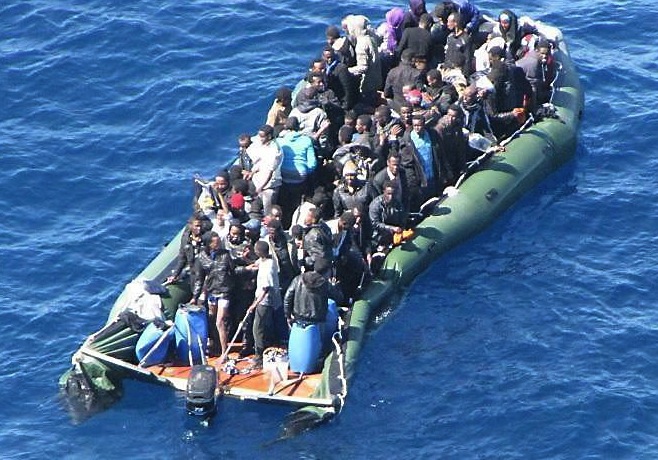
The ICJ is urging the European Council to immediately act to take effective measures to protect the lives of migrants at sea, after it failed to respond adequately to the repeated tragedies at a special meeting held on 23 April.
The special meeting of the European Council was called after the sinking of a boat in the Libyan Search and Rescue Zone left at least 700 persons dead. Since then, other incidents have brought the death toll in the Mediterranean to more than 1,000 in one week.
In its statement, released following the meeting, the European Council directed the EU institutions and the Member States to take a set of actions with the stated aim of preventing further loss of lives at sea.
The ICJ is deeply saddened by these tragedies that are the concern not only of the Mediterranean region and of Europe, but of the whole of the international community.
It is deeply regrettable that the reaction of the European Union and its Member States at a moment of such gravity has concentrated on presevering security of borders, and returning migrants, rather than on humanitarian and human rights concerns, particularly strengthening search and rescue operations in order to save lives, the ICJ says.
Although the European Council has affirmed that its “immediate priority is to prevent further loss of life at sea”, the measures envisaged in this statement are not designed to achieve this aim. Instead, they reflect a continuing security-based policy, centred on the need to “fight the traffickers” and on combatting irregular migration.
The ICJ supports the call of the UN Special Rapporteur on the rights of migrants, Fraçois Crépeau, urging the EU and Member States to focus their migration policies on the introduction of safe and legal migration routes and combatting the black labour market.
The framing of migration policies around narrowly perceived “security” interests and the strengthening of border controls creates a situation in which smugglers provide the only route for many migrants and this is leading to serious abuses of human rights. Migrants, many of whom are fleeing war or persecution, should not have to resort to such means of reaching safety in Europe.
“Strengthening our presence at sea”
While welcoming the increase in financial support for Frontex operations Triton and Poseidon with a view to foster its search and rescue capabilities, the ICJ is concerned that this commitment in the context of operations presently aimed to “control irregular migration flows towards the territory of the Member States of the EU and to tackle cross-border crime” risks marginalizing rescue at sea within these operations.
Resources must also be allocated directly to increase search and rescue capacities at the EU and national levels, in order to ensure that the human rights of migrants are protected, and that lives are saved.
“Fighting traffickers in accordance with international law”
The commitment in the statement to increase intelligence and police co-operation with third countries as a means of fighting trafficking, without corresponding human rights protections. Any such co-operation must be carried out in compliance with the EU Charter of Fundamental Rights, the European Convention on Human Rights and other international human rights law and standards.
Without strong safeguards in law and in practice, there is a risk that such co-operation may lead to exchange of information or evidence with, or transfer of suspects to, States in which human rights abuses are systematic or widespread or where particular individuals may be at risk.
This may lead to violations of human rights, including of the right to asylum, the right to the protection of non-refoulement, the right to be free from torture and ill-treatment and the right life.
In addition, engagement in intelligence and police cooperation, while an important tool in effective law enforcement, risks, if not undertaken with adequate safeguards, leading to infringements to the right to privacy, the right to data protection, and the prohibition of collective expulsions.
All of these rights are protected by the EU Charter of Fundamental Rights, as well as by international human rights treaties binding on EU Member States.
Regarding the commitment to take systematic action to capture and destroy vessels used by traffickers in the Mediterranean, the ICJ is also seriously concerned that any such any action risks to be in violation of international law and could lead to a risk of loss of lives.
Finally, the proposal to use Europol to detect and request removal of internet content used by “traffickers” to attract migrants and refugees may lack a sufficient legal basis in EU or national law.
While welcoming the statement’s acknowledgment that such measures must be in accordance with national constitutions, the ICJ recalls that they must also be in compliance with the EU Charter and international human rights law.
Any new measures must include safeguards and limitations to ensure that human rights, including the rights to freedom of expression and association are fully respected.
“Preventing illegal migration flows”
The ICJ is concerned that the stepping up of cooperation initiatives envisaged in the statement, with the aim of preventing irregular migration, poses a risk of complicity by the EU, i.e. aiding or assisting in violations of human rights by third countries.
The ICJ urges that any co-operation with third countries in preventing irregular migration must be in compliance with the EU Charter of Fundamental Rights and international human rights law.
Furthermore, the ICJ is particularly concerned by the decision of the European Council to promote further the readmission to third countries of “unauthorised economic migrants” and to order the establishment of a new return programme for the rapid return of “illegal migrants” from frontline member states, co-ordinated by Frontex.
While the content of the new fast return programme proposed by the Council remains unclear, as does the definition of “rapid return,” the ICJ considers that such a programme is likely to increase the possibility of European Union complicity in violations of the protections of non-refoulement, the right to asylum, the prohibition of collective expulsions and the right to an effective remedy, against its obligations under the EU Charter of Fundamental Rights.
The ICJ is concerned that the rapidity of the return could be linked to certain national expulsion practices that are at odds with the Member States’ obligations under the EU Charter and international human rights and refugee law. Furthermore, the ICJ recalls that under article 9 of the Frontex Regulation, Frontex, in its joint return operations, is not able to assess the compliance of return decisions on the merits. This lack of control increases the risk of aiding or assisting in serious violations of human rights.
“Reinforcing internal solidarity and responsibility”
Finally, in regard to the commitment to provide emergency aid to frontline Member States, the ICJ supports the rapid deployment of a long-term, sustainable programme of aid to such states, directed at the provision of search and rescue operations in the Mediterranean, and designed to safeguard the lives and rights of migrants.
The ICJ also recalls that, consistent with the dictates of the UN charter and international human rights treaties, States are under a general obligation to engage in international cooperation and assistance to protect human rights.
Conclusion
The ICJ deplores the fact that, following the tragic death of more than 1,000 people in one week, the EU Member States and the European Council, have failed to act meaningfully to protect the lives of migrants by taking decisive measures to protect the right to life of those crossing the Mediterranean.
In prioritizing border security and returns over search and rescue, the Member States of the European Union have demonstrated a reckless disregard for the human rights of migrants fleeing war, persecution or dire standards of living.
The ICJ urges the EU Member States and the EU institutions to take swift action, centred on the protection of lives and rights of migrants, in order to uphold the EU founding values of the rule of law and human rights, affirmed in article 2 of the Treaty on the European Union.

Apr 20, 2015 | News
The ICJ is concerned at reports that a police official has purported to terminate a lawyer’s representation of a client against the client’s wishes, in violation of the right to fair trial and international standards on the independence and role of the legal profession.
A.J. Uchkempirov, the investigator of the City Department of Internal Affairs (the city police department) of Karakol City, reportedly issued a ruling removing lawyer Nurkyz Asanova from representation of her client, Mr Ishen Abdyrashev.
The ICJ is particularly concerned given that the removal of lawyer Asanova comes while she is representing Mr Abdyrashev in a case alleging that he was subjected to torture by police officers in detention, and subsequently detained at a police officer’s home and forced to carry out unpaid work for one and a half months.
On 29 December 2014, Ishen Abdyrashev, assisted by lawyer Asanova, complained about these events and a criminal investigation was initiated.
The investigation has now been completed and a criminal trial is underway.
On 3 April 2015, Abdrashev himself was charged with robbery, which he denies.
Lawyer Asanova also represents him in the robbery case.
On 14 April, investigator Uchkempirov issued a ruling purporting to remove her, despite Mr Abdyrashev’s opposition.
The purported basis for the ruling was that Lawyer Asanova was in some way interfering with the investigation of the case.
The investigator had no authority under Kyrgyz law to issue such a decision.
Under international standards, such a decision could in any event only be taken by an appropriately independent authority following a regular and fair procedure, which was clearly not the case here.
According to the UN Basic Principles on the Role of Lawyers, for instance, “[n]o court or administrative authority before whom the right to counsel is recognized shall refuse to recognize the right of a lawyer to appear before it for his or her client unless that lawyer has been disqualified in accordance with national law and practice and in conformity with these principles” (Article 19).
This is an important guarantee for the right under international law of every person to be represented by a lawyer of their own choice, as protected by the International Covenant on Civil and Political Rights and recognized by the Basic Principles.
The Principles also recognize, further to the right to fair trial under the Covenant, that it is the obligation of the government to guarantee that lawyers are able to pereform their functions without “intimidation, hindrance, harassment or improper interference” and that they are able to consult with their clients both within their own country and abroad.
The investigator’s decision should be declared void and lawyer Nurkyz Asanova’s right to represent, to communicate with and to visit her client, should be fully recognized and respected.
Furthermore, the authorities must take steps to ensure that there is no further unlawful interference with Ishen Abdyrashev’s right to the lawyer of his choice.
Kyrgysztan-Lawyer Asanova_statement-News-web story-2015-RUS (full text in PDF)

Apr 9, 2015 | News
Among the victims of a gun attack today at the Palace of Justice of Milan, according to press reports, were Judge Fernando Ciampi and lawyer Lorenzo Alberto Claris Appiani.
Press reports state that the person who opened fire in the Palace of Justice of Milan, killing three persons and injuring several others, was a defendant in a case.
The ICJ calls on relevant authorities immediately to launch a thorough inquiry into the system of security at the Palace of Justice, for judges, lawyers, and prosecutors, as well as witnesses and parties to cases, employees, and others present in the buildings.
The ICJ recalls that the State has a duty under international law to ensure protection for members of the judiciary and others who may be at risk of such attacks.
Mar 31, 2015 | Advocacy, News
The ICJ today expressed concern at searches of lawyers’ homes and workplace by Kyrgyz investigators in the city of Osh.
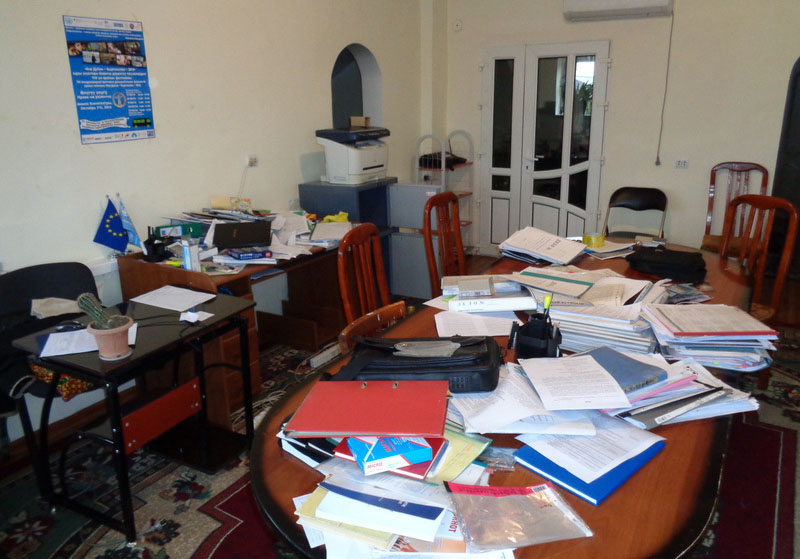
The home of lawyer Valerian Vakhitov and the office of the human rights organization “Bir-Duyno-Kyrgyzstan” (photo) where lawyers Valerian Vakhitov and Khusanbay Saliyev worked, were searched and materials of the lawyers’ cases were seized. The ICJ considers that the searches are violations of the right to confidential communication between a lawyer and his or her client.
The confidentiality of lawyer-client communications and lawyers’ files is protected in international human rights law as part of the right to a fair trial, as well as the prohibition of arbitrary interference with correspondence, privacy and (in this case) home.
The searches followed the arrest of Umar Farooq, a US citizen and journalist who reportedly conducted research on inter-ethnic tensions in the Kyrgyz Republic, in particular near the border with Uzbekistan.
On 25 March 2015, he was arrested by officers of the State Committee of National Security (SCNS) and a number of items in his possession were seized including recordings containing “statements on religious topics and clips of military activities”, copies of charges filed against clients of the two lawyers, A.M. Yusupov and I.I. Salibayev, and the business cards of the two lawyers.
On 28 March, Umar Farooq was expelled from the Kyrgyz Republic on grounds of collection of information without accreditation.
The investigator sought a search warrant for the lawyers’ premises on the grounds that they could contain documents “necessary for the investigation” in criminal case No. 082-15-0236.
Warrants to search the NGO premises where the lawyers worked and to search the residence of Valerian Vakhitov, were issued in separate proceedings on 26 and 27 March by judges K.M. Matisakov and B.T. Satybaldiyev.
According to the search warrant issued by the Court, the search of Lawyer Vakhidov’s home was authorized taking into account the “the need for a full, objective, comprehensive resolution of the crime, obtaining evidence necessary for the investigation of the case, inevitability of the punishment for a crime committed and for the purposes of national security”.
The same reasons were given to authorize searches of the office of “Bir-Duyno-Kyrgyzstan” Investigators seized computers, memory sticks, dictaphones and disks with information on cases in which the lawyers represented clients.
Lawyer Vakhitov reported that among other documents, files relating to nine cases in which he represented individuals before the UN Treaty Bodies, including communication with the UN bodies, had been seized.
The ICJ notes that the State Committee of National Security of the Kyrgyz Republic officially stated, on 30 March, that the searches of work and residence places of lawyers were “legal and within the framework of the CPC of the KR [Criminal Procedure Code of the Kyrgyz Republic]”.
On the same day, the Council of Advokatura, its main executive body, issued a statement calling on the Prosecutor General Indira Zholdubayeva “to take the strictest measures provided by law in regard to the officers of the State Committee of National Security which violated the guarantees of the independence of lawyers’ activity and integrity of lawyers”.
The ICJ considers that the searches are a clear violation of the law of the Kyrgyz Republic. According to Article 29 of the Law On Advokatura and Lawyers’ Activity the Kyrgyz Republic “requisitioning, seizure, examination, inspection, copying documents, collection and use of information related to legal assistance in a particular criminal case are allowed only in the case involving a lawyer as a defendant …”.
A criminal case against a lawyer may be initiated only by the Prosecutor General or her deputy (Article 29.3).
According to article 30 of the Law, information related to providing legal aid to clients is protected as lawyer-client privilege (…).
Read the full statement here:
Kyrgyzstan-Searches of lawyers-Advocacy-2015-ENG (full text in PDF)
Kyrgyzstan-Searches of lawyers-Advocacy-2015-RUS (Russian version in PDF)