Mar 27, 2015 | Advocacy, News, Non-legal submissions
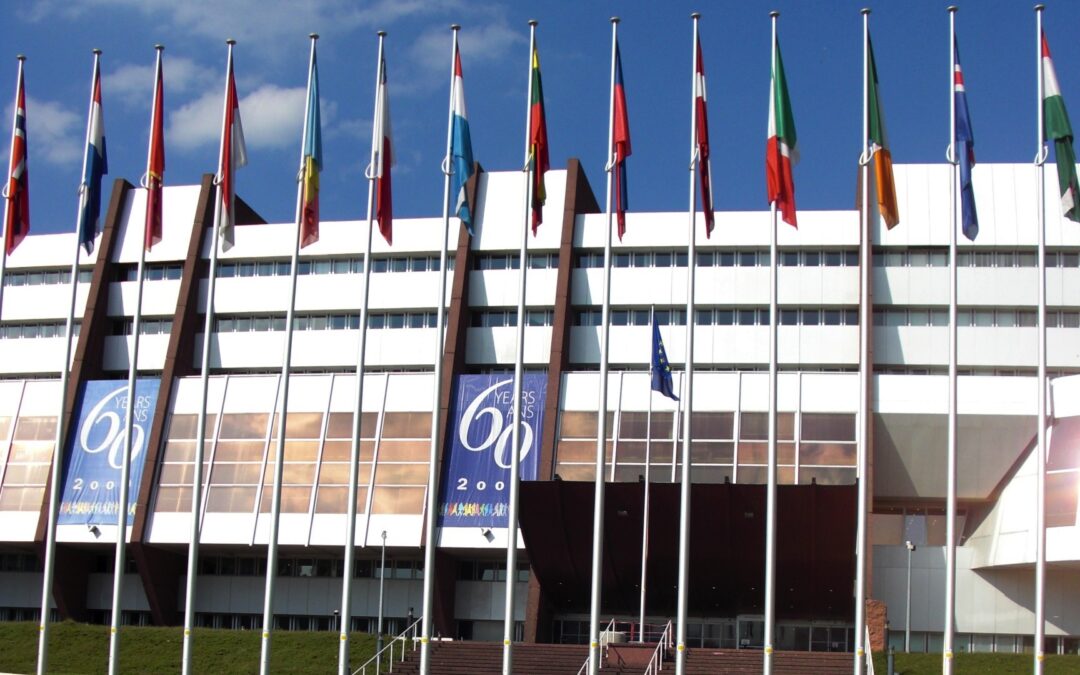
The ICJ, and other NGOs present at the Brussels Conference on the implementation of the European Convention on Human Rights today responded to the final draft of the Brussels Declaration to be adopted today, with ten specific action points.
The response welcomes the draft Declaration’s deadline of June 2016 to improve the execution of the judgments of the European Court of Human Rights, but regrets that it does not set out the specific measures that states and the Committee of Ministers should take to improve implementation.
CouncilofEurope-JointStatement-ExecutionofJudgments-BrusselsConference-Advocacy-non legal submission-2015-ENG (download the joint statement)
Mar 19, 2015 | Advocacy, Legal submissions, News
The ICJ and Amnesty International have presented a submission on the draft of an Additional Protocol supplementing the Council of Europe Convention on the Prevention of Terrorism.
In their submission, the ICJ and AI outlined before the Committee on Foreign Terrorist Fighters and Related Issues (COD-CTE) of the Council of Europe the general principles of human rights law related to the issue of foreign fighters and the implementation of Security Council resolution 2178(2014) and made observations on the draft criminal offences contained in the draft protocol.
The submission outlines positions and concerns with relation to:
- The lack of definition of central concepts like “terrorism”, “terrorist acts”, and “foreign fighters”
- The risk of introducing criminal offences lacking the clarity, accessibility and foreseeability required by the principle of legality
- The risk of conflation of of different legal regimes, notably of international humanitarian law and ordinary criminal law
- The need to investigate and prosecute existing crimes under international law
- The need to ensure that any criminalisation of acts or omissions must have a close connection to the commission of the principal criminal offence, with a real risk that such a principal criminal act would in fact take place
- Specific comments on the draft offences of participation in an association or group for the purpose of terrorism; receiving training for terrorism; travelling abroad for the purpose of terrorism; funding travelling abroad for the purpose of terrorism; organizing or otherwise facilitating travelling abroad for the purpose of terrorism.
CouncilofEurope-Submission-ForeignFighters-Advocacy-Legal Submission-2015-ENG (download the observations)
Mar 17, 2015 | Events, News
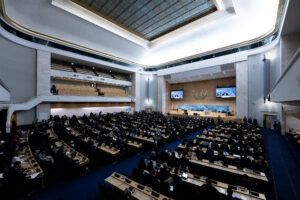
This side event will take place on Thursday 19 March 2015, 12.00-14.00, at the Palais des Nations, Geneva, Room XXVII.
It aims at creating a space to discuss the EU agenda on Business & Human Rights, identifying current challenges and development, and exploring opportunities arising from the Treaty process.
Panelists:
Mons. Silvano Tomasi, Holy See, Permanent Observer
Mr. Jerome Bellion-Jourdan, Delegation of the European Union to the UN
Mrs. Elena Valenciano, European Parliament Sub-Committee on Human Rights, Chair
Mr. Richard Meeran, Leigh Day, Partner
Ms. Anne van Schaik, Friends of the Earth Europe, Economics and Justice Team
Moderation: Dr. Carlos Lopez, International Commission of Jurists, Senior Legal Adviser
Erope-Flyer side-event EU BHR perspectives-News-event-2015-ENG (ful text in PDF)
Feb 5, 2015 | News
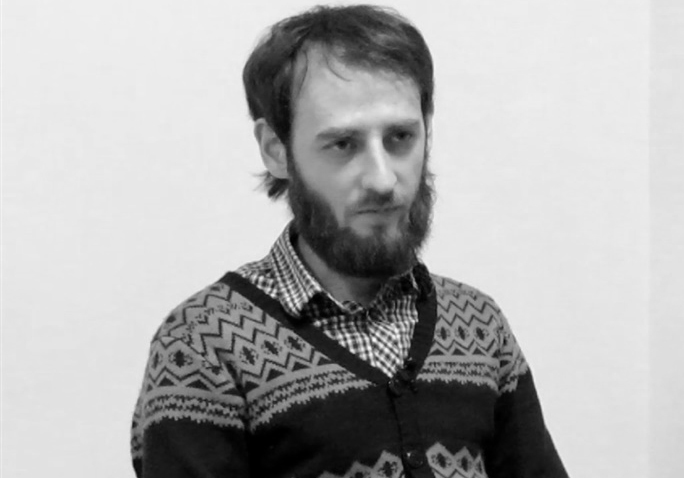
The ICJ is concerned by yesterday’s attack on lawyer Murad Magomedov in Makhachkala, near the Supreme Court of Dagestan building. The ICJ calls on the authorities to take effective measures to guarantee the security of lawyer Magomedov.
The attack took place during a break in a Supreme Court hearing in which Murad Magomedov was defending his client, Akhmed Israpilov, on charges of terrorism.
The lawyer was severely beaten by a group of five people, and sustained serious head injuries.
He was taken to the Republican Central Clinical Hospital, where he remains, recovering from concussion, multiple injuries and fractures of the jaw.
“This is yet another in a series of physical attacks against lawyers in Dagestan and shows the urgent need for the authorities to take effective measures to protect lawyers in the region,” Temur Shakirov, ICJ Legal Adviser, said today. “Both local and federal authorities in the Russian Federation must ensure a prompt investigation leading to those responsible for this violent act being brought to justice.”
The UN Basic Principles on the Role of Lawyer provide that “where the security of lawyers is threatened as a result of discharging their functions, they shall be adequately safeguarded by the authorities”.
Under international human rights law, the State must take steps to protect the security of persons who the authorities know or ought to know are under threat, and must ensure an independent, prompt, and thorough investigation of any attacks on the life or physical integrity of individuals.
Murad Magomedov has worked as a lawyer with “Memorial” Human Rights Centre since autumn 2014 and represents individuals affected by of a “special operation” in Dagestan’s Vremenyi village in September 2014. In this case Magomedov does not act as a Memorial representative.
The ICJ has previously highlighted cases of assault and killing of lawyers in Dagestan.
Contact:
Róisín Pillay, Director, Europe Programme, roisin.pillay(a)icj.org
Temur Shakirov, Legal Adviser, Europe Programme, temur.shakirov(a)icj.org

Feb 3, 2015 | News
On 2 February, the ICJ observed the trial of lawyer Kalid Baghirov, before the Nizami District Court of Baku.
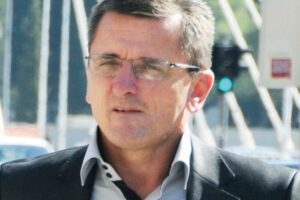
In the case, the Azerbaijan Collegium of Lawyers seeks disbarment of the prominent lawyer (photo), who recently acted in a number of high profile cases in Azerbaijan, including on behalf of human rights defenders.
Following a letter of the Sheki Court of Appeal alleging misconduct by Khalid Baghirov during the trial against Ilgar Mammadov, leader of the “Republican Alternative” movement and former presidential candidate, on 10 December 2014 the Presidium of the Collegium of Lawyers suspended Khalid Baghirov’s practice.
At the same time, the Presidium applied to the Nizami District Court seeking complete termination of his right to practice law. The Court accepted the case for consideration.
The ICJ commissioned an international observer, Liliya Vigel, a lawyer practicing in the Republic of Uzbekistan, to observe the hearing in the case before the Nizami District Court.
The ICJ observer also met with the representative of the Collegium of Lawyers, with lawyer Baghirov, with members of the Presidium of the Collegium, and with a number of non-governmental organizations to collect information about the case.
The ICJ continues to monitor the case in relation to international standards on human rights and the rule of law, including as regards respect for the role of lawyers, and plans to publish a report on the proceedings in due course.
Contact:
Róisín Pillay, Director, Europe Programme, roisin.pillay(a)icj.org
Temur Shakirov, Legal Adviser, Europe Programme, temur.shakirov(a)icj.org
Jan 14, 2015 | News
The ICJ today expressed its concern at the prosecution and conviction of lawyer Shukhrat Kudratov by Dushanbe City Court on charges of fraud and bribery.