Oct 11, 2016 | News
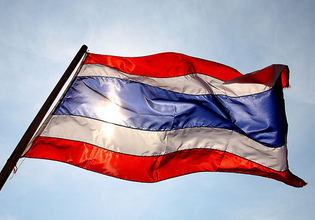
Thailand should immediately end the use of Article 44 of the Interim Constitution which gives the Head of the military junta sweeping, unchecked powers contrary to the rule of law and human rights, said the ICJ today.
Despite widespread international condemnation of Article 44, its use has increased every year since the Interim Constitution was promulgated on 22 July 2014 following the coup d’état of 22 May 2014.
The Head of the National Council for Peace and Order (NCPO), Prayut Chan-o-cha, has issued at least 107 Orders under Article 44 (available in the public domain): at least one in 2014; 44 in 2015; and 62 in 2016 to date – with 37 Orders being issued since June 2016 alone.
“The Head of the NCPO’s increasing willingness to use extraordinary powers to make ad hoc, arbitrary changes to existing laws and regulations without judicial oversight should be alarming to everyone, including the business sector,” said Wilder Tayler, Secretary General of the ICJ.
“Article 44 places law making power in the hands of one man, while Articles 47 and 48 of the Interim Constitution block judicial review or access to remedies and reparation. This is entirely inconsistent with the three fundamental pillars of the rule of law, equality, accountability and predictability, and should be revoked immediately,” he added.
The Article 44 orders range from those restricting the civil rights of all people in Thailand to those aimed at seemingly minor and ordinary bureaucratic processes.
To date, Article 44 has been used to introduce a raft of revisions into existing Thai law without observing proper process or practice, including providing for the acquisition of land for the establishment of Special Economic Zones bypassing the usual environmental and social checks and balances provided for in domestic legislation; granting military officers sweeping powers of investigation, arrest and detention; and prohibiting the gathering of five or more persons for political purposes.
“It is long past time for Thailand to revoke Article 44 and all others laws, orders and announcements issued since the military coup that are inconsistent with the rule of law and human rights,” Tayler said.
“The justifications the military presented for such measures were never valid or credible, and certainly not so after more than two years of direct military rule.”
All Orders issued under Article 44 – and all other NCPO Orders and Announcements – will continue to remain in force under the draft Constitution that was accepted at a public referendum on 7 August 2016, and may only be repealed or amended by an Act.
Last week, Deputy Prime Minister Wissanu Krea-ngam announced that the NCPO was considering converting many of the hundreds of orders issued by the NCPO into legislation, including those issued under Article 44.
thailand-art-44-ncpo-news-press-releases-2016-eng (full text with background, in PDF)
thailand-head-of-ncpo-orders-advocacy-2016-eng (full list of all publicly available Head of NCPO Orders, in PDF)
thailand-art-44-ncpo-news-press-releases-2016-tha (full text in Thai, PDF)

Oct 3, 2016 | News
The government should drop all proceedings against human rights lawyer, Sirikan Charoensiri, including the specious accusation of sedition, which apparently relate to her organization’s representation of 14 student activists peacefully protesting in June 2015, the ICJ and other groups said today.
On 27 September 2016, Sirikan Charoensiri (photo), a lawyer and documentation specialist at Thai Lawyers for Human Rights (TLHR), received a summons from the Thai Police following accusations that she violated Article 12 of the Head of National Council for Peace and Order (NCPO) Order 3/2015, prohibiting the gathering of five or more people for political purposes, and Article 116 of the Thai Criminal Code, a ‘sedition’-type offence.
According to the summons, the accusations are made by an army officer, Lieutenant Colonel Pongsarit Pawangkanan.
Sirikan Charoensiri received the summons, dated 20 September 2016, when she returned to Thailand after attending the 33rd Session of the Human Rights Council in Geneva where she conducted advocacy on the human rights situation in Thailand on behalf of FORUM-ASIA and the ICJ.
Sirikan Charoensiri did not receive an earlier summons, dated 14 September 2016, the police claimed had been sent to her apartment, as she was not home at the time.
Sirikan Charoensiri has already been charged with two offences under the Criminal Code of Thailand: “giving false information regarding a criminal offence” and “refusing to comply with the order of an official” in relation to TLHR’s provision of legal aid to 14 student activists – the new summons appears to relate to the same case.
“The army’s accusation that Sirikan Charoensiri has violated the frequently abused sedition law with its extremely serious penalties and risk of a military trial is indefensible and must be withdrawn immediately,” said Wilder Tayler, Secretary General of the ICJ.
“The fact that the authorities have made these accusations more than one year after TLHR’s clients were charged with sedition in the same case suggest the accusations have been made in retaliation for her high-profile national and international human rights advocacy since the military coup,” he added.
The other groups who signed the statement are: Human Rights Watch, Amnesty International, Asian Forum for Human Rights and Development (FORUM-ASIA), the Observatory for the Protection of Human Rights Defenders (an FIDH–OMCT partnership), Protection International (PI), Lawyers’ Rights Watch Canada (LRWC), Fortify Rights, and the International Service for Human Rights (ISHR).
thailand-sirikan-charoensiri-conviction-news-press-releases-2016-eng (full text in PDF)
thailand-sirikan-charoensiri-conviction-news-press-releases-2016-tha (Thai version, in PDF)
Sep 28, 2016 | News
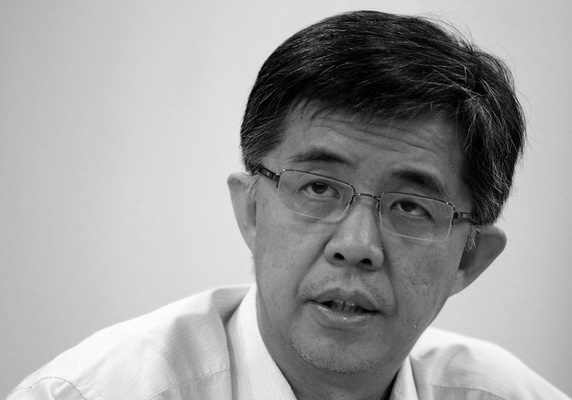
The conviction of Member of Parliament Tian Chua under the 1948 Sedition Act increases already severe restrictions on freedom of expression in Malaysia, said the ICJ today.
The Malaysian government should drop all charges filed under this law and remove or amend this colonial era law to ensure compliance with international human rights law and standards, the ICJ added.
The Sessions Court in Kuala Lumpur convicted Tian Chua (photo) today under Section 4(1)(b) of the 1948 Sedition Act for allegedly uttering “seditious words.”
The allegedly “seditious words” spoken by Tian Chua were calling on Malaysians to “stand up and fight against racism and corruption.”
Tian Chua spoke these words at a public forum on 13 May 2013 at the Kuala Lumpur and Selangor Assembly Hall.
“Prime Minister Najib Razak promised in 2012 to abolish the 1948 Sedition Act, but until now, this promise has not been fulfilled,” said Emerlynne Gil, ICJ’s Senior International Legal Adviser.
“It now appears that the Malaysian government is holding on to this law to silence political opponents and human rights defenders who express critical views about what is happening in the country today,” she added.
Tian Chua received a penalty of three months’ imprisonment plus a fine of RM1,800 (approximately US$435).
Although he will still be entitled to keep his seat as Batu’s representative to the Malaysian Parliament, his conviction sends a clear and dangerous message that politically critical comments or dissenting opinions from anyone, including a Member of Parliament, will not be tolerated by the government, the ICJ says.
Several other people were also charged for sedition for their speeches at the same public forum where Tian Chua spoke: activists Adam Adli, Hishamuddin Md. Rais, Haris Fathillah Mohamed Ibrahim, and Safwan Anang.
All of them have already been convicted in the past few months under the same provision of the Sedition Act.
“By its very terms, the 1948 Sedition Act contemplates restrictions on the exercise of freedom of expression that are grossly overbroad and inconsistent with the basic rule of law and human rights principles,” said Gil.
The lawyers of Tian Chua, Latheefa Koya and N. Surendran, have confirmed that they will be seeking a stay order on the basis that they will be appealing the sentence and conviction.
The ICJ has repeatedly expressed its concerns regarding the restrictive effect the 1948 Sedition Act has on freedom of expression in the country.
The law criminalizes speech and publications considered to have “seditious tendencies”, a term that is very ambiguously and vaguely defined.
Last year, the ICJ expressed alarm over amendments made by the Malaysian Parliament strengthening the law and broadening its scope, making the “promotion” of hatred between religions an offence.
Contact:
Emerlynne Gil, ICJ’s Senior International Legal Adviser for Southeast Asia, t: +66840923575 ; e: emerlynne.gil(a)icj.org
Sep 20, 2016 | News
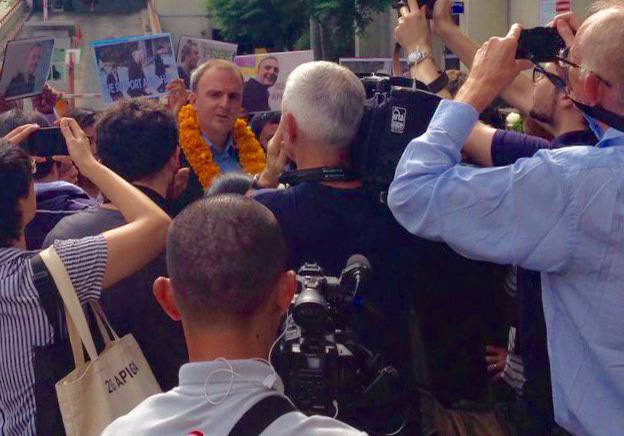
The ICJ expresses its disappointment with today’s verdict criminalizing the work of human rights defender, Andy Hall, and calls upon Thailand to decriminalize defamation and amend the Computer Crime Act in line with international standards protecting freedom of expression.
This morning, Thailand’s Southern Bangkok Criminal Court found Andy Hall guilty of defaming a Thai fruit processing company under Article 328 of the Thai Criminal Code and violation of Article 14(1) of the Computer Crime Act, and sentenced him to a fine of THB 200,000 (USD$ 5,700) reduced to THB 150,000 (USD $4,300); and four years imprisonment, reduced to three years and suspended for two years.
Andy Hall has said he will appeal the verdict.
“Human rights defenders such as Andy Hall have the right to exercise freedom of expression in advocating for the protection and realization of human rights – a right that Thailand has a duty to protect,” said Kingsley Abbott, Senior International Legal Adviser at the ICJ.
“Unfortunately, there are numerous examples of criminal defamation and the Computer Crime Act being used against human rights defenders in Thailand, a practice that must end, including through a substantial reform of these laws,” he added.
The ICJ and Lawyers Rights Watch Canada submitted a joint amicus curiae brief in the proceedings, arguing that the imposition of harsh penalties such as imprisonment or large fines on a human rights defender risk having a ‘chilling effect’ on the exercise of freedom of expression, which Thailand is bound to protect pursuant to its international legal obligations.
The ICJ anticipates the arguments contained in the joint amicus will be considered on appeal.
“It is also disappointing that the Court did not appear to take into account the recent decision of the Phuket Provincial Court in the Phuketwan case, which found that the Computer Crime Act was not intended to be used in cases of alleged defamation,” said Abbott.
On 1 September 2015, the Phuket Provincial Court acquitted two journalists of criminal defamation and violations of the Computer Crime Act after the Royal Thai Navy complained the journalists defamed it when, on 17 July 2013, the journalists reproduced a paragraph from a Pulitzer prize-winning Reuters article that alleged “Thai naval forces” were complicit in human trafficking.
The criminal defamation proceedings brought against Andy Hall are among several that have been brought against human rights defenders in Thailand in recent years.
Others examples include the charges laid against activists Pornpen Khongkachonkiet, Somchai Homloar and Anchana Heemina in July 2016 for raising allegations of torture in the deep South; and those brought against activists protesting various development projects in Thailand which are allegedly having an adverse impact on communities.
Background
Today’s case is one of four criminal and civil proceedings (two criminal and two civil) a Thai fruit processing company, Natural Fruit Company Ltd., has brought against Andy Hall in relation to the report of a Finnish NGO, Finnwatch, published in January 2013, called Cheap Has a High Price.
Andy Hall’s research was included in the report which alleged that labour rights violations were taking place at Natural Fruit Company Ltd., whose employees included migrant workers from Myanmar.
In September 2015, a Thai Appeal Court upheld the dismissal of the other criminal defamation proceeding Natural Fruit Company Ltd. brought against Andy Hall. That proceeding is currently before the Supreme Court. Two civil proceedings are also before the Thai courts but have been suspended pending resolution of the two criminal proceedings.
The use of criminal defamation laws, carrying penalties of imprisonment, against human rights defenders reporting on alleged human violations, constitutes a violation of Thailand’s obligations under the International Covenant on Civil and Political Rights (ICCPR), to which it is a state party.
thailand-verdict-andy-hall-case-news-press-release-2016-eng (full text in PDF)
thailand-verdict-andy-hall-case-news-press-release-2016-tha (full text in Thai, PDF)
Contact
Sam Zarifi, ICJ Asia Pacific Regional Director (Bangkok), t: +66 807819002; e: sam.zarifi(a)icj.org
Kingsley Abbott, ICJ Senior International Legal Adviser, t: +66 9 4470 1345, e: kingsley.abbott(a)icj.org
Sep 18, 2016 | News
The ICJ held a workshop on Environmental Impact Assessment in Kyauk Phyu on 17-18 September 2016. Thirteen women and 30 men attended from Kyauk Phyu town, its surrounding villages and the regional capital Sittwe.
Kyauk Phyu is the proposed site for a megaproject to include a Special Economic Zone and deep seaport in Myanmar’s westernmost Rakhine State.
A Chinese company plans to develop the projects and the newly elected Myanmar Government is considering its future.
The EIA workshop included lawyers and civil society representatives as well as village administrators from each of the nine village administrative tracts in the proposed SEZ area.
An EIA is designed to avoid, minimize, eliminate and reduce harmful impacts of development projects.
It can require revising plans, making alternative arrangements and even cancelling project components.
Myanmar law now requires EIAs, including in SEZs, under the 2014 SEZ Law and 2015 EIA Procedure. Health, livelihood and social impact assessments are critical to this process.
Projects may only commence after the Environment Ministry approves an EIA.
Sean Bain, ICJ Legal Consultant for Myanmar, shared updates from research on SEZ legal frameworks and project plans.
The ICJ’s Legal Researcher, U Hayman Oo, facilitated discussions and linked these laws with local developments.
Participants were encouraged to document their land and livelihoods so they may have an evidence base to refer to in future.
Matthew Baird, an environmental lawyer supporting both the Environment Ministry and civil society groups, outlined each step involved in an EIA.
He emphasized the importance of public participation throughout the process – particularly in the early screening and scoping stages.
Early community engagement is critical to influence the focus and scope of the investigation, which would inform the draft EIA Report developed by an EIA consultancy firm.
Daw Khin Su Su Naing, from Coffey, explained the role of the consultancy firms hired by companies to conduct EIAs.
She described how social impacts are assessed, providing examples from elsewhere in Myanmar. Public participation was again emphasised as crucial.
U Mya Hlaing, from the Thilawa Social Development Group, shared community experiences from the development of Myanmar’s only active SEZ – located in Thilawa, across the river from Yangon. Villagers resettled by the project remain concerned about the standard of relocation sites and loss of livelihood opportunities.
Community organizing in Thilawa has been an important factor in improving public participation in EIA and resettlement processes.
Dr Daniel Aguirre, the ICJ’s International Legal Adviser, discussed international business and human rights frameworks, and the monitoring role of civil society.
From Earth Rights International, U Zaw Zaw explained how an Operational Grievance Mechanism can be a useful tool for creating a communication channel between affected people and companies.
An OGM cannot solve all problems, but can help to discuss issues and remedies as they arise.
Many participants have experienced impacts from irresponsible and at times illegal business activities.
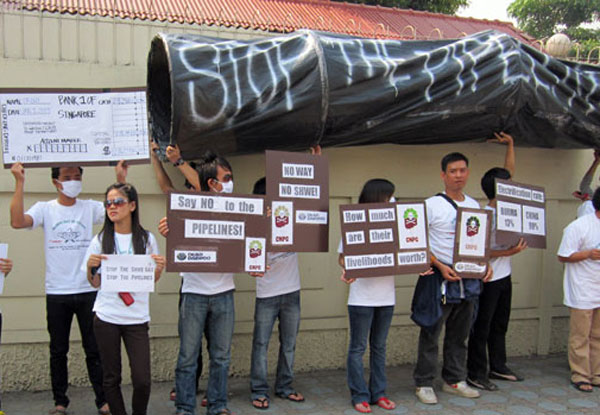
Kyauk Phyu hosts oil and gas facilities that serve a pipeline, finished in 2013, linking the Bay of Bengal with western China. No public EIA was conducted, and locals say the pipeline project led to land loss, deteriorating livelihoods and environmental pollution.
Many are still owed compensation and some were imprisoned for protesting to demand remedies.
Workshop participants expressed concerns that these problems will be repeated.
U Mya Hlaing encouraged locals in Kyauk Phyu to review the legal procedures and understand government obligations: “I am just a poorly educated farmer, but I have carefully read the laws and it has helped our community to demand our rights.”
He encouraged participants to raise concerns with Myanmar’s new governance bodies for SEZ management.
This was the ICJ’s third event in Kyauk Phyu over two years, with further initiatives planned.

Sep 16, 2016 | News
Indian authorities have detained a Kashmiri human rights activist after stopping him from traveling to the United Nations Human Rights Council in Geneva, Human Rights Watch and the ICJ said today.
Khurram Parvez was arrested in his home on 15 September 2016, a day after being prevented from leaving the country with a group of rights activists who were traveling to Geneva to raise concerns about the security force crackdown in Jammu and Kashmir.
Human Rights Watch and the ICJ call on authorities to immediately release Parvez and allow him to attend the Human Rights Council session.
“Indian authorities seem to have missed the irony of blocking a rights activist on his way to the UN Human Rights Council,” said Sam Zarifi, Asia Director at the International Commission of Jurists.
“Monitoring and engage
ment by civil society is necessary to prevent human rights violations and ensure accountability. The Government should immediately release Khurram Parvez and begin working with him and other activists to address the difficult issues facing Jammu and Kashmir,” he added.
Parvez, 39 years of age, is chair of the Asian Federation Against Involuntary Disappearances (AFAD) and program coordinator of the Jammu Kashmir Coalition of Civil Society (JKCCS).
He has documented cases of enforced disappearances and investigated unmarked graves in Kashmir.
According to his lawyer, Parvez has been detained by Kashmir police under “preventive detention” provisions of the Code of Criminal Procedure, including section 151 (arrest to prevent the commission of cognizable offense).
The Government’s actions against Parvez violate his right to freedom of movement.
Under international human rights law, any restrictions on freedom of movement for security reasons must have a clear legal basis, be limited to what is necessary and be proportionate to the threat.
This is further supported by article 5 of the UN Declaration on Human Rights Defenders, which states that “[f]or the purpose of promoting and protecting human rights and fundamental freedoms, everyone has the right, individually or in association with others, at the national and international levels… to communicate with nongovernmental or intergovernmental organizations.”
“Instead of trying to silence human rights activists, India should be addressing the serious human rights problems in Jammu and Kashmir and holding perpetrators of abuses to account,” said Meenakshi Ganguly, South Asia Director at Human Rights Watch.
“Preventing open discussion of these issues, whether in India or in Geneva, sends a message to Kashmiris that the government has no interest in addressing their concerns,” she added.
Background
Violent protests broke out in Jammu and Kashmir state after the killing of Hizb-ul-Mujahedin militant Burhan Wani in an armed encounter on 8 July.
Since then, the authorities have placed large parts of the state under curfew restrictions to try to stop protesters who hurl stones at security forces and attack police posts.
Security forces have used unnecessary lethal force to contain the violence, which has resulted in the death of 80 protesters and 2 police officers, and thousands injured.
Some protesters, including children, lost their vision from pellets fired from riot-control guns.
While police have a duty to protect lives and property, under the UN Basic Principles on the Use of Force and Firearms by Law Enforcement Officials, they should use non-violent means as far as possible, only use force when unavoidable and in a proportionate manner, and use lethal force only when absolutely necessary to save lives, Human Rights Watch and International Commission of Jurists said.
The authorities have also attempted to censor news and restrict access to information.
The Government shut down local newspapers for three days, blocked mobile internet services temporarily, and ordered local cable operators to block the transmission of five news channels on television.
India has failed to address longstanding grievances in Jammu and Kashmir.
Numerous expert committees in India have recommended steps to address past human rights violations, including a repeal of the draconian Armed Forces Special Powers Act, but the Indian Government has ignored these recommendations.
Contact:
Sam Zarifi, ICJ Asia-Pacific Regional Director, (Bangkok); t:+66(0) 807819002; e: sam.zarifi@icj.org