Oct 16, 2016 | News
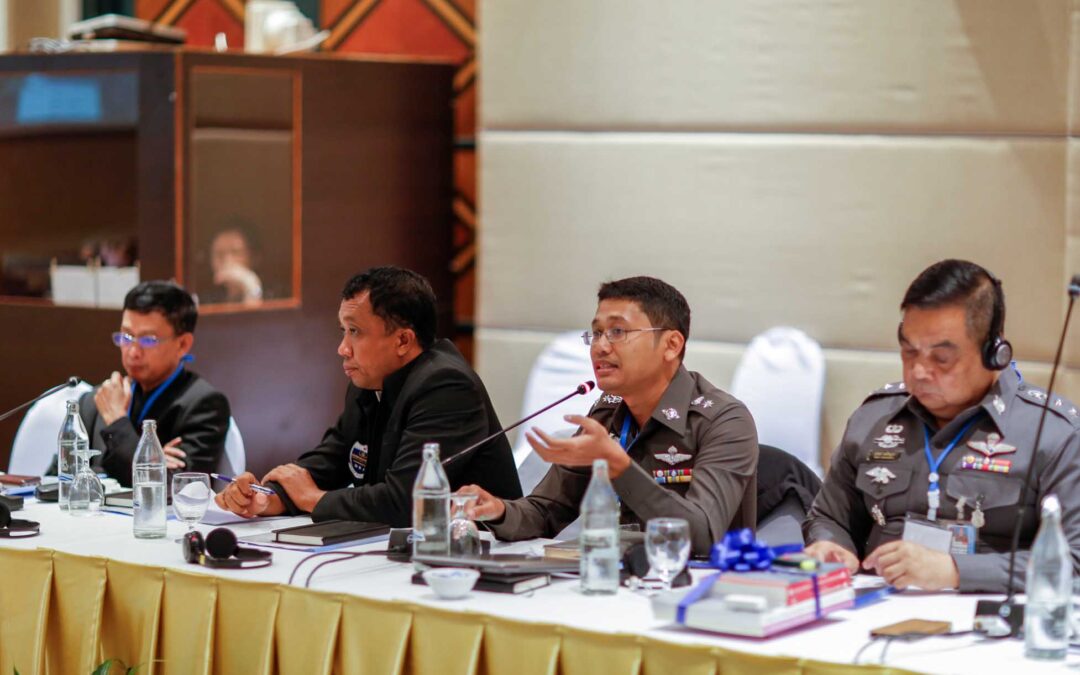
On 15-16 October 2016, the ICJ held a Workshop for justice sector actors in Thailand’s deep South on “the Use of Telecommunication Evidence in Criminal Cases” for police, special investigators, prosecutors and lawyers.
The attendees included 30 public prosecutors, police and Department of Special Investigation (DSI) officials, 15 defense lawyers, and observers from the Thailand Institute of Justice (TIJ) and the Asia Foundation.
This is the sixth ICJ workshop related to strengthening the administration of justice in the deep South since 2011.
The objective of the workshop, held in Hat Yai, was to discuss how telecommunication information may be used as part of an effective criminal investigation, and the ways in which prosecutors, lawyers and judges should consider approaching the use of this kind of information as evidence at trial.
The Workshop observed a moment of silence for the passage of the late King Rama IX.
Kingsley Abbott, ICJ Senior International Legal Adviser, opened by saying that the use of telecommunication evidence is one tool that can be used in an effective investigation of serious criminal and security related cases followed by fair trials.
However, it is important to ensure that the acquisition and use of this information as evidence fully respects the right to privacy guaranteed by the International Covenant on Civil and Political rights (ICCPR) to which Thailand is a State Party.
The ICJ firmly believes that respect for human rights and the rule of law must be the bedrock in countering terrorism and violent crime.
Speakers at the Workshop included Judge Wasupatchra Jongpermwattanapol, Chief Judge of the Office of the Chief Justice Region 9; Mr Sophon Tipbamrung, Executive Director of the Special Office of Criminal Litigation 3, Region 9; Lt. Col. Thatphichai Chanwaranon, Deputy Superintendent of the Investigation Bureau, Southern Border Provinces Police Operation Center and national expert on the use of telecommunication evidence; and Mr Nigel Povoas, a British Barrister with experience leading high profile international serious and organized crime cases and an expert in the use of telecommunication evidence.
Background
Previous ICJ workshops in the deep South have included:
- The Protection of Victims in Criminal Cases (2015)
- The Principle of Inadmissibility of Evidence Obtained by Unlawful Means and Hearsay Evidence: International Standards Compared to Thai Law (2014)
- Rule of Law and Strengthening the Administration of Justice in the Context of Habeas Corpus in the Southern Border Provinces (2012)
- Rule of Law and Strengthening the Administration of Justice in the Context of Bail in the Southern Border Provinces (2012)
- Rule of Law and Strengthening the Administration of Justice in the Context of the Application of Emergency Laws in the Southern Border Provinces (2011)

Oct 16, 2016 | News
The ICJ today condemned the execution of Asadul Islam, leader of Jamayetul Mujahideen Bangladesh (JMB), a banned Islamist group.
Asadul Islam was hanged on Sunday for his alleged role, along with seven other JMB leaders, in a 2005 bus bombing that killed two lower court judges.
He was tried and convicted in absentia in 2005, later detained in July 2007, and had been in prison since that time. In August 2016, the Bangladesh Supreme Court dismissed his final appeal, paving the way for his execution this week.
“The death penalty is the ultimate form of cruel and inhuman punishment, and does not serve the interests of justice,” said Sam Zarifi, Asia-Pacific Regional Director for the ICJ.
“While Bangladesh authorities have an obligation to bring to justice perpetrators of such terror attacks, this must be done through fair trials and the rule of law,” he aded.
The International Covenant on Civil and Political Rights (ICCPR), to which Bangladesh is a party, protects the right to life and the right to a fair trial.
As the UN Human Rights Committee has emphasized, because of its irreversible nature it is particularly important that all applicable fair trial standards be scrupulously observed in capital punishment cases.
Failure to respect such standards constitutes a violation of both the right to life (ICCPR article 6) and the right to a fair trial (ICCPR article 14).
The ICJ is particularly concerned that his trial in absentia impaired Islam’s right to a fair trial, as the right to be present at trial and present a defence are critical elements of a fair trial.
The ICJ opposes capital punishment in all cases without exception.
The ICJ considers that the death penalty constitutes a violation of the right to life and the right not to be subjected to cruel, inhuman or degrading treatment.
In December 2014, the UN General Assembly by an overwhelming margin adopted a resolution, for the fifth time since 2007, emphasizing that the use of the death penalty undermines human dignity and calling on those countries that maintain the death penalty to establish a moratorium on its use with a view towards its abolition.
“Especially where the death penalty is concerned, the State must take extra care to ensure that the trial process meets the highest standards of fairness and due process under international law, as there is no possibility of reversal once carried out,” Zarifi said.
“Bangladesh has an unfortunate record of administering unfair trials in terrorism cases, including those involving the death penalty,” he added. “Asadul Islam’s case raises serious concerns that the Bangladesh authorities once again failed to meet their fair trial obligations under international law, and therefore this death sentence should not have been carried out.”
The ICJ calls on Bangladesh to impose an official moratorium on the death penalty and take prompt measures towards its abolition.
Contact
Sam Zarifi, ICJ Asia Pacific Regional Director (Bangkok), t: +66 807819002; email: sam.zarifi(a)icj.org
Oct 15, 2016 | News
Authorities in Jammu and Kashmir should end the use of the Jammu and Kashmir Public Safety Act (PSA) to arbitrarily detain people, including children, the ICJ, Amnesty International India and Human Rights Watch said today.
The PSA violates international due process standards and should be repealed, the groups said.
“The use of the PSA to detain people, particularly children, violates a range of human rights, and its increasing use in recent weeks undermines the rule of law and further entrenches impunity in Kashmir,” said Sam Zarifi, ICJ Asia Director.
“Police should end the use of the PSA; if people are suspected of committing offences, they should be properly charged and given fair trials,” he added.
The PSA is an administrative detention law that allows detention without charge or trial for up to two years in some cases.
Following an amendment in 2012, the PSA expressly prohibits the detention of anyone under 18.
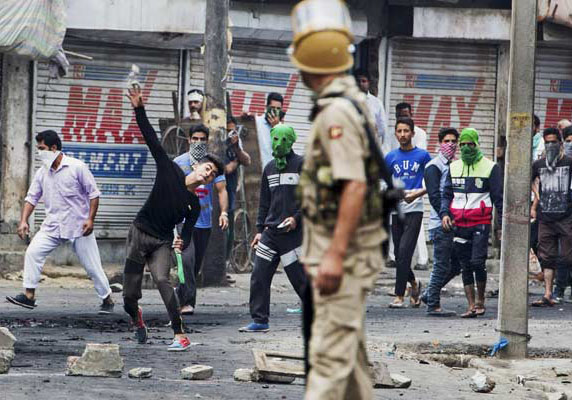
Between 9 July – when protests and violent clashes broke out in the state following the killing of a leader of the armed group Hizbul Mujahideen – and 6 October, authorities have detained over 400 people, including children, under the PSA, according to media reports.
“The government has a responsibility to address violence during protests, but indefinitely detaining people without charge only adds to the lawlessness,” said Meenakshi Ganguly, South Asia Director, Human Rights Watch. “Detaining children under the PSA is not only unlawful, but could have negative repercussions for years.”
On 16 September, Rayees Ahmad Mir, who is 16 years old according to his school records, was arrested in Baramulla district under ordinary criminal procedure for allegedly throwing stones at security forces.
Two days later, an executive official passed an order to detain him under the PSA, to preclude his release on bail.
The order incorrectly stated that he was 18 years old. Rayees Mir’s family challenged the order before the Jammu and Kashmir High Court, producing documents that proved he was only 16.
On 7 October, the court stated that Rayees Mir should be treated according to juvenile justice rules, as there was prima face evidence that he was a minor, and ordered his transfer to a juvenile home. The PSA detention order has not yet been quashed.
An official at the Kot Bhalwal jail said on 14 October that the prison authorities had not yet transferred Rayees Mir, as they had not received a copy of the court order.
Mir Shafqat Hussain, a lawyer representing many PSA detainees, said: “In a number of cases the families have not been informed about the grounds of detention. Arresting minors and booking them under PSA is definitely going to have an effect on their psyche. From schools and colleges, these boys end up in jails where they will be kept together with adults. It is definitely going to have an adverse effect on them.”
On 18 August, Waheed Ahmed Gojree, who is 16 according to his school records, was arrested in Kupwara district and detained at a police station.
According to his family, the police at first told them he would be released the next day, but then said that he had been detained under the PSA.
He was first taken to a jail in Baramulla, and then to the central jail in Jammu.
An official at the central jail confirmed that he had been detained under the PSA.
The family has not yet received a copy of the detention order, or been formally informed about the grounds of Waheed Gojree’s detention.
The authorities appear to have not taken his age into account before issuing his detention order.
“The central and state governments have spoken about following the principle of insaniyat, or humanity, in dealing with the crisis in Jammu and Kashmir,” said Aakar Patel, Executive Director at Amnesty International India. “But detaining children under the PSA is neither humane nor lawful.”
Amnesty International India, Human Rights Watch and the ICJ believe that anyone detained under the PSA must either be charged promptly with a recognizable criminal offence or prosecuted in a fair trial, or else be released.
Not prosecuting people suspected of committing offences can also violate the human rights of the victims of these offences.
Contact
Sam Zarifi, ICJ Asia & Pacific Regional Director (Bangkok), t: +66 807819002; email: sam.zarifi(a)icj.org
india-joint-statement-psa-news-press-release-2016-eng (full text of statement, in PDF)

Oct 13, 2016 | News
The ICJ expressed disappointment in the adjournment of Asia bibi’s blasphemy appeal and urged the Supreme Court to set a new hearing date as soon as possible.
“Asia bibi has been on death row for six years under a bad law that has been improperly applied,” said Sam Zarifi, ICJ’s Asia Director. “The Supreme Court has previously held that people accused of blasphemy in Pakistan ‘suffer beyond proportion or repair’ – such delays in proceedings are one reason why.”
The hearing was adjourned because Justice Iqbal Hameed-ur-Rahman, one of the three judges to hear the case, recused himself from the bench on the day of the hearing, reportedly because of a “conflict of interest”.
“The date and bench for the hearing had been fixed nearly a week ago – it is difficult to understand why Justice Hameed-ur-Rahman’s decision to recuse himself was announced only at the hearing, with no alternative arrangements having been made,” added Zarifi.
Justice Hameed-ur-Rahman’s recusal is related to Salmaan Taseer’s murder case.
In 2011, Salmaan Taseer, the former Governor of Punjab, was killed by his bodyguard, Mumtaz Qadri.
Qadri claimed he killed Taseer for questioning the merits of the blasphemy proceedings against Asia bibi and calling for reform of the blasphemy laws to prevent their misuse.
Mumtaz Qadri was convicted and sentenced to death for the killing in October 2011.
Qadri challenged the conviction and sentence before the Islamabad High Court, where Justice Hameed-ur-Rahman was one of the two judges who admitted his appeal for hearing.
Extremist Islamist groups have frequently held demonstrations calling for Asia bibi to be hanged.
A day before the Supreme Court was scheduled to hear Asia bibi’s appeal, an Islamist group publicly threatened it would take to the streets if Asia bibi was acquitted.
Asia bibi’s lawyer, Saif-ul-Malook, has also stated he has received threats for pursuing her case.
Under Pakistani and international standards, judges have a right and a duty to decide cases before them according to the law, free from fear of reprisals.
Governments must also ensure that lawyers are able to perform all of their professional functions without intimidation, hindrance, harassment or improper interference from any person.
In a report published last year, the ICJ documented a pattern of threats and violence in blasphemy cases in Pakistan.
Judges who hear blasphemy cases are often harassed and threatened by those who demand that the suspect be convicted.
Some judges have reported receiving letters and phone calls warning them of attacks against themselves and their families if defendants in blasphemy cases are acquitted.
Where hearings are public, courtrooms are often packed with hostile crowds, chanting slogans against the accused. Often, these crowds are linked to violent Islamist groups.
The Government should take notice of this pattern of threats and reprisals and ensure the judges and lawyers in Asia bibi’s case are given adequate security to perform their duties independently and impartially, said the ICJ.
Contact:
Sam Zarifi, ICJ Asia Pacific Regional Director (Bangkok), t: +66 807819002; e: sam.zarifi(a)icj.org
Reema Omer, ICJ International Legal Adviser for Pakistan (London), t: +44 7889565691; e: reema.omer(a)icj.org
Additional Information
Asia Noreen (Asia bibi) has been on death row since 2010, when a trial court convicted her of “defaming the Prophet Muhammad” and sentenced her to death. The Lahore High Court upheld her conviction and confirmed her death sentence in 2014.
In a briefing paper published on Wednesday, the ICJ assessed the fair trial violations in Asia bibi’s trial and appellate hearing.
The ICJ found glaring omissions both in the appraisal of evidence as well as the application of laws that brought her conviction into question.

Oct 12, 2016 | News
In a briefing paper released today, the ICJ provides answers to key questions regarding the blasphemy case against Asia Noreen (Asia bibi), a 45-year old Christian woman convicted and sentenced to death for “defaming the Prophet Muhammad” in 2010.
Tomorrow, on Thursday 13 October 2016, the Supreme Court of Pakistan is scheduled to hear Asia bibi’s appeal challenging her conviction and death sentence for blasphemy.
The Lahore High Court had upheld her conviction and sentence in October 2014.
“Asia bibi has been on death row for six years under a bad law that has been improperly applied,” said Sam Zarifi, ICJ’s Asia Director.
“The Supreme Court has previously held that people accused of blasphemy in Pakistan ‘suffer beyond proportion or repair’– Asia bibi’s case is an illustration of that injustice and suffering,” he added.
If the Supreme Court upholds her conviction, Asia bibi will be at the risk of execution, with only limited options of filing for a review of the judgment and making a mercy petition to the President of Pakistan.
The Supreme Court has so far not upheld any convictions for blasphemy under section 295-C of the Penal Code (defamation of the Prophet Muhammad).
The briefing paper explains the allegations against Asia bibi and assesses the violations of Pakistani and international fair trial standards during her blasphemy trial and high court appeal.
“This is the first blasphemy appeal being heard by the Supreme Court since 2002,” Zarifi said.
“All eyes are on the Court to see if it will provide justice to Asia bibi, and whether it will try to clean up some of the manifest injustices of the blasphemy law and how it’s being applied today,” he addedd.
The ICJ opposes laws that criminalize the exercise of freedom of expression as protected by international law and standards, including in relation to religion, and opposes capital punishment in all circumstances.
The death penalty constitutes a violation of the right to life and the right not to be subjected to cruel, inhuman or degrading punishment.
Contact:
Sam Zarifi, ICJ Asia Pacific Regional Director (Bangkok), t: +66 807819002; e: sam.zarifi(a)icj.org
Reema Omer, ICJ International Legal Adviser for Pakistan (London), t: +44 7889565691; e: reema.omer(a)icj.org
Additional Information:
In November last year, the ICJ published a report documenting in detail systematic and widespread violations of the right to a fair trial in proceedings related to blasphemy offences in Pakistan, particularly in trial courts. The report confirmed concerns raised by the Supreme Court of Pakistan that individuals accused of blasphemy ‘suffer beyond proportion or repair’ in the absence of adequate safeguards.
The ICJ also made a number of recommendations to the Pakistani executive, legislative and judicial branches to address violations caused by application of the blasphemy laws, whether due to the legislative provisions themselves or at the investigative, prosecutorial, procedural, administrative and judicial levels highlighted in the report, including to ensure that those accused of blasphemy have a fair chance at defending themselves.
pakistan-asia-bibi-qa-advocacy-2016-eng (full Q & A, in PDF)
Oct 11, 2016 | Multimedia items, News, Video clips
Selected by a jury of 10 global human rights organizations, including the ICJ, Ilham Tohti has worked for two decades to foster dialogue and understanding between Uyghurs and Han Chinese. Detained in China, he could not travel to collect his prize in Geneva.
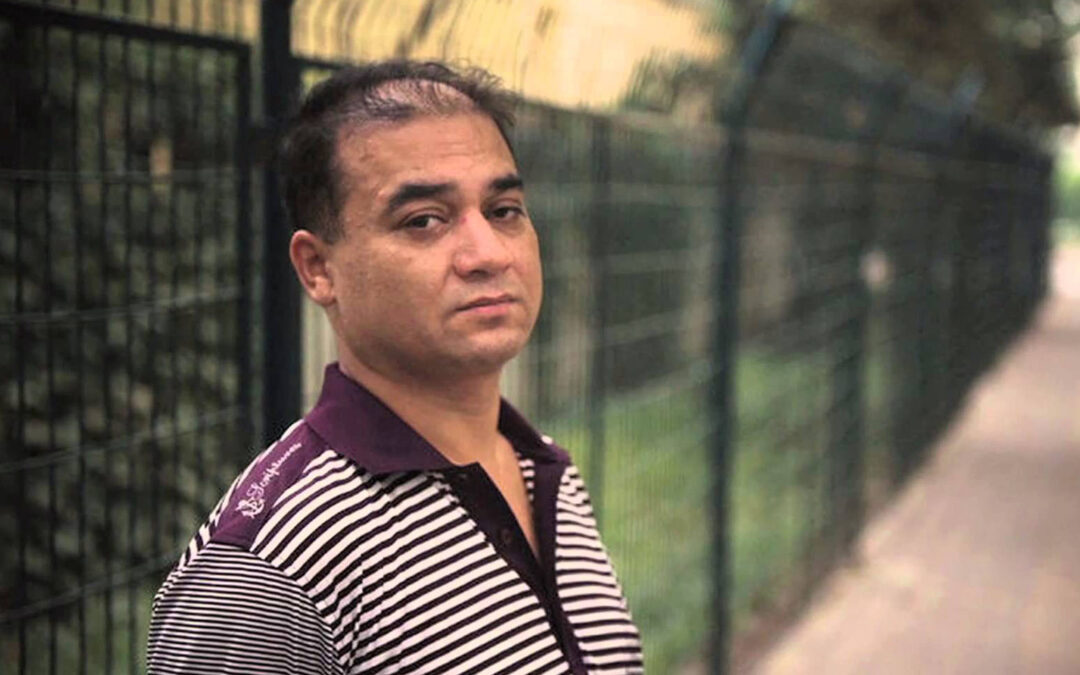
A renowned Uyghur intellectual in China, Ilham Tohti (photo) has rejected separatism and violence, and sought reconciliation based on a respect for Uyghur culture, which has been subject to religious, cultural and political repression in the Xinjiang Uyghur Autonomous Region.
In 1994 he began to write about problems and abuses in Xinjiang, which led to official surveillance.
From 1999 to 2003 he was barred from teaching.
Since then the authorities have also made it impossible for him to publish in normal venues.
As a response, he turned to the Internet to broaden public awareness of the economic, social and developmental issues confronting the Uyghurs.
In 2006 he established Uyghurbiz.net, a Chinese-language site, to foster dialogue and understanding between Uyghurs and Han Chinese.
Over the course of its existence, it has been shut down periodically, and people writing for it have been harassed.
In 2009, he was arrested for several weeks after posting information on Uyghurs who had been arrested, killed and “disappeared” during and after protests.
In the following years he was periodically subjected to house arrest, and in 2013, while bound to take up a post as a visiting scholar at Indiana University, USA, he was detained at the airport and prevented from leaving China.
On January 15, 2014, Ilham Tohti was arrested on charges of separatism and sentenced to life imprisonment, after a two-day trial.
Numerous statements were issued by Western governments and the European Union condemning his trial and sentence, and in early 2016 several hundred academics petitioned the Chinese leadership for his release.
Upon his nomination as a Finalist for the Martin Ennals Award earlier this year, his daughter stated: “My father Ilham Tohti has used only one weapon in his struggle for the basic rights of the Uyghurs of Xinjiang: Words; spoken, written, distributed, and posted. This is all he has ever had at his disposal, and all that he has ever needed. And this is what China found so threatening. A person like him doesn’t deserve to be in prison for even a day.”
Martin Ennals Foundation Chair Dick Oosting said: “The real shame of this situation is that by eliminating the moderate voice of Ilham Tohti the Chinese Government is in fact laying the groundwork for the very extremism it says it wants to prevent.”
The two other finalists received Martin Ennals Prizes.
Zone 9 Bloggers (Ethiopia) are nine young activists who called themselves ‘Zone 9’ as a symbol for Ethiopia as a whole (Kality prison in Ethiopia, has 8 zones and holds many journalists and political prisoners).
They document human rights abuses and shed light on the situation of political prisoners in Ethiopia.
Six of its members were arrested and charged with terrorism.
Although they have now been released, three are in exile while four of the six remaining in Ethiopia are still facing charges and banned from travel.
Razan Zaitouneh (Syria) has dedicated her life to defending political prisoners, documenting violations, and helping others free themselves from oppression.
She founded the Violations Documentation Center (VDC), which documents the death toll and ill-treatment in Syria’s prisons.
She had started to cover all sides in the conflict when she was kidnapped, alongside with her husband and two colleagues, on 9 December 2013. Her whereabouts remain unknown.
Background
The “Nobel Prize of Human Rights”, the Martin Ennals Award for Human Rights Defenders (MEA) is a unique collaboration among ten of the world’s leading human rights organizations to give protection to human rights defenders worldwide.
Strongly supported by the City of Geneva, the award is given to Human Rights Defenders who have shown deep commitment and face great personal risk. Its aim is to provide protection through international recognition.
The Jury is composed of the following NGOs: ICJ, Amnesty International, Human Rights Watch, Human Rights First, Int’l Federation for Human Rights, World Organisation Against Torture, Front Line Defenders, EWDE Germany, International Service for Human Rights, and HURIDOCS.
Contact:
Michael Khambatta, Director, Martin Ennals Foundation, t: +41 79 474 8208, e: khambatta(a)martinennalsaward.org
Olivier van Bogaert, Director, ICJ Media and Communications, and ICJ Representative on the MEA Jury, t: +41 22 979 38 08, e: olivier.vanbogaert(a)icj.org
china-mea-laureate-2016-news-press-releases-2016-chi (full text in Chinese, PDF)
Watch the Martin Ennals Award Ceremony 2016:
Watch the Ilham Tohti movie: