Dec 5, 2013 | Events, News
The 4th ICJ Geneva Forum of Judges and Lawyers opened today. This year’s forum promotes the role of women in the judiciary, focusing particularly on women judges and lawyers from Africa and the Middle East.Scheduled on 5-6 December, it forms part of a broader ICJ initiative on women judges, lawyers and human rights defenders as agents of change.
The Forum is convened annually by the ICJ’s Centre for Independence of Judges and Lawyers, bringing together legal practitioners from around the world to help safeguard the independence and impartiality of the judiciary and the legal profession.
The 2013 edition of the Forum is supported by the République and Canton de Genève, Australian Aid, and PeaceNexus Foundation.
ICJGeneva Forum 2013-Final Agenda-event-2013 (download in pdf)
ICJGeneva Forum 2013-Participants list-event-2013 (download in pdf)
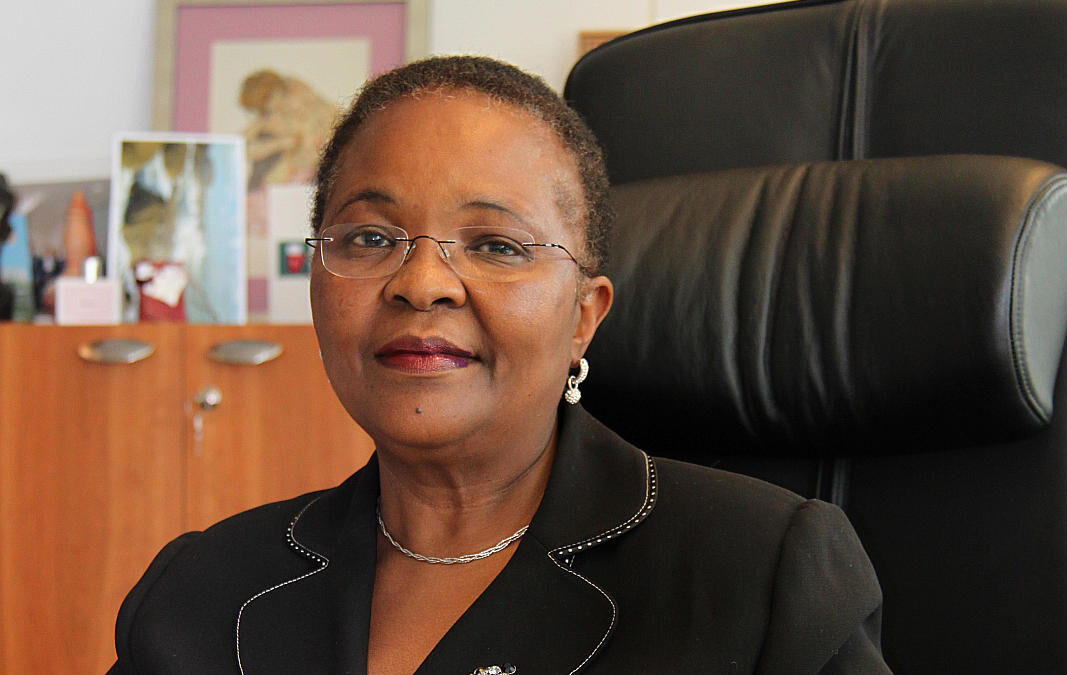
Picture: ICJ Commissioner Sanji Monageng (Botswana) will chair the session on stories from the frontline.
Dec 3, 2013 | Agendas, Events
The ICJ was at the Club de la Presse in Geneva for a roundtable ahead of the Fourth ICJ Geneva Forum of Judges and Lawyers. The event was live streamed.
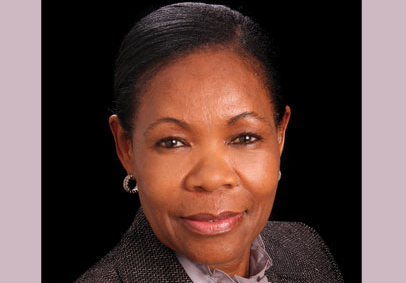
Moderated by Leah Hoctor, Senior Legal Adviser at ICJ, the event was a unique opportunity to share the real life experiences of two African women, who have overcome the challenges of poverty and discrimination to become two of Africa’s most senior and admired judges.
Justice Yvonne Mokgoro (photo) was the first black woman judge in South Africa and a former justice of its post-apartheid Constitutional Court.
Justice Lilian Tibatemwa-Ekirikabinza is an academic leader in Uganda. She was the first Ugandan woman to qualify for an award of a Ph.D. in Law.
The Press Club event came ahead of the Fourth ICJ Geneva Forum of Judges and Lawyers on 5-6 December.
The Forum is convened annually by the ICJ’s Centre for Independence of Judges and Lawyers, bringing together legal practitioners from around the world to help safeguard the independence and impartiality of the judiciary and the legal profession.
This year’s forum promotes the role of women in the judiciary, focusing particularly on women judges and lawyers from Africa and the Middle East.
It forms part of a broader ICJ initiative on women judges, lawyers and human rights defenders as agents of change.
Watch the event here:
Oct 27, 2013 | News
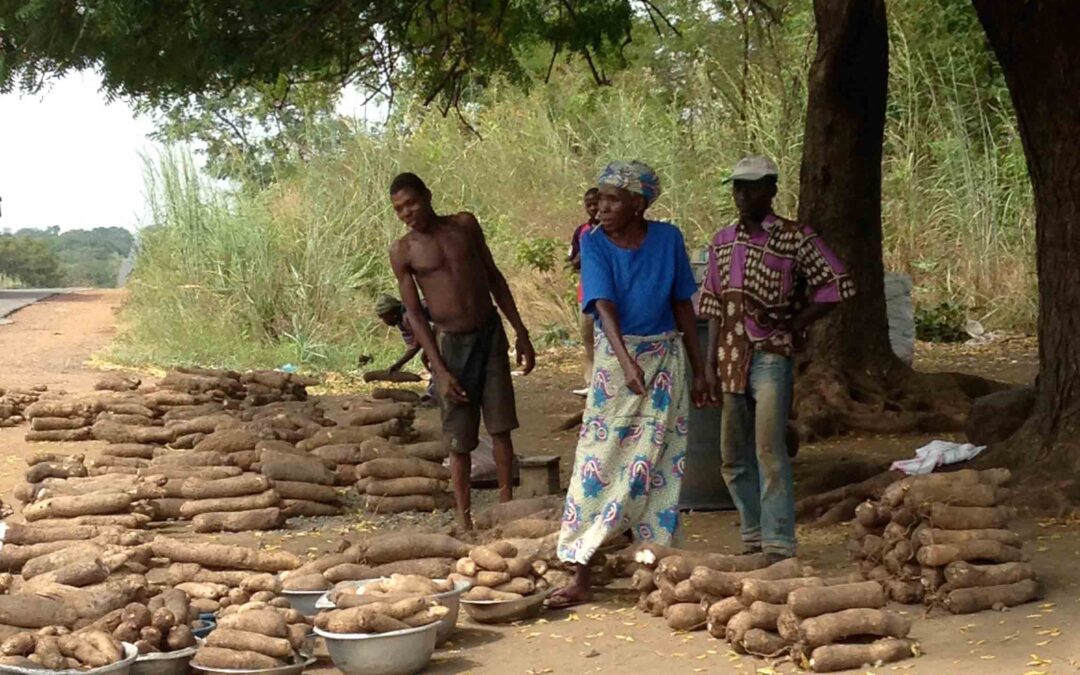
The international NGO coalition for the OP to the ICESCR supports national initiatives to promote ratification in Africa.
The International Coalition for the Optional Protocol to the International Covenant on Economic, Social and Cultural Rights ended today a one-week support mission to promote the ratification of the Protocol in West Africa.
Although the group of African States played a fundamental role in the elaboration of the Protocol, none of them have yet ratified this instrument that will give the possibility to victims of violations of ESCR to have their case examined by the UN Committee in charge.
On 21 and 22 October in Cotonou, Benin, two members of the International Coalition, Amnesty International and the International Commission of Jurists, supported national actors, including the Coalition béninoise pour les DESC, Amnesty International-Benin, the Chaire UNESCO-Benin, in the organization of a high-level roundtable discussion to welcome the signature by the State of Benin of the Optional Protocol to the ICESCR on 24 September 2013 and to encourage the State to move quickly towards the ratification of the instrument.
The initiative benefitted from the participation of two Ministers, the Minister of Justice and Human Rights and the Minister in charge of the relations with the institutions, as well as from the support of additional partners including the Office of the High Commissioner for Human Rights.
From 24 to 26 October, and with the support of the International Coalition, a group of national civil society organized in Sokodé (about 400 km from Togo’s capital Lome) a national gathering to discuss the international standards on ESCR, the promotion and protection mechanisms for these rights, including the procedures under the Protocol.
Fifty-two participants from more than 30 civil society organizations from all parts of the country took part in this event.
Following the discussions, the organizers – the Plateforme DESC-Togo, GRADSE, RAPDA-Togo, FETAPH, WILDAF-Togo, FLORAISON et AMNESTY INTERNATIONAL-Togo, in collaboration with the International Commission of Jurists, the OHCHR, Amnesty International and Terre des Hommes France – established an action plan for the promotion and protection of ESCR in the country, including the monitoring of key recommendations of the CESCR and the ratification of the Optional Protocol.
Aug 15, 2013 | News
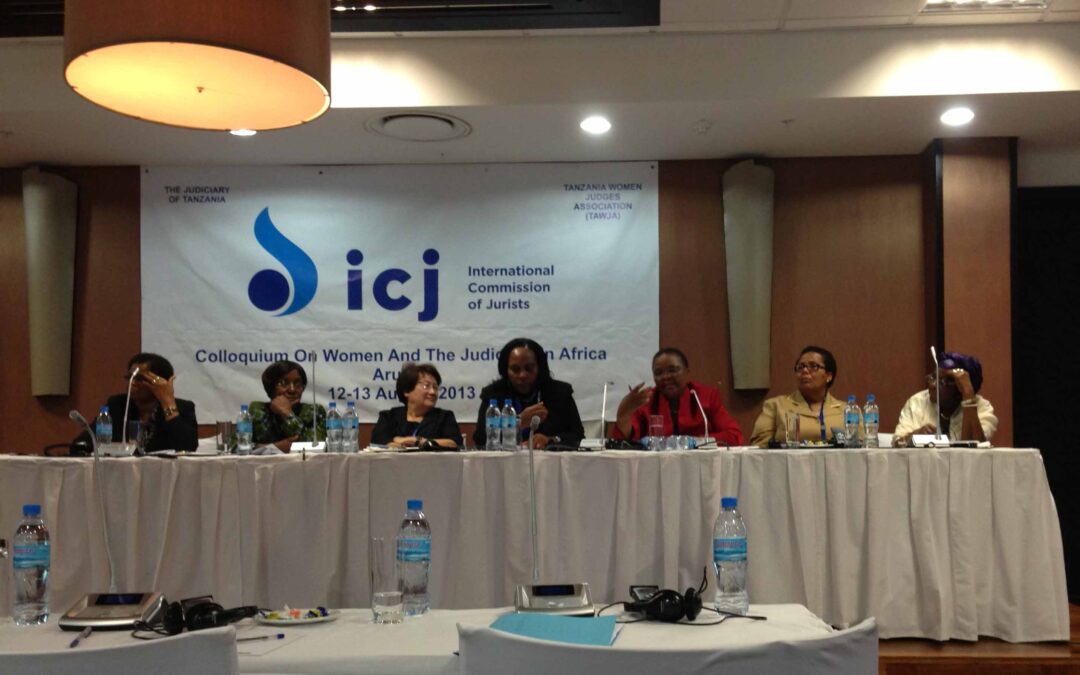
Women judges from across Africa participated in the first ICJ Colloquium on Women and the Judiciary on 12 and 13 August in Arusha, Tanzania.
The Arusha Colloquium, was opened by the Chief Justice of Tanzania and was hosted in collaboration and partnership with the Tanzania Women Judges Association and the Judiciary of Tanzania.
It enabled thirty five senior women judges from over fifteen African jurisdictions to come together to share their stories and reflect on and discuss their personal and professional experiences and challenges as women within the judiciary.
They were joined by over 15 women human rights defenders and lawyers.
Colloquium themes included the importance and role of women within the judiciary, independence and impartiality issues effecting women judges, appointment and promotion procedures, education and training needs and the role of women judges associations.
Discussions also addressed the role of the judiciary in advancing gender equality, women’s access to justice and protection of women human rights defenders.
The Colloquium marks the beginning of an ICJ multi-year initiative on women judges, lawyers and human rights defenders as agents of change.
Jul 9, 2013 | News
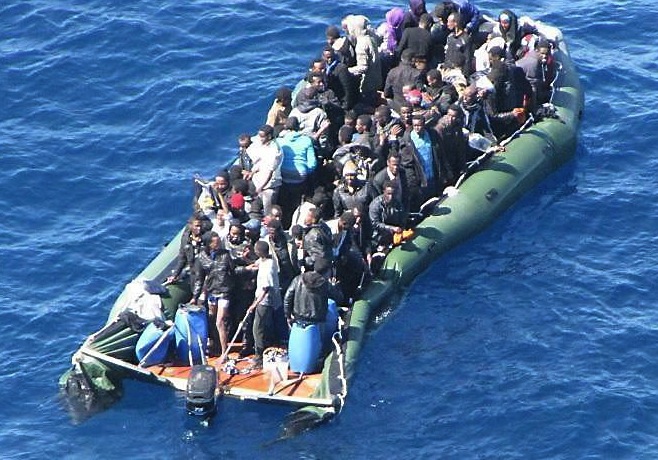
The International Commission of Jurists (ICJ) today called on the Government of Malta to refrain from forcibly transferring a number of Somali nationals to Libya, where they are alleged to be at real risk of human rights violations and further transfer to Somalia.
According to media reports, the persons at risk of transfer are part of a group of some 102 persons, including 41 women and two babies, who arrived in Malta this morning.
The ICJ expresses its grave concern at the possibility that Somali nationals, who are alleged to be considered at risk of being subject to ill-treatment or persecution if sent back to Somalia, would first be sent back to Libya. According to the office of the United Nations High Commissioner for Refugees, in Libya, migrants face a “constant risk of exploitation, arrest and indefinite detention”.
The ICJ stresses that the European Court of Human Rights has ruled, in the judgment Hirsi Jamaa and others v. Italy, that sending back potential asylum seekers, including of Somali origin, to Libya, without individual assessment of their situation and access to asylum procedures, violates the European Convention on Human Rights, in particular the principle of non-refoulement, the prohibition of collective expulsion and the right to an effective remedy for violations of human rights.
The ICJ therefore calls on the Maltese Government to refrain from expelling or otherwise transferring to Libya any of the Somali citizens who arrived on Maltese shores today. The migrants must be fully informed of their right to apply for international or humanitarian protection under EU and Maltese law; and each of their cases must be examined on its individual merits.
Statement-ExpulsionSomalis-2013-Malta (download the statement)
Contact:
Massimo Frigo, ICJ Legal Adviser of the Europe Programme, tel: 41 22 979 38 05, e-mail: massimo.frigo(a)icj.org
Róisín Pillay, ICJ Director of the Europe Programme, e-mail : roisin.pillay(a)icj.org