Feb 17, 2020 | Feature articles, News
A tribute to former ICJ Commissioner José Zalaquett by current ICJ Commisioner Alejandro Salinas Rivera (Chile).
After a prolonged and agonizing illness, our beloved José (Pepe) Zalaquett has passed away. Pepe, as his friends used to call him and as he was widely known, was a leading lawyer and professor of international human rights law.
However, he was much more than that. At heart, he was a gentle man, a curious and pleasant human being, very sensitive to the expressions of art.
As a lawyer and later as a law professor, he was characterized by his deep commitment to justice and respect for human rights.
This commitment also brought adverse consequences in his life, as he suffered persecution, jail and exile, during the Chilean dictatorship.
While in exile and away from his homeland, he joined Amnesty International, and soon after became the president of its board of directors.
Upon returning to Chile after 10 years of exile, he headed the Chilean section of Amnesty International, in what were strenuous times for the country.
Once democracy was re-established in Chile, he became part of the National Truth and Reconciliation Commission, known as the “Rettig” Commission. However, it should have been called the “Zalaquett” Commission instead, since he was the architect of the initiative which was later emulated in South Africa, El Salvador and other countries, which initiated similar processes.
Pepe, because of his strict commitment to justice and his veritable concern for the protection and promotion of human rights, was not confined in dogmas or prejudices; he was so generous, open and free minded that he would not settle for anything less than the best. This at times made him a quixote, facing solo against windmills.
Pepe was a lover of life, a sensitive soul and an art aficionado. He had an opinion over almost all artistic disciplines. He regularly wrote art columns and his reviews were very reputed.
Pepe was one of those humans who are scarce and yet essential for our society. He was a complex and wholesome personage, who left his mark after his demise.
He left behind a generation of spirited students and disciples trained at the Centre for Human Rights of the University of Chile, of which he was a co-Director, who will undoubtedly continue his legacy in human rights.
But even more, he left an impression, a way of doing things, an impalpable legacy that is quintessential for the times to come. Intellectual honesty, sensitivity and empathy towards the victims along with ethical austerity and geniality, are part of the legacy that Pepe leaves behind after passing through this life.
The ICJ feels privileged as an institution to count Pepe Zalaquett among its commissioners. His departure indisputably, is an irredeemable loss, but at the same time we are proud and grateful to have shared a common cause with him.
José, Pepe, thank you very much …
Feb 13, 2020 | News
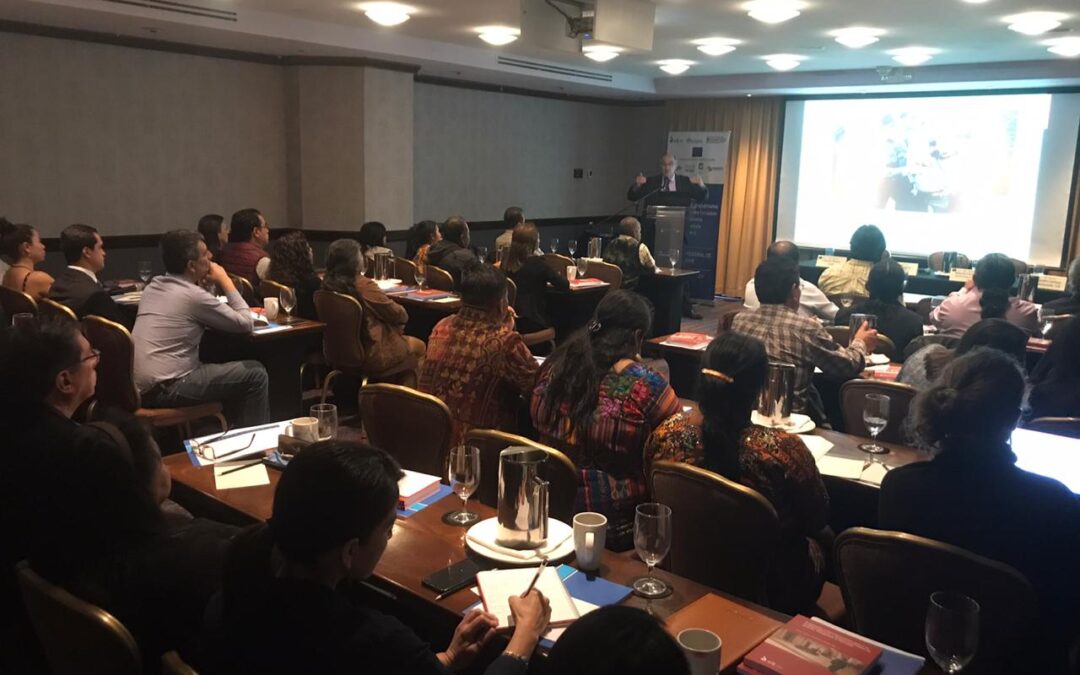
The ICJ convened two workshops in Guatemala City from 11 to 13 February for more than 30 lawyers and more than 30 representatives of victims’ organizations on the international law and standards that apply to the investigation of unlawful death and enforced disappearances.
The workshops were conducted as part of the project under the ICJ’s Global Accountability Initiative entitled, Promoting justice for extrajudicial killings and enforced disappearances in Colombia, Guatemala and Peru, and supported by the EU European Instrument for Democracy and Human Rights (EIDHR). The project promotes accountability of perpetrators and access to effective remedies and reparation for victims and their families in cases of extrajudicial killings and enforced disappearances.
The workshop for lawyers was inaugurated by the President of the Board of Lawyers of Guatemala, Ovidio Orellana. The workshop with representatives of victims organizations was inaugurated by the Chief of Cooperation of the European Union Alberto Cortezón.
Participants in the workshops emphasized that the Guatemalan public authorities must respect and effectively impolement the the revised Minnesota Protocol on the Investigation of Potentially Unlawful Death, and that there was a need to reinforce advocacy strategies for the respect of the Protocol by the Guatemalan Human Rights Institutions.
The Presidential Commission on Human Rights (COPREDEH) and the Ombudsman´s Office participated during the workshop with victims’ organizations. They committed themselves to take the necessary actions to incorporate into their work the principles and content of the Minnesota Protocol, as a complementary tool to other conventions and binding law.
Contacts:
Ramón Cadena, Regional Director of ICJ’s Central America Office, email: ramon.cadena@icj.org
Kingsley Abbott, Senior Legal Adviser & Coordinator of the ICJ’s Global Accountability Initiative, email: kingsley.abbott@icj.org
Carolina Villadiego Burbano, ICJ Legal and Policy Adviser, Latin America, and Regional Coordinator of the Project, email: carolina.villadiego@icj.org
Jan 30, 2020 | News
The “Peace to Prosperity” plan proposed by the United States, and developed in the absence of any meaningful engagement with Palestinian representatives, is not a serious means to solve the conflict between Israel and Palestinian, and all actors in the international community should reject it, the ICJ said today.
As presented, the Plan would pave the way for Israel to annex large portions of the occupied West Bank, including East Jerusalem, and deny the Palestinians the internationally protected right to self-determination as well as the right to return of Palestinians. In addition, it seeks to legitimize the acquisition of land by force, all in violation of international law and the UN Charter.
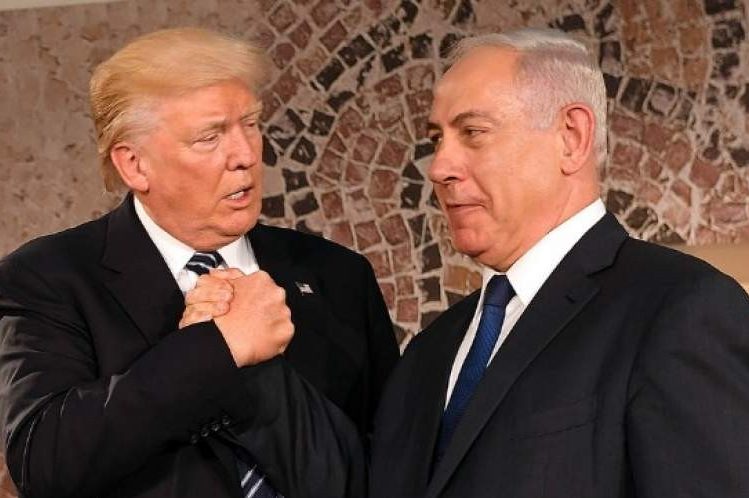
On 28 January 2020, US President Donald Trump publicly announced the plan at the Whitehouse in Washington, with Israeli Prime Minister Benjamin Netanyahu at his side.
“The US plan is a political stunt that patently disregards international law and how the rights of Palestinians are recognized and protected under international law,” said Said Benarbia, the ICJ’s MENA Programme Director.
The ICJ emphasized that any claims of sovereignty by Israel over parts of the West Bank, including East Jerusalem, based on this plan would be null, void and of no effect.
The text of the US plan inaccurately asserts that Israel has “valid legal and historical claims over the West Bank” and notes that “[t]he State of Israel and the United States do not believe the State of Israel is legally bound to provide the Palestinians with 100 percent of pre-1967 territory.”
This position runs counter to numerous applicable UN Security Council Resolutions, including Resolution 242, which required Israel’s complete withdrawal from the territory occupied in 1967.
“Any settlement to the conflict between Israel and Palestine must be consistent with international law, including international human rights law and international humanitarian law,” Benarbia added. “This requires negotiations on an equal footing between the parties, optimally with broad international engagement, not simply an intervention by a single State.”
Israeli settlements are established in violation of article 49(6) of the Fourth Geneva Convention, which prohibits the Occupying Power from transferring its own population into the occupied territory.
Their eventual incorporation into Israel would amount to unlawful annexation, in contravention of the prohibition of territorial acquisition by force established by the UN Charter and international law.
The US plan posits that “Jerusalem will remain the sovereign capital of the State of Israel,” apportioning to the State of Palestine the areas of the city beyond the separation barrier. It also denies the right to return of Palestinian refugees.
Effectively making Israel’s occupation of parts of the West Bank permanent, the US plan further provides that Israel will maintain “overriding security responsibility for the State of Palestine” and that the West Bank and Gaza should be fully demilitarized.
Contact
Said Benarbia, Director of the ICJ Middle East and North Africa Programme, t: +41-22-979-3817; e: said.benarbia(a)icj.org
Dec 6, 2019 | News
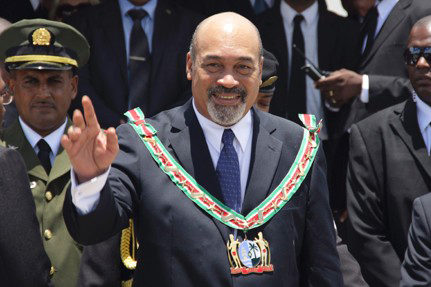
Today, the ICJ has taken note of the 29 November 2019 conviction by the military and civilian chambers of a Court Martial (“the Court”) in Suriname of President Desiré Delano Bouterse and acquittal of others for crimes under international law relating to events that had taken place in December 1982 in Suriname.
The Court imposed a 20-year sentence of imprisonment on Bouterse, albeit it did not order an arrest warrant to be issued against him.
Bouterse and his co-accused faced charges of torture and murder — by means of extra-judicial executions – of 15 people – lawyers, journalists, soldiers, businessmen, academics and a trade union leader – who had been openly critical of the regime at the time, following a military coup led by Bouterse.
Bouterse, who remains the country’s President, was abroad when the Court delivered its verdict; he returned to Suriname two days later.
The ICJ is concerned at apparent efforts to circumvent the Court’s verdict. Since his conviction, Bouterse has made statements amounting to a deliberate undermining of the judicial process and rule of law, such as calling on the court to “come and get me”.
The ICJ further takes note that there is a possibility of appeal and calls on all parties to respect the rule of law and to allow the legal system to run its course, in accordance with international fair trial standards, without further delays, threats or other forms of executive interference.
Background to the 29 November 2019 verdict
The trial against Bouterse and his alleged accomplices began in 2007. On 19 July 2010, Desiré Delano Bouterse was elected President of Suriname, taking up office on 12 August 2010. On 4 April 2012, the country’s Parliament adopted an amendment to the 1989 Amnesty Law in existence at the time, which had the effect of granting an amnesty to President Bouterse and others in relation to any wrongdoing in connection with the December 1982 events. This led to a decision by the Court to suspend the trial of Bouterse and his co-accused indefinitely pending the establishment of the constitutionality or otherwise of the 1989 Amnesty Law. As the ICJ noted in its report of 29 May 2012, which followed an ICJ mission to the country to observe the trial, there were a number of unresolved questions regarding the legality of the 1989 Amnesty Law, including its incompatibility with Suriname’s international law obligations.
Since its initial mission in 2012, the ICJ has frequently expressed concern at the persistent delays in the proceedings. Eventually, in June 2016, the Court declared the 1989 Amnesty Law unconstitutional, and ordered the proceedings’ resumption; however, delays continued to beset the proceedings. On 2 August 2016, the Inter-American Commission on Human Rights expressed its deep concern about the then ongoing delays in the resumption of the trial. Eventually, by early 2017, the Court decided to have the charges put to the accused and ordered the prosecutor to read them out in court.
Persistent efforts by Bouterse to use his authority to have the trial declared a threat to national security or a danger to the country’s economic stability were unsuccessful, and the trial resumed, albeit with continued delays, prompting the ICJ to issue a further statement in May 2017 calling for the resumption of the trial without further delay.
Eventually, in June 2017, the public prosecutor issued his full list of charges against President Bouterse, accompanied by a request of a sentence of imprisonment of no less than 20 years on conviction, thereby moving to the trial phase proper of the proceedings.
Download
Suriname-Bouterse case-news-press release-2019-DUT (PDF available in Dutch)
Nov 26, 2019 | News
Three exceptional women – Huda Al-Sarari, Norma Ledezma and Sizani Ngubane – are the finalists for the 2020 Martin Ennals Award, a demonstration of the leading position now occupied by women in the defence of human rights. The ICJ is member of the MEA Jury.
In Yemen, Huda Al-Sarari has exposed and challenged the existence of secret prisons and many cases of torture.
In Mexico, Norma Ledezma is fighting against femicides and disappearances.
In South Africa, Sizani Ngubane is fighting for access for women to education and to land.
Three women nominated: a first
Each year, the Martin Ennals Award rewards human rights defenders from around the world who distinguish themselves by their strong commitment to promoting human rights – often at the risk of their own lives.
In 2020, for the first time the Jury nominated three women who defend the fundamental rights of their communities in sensitive contexts.
“The Martin Ennals Foundation is proud to recognize the courageous work of three women. For the 2020 edition, our Jury’s choice reflects the ever-greater global impetus of individuals – whatever their gender – who are committed to respect for human rights and women’s rights in particular,” said Isabel de Sola, Director of the Martin Ennals Foundation.
“The finalists for the 2020 Martin Ennals Award work on different continents, but all three have in common their resilience, determination, a tremendous rigour and, finally, the positive and concrete impact of their work,” added Hans Thoolen, Chairman of the Jury.
In Yemen, where the conflict has been ongoing since 2005, Huda Al-Sarari, a Yemeni lawyer, unveiled the existence of several secret detention centres where the worst violations of human rights were committed: torture, disappearances or even extrajudicial executions.
In South Africa, women face discrimination, the worst expression of which is widespread gender violence. In rural communities, they frequently have their land expropriated and are deprived of access to education and justice. Sizani Ngubane founded an organization of more than 50,000 women from rural areas in her country and has fought successfully for over 40 years for the recognition of their rights.
In Mexico, the civil population is paying a high price for the weakness of the rule of law which is underpins widespread violence and impunity. Women are the primary victims, with more than 3,500 femicides committed each year. Norma Ledezma, who is the mother of one of the victims, puts all her energy into supporting families seeking access to justice in the state of Chihuahua.
The finalists were selected by a jury made up of representatives of ten of the world’s leading human rights organizations: the ICJ, Amnesty International, Human Rights Watch, Human Rights First, International Federation for Human Rights, World Organisation Against Torture, Front Line Defenders, EWDE Germany, International Service for Human Rights and HURIDOCS.
The 2020 Martin Ennals Award will be given to one of the three finalists on 19 February 2020 at a livestreamed public ceremony. The event is hosted by the City of Geneva which, as part of its commitment to human rights, is a longstanding supporter of the Award.
Contact
Olivier van Bogaert, Director Media & Communications, ICJ representative in the MEA Jury, t: +41 22 979 38 08 ; e: olivier.vanbogaert(a)icj.org
Chloé Bitton, Communications Manager, Martin Ennals Foundation, t +41 22 809 49 25 e: cbitton(a)martinennalsaward.org
Universal-MEA2020bios-News-2019-ENG (full bios of finalists, in PDF)
Universal-MEA2020bios-News-2019-ARA (full story and bios of finalists in Arabic, PDF)

![Smoke rises after an Israeli air strike on the village of Taybeh in southern Lebanon [Source: Al Jazeera]](https://www.icj.org/wp-content/uploads/2026/03/Screenshot-2026-03-20-at-15.56.24-300x200.png)