Jun 28, 2018 | News
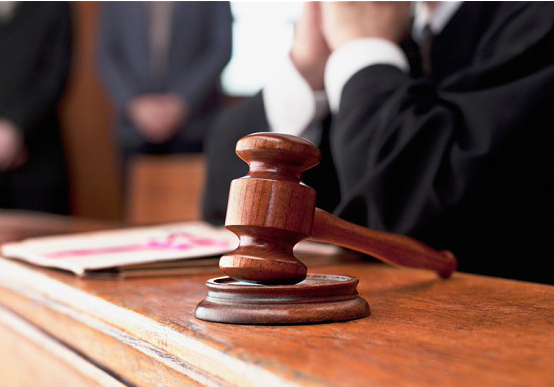
The ICJ is deeply concerned with the allegations that the former Chief Justice and other officials infringed the freedom of expression and freedom of association of individual judges in South Korea.
The ICJ urges the Republic of Korea to ensure the individual independence of judges in the country.
The ICJ received information that in 2015, the National Court Administration (NCA), under the term of former Chief Justice Yang Sung-tae, submitted proposals to the government of South Korea to create a ‘second Supreme Court,’ arguing that it would assist in relieving the existing Supreme Court with its caseload.
This proposal was met with numerous criticisms from the general public and several individual judges.
Allegedly, judges who criticized this proposal were placed by the NCA under surveillance, both in their professional and personal dealings.
Moreover, they were prevented from joining international conferences and national professional organizations. Some were also either sidelined for promotions or were not given preference for educational opportunities abroad.
On March 2017, during the term of former Chief Justice Yang, the Supreme Court, through the NCA, created an internal committee to conduct an investigation to look into these allegations.
Two other subsequent separate committees were formed to investigate.
Finally, on Mary 2018, under the term of the current Chief Justice Kim Myeong-soo, the latest committee, without releasing a full report, said that it did not find basis to file criminal charges against the NCA and former Chief Justice Yang.
On 18 June 2018, the Seoul Central District Prosecutor’s Office initiated its own investigation into the allegations, including the possibility of filing criminal charges against former Chief Justice Yang and some NCA judges.
The rights of freedom of expression and association of judges is recognized in the UN Basic Principles on the Independence of the Judiciary and other relevant standards, which also provide for appropriate and fair procedures for holding judges to account for misconduct.
In principle, in matters touching on alleged misconduct by a judge related to the discharge of his or her duties, the ICJ considers that international standards and best practices concerning judicial independence and accountability would require at the minimum that a prosecutor seek permission of a judicial council or current Chief Justice, or other similar superior judicial authority, before commencing a formal criminal investigation or proceedings against a sitting judge.
The ICJ calls on the prosecutors’ office to seek such permission and to take steps to demonstrate that it will remain impartial and independent in the conduct of its own investigation.
The ICJ also calls on the Supreme Court to initiate a new investigation of its own, including to consider the issues from a judicial professional conduct perspective.
Finally, the ICJ urges the Supreme Court to ensure that interferences into the individual independence of judges in South Korea would never happen again.
Contact
Emerlynne Gil, ICJ Senior International Legal Adviser, t: +662 619 8477 (ext. 206) ; e: emerlynne.gil@icj.org
South Korea-Independence of Judges-News-Web Story-2018-ENG (full story in PDF)
Jun 27, 2018 | Advocacy, Non-legal submissions
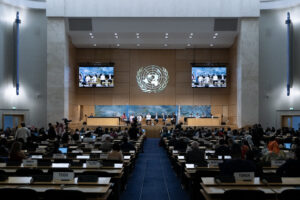
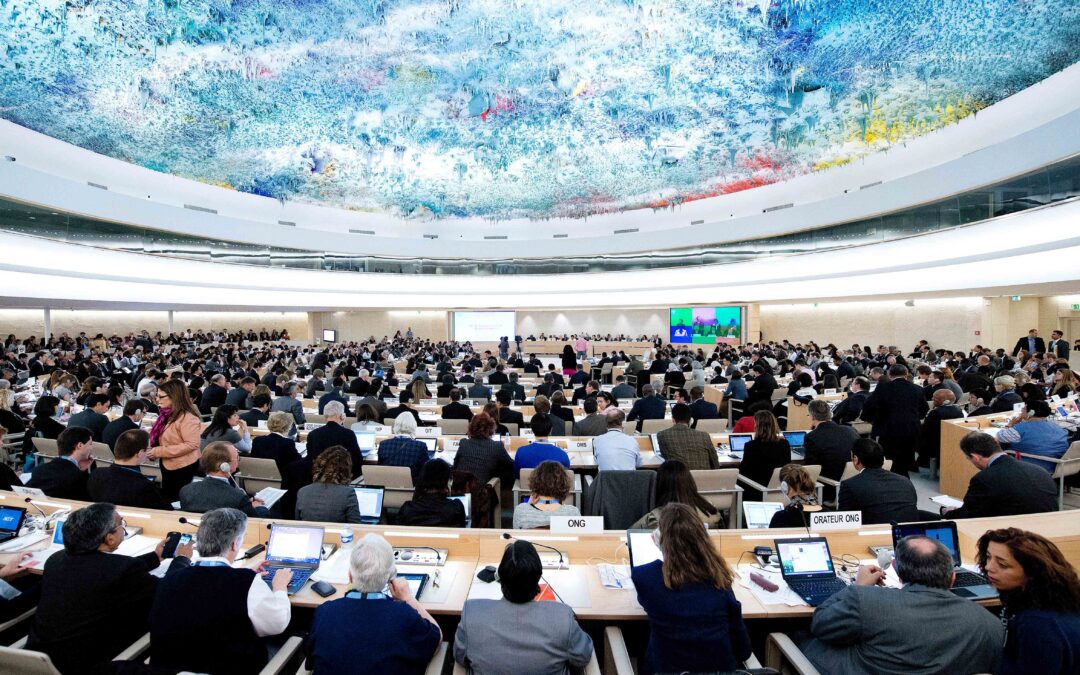
At the UN, the ICJ today highlighted the deteriorating situation for human rights and rule of law in Cambodia.
The statement came during a general debate at the UN Human Rights Council, on human rights situations that require the Council’s attention. It read as follows:
“Mr. President,
A State rapidly moving in an authoritarian direction, with widespread and deepening repression of human rights, whose civil society cannot even speak openly at this Council for fear of reprisals, should be discussed as a situation requiring the Council’s attention under item 4, and not merely a matter of technical assistance and capacity-building under item 10. An urgent example is Cambodia.
The continuing human rights and rule of law crisis orchestrated by the ruling party has deeply compromised national elections scheduled for 29 July.
Authorities continue to abuse the legal system to repress civil society, independent media, the political opposition, and increasingly, ordinary individuals.
The Government has threatened prosecution of any person calling for a boycott of the highly compromised elections. It has established a working group to monitor and control all information on websites and social media. Ordinary people are being arrested, charged and detained under a new lèse-majesté law.
Repression of civil society and independent media continues – with the sale of the last independent English-language newspaper to an owner allegedly linked to the Government, and judicial investigation of civil society members in criminal proceedings against detained opposition leader, Kem Sokha.
The Council and its members must respond more effectively to the ongoing crisis in Cambodia, particularly in the few weeks remaining before the election.
Thank you, Mr. President.”
The delegation of the Cambodian government exercised its right of reply at the end of the debate. Its statement is available here: UN_HRC38-Cambodia-Reply-2018
Jun 24, 2018 | News
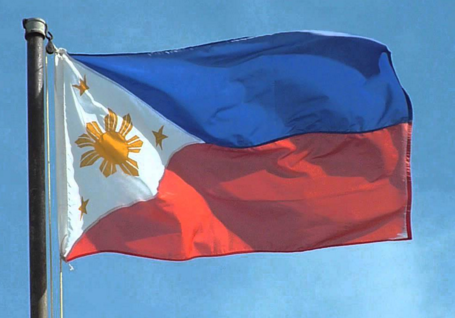
The proposed amendments to the Philippines’ Human Security Act of 2007 (HSA) would, if adopted, give government authorities a license to commit human rights violations, said the ICJ in its submission today to the House of Representatives.
The ICJ strongly urged the House of Representatives to reconsider these proposed amendments and in the interim to allow more time for full consultation and debate on revisions of the law.
In its submission to the House of Representatives’ joint Technical Working Group (TWG) of the Committees of Public Order and Safety and National Defense and Security, the ICJ stressed that certain proposed amendments to the HSA are clearly incompatible with international human rights.
It is also incompatible with laws and standards that prohibit unfettered surveillance power and arbitrary deprivation of the right to liberty and protect the rights to privacy, information, redress, and freedom of opinion and expression.
The ICJ also expressed deep concern that the law also gives military personnel responsibility in countering terrorism, specifically to conduct surveillance on, arrest, and detain persons who are suspected of acts of terrorism.
“The proposed amendments do not address the existing flaws of the HSA. For instance, the definition of acts of terrorism under the HSA is vague and ambiguous and the proposed changes do not in any way remedy that,” said Emerlynne Gil, Senior International Legal Adviser with the ICJ.
The ICJ also pointed out that the proposed amendments are likely to lead to violations of the right to freedom of opinion and expression.
The proposed amendments would also impermissibly lengthen to thirty (30) days the period within which an individual may be detained without judicial warrant.
“This is clearly incompatible with the Philippines international legal obligations and constitutes arbitrary deprivation of liberty,” said Gil.
The ICJ proposes to reduce the detention period to forty-eight (48) hours or less, in compliance with international human rights laws and standards.
“The Philippine government has the undeniable duty to protect people from acts of terrorism committed by non-State actors, but it cannot use as a pretext the serious nature of terrorist acts to avoid its obligations under international human rights law,” Gil added.
Contact:
Emerlynne Gil, Senior International Legal Adviser, t: +662 619 8477 (ext. 206) e: emerlynne.gil(a)icj.org.
Cover Letter ENG (PDF): Philippines-Amendments-to-HSA-Advocacy-Cover Letter-June-2018-ENG
Full Submission ENG (PDF): Philippines-Proposed-Amendments-to-HSA-Advocacy-non-legal-Submission-June-2018-ENG
Jun 20, 2018 | Advocacy, News
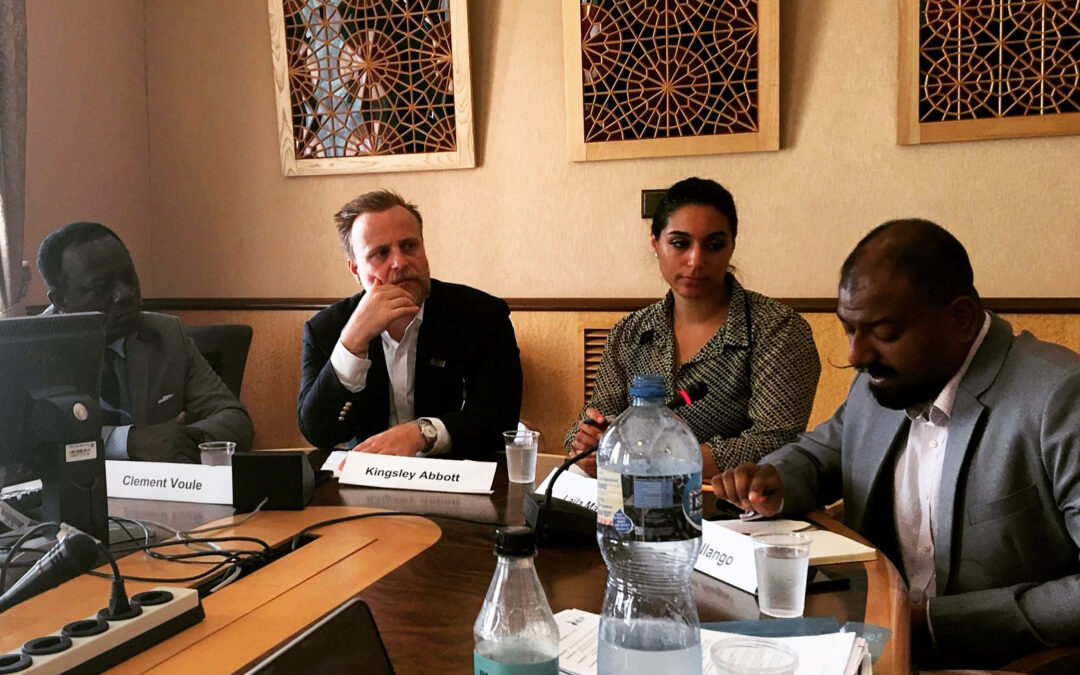
Today, the ICJ held a joint side event at the 38th Regular Session of the Human Rights Council on freedoms of expression, association and assembly in the context of elections in Asia.
The event was co-organized by the ICJ, in collaboration with Forum Asia and Human Rights Watch.
Kingsley Abbott, ICJ Senior Legal Adviser, spoke at the event, highlighting the regression in human rights and the rule of law in the Southeast Asian region, focusing on Thailand and Cambodia in the lead up to elections.
He identified recent developments in the misuse of the law to violate human rights in Thailand and Cambodia, and called for a necessary push back against the weaponization of the law and the misuse of the principle of the ‘rule of law’ in both countries.
Other speakers at the event included Iniyan Ilango, from Forum Asia, who spoke about fundamental freedoms in the context of elections in Bangladesh and the Maldives and other countries in Asia; and UN Special Rapporteur on the rights to freedom of peaceful assembly and of association, Clément Nyaletsossi Voule, who addressed the event more broadly on the protection and promotion of freedom of assembly and association in the context of elections.
The event was moderated by by Laila Matar, Deputy Director, United Nations, Human Rights Watch.
Contact
Kingsley Abbott, Senior Legal Adviser, ICJ Asia Pacific Regional Office, t: +66 94 470 1345, e: kingsley.abbott(a)icj.org
Thailand-Cambodia-Side-event-HRC38-Freedoms-of-Expression-Advocacy-2018-ENG (full speech in PDF)
Jun 19, 2018 | Advocacy, Non-legal submissions
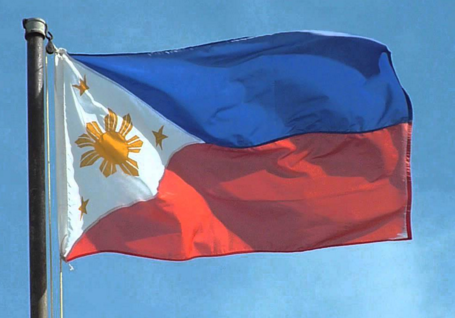
The ICJ today joined other NGOs in calling for the UN Human Rights Council to establish an international investigation into extrajudicial killings in the ‘war on drugs’ in the Philippines.The call came in a joint oral statement to the Council, delivered by Franciscans International on behalf of the group of NGOs. The statement, part of the general debate on a global update provided to the Council by the High Commissioner for Human Rights, read as follows:
“Mr President, we welcome the High Commissioner’s update. We are pleased to hear about positive developments that several States have made in granting access to Special Procedures. However, we deeply regret that this is not the case for the Philippines, a member of the Human Rights Council, which has refused access to the Special Rapporteur on extrajudicial executions, in spite of the thousands of killings in the government’s ongoing ‘war on drugs’, and the lack of independent and impartial investigations in the country.
We are further concerned that the lack of cooperation with Special Procedures has been further compounded by the Philippine President’s threats and verbal attacks against several mandate holders and the High Commissioner himself. In the absence of cooperation with Special Procedures, we call on the Council to establish an independent international investigation into extrajudicial killings in the ‘war on drugs’ in the Philippines.
As this was the last update of the High Commissioner to the Council, we would like to express deep appreciation for his hard work and dedication over his four year term, and the attention he has drawn to threats to human rights defenders and their work in the Philippines. We call on the Council to follow up on this work by mandating the OHCHR to monitor the deterioration in the situation of human rights and attacks on democratic institutions, as well as the Philippine government’s moves toward authoritarianism, and ask the OHCHR to report on this to the Human Rights Council.”
In 2016 the ICJ released a briefing paper on investigation of extrajudicial executions in the Philippines, which among other things called for an independent commission of inquiry, after having earlier written directly to President Duterte.