
Jul 18, 2016 | News
The Maldives must immediately commute the death sentence imposed on Hussain Humam Ahmed and reinstate the 60-year old moratorium on capital punishment with a view towards abolishing it in law, the ICJ said today.
The Maldives Supreme Court on 24 June 2016 upheld the death sentence of 22-year old Hussain Humam Ahmed, convicted in 2012 for the murder Afrasheem Ali, a Member of Parliament (MP).
The execution, which the Government has expressed its intention to carry out within thirty days of the ruling, would be the first in the country since 1953.
“The reintroduction of the death penalty after 60 years, even as an increasing majority of nations are moving towards its abolition, is a tremendous blow to the already weak human rights situation in the Maldives,” said Nikhil Narayan, the ICJ’s South Asia senior legal adviser.
“Maldivian authorities must immediately halt Humam’s and others’ imminent executions and reinstate the moratorium as a first step towards getting rid of it outright,” he added.
On 7 July 2016, just two weeks after upholding Humam’s death sentence, the Supreme Court upheld a second death sentence, this one against Ahmed Murrath, a 32-year old convicted for the 2012 murder of Ahmed Najeeb, a prominent lawyer.
Hussain Humam was first arrested in October 2012 for the stabbing death of Afrasheem Ali, an MP for the ruling Progressive Party of the Maldives (PPM).
The trial, conviction and Supreme Court decision come even as the prosecutor’s office has admitted that the investigation into the murder is still ongoing.
The Supreme Court ruling also ignored a last-minute request by the victim’s family to delay enforcement of the death sentence until the conclusion of the investigation.
Human rights groups and independent observers have highlighted a number of fair trial and due process irregularities in Humam’s investigation and trial.
Humam’s conviction was based solely on his “confession” at a May 2013 hearing, after initially pleading not guilty.
Humam later retracted the confession and claimed that the police had obtained it through coercion.
“Proceeding with Humam’s execution on the basis of a deeply flawed trial, particularly in a context in which the Maldivian Supreme Court and criminal justice system are already under considerable criticism for their lack of independence, impartiality and failure to adhere to international fair trial and due process standards, would amount to a further violation of his rights to life and human dignity,” said Narayan.
The ICJ opposes capital punishment in all cases without exception. The death penalty constitutes a violation of the right to life.
“The death penalty is the ultimate form of cruel and inhuman punishment, which cannot be reversed once carried out, and neither serves the interests of justice for victims nor as a deterrent against future crimes,” Narayan added.
Following the Supreme Court’s decision, on 30 June, the Maldivian Government amended regulations to enforce the death sentence by lethal injection.
The new regulations require the president to order Humam’s execution within three days of endorsement of the death sentence by a committee comprising of the chief prosecutor, the commissioner of prisons, and the chief justice.
The execution must then be carried out within seven days of the president’s order. The president may then only halt the execution on a direct plea from the victim’s family.
President Yameen’s administration has maintained its resolve to implement the death sentence within thirty days of the 24 June Supreme Court ruling.
The Maldives must immediately halt Humam’s and others’ imminent execution, reinstitute the moratorium on the use of the death penalty and take meaningful steps towards its eventual abolition in law and practice, the ICJ says.
Background:
The ICJ has previously detailed the human rights crisis in the Maldives, and the deep politicization of the Maldivian judiciary and criminal justice system, in its August 2015 fact-finding report.
The Maldives is party to most of the principal human rights treaties, including the International Covenant on Civil and Political Rights, which obliges the Maldives to respect the rights to life, human dignity, freedom from cruel, inhuman or degrading treatment or punishment, and to a fair trial.
In December 2014, the UN General Assembly adopted a resolution, for the fifth time since 2007, emphasizing that the use of the death penalty undermines human dignity and calling on those countries that maintain the death penalty to establish a moratorium on its use with a view to its abolition. A majority of 117 UN Member States voted in favor of a worldwide moratorium on executions as a step towards abolition of the death penalty.
Contact:
Nikhil Narayan, ICJ South Asia Senior Legal Adviser, t: +977-981-3187821, e: nikhil.narayan(a)icj.org.
Jul 13, 2016 | News
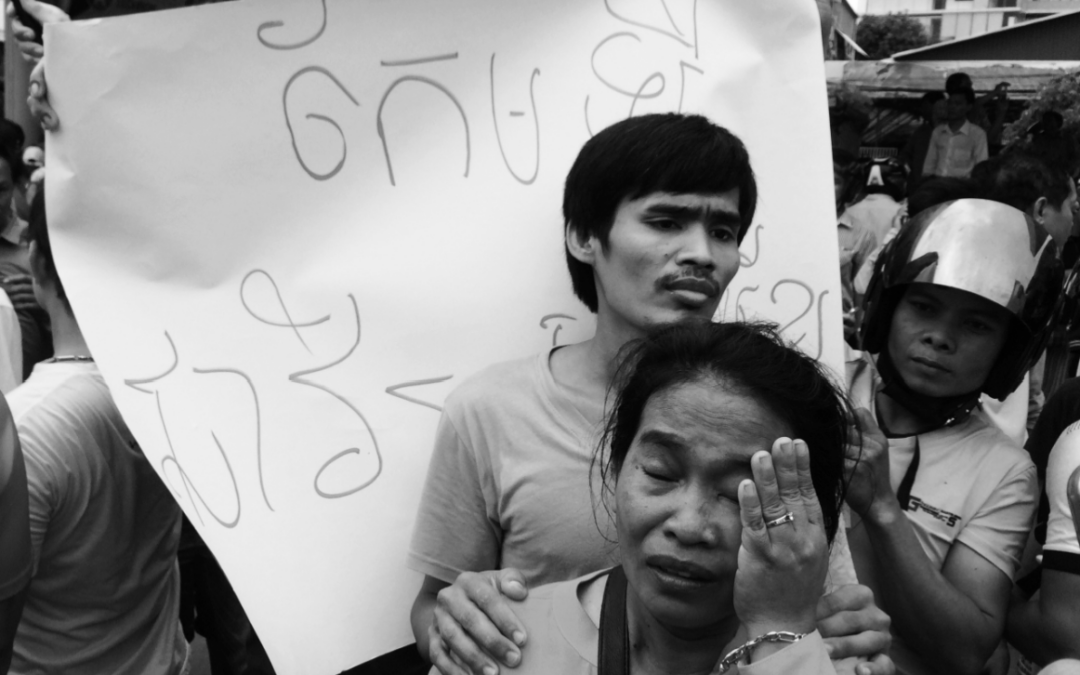
The ICJ deplores the killing of Kem Ley, an outspoken human rights defender, political analyst and organizer of grassroots community activists, and calls on the Government to carry out a prompt, impartial and effective investigation to identify and bring to justice those responsible.
Shortly after the killing, Cambodian police arrested a suspect approximately two kilometers from the crime scene who “confessed” on a leaked video to killing Kem Ley for failing to repay a personal loan.
“Kem Ley, a prominent political commentator and human rights defender, was killed against a backdrop of escalating attacks on civil society and the political opposition,” said Kingsley Abbott, ICJ Senior International Legal Adviser.
“In the context of Cambodia’s long history of impunity in cases of allegedly politically motivated killings, and even though a suspect is already in custody, the authorities must continue the investigation in a transparent and methodical manner until all potential lines of inquiry have been exhausted,” he added.
There are already concerns about certain events that took place immediately after the killing which may have harmed the investigation.
For example, shortly after news spread of Kem Ley’s death, the authorities observed a large crowd gather in and around the courtyard of the petrol station in which he was killed, potentially compromising important sources of evidence from this wider area and the vehicles within it.
The large gathering effectively served to block medical vehicles from removing Kem Ley’s body from the scene, which may have prevented a forensic autopsy from taking place.
Later the same afternoon a large procession accompanied his body from the crime scene through the streets of Phnom Penh to Wat Chas pagoda, where his body remains lying in wake.
“Where it lacks capacity, Cambodia should seek technical assistance from States and international organizations particularly in the specialized areas of Closed Circuit Television (CCTV) and telecommunication data analysis which may assist in establishing the identification and movements of the perpetrator and whether he or she acted alone or with others,” Abbott said.
The ICJ calls on the Cambodian authorities to:
1. Ensure that the investigating judge and investigators are – and are seen to be – impartial and independent of undue influence, and are free to perform their professional functions objectively without intimidation, hindrance, harassment or improper interference.
2. Ensure that the investigation process and its outcome are transparent and open to scrutiny by the victims and the general public.
3. Protect the rights of the victims including by ensuring Kem Ley’s family:
- receive regular information about the progress of the investigation and their rights;
- receive all necessary support and assistance; and
- are protected from any ill-treatment, intimidation, or sanction as a result of their participation in the investigation.
4. Protect anyone who provides information to the authorities from ill-treatment, intimidation or sanction.
5. Actively seek out and accept offers of assistance from States and international organizations including in the areas of:
- the analysis of any CCTV and telecommunication data; and
- the forensic examination of Kem Ley’s body, crime scenes and vehicles.
Background
At approximately 0830 on 10 July 2016, Kem Ley was shot and killed at a petrol station cafe on Phnom Penh’s Monivong Boulevard. Shortly afterwards, the authorities apprehended a man nearby in connection with the killing who identified himself as “Chuob Samlab”.
On a leaked video, the man reportedly “confessed” to the killing claiming he shot Kem Ley over a debt the political commentator allegedly owed him, a fact reportedly disputed by Kem Ley’s widow and the suspect’s wife.
Under Article 12 of the United Nations Declaration on Human Rights Defenders, States are required to take all necessary measures to ensure the protection of human rights defenders against any violence, threats, and retaliation.
Contact:
Kingsley Abbott, ICJ Senior International Legal Adviser for Southeast Asia, t: +66 94 470 1345 ; email: kingsley.abbott(a)icj.org
Jul 12, 2016 | News
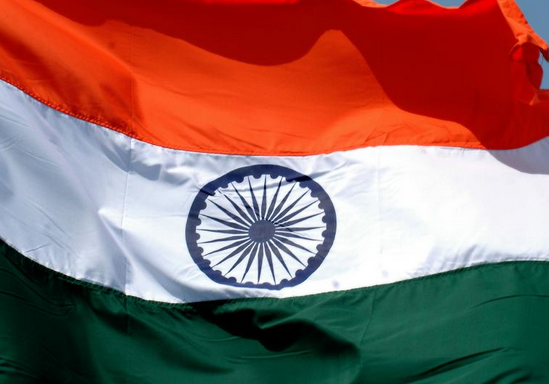
The Indian Supreme Court’s recent decision reiterating the importance of accountability for human rights violations by police and security forces, in particular where unnecessary or excessive force is alleged to have been used, is a welcome step and must be immediately implemented.
In the case of EEVFAM v Union of India, petitioners alleged that 1,528 killings by the police and security forces in the Indian state of Manipur had amounted to unlawful extrajudicial executions. Manipur is the site of a long-running armed insurgency.
In 2013, a court-appointed commission – the Santosh Hegde Commission – conducted an inquiry into six of the cases mentioned in the petition, and found all the six killings to be unlawful.
“This judgment is a strong signal from the Court that human rights violations by security forces will not be tolerated in the name of national security or anti-terror policies,” said Sam Zarifi, the International Commission of Jurists (ICJ) Asia Director.
“It’s crucial for the government now to follow through on this ruling to bring the families of the victims of these and other extra judicial executions mentioned in this petition closer to truth, justice and accountability”.
The killings mentioned in the petition all took place in areas considered “disturbed” under the Armed Forces Special Powers Act (AFSPA). Once an area is declared “disturbed” under the AFSPA, armed forces are given a range of “special powers”, which include the power to arrest without warrant, to enter and search any premises, and in certain circumstances, use force, to cause death.
Under the AFSPA, governmental permission, or sanction, is required before any member of the armed forces can be prosecuted for crimes in a civilian court, thus effectively shielding armed forces from accountability for human rights violations.
“These, and other allegations, of human rights violations under the AFSPA only reiterate the urgent need to repeal this draconian and undemocratic law,” Zarifi said. “The allegations in this case are evidence of the culture of impunity that the AFSPA has perpetuated”.
In the present judgment, the Supreme Court made some welcome observations:
- It emphasized the need for accountability for human rights violations by security forces, reiterating the principles laid down in previous landmark cases. It said “every death caused by the armed forces, including in the disturbed area of Manipur should be thoroughly enquired into if there is a complaint or allegation of abuse or misuse of power”.
- It dismissed the government’s argument that legal safeguards would not fully apply to anyone considered an “enemy” under Indian law. The Court held that at least all Indian citizens were equally entitled to the enjoyment of the fundamental rights in the Constitution, stating “If members of our armed forces are deployed and employed to kill citizens of our country on the mere allegation or suspicion that they are ‘enemy’, not only the rule of law but our democracy would be in grave danger”.
- It noted that it did not have sufficient information about each of the 1,528 cases mentioned in the petition. It has directed parties to present detailed information about the status of each case.
“This judgment references India’s obligations under international human rights law, which requires the government to respect and protect the right to life and ensure access to effective remedies,” Zarifi said. “Accountability for all human rights violations is a key aspect of these rights”.
The ICJ called for independent, impartial and thorough investigations into all the cases mentioned in the petition, in line with international standards.
It said that persons responsible should be brought to justice in fair trials in civilian courts, and the family of victims should be accorded an effective remedy and reparation for any violations.
The ICJ will continue to follow the case, which will continue in four weeks. Several key issues remain to be addressed, which the court will look at in subsequent hearings.
First, how should the specific cases be investigated? The petitioners have asked for the constitution of a Special Investigation Team, comprising police officers from outside the state of Manipur, to investigate the allegations, to ensure that the enquiry is fair, independent and thorough.
Second, in what forum should trials take place? The Indian Army Act allows for army personnel on active duty to be tried by a court martial (military court) instead of a civilian court for all offences, including gross human rights violations.
International standards call for military personnel accused of gross human rights violations to be put on trial before a civilian court. The Court has left this question open for the allegations in the present petition, stating: “The law is therefore very clear that if an offence is committed even by Army personnel, there is no concept of absolute immunity from trial by the criminal court”.
Third, the Court will also consider the efficacy of the National Human Rights Commission; in particular whether its guidelines are binding or only advisory. Under Indian law, the NHRC has limited jurisdiction where human rights violations by the armed forces are concerned.
Contact
Sam Zarifi, ICJ Asia Pacific Regional Director (Bangkok), t: +66 807819002; e:sam.zarifi(a)icj.org
Jul 1, 2016 | Feature articles, News
A feature article by U Hayman Oo, ICJ Legal Researcher in Yangon, Myanmar.
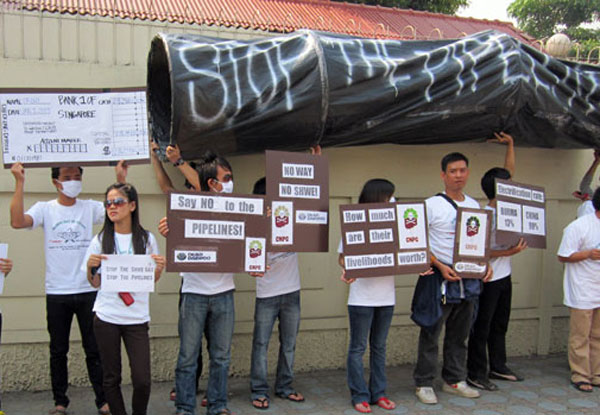
In a recent meeting with Chinese ambassador to Myanmar and villagers, organized in Kyauk Phyu, a villager from Gone Shein Village asked the ambassador to help address the damages caused to their farmland by the Shwe Gas Pipeline Project that began five years ago.
She also expressed doubts that the Kyauk Phyu Special Economic Zone (Kyauk Phyu SEZ) would benefit villagers amid all the unresolved disputes.
Given such disputes, local people are not optimistic about the upcoming development of the Kyauk Phyu SEZ.
They perceive that the project will be a ‘loss’ rather than a ‘gain’ for them.
Most of the local population of farmers fear that the project will be a disaster to their livelihood along with massive land losses.
On a recent trip to Kyauk Phyu by the International Commission of Jurists (ICJ), community members, including local MPs and lawyers, reported their concerns that a second round of such abuses will be experienced, this time even worse, during development of the Special Economic Zone planned for the area, despite promises from the Government that the development will be environmentally sustainable and bring socio-economic benefits to the region.
In fact, Special Economic Zone can contribute to the country’s economy and help benefit the welfare of its people – but only if sound policies of sustainable development in compliance with human rights are in place.
Otherwise, massive economic projects of this kind risk large-scale adverse environmental, social and human rights impacts.
Kyauk Phyu residents know very well how foreign investments can be harmful for the community when investors fail to comply with local laws as well as international standards, because of their experience with the Shwe Gas Project, a Myanmar-China pipeline.
The Gas Pipeline project was notorious for reported labour abuses, and claims of inadequate compensation for land confiscation, arrest and detention of community leaders and loss of community livelihoods and environmental degradation.
Villagers still frequently take to the street demanding for the damages caused to their farmland to be addressed, in the absence of a proper grievance mechanism.
With these prevailing experiences in mind, local residents were alarmed when authorities reportedly measured about 250 acres for the SEZ around Kathapray, Krat Tein, and Thaing Chaung village tracts in Kyauk Phyu, raising more concerns of land acquisition and compensation.
Locals complain that there was no transparent discussion over compensation for this potential land acquisition.
Villagers from Pyai Sate Kay village reportedly lost about 40 acres of farmland to the construction of a reservoir.
Although, the compensation were made for 5.1 acre of farmland, the rest of grazing land was not compensated according to a report from a villager.
There were also complaints that the compensation was neither a current market price nor a sufficient amount of money for them to be able to buy a similar size of land for cultivation.
He also complained that the Government promised to provide replacement land, but that this has not yet happened.
A total of over 70 acres of land was also apparently acquired for another reservoir under construction near Thai Chaung village.
Compensation was only paid for the farmland acreas occupied for the construction excluding land affected by the access to the reservoir.
“We were compensated but the land we lost were not measured properly. The amount paid was only on the basis of approximation. The land we lost should have been measured carefully to pay for the compensation,” said Ko Tun Nu from Thaing Chaung village.
It is reported that these reservoirs were constructed with the purpose of water supply for the SEZ project.
Furthermore, villagers from Ohn Taw and Pyai Sate Kay also reportedly lost a total of 220 acres of land when it was allocated for construction of a police station between the villages.
Although generally the purpose of the security force stationed there is for the security of the township, local people suspect that this increased security presence is instead in preparation to meet the security demands for the planned SEZ project.
There has apparently been no discussion over compensation. It is also questionable whether this volume of land is necessary for the construction of a police station.
According to the Special Economic Zone Law 2014, the Ministry of Home Affairs is responsible for land acquisition in the area of a SEZ in accordance with existing laws and regulations.
It also imposes duties on the investors and developers to bear the expenses of compensation and relocation and to ensure that the standard of living of affected persons does not fall below their original living standard.
The new NLD-led Government has inherited ample land-related problems and has prioritized dealing with these issues.
On May 5th, the Government formed the ‘Central Committee for the Review of the Acquisition of Farmland and Other Land’ in order to combat nation-wide land disputes.
The Committee’s responsibilities include investigation of compliance with existing laws by relevant authorities.
The President has also instructed that all land acquisition cease until all existing land disputes are resolved.
In addressing those issues, it is important that international standards such as Basic Principles and Guidelines on Development Based Eviction and Displacement are integrated into national policies and regulations.
Only then will such projects ensure the protection of the rights and livelihood of communities and the promotion of responsible business in the country.
Myanmar-Kyauk Phyu SEZ-News-Op-eds-2016-BUR (Full text in Burmese, PDF)

Jun 30, 2016 | News
The Pakistani Government should not extend the oppressive and ineffective Protection of Pakistan Act (POPA), which is set to expire on 15 July 2016, said the International Commission of Jurists (ICJ) today.
POPA was enacted in July 2014 for a period of two years to combat “waging of war or insurrection against Pakistan” and to provide “speedy trial” for offences “threatening the security of Pakistan”.
Earlier this week, the Ministry of Interior confirmed that it planned to renew POPA for another two years.
“In these two years, not one suspect has been convicted under POPA, so we can conclude that the law doesn’t really protect people in Pakistan from terrorism and other violent acts, but instead it undermines their basic human rights protections,” said Sam Zarifi, ICJ’s Asia director.
“The Government’s plan to renew this hastily drafted law is a classic case of supposedly ‘temporary’ departures from normal legal processes and human rights protections on the basis of ‘exceptional” circumstances’ becoming a permanent part of the legal system.”
In a statement issued shortly after the Protection of Pakistan Act was enacted, the ICJ warned that POPA gives military and law enforcement authorities sweeping powers to detain individuals in contravention of Pakistan’s international human rights law obligations.
The law allows prolonged preventive administrative detention without adequate safeguards; retrospectively authorizes otherwise arbitrary or unlawful arrests or detentions; authorizes secret and unacknowledged detention; and gives law enforcement agencies broad powers to “shoot at sight”.
In addition, the law creates “special courts” to try scheduled offences under the Act. Procedures for the operation of these “special courts” allow for secret hearings and do not meet international standards for fair and public criminal proceedings before a competent, independent and impartial tribunal.
According to Government officials, the Ministry of Interior has cleared “hundreds of cases of peace disrupting elements” for trial before the “special courts” constituted under POPA.
The five “special courts” remained non-functional for many months because of lack of staff and other facilities. The courts are now functional, but have so far not concluded a single trial.
“POPA is not only an oppressive law, it has also proven to be completely ineffective,” added Zarifi. “Instead of renewing the law, the Government should focus on strengthening the existing criminal justice system, which is suffering because of years of neglect.”
Political groups, including the Muttahida Qaumi Movement (MQM) and the Pakistan People’s Party (PPP), have alleged that the unfettered powers given to civilian and military law enforcement agencies under POPA are being used to target their workers for political activity and association. They say the law has been used to arbitrarily detain dozens of their activists.
“Pakistan faces a genuine threat from militant groups engaging in acts of terrorism, and the Pakistani Government has an obligation to protect all people from such attacks,” said Zarifi. “International law gives governments reasonable flexibility to combat terrorism, without contravening human rights obligations, and claims of ‘threats to national security’ can never be used as a justification for the practice of extrajudicial killings, secret detention, and enforced disappearance.”
The ICJ urges the Pakistani authorities not to extend POPA.
It further calls on the authorities to review all national security legislation to ensure it is fully compatible with international human rights law and standards.
Contact:
Sam Zarifi, ICJ Asia Pacific Regional Director (Bangkok), t: +66 807819002; e: sam.zarifi(a)icj.org
Reema Omer, ICJ International Legal Adviser for Pakistan (London), t: +44 7889565691; e: reema.omer(a)icj.org




