Mar 23, 2015 | News
The arrest and criminal investigation today of prominent human rights Malaysian lawyer Eric Paulsen, apparently in connection to messages he sent on Twitter, is another move towards Malaysia’s accelerating use of the archaic and draconian Sedition Act, said the ICJ.
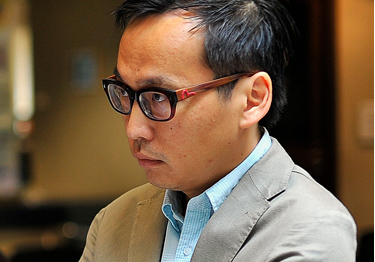
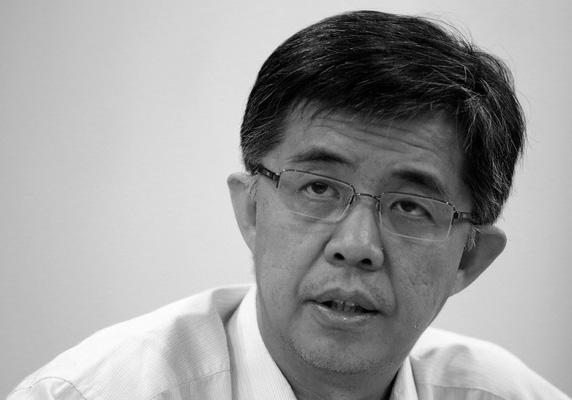
Eric Paulsen (photo), co-founder of Lawyers for Liberty, was arrested in the afternoon of 22 March 2015 at the Dataran Merdeka underground in Kuala Lumpur.
Although the exact basis of the arrest is not yet clear, his lawyers believe it was because of his Tweets criticizing efforts to introduce religion-based criminal offences and punishment (hudud) by the Kelantan state government.
Eric Paulsen was detained overnight and has yet to be charged with any offence. During the remand hearing on his case at noon today, the court denied an extension of his detention, but the police kept him in detention until 6pm today for questioning.
According to media reports, the postings “were seen as an insult which could disturb public peace,” one of the bases for invoking the Sedition Act.
“Malaysian authorities have been increasingly resorting to the Sedition Act to silence any political criticism, and now they’ve taken the alarming step of expanding it to cover even statements about religion,” said Emerlynne Gil, International Legal Advisor for Southeast Asia at the ICJ. “The Malaysian government is trying to position itself as the authority on religious matters, while at the same time violating the right to free expression as well as Malaysia’s Constitution.”
On 22 March 2015, Malaysia’s Inspector-General of Police (IGP) Tan Sri Khalid Abu Bakar, commented through his own Twitter account that the police “views seriously” comments on religion made by those who are “not experts on the subject.” He further said, that the police “ha[ve] no choice but to take action” against those people who comment on religion.
The IGP’s comments were made in relation to the launching of an investigation against the Business Radio Station (BFM) and its presenter, Aisyah Tajuddin, for criticizing the implementation of hudud in Kelantan.
In 2012, Prime Minister Najib Razak promised that the Government of Malaysia would abolish the Sedition Act.
This promise, however, was reversed when Najib Razak announced in November 2014, that the Act would instead be strengthened to include provisions to protect the sanctity of Islam and on the secession of the Sabah and Sarawak states.
“The Sedition Act of 1948 is archaic and it’s high time the government followed through on its promise to get rid of this legislation,” said Emerlynne Gil.
This is Eric Paulsen’s second investigation under the Sedition Act this year, as he was arrested in January and then charged in February under section 4(1)(c) of the Act for a Twitter comment regarding the Malaysian Islamic Development Department.
The ICJ underscores that the Government’s actions contravene Principle 23 of the UN Basic Principles on the Role of Lawyers, which states that “lawyers like other citizens are entitled to freedom of expression, belief, association and assembly.
In particular, they shall have the right to take part in public discussion of matters concerning the law, the administration of justice and the promotion and protection of human rights….”
Background:
The 1948 Sedition Act, originally enacted by the British colonial government and amended several times over the years, criminalizes speech and publications considered to have “seditious tendencies”.
The term “seditious tendencies” is ambiguously defined to mean any kind of speech or publication that causes “hatred or contempt, or excite disaffection” against any ruler or the government or promotes “ill will and hostility between the different races or classes”.
The law also considers “seditious” any speech or publication that questions the special privileges of the Malay people, as provided in the Constitution.
Furthermore, sedition is a strict liability offence in Malaysia, which means that the intention of a person allegedly making seditious statements is irrelevant.
For instance, a person making a statement may not have the intent to cause “hatred or contempt” towards the government, but may nonetheless be held liable for sedition if authorities believe that the person in fact incited such feelings.
The ICJ considers that the Act, by its very terms, contemplates restrictions on the exercise of freedom of expression that are grossly overbroad and inconsistent with basic rule of law and human rights principles.
Contact:
Emerlynne Gil, ICJ’s International Legal Adviser for Southeast Asia, e: emerlynne.gil(a)icj.org, t +66 2 619 8477 ext. 206 or +66 840923575
Mar 20, 2015 | News
The Malaysian government should immediately release from detention Malaysian Parliamentarian Tian Chua, the ICJ said.
Tian Chua, who is also Vice President of the opposition Parti Kaedilan Rakyat (PKR), was arrested today for allegedly committing acts under section 143 of the Penal Code on unlawful assembly.
The arrest took place before noon after Tian Chua voluntarily appeared at the Dang Wangi police station in Kuala Lumpur to provide a statement in connection with the investigations regarding his participation in the peaceful KitaLawan rally on 7 March 2015.
The police detained Tian Chua before he could provide his statement.
He has so far not been charged with any offence.
However, if he is charged under section 143 of the Penal Code and convicted, he may be imposed the penalty of imprisonment for up to six months or fined, or both.
“At least 11 opposition figures associated with the KitaLawan rally have now been targeted by the authorities, who have been arresting and detaining them for 24 hours as a form of harassment and intimidation,” said Emerlynne Gil, ICJ’s International Legal Advisor for Southeast Asia. “It seems that Malaysia is rapidly returning to the dark days during the late 1980s of systematic pretrial and arbitrary detention under the Internal Security Act.”
The KitaLawan rally was convened in protest at the conviction and imprisonment of opposition leader Anwar Ibrahim, who was sentenced to five years’ imprisonment in February 2015 on charges of sodomy, following a trial conducted in violation of international human rights standards.
The ICJ underlines that in the absence of charges for a cognizable criminal offence not predicated on the exercise of a protected human right, Tian Chua and the other individuals who participated at the KitaLawan rally should not have been arrested and any form of harassment against them must be ended.
Under Malaysian law, police arresting a person without a warrant has to bring the arrested person before a judge “without unnecessary delay”.
The law also provides that no person arrested without a warrant shall be detained for more than 24 hours before being presented to a judge.
“The authorities are abusing their powers and using the law as a form of punishment even before they are convicted of, or even charged with, an actual crime in violation of Tian Chua’s right to presumption of innocence,” added Gil. “This abuse of pretrial detention as a form of harassment aggravates the repressive atmosphere created by the recent misuse of sedition laws to silence critics.”
Tian Chua is expected to be held overnight in prison. He will have his remand hearing on 21 March in the morning.
The ICJ calls for Tian Chua’s immediate release and urges the Government of Malaysia to end all forms of harassment against persons for their participation in peaceful assemblies.
Contact:
Emerlynne Gil, ICJ’s International Legal Adviser for Southeast Asia, e: emerlynne.gil(a)icj.org, tel. no.: +66 2 619 8477 ext. 206 or +66 840923575

Mar 16, 2015 | News
The ICJ today condemned the arrest and detention of Malaysian Member of Parliament and daughter of imprisoned opposition leader Anwar Ibrahim, Nurul Izzah Anwar, under section 4(1) of the colonial-era 1948 Sedition Act.
The arrest, which took place around 3.30pm at Dang Wangi police station in Kuala Lumpur, appears to be linked to a speech she gave in Parliament on 10 March 2015 that reportedly criticized the judges in her father’s sodomy II case.
It was reported that Nurul Izzah (photo) was at the police station today to provide statements for her involvement in a demonstration on 14 February, as well as her parliamentary speech.
She managed to complete part of her statement, but was arrested before she could provide a statement on the alleged seditious speech.
Nurul Izzah has yet to be formally charged and it is unclear as to whether the detention is in relation to a specific section of her speech or to the entire speech.
“The Malaysian authorities must stop the continued use of the offence of sedition to arbitrarily detain and stifle freedom of expression,” said Sam Zarifi, ICJ’s Regional Director for Asia and the Pacific.
On 10 February 2015, the Federal Court of Malaysia upheld the Court of Appeal’s decision to convict and sentence Anwar Ibrahim for sodomy under section 377B of the Penal Code.
Since then, a cartoonist has been charged under the Sedition Act, while several opposition politicians and lawmakers have been investigated for allegedly making seditious comments on the Federal Court’s decision.
The ICJ has previously denounced the use of the Sedition Act and repeatedly called for its abolition of the Act as its vague and overbroad provisions are incompatible with international human rights standards.
Nurul Izzah will reportedly remain in prison for the night and will have her remand hearing first thing in the morning on 17 March 2015.
The ICJ will continue to monitor her case.
The ICJ also calls on the Government of Malaysia to immediately release of Nurul Izzah and reiterates its call for the repeal of the Sedition Act.
Background
The 1948 Sedition Act, originally enacted by the British colonial government and amended several times over the years, criminalizes speech and publications considered to have “seditious tendencies”.
The term “seditious tendencies” is ambiguously defined to mean any kind of speech or publication that causes “hatred or contempt, or excite disaffection” against any ruler or the government or promotes “ill will and hostility between the different races or classes”.
The law also considers “seditious” any speech or publication that questions the special privileges of the Malay people, as provided in the Constitution.
Furthermore, sedition is a strict liability offence in Malaysia, which means that the intention of a person allegedly making seditious statements is irrelevant.
For instance, a person making a statement may not have the intent to cause “hatred or contempt” towards the government, but may nonetheless be held liable for sedition if authorities believe that the person in fact incited such feelings.
The ICJ considers that the Act, by its very terms, contemplates restrictions on the exercise of freedom of expression that are grossly overbroad and inconsistent with basic rule of law and human rights principles.
Contact:
Sam Zarifi, ICJ Regional Director of Asia and the Pacific, mobile: +668 07819002 or email: email: sam.zarifi(a)icj.org
Mar 13, 2015 | Advocacy, Non-legal submissions
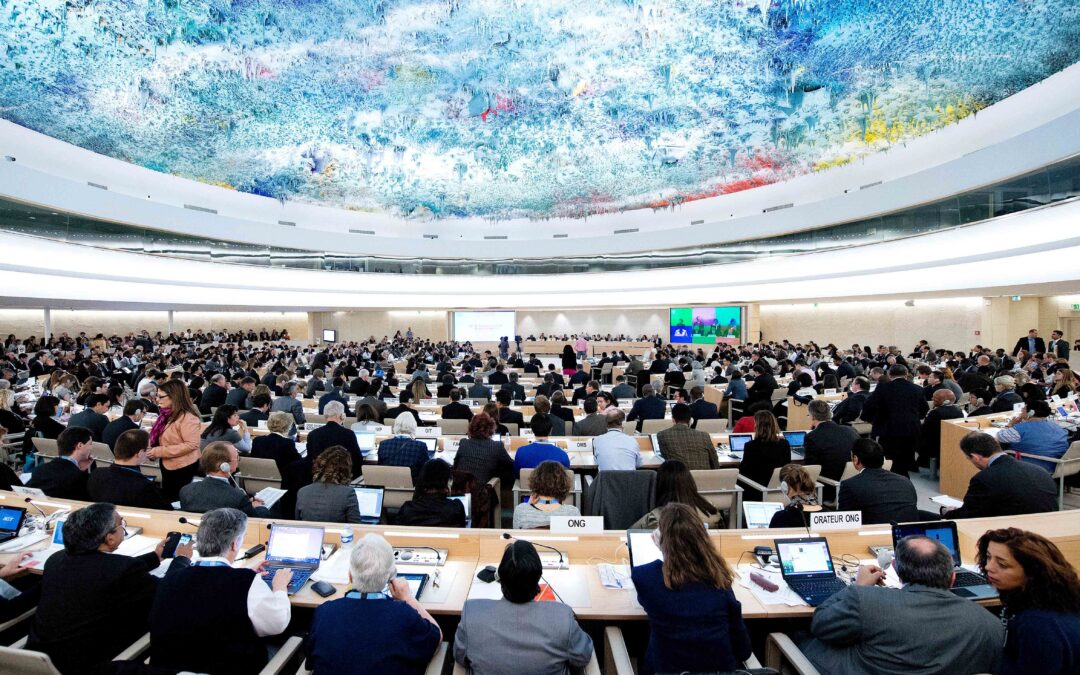
The Colombian Commission of Jurists, an affiliate of the ICJ, today called for the UN Human Rights Council to uphold the use of civilian courts, rather than military tribunals, to try civilians and to adjudicate claims for human rights violations.
An oral statement to the UN Human Rights Council highlighted that:
- military tribunals should as a matter of principle have no jurisdiction to try civilians or to adjudicate claims of serious human rights violations;
- These matters should be the domain of civilian courts; and
- The jurisdiction of military tribunals should be restricted to specifically military offenses committed by military personnel.
The oral statement emphasised to the global reach of the issue, referring by way of example to the military commissions established by the United States of America at Guantánamo Bay, as well as recent negative developments in Colombia, Egypt, Thailand and Pakistan.
The statement noted that the Principles Governing the Administration of Justice Through Military Tribunals presented to the Commission on Human Rights by Emmanuel Decaux in 2006 (UN Doc E/CN.4/2006/58), are widely referenced, but have yet to receive full recognition by the Human Rights Council. The statement added its support to the calls by the Special Rapporteur on Independence of Judges and Lawyers, the Working Group on Arbitrary Detention, and others, for the Council to endorse and seek implementation of the Principles without further delay.
The statement responds to an expert consultation on the administration of justice through military tribunals convened by the Council (UN Doc A/HRC/28/32).
The full oral statement can be downloaded in pdf format here: Advocacy-HRC28-MilitaryCourts-OralStatement-2015
Said Benarbia, Director of ICJ’s Middle East North Africa Programme participated in the expert consultation.
His statement can be found here: MENA-Military Courts HRC28-Advocacy-2015-ENG (full text in PDF).
Thailand exercised its right of reply, which can be viewed in the UN webcast archive, here.

Mar 12, 2015 | News
Pakistan’s decision to fully reinstate the death penalty puts at imminent risk of execution more than 500 people on death row who have exhausted all avenues of appeal, with another 8000 facing death penalties, said the ICJ today.
“The total abandonment of the moratorium on the death penalty is a disaster for human rights in Pakistan,” said Sam Zarifi, ICJ’s Asia director. “We fear a major acceleration in the flow of executions we have seen over the past few months—none of which do anything to protect the rights of the Pakistani people.”
25 people have been executed since 16 December 2014, when Pakistan lifted a moratorium on executions in cases of capital punishment related to terrorism. The decision to partially lift a six-year unofficial moratorium on executions was in response to an attack on a school in Peshawar, killing 150 people, almost all of them children. Pakistan Tehreek-e-Taliban claimed responsibility for the attack.
In January, Pakistan also amended the Constitution and the Army Act, 1952, empowering military courts to try civilians for terrorism related offences.
“The Pakistani people face a very real threat from terrorist attacks, but there is no indication that the death penalty will decrease this threat,” said Zarifi. “Instead, the government is targeting hundreds of people on death row whose convictions had nothing to do with terrorism-related offenses.”
In Pakistan, capital punishment is prescribed for 27 different offences, including blasphemy, sexual intercourse outside of marriage, kidnapping or abduction, rape, assault on the modesty of women and the stripping of women’s clothes, smuggling of drugs, arms trading and sabotage of the railway system. Many of these crimes do not meet the threshold of ‘most serious crimes’ stipulated by Article 6 of the International Covenant on Civil and Political Rights (ICCPR).
Pakistan ratified the ICCPR in 2010. Article 6 of the ICCPR, guaranteeing the right to life, requires that states restrict capital punishment to only the ‘most serious crimes’. The UN Special Rapporteur on extrajudicial, summary or arbitrary executions has clarified that in the context of the death penalty, the definition of the ‘most serious crimes’ is limited to those cases in which there was an intention to kill, which resulted in the loss of life.
In December 2014, the UN General Assembly adopted a resolution, that emphasizes that that the use of the death penalty undermines human dignity and that calls on countries that maintain the death penalty to establish a moratorium on its use with a view to its abolition. An overwhelming majority of 117 UN Member States voted in favor of the call for a worldwide moratorium on executions, as a step towards abolition of the death penalty.
Pakistan should reinstate a moratorium on the death penalty, with a view to definitively abolishing the practice in law,” said Zarifi.
ICJ opposes capital punishment in all cases without exception. The death penalty constitutes a violation of the right to life and the right not to be subjected to cruel, inhuman or degrading punishment.
Contact
Sam Zarifi, ICJ Asia Pacific Regional Director (Bangkok), t: +66 807819002; email: sam.zarifi(a)icj.org
Reema Omer, ICJ International Legal Advisor for Pakistan (London), t: +447889565691; email: reema.omer(a)icj.org