
Mar 12, 2015 | News
Thailand must live up to its repeated promises to bring justice to the case of Somchai Neelapaijit, who was forcibly disappeared eleven years ago today, said the ICJ.
In multiple statements since Somchai Neelapaijit was abducted on a street in central Bangkok, the Royal Thai Government has pledged to resolve the case.
Before the United Nations Human Rights Council in May 2008, the Royal Thai Government pledged “to do its utmost and leave no stone unturned in order to bring to justice the case of Mr Somchai.”
In April 2014, Thailand gave assurances to the UN Committee that monitors the implementation of the Convention Against Torture in Geneva that the Department of Special Investigations (DSI) was continuing to investigate Somchai Neelapaijit’s case without any interference.
“Despite the passage of eleven years, Thai authorities have not carried out a comprehensive investigation or exhausted the possible sources of evidence,” said Sam Zarifi, ICJ’s Regional Director for Asia and the Pacific. “What is required is the DSI’s real and determined effort to identify the perpetrators and bring them to justice.”
Thailand signed, but has not yet ratified, the Convention Against Enforced Disappearance in January 2012.
Pending the ratification, Thailand must desist from any acts that would defeat the objective and purpose of the Convention, which among other things places an obligation on State Parties to make enforced disappearance a criminal offence, to thoroughly and impartially investigate cases, bring those responsible to justice and treat family members of a ‘disappeared’ person as victims in their own right.
Promisingly, the Ministry of Justice is in the process of drafting a Torture and Enforced Disappearance Prevention and Suppression Bill, which, in its current form, defines and criminalizes enforced disappearance and torture in Thailand.
“This new law must ensure there is no statute of limitations on enforced disappearance, which is not only a serious human rights violation but also a crime under international law,” added Zarifi. “Somchai’s fate and whereabouts remain unresolved, and his family continue to demand truth and justice from the authorities.”
To mark the 10-year anniversary of Somchai Neelapaijit’s “disappearance”, the ICJ released a report Ten Years Without Truth: Somchai Neelapaijit and Enforced Disappearances in Thailand, in which it documented the tortuous legal history of the case.
The report highlighted several key problems, such as poor use of forensic evidence, failure to follow and develop leads, unduly restrictive interpretation of national and international law, and above all, a lack of political will to resolve a case that remains emblematic of the culture of impunity in Thailand.
Contact
Sam Zarifi, ICJ Asia-Pacific Regional Director, (Bangkok), t:+66 807819002, e-mail: sam.zarifi(a)icj.org

Mar 6, 2015 | News
The ICJ today expressed its dismay that the Singapore Court of Appeal, in a judgment issued on 4 March 2015 declined to declare caning, a painful form of corporal punishment, to be unlawful.
The administration of caning violates the absolute prohibition of torture and cruel, inhuman or degrading punishment under international law.
Despite this prohibition, the Court of Appeal determined that any international legal prohibition had no effect on Singapore, since the legislature had not made it part of the country’s domestic law.
The ICJ emphasized that Singapore’s failure to prohibit caning in its own national law in no way makes caning a lawful act.
Under international law, caning remains wrong and illegal, irrespective of the country’s domestic arrangements.
The Court of Appeal also ruled that caning, administered as a form of judicially imposed punishment in Singapore, does not amount to torture.
The Court of Appeal stated that caning did not “breach the high threshold of severity and brutality that is required for it to be regarded as torture.”
The ICJ notes that the international prohibition against ill-treatment extends not only to torture, but also to cruel, inhuman and degrading treatment and punishment.
The ICJ considers that caning constitutes both types of ill-treatment.
The ruling was issued by the Singapore Court of Appeals in the case of Yong Vui Kong, a 26-year old man who appealed against his sentence of 15 strokes of the cane and life imprisonment imposed as a punishment for an offence under the Misuse of Drugs Act.
Upon his conviction in 2011, Yong Vui Kong had initially been sentenced to death.
Following changes in the law and an application for re-sentencing to the High Court, his sentence was modified in 2013 to life imprisonment and ‘15 strokes of the cane’.
In his appeal, which was dismissed by the Court of Appeal, Yong Vui Kong challenged this sentence on several grounds, including that caning constitutes torture, which is prohibited under international law.
“The Court of Appeal’s ruling is out of step with Singapore’s obligations to prevent, prohibit and punish all forms of torture and other cruel, inhuman or degrading treatment or punishment. International human rights bodies have made clear that caning and other forms of corporal punishment violate the absolute prohibition of torture and other cruel, inhuman or degrading treatment or punishment. As such it must be prohibited,” said Emerlynne Gil, International Legal Adviser for Southeast Asia of the ICJ.
Laws in Singapore that permit the imposition of corporal punishment are inconsistent with Singapore’s obligation to prohibit torture and other ill-treatment at all times and in all circumstances.
Consequently, in 2011 the UN Committee on the Rights of the Child asked Singapore to “prohibit unequivocally by law, without any further delay, all forms of corporal punishment, including caning, in all settings”.
In addition, when Singapore went under the Universal Periodic Review of its human rights record before the UN Human Rights Council in 2011, several States recommended that the authorities abolish all corporal punishment, including caning.
The ICJ also emphasizes that all forms of torture and other cruel inhuman or degrading treatment are absolutely prohibited by customary international law and international treaties binding on Singapore, including the Convention on the Rights of the Child (CRC) and the Convention on the Rights of Persons with Disabilities (CRPD).
The prohibition against torture is also a peremptory norm of international law, as recognized by numerous legal authorities and by all States in repeated UN General Assembly resolutions.
The peremptory character of the norm means that it overrides all other laws, international or domestic. The Court of Appeal dismissed any effect that the peremptory character of the prohibition might have on its administration in Singapore.
The ICJ calls on the lawmakers in Singapore to act without delay to outlaw corporal punishment.
Contact:
Emerlynne Gil, International Legal Adviser for Southeast Asia, t +66840923575 ; e emerlynne.gil(a)icj.org
Mar 4, 2015 | News
The ICJ today calls for the immediate suspension of the execution of 10 individuals in Indonesia who have been convicted of drug-related offences and are scheduled to be executed by firing squad this month.
“We call on President Jokowi Widodo to reconsider his decision to deny the petitions for clemency submitted to him by these individuals,” said Sam Zarifi, ICJ’s Regional Director for Asia and the Pacific. “This recent rash of executions of drug offenders violates international law and, based on experience around the globe, will not even address the real problems of drug-related crime in Indonesia.”
“The execution of these individuals would violate Indonesia’s obligations as a party to the International Covenant on Civil and Political Rights, and goes against the global trend towards the abolition of the death penalty,” Zarifi added.
According to a report by the UN Secretary General to the General Assembly in 2012, 150 of the 193 UN Member States have either abolished the death penalty or introduced a moratorium on it.
More recently, the UN General Assembly adopted a resolution calling for an international moratorium on the use of the death penalty.
The resolution, which was passed last December 2014, was supported by 117 member states.
This is a notable increase since the resolution was first adopted in 2007, when only 104 member states voted “yes”.
Earlier this year, six persons convicted of drug trafficking offences were executed by firing squad.
These executions, like those planned for the 10 later this month fly directly in the face of the findings and recommendations of the UN Human Rights Committee.
Following its review of Indonesia’s implementation of its obligations under the ICCPR in 2013, the Human Rights Committee recommended that the Government of Indonesia commute all death sentences imposed on persons convicted of drug offences, amend its laws to ensure that drug offences are not punishable by the death penalty, and to reinstate the moratorium on executions.
The ICJ also notes that the current spate of planned executions in Indonesia is inconsistent with the actions of the Government of preventing the executions of its nationals convicted of committing crimes abroad.
For example, in April last year, the Government of Indonesia paid US$2.1 million as so called ‘blood money’ to stop the execution of an Indonesian woman who had been working as a domestic helper in Saudi Arabia and was convicted of killing her elderly employer.
In addition to calling for the suspension of the planned executions, the ICJ calls on the Government of Indonesia to immediately re-establish a moratorium on the death penalty implemented from 2008 until 2013, when it resumed executions, and to take the steps necessary to abolish the death penalty.
The ICJ opposes death penalty for all crimes and considers its imposition a violation of the right to life and the right not to be subjected to cruel and inhuman treatment or punishment.
The 10 individuals scheduled to be executed are: Mary Jane Fiesta Veloso (Philippines); Myuran Sukumaran, aka Mark, (Australia); Serge Areski Atlaoui (France); Martin Anderson, aka Belo, (Ghana); Zainal Abidin (Indonesia); Raheem Agbaje Salami (Spain); Rodrigo Gularte (Brazil); Andrew Chan (Australia); Silvester Obiekwe Nwolise and Okwudili Oyatanze (both from Nigeria).
Contact:
Sam Zarifi, ICJ Regional Director for Asia and the Pacific, e sam.zarifi(a)icj.org or m +668 07819002
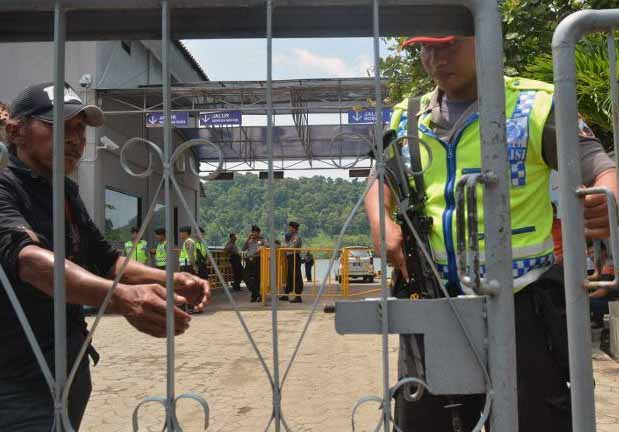
(Photo: Indonesian police at execution site).
Mar 3, 2015 | News
Myanmar’s parliament must reject or extensively revise a series of proposed laws that would entrench already widespread discrimination and risk fuelling further violence against religious minorities, Amnesty International and the ICJ said today.
A package of four laws described as aimed to “protect race and religion” – currently being debated in parliament – include provisions that are deeply discriminatory on religious and gender grounds.
They would force people to seek government approval to convert to a different religion or adopt a new religion and impose a series of discriminatory obligations on non-Buddhist men who marry Buddhist women.
“Myanmar’s parliament must reject these grossly discriminatory laws which should never have been tabled in the first place. They play into harmful stereotypes about women and minorities, in particular Muslims, which are often propagated by extremist nationalist groups,” said Richard Bennett, Amnesty International’s Asia-Pacific Director.
“If these drafts become law, they would not only give the state free rein to further discriminate against women and minorities, but could also ignite further ethnic violence,” he added.
The draft laws have been tabled at a time of a disturbing rise in ethnic and religious tensions, as well as ongoing systematic discrimination against women, in Myanmar.
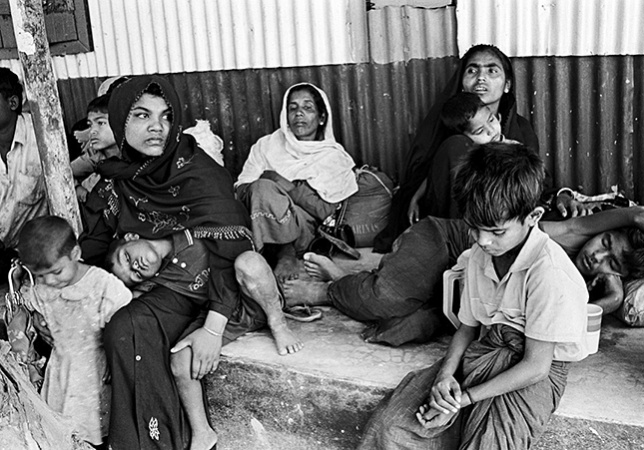
In this context, where minority groups – and in particular the Rohingya (photo) – face severe discrimination in law, policy and practice, the draft laws could be interpreted to target women and specific communities identified on a discriminatory basis.
“The passage of these laws would not only jeopardize the ability of ethnic and religious minorities in Myanmar to exercise their rights, it could be interpreted as signalling government acquiescence, or even assent, to discriminatory actions,” said Sam Zarifi, ICJ’s Asia Director. “The introduction of these discriminatory bills is distracting from the many serious political and economic issues facing Myanmar today.”
Of the four draft laws, two – the Religious Conversion Bill and the Buddhist Women’s Special Marriage Bill – are inherently flawed and should be rejected completely.
The remaining two – the Monogamy Bill and the Population Control Healthcare Bill – need serious revision and the inclusion of adequate safeguards against all forms of discrimination before being considered, let alone adopted.
These bills do not accord with international human rights law and standards, including Myanmar’s legal obligations as a state party to the UN Convention on the Elimination of all Forms of Discrimination against Women and the UN Convention on the Rights of the Child.
Amnesty International and the ICJ have conducted a legal analysis of the four laws and have found that:
- The Religious Conversion Bill stipulates that anyone who wants to convert to a different faith will have to apply through a state-governed body, in clear violation of the right to choose one’s own religion. It would establish local “Registration Boards”, made up of government officials and community members who would “approve” applications for conversion. It is unclear whether and how the bill applies to non-citizens, in particular the Rohingya minority, who are denied citizenship in Myanmar. Given the alarming rise of religious tensions in Myanmar, authorities could abuse this law and further harass minorities
- The Buddhist Women’s Special Marriage Bill explicitly and exclusively targets and regulates the marriage of Buddhist women with men from another religion. It blatantly discriminates on both religious and gender grounds, and feeds into widespread stereotypes that Buddhist women are “vulnerable” and that their non-Buddhist husbands will seek to forcibly convert them. The bill discriminates against Buddhist women as well as against non-Buddhist men who face significantly more burdens than Buddhist men should they marry a Buddhist woman.
- The Population Control Healthcare Bill – ostensibly aimed at improving living standards among poor communities – lacks human rights safeguards. The bill establishes a 36-month “birth spacing” interval for women between child births, though it is unclear whether or how women who violate the law would be punished. The lack of essential safeguards to protect women who have children more frequently potentially creates an environment that could lead to forced reproductive control methods, such as coerced contraception, forced sterilization or abortion.
- The Monogamy Bill introduces new provisions that could constitute arbitrary interference with one’s privacy and family – including by criminalizing extra-marital relations – instead of clarifying or consolidating existing marriage and family laws.
Contact
In Bangkok – Sam Zarifi, ICJ Regional Director for Asia and the Pacific, sam.zarifi(a)icj.org; m +66807819002
In London – Olof Blomqvist, Amnesty International Asia-Pacific Press Officer, olof.blomqvist(a)amnesty.org; t: +44 20 7413 5871, m +44 790 4397 956
An extensive legal analysis of the laws by Amnesty International and the ICJ can be found here:
Myanmar-Reject discriminatory race and religion draft laws-Advocacy-2015-ENG (full text in PDF)
Feb 27, 2015 | News
The Nepali government must fully implement yesterday’s decision of the Supreme Court rejecting the possibility of amnesties for perpetrators of serious human rights abuses during the country’s civil war, said today the ICJ.
The decision, by a three-person special constitutional bench, composed of Justice Kalyan Shrestha, Justice Baidhya Nath Upadhyay and Justice Cholendra Shumsher JB Rana, struck down the amnesty provision of the Commission on Investigation of Disappeared Persons, Truth and Reconciliation Act 2014 (TRC Act) promulgated last May 2014.
The Court also ruled that only the judiciary, and not the Commissions established by the TRC Act, can determine the criminality of any violations committed in the context of the country’s decade-long conflict.
“Nepal’s Supreme Court has once again firmly reasserted the right of the victims of human rights violations to seek justice,” said Sam Zarifi, ICJ’s Asia Director. “This bold and principled decision should finally end the cynical attempts by politicians from all Nepal’s major parties, as well as the military, to legislate impunity and shield themselves from accountability.”
The decision distinguished between the jurisdiction of the courts and the criminal justice system, and the non-judicial reconciliation and truth-seeking mechanisms established by the TRC Act.
In the months before the decision, the government had essentially frozen the prosecution of claims already before various courts, and had blocked the filing of First Information Reports (FIRs) by victims trying to lodge new complaints.
“Now, the government must not only remove obstacles to these cases, it must commit itself to prosecuting such claims,” Zarifi added. “The Government must immediately take all necessary steps to implement the court ruling including to ensure criminal investigation of FIRs, and address the concerns raised by the victims on the formation of the Truth and Reconciliation Commission and Commission of Inquiry on Enforced Disappearance.”
This is the second time that the Nepali Supreme Court has rejected the amnesty scheme introduced by the Nepali government.
On 2 January 2014, the Supreme Court had declared unconstitutional the Ordinance on the Truth and Reconciliation Commission (TRC Ordinance).
However, the Government effectively ignored the Court order and introduced a slightly modified version of the 2013 Ordinance replicating almost all of the provisions of the TRC Ordinance, including many of its problematic aspects, such as the ‘amnesty’ provision.
“The Government, with the help of the international community, must now dedicate itself to meeting the promise of the political parties to provide justice, truth and reparations to the victims and survivors of the conflict,” said Zarifi. “Only doing so will help end the country’s cycle of impunity.”
Contact:
Sam Zarifi, ICJ Asia Pacific Regional Director (Bangkok), t: +66 807819002; email: sam.zarifi(a)icj.org