Sep 12, 2013 | News, Uncategorized
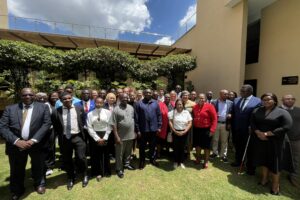
Justice Elizabeth Evatt AC (photo), will be observing the hearing of the appeal of Anwar Ibrahim’s case from 17 to 18 September 2013 at the Court of Appeal in Putrajaya.
Justice Evatt is the first female judge to be appointed to an Australian Federal Court, a former member of the United Nations Human Rights Committee, and a commissioner of the ICJ.
Anwar Ibrahim is a Malaysian politician and is currently the leader of the opposition party, Parti Keadilan Rakyat, and the opposition alliance known as Pakatan Rakyat.
The appeal hearing that Justice Elizabeth Evatt will be observing emerged from the 2008 charges filed against Anwar Ibrahim immediately after the general elections held that year.
He was charged for allegedly committing sodomy, which is a crime under Section 377B of the Penal Code and carries the penalty of up to 20 years of imprisonment and whipping.
The High Court acquitted Anwar Ibrahim on 9 January 2012.
This is the second time that Anwar Ibrahim is facing sodomy charges after his dismissal from the Malaysian Cabinet in 1998.
In 2004, The ICJ also sent a representative to observe the sodomy trial of Anwar Ibrahim, where the Federal Court overturned the High Court decision to convict him.
The ICJ called the Federal Court’s ruling “a step in the right direction in upholding the rule of law”.
Justice Evatt’s mandate as ICJ’s high-level observer to the appeal hearing includes monitoring the fairness of the proceedings against Anwar Ibrahim in the light of relevant international standards.
These standards include, among others the UN Basic Principles on the Independence of Judges, which set out standards on the independence and impartiality of judges, and the UN Guidelines on the Role of Prosecutors, which set out standards on the independence of prosecutors.
Justice Evatt will also be evaluating whether the prosecution under Section 377B of the Malaysian Penal Code is being used in this case to suppress political dissent, contrary to the right to freedom of expression.
“The right to observe trials stems from the general right to promote and secure the protection and realization of human rights. Trial observation is a key tool in monitoring the respect for human rights and the rule of law. It is an effective method to examine the level of independence and impartiality of a country’s criminal justice system,” said Emerlynne Gil, ICJ’s International Legal Adviser on Southeast Asia. “Trial monitoring also serves to promote better compliance with both domestic law and international standards that aim to ensure protection of human rights, including the rights to fair trial and due process.”
Contact:
Emerlynne Gil, International Legal Adviser for the ICJ Asia & Pacific Programme, t +662 6198477 ext. 206; email: emerlynne.gil(a)icj.org

Sep 11, 2013 | News
The ICJ expressed its disappointment over the continued arbitrary detention and refusal of bail of Secretary of human rights organization, Odhikar, and Supreme Court Advocate Adilur Rahman Khan.
The ICJ urged the Bangladeshi authorities to drop their opposition to Adilur Rahman Khan’s bail application.
On 9 September 2013, a Magistrates Court in Dhaka refused Adilur Rahman Khan’s bail application for the second time. He had earlier been denied bail on 11 August 2013.
“Adilur Rahman Khan is being arbitrarily detained for his lawful exercise of the right to freedom of expression and his legitimate work as a human rights defender,” said Ben Schonveld, ICJ’s South Asia Director. “What we are seeing is a Government crackdown on voices of dissent.”
Under international law, all persons are presumed innocent until proven guilty.
Under Article 9 of the International Covenant on Civil and Political Rights (ICCPR), to which Bangladesh is a party, there is a presumption of pre-trial release.
A person can only be denied pre-trial release where it is reasonable and necessary in all of the circumstances to prevent absconding, interference with evidence or recidivism.
“The Government cannot show that Adilur Rahman Khan poses a flight risk,” Schonveld added. “In fact, he faces a serious threat of torture and ill-treatment during detention, as documented by Odhikar and other human rights organizations.”
The ICJ reiterates its call on Bangladesh to immediately and unconditionally drop all charges against Adilur Rahman Khan and Nasiruddin Elan, ensure Adilur Rahman Khan is treated in accordance with international law in custody, and cease its harassment of Odhikar.
Contact
Ben Schonveld, ICJ South Asia Director (Kathmandu), t: +977 14432651; email: ben.schonveld(a)icj.org
Additional information
Adilur Rahman Khan was arrested his home on 10 August 2013 without an arrest warrant.
On August 11, a Magistrate’s Court refused his bail application and remanded him for five days of custodial interrogation.
On August 12, the High Court Division of the Supreme Court stayed the remand order and directed that Adilur Rahman be sent back to jail, where he could be interrogated ‘at the gate of the jail.’
On 4 September 2013, the Detective Branch of Police filed a charge sheet against Adilur Rahman Khan and Odhikar’s Director, Nasiruddin Elan, under Section 57 of the International Communication and Technology Act 2006.
They were accused of distorting information, presenting false evidence and manipulating photographs regarding a police operation on a Hefazat-e Islam rally in May this year.
Odhikar had reported that 61 people were killed in the police crackdown on the rally. The government contested the number of casualties.
Adilur Rahman Khan and Nasiruddin Elan will be formally charged on 12 September 2013.
LATEST UPDATE: Letter to Prime Minister Sheikh Hasina Wazed on the Continued Detention of Adilur Rahman Khan
Bangladesh- Letter Adilur Rahman Khan-Advocacy-Open letter-2013 (full text in pdf)
Sep 5, 2013 | News
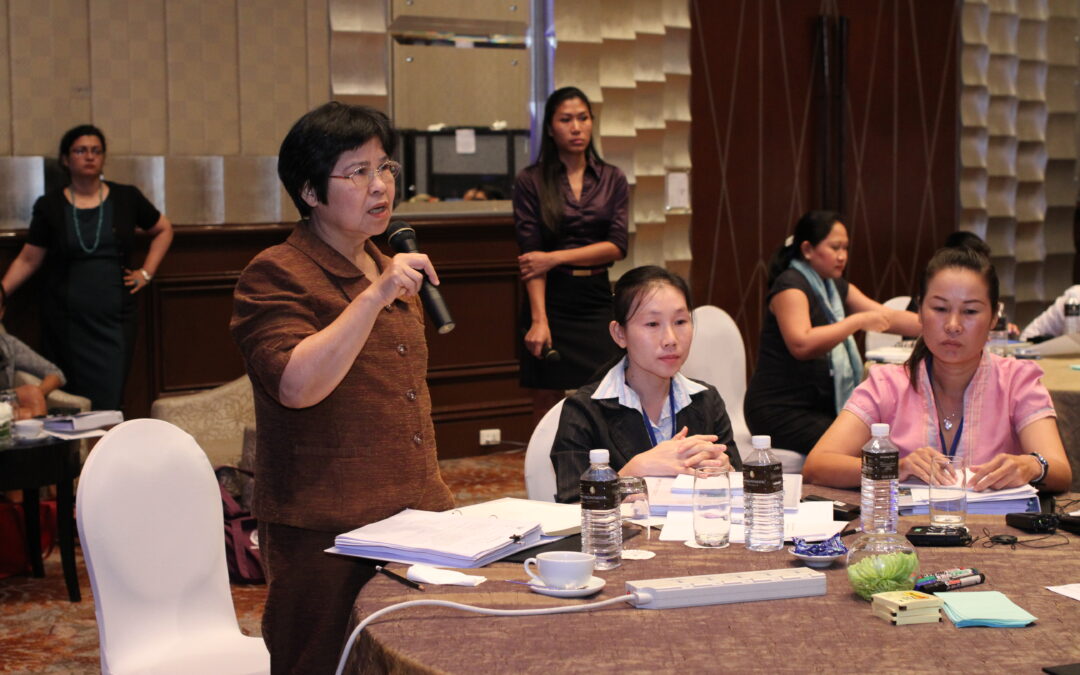
The ICJ collaborated on this judicial colloquium with the UN Entity for Gender Equality and Empowerment of Women and the Thailand Office of the Judiciary.
The Judicial Colloquium on Gender Equality Jurisprudence and the Role of the Judiciary in Promoting Women’s Access to Justice was held from 4 to 5 September 2013 in Bangkok, Thailand.
Judges from eight Southeast Asian countries (Cambodia, Indonesia, Lao PDR, Myanmar, the Philippines, Thailand, Timor Leste, and Thailand) came to the colloquium to discuss the role of judges in the implementation of the Convention on the Elimination of All Forms of Discrimination against Women (CEDAW).
Representatives from the eight countries’ judicial training institutions and civil society organizations joined them in this colloquium. All eight participating countries are parties to the CEDAW.
The judicial colloquium is part of the work of the ICJ in engaging various actors, including judges, lawyers, and human rights defenders, to explore ways to address the range of obstacles that persistently reduce women’s access to justice and legal protection.
Sam Zarifi, ICJ’s Regional Director for Asia and the Pacific, also noted the importance of this colloquium in the context of the development of a regional human rights mechanism in the ASEAN. He observed during his opening speech that the ASEAN is in the midst of setting standards and emphasized “it is important for judges to be aware of international standards of this issue so that they can substantially contribute to the discourse in setting up a regional mechanism.”
At the end of the colloquium, the participating judges, representatives from judicial training institutes and civil society organizations adopted a statement which noted, among other things, the uneven progress in the implementation of CEDAW in domestic laws and that judges should strive to interpret domestic law in consonance with the CEDAW.
They also agreed on recommendations, one of which is to encourage the formation of a regional network of judges to promote continuing dialogue, knowledge and information sharing regarding the application of CEDAW and other international human rights treaties in judicial systems.
Contact:
Emerlynne Gil, International Legal Advisor, tel. no. +66 6198477 ext. 206 or emerlynne.gil(a)icj.org

Sep 2, 2013 | News
The ICJ today called on the Bangladesh authorities to immediately withdraw the contempt of court notice issued against the international human rights organization Human Rights Watch.
The charges are in response to well documented concerns by Human Rights Watch that the trial of Ghulam Azam (photo), former head of the Islamist group Jamaat-e-Islami Azam’s trial was “deeply flawed” and failed to meet international fair trial standards.
“Silencing voices that highlight the shortcomings of the International Crimes Tribunal impede rather than advance the enormously important task of ensuring that those responsible for committing atrocities during Bangladesh’s war of liberation are brought to justice in a process that complies with international law and standards”, said Alex Conte, Director of the ICJ’s International Law and Protection Programmes.
On 2 September 2013, the International Crimes Tribunal (ICT) in Bangladesh issued a show cause notice asking Human Rights Watch to explain why contempt of court proceedings should not be initiated against it for its allegedly ‘biased’, ‘scandalous’ and ‘inaccurate’ statements about the ICT. Human Rights Watch has to respond within three weeks, or possibly face trial and conviction in absentia.
“Assessing the conduct of administration of justice in judicial proceedings, including where it entails criticism of judicial performance is an important means of ensuring accountability,” said Conte. “Judges and prosecutors should defend the right to freedom of expression, not use their discretionary powers to muzzle criticism”.
Contact:
Alex Conte, Director, International Law & Protection Programmes, t: +41 79 957 2733; email: alex.conte(a)icj.org
Additional information:
The Bangalore Principles on Judicial Conduct clarify that “since judicial independence does not render a judge free from public accountability, and legitimate public criticism of judicial performance is a means of ensuring accountability subject to law, a judge should generally avoid the use of the criminal law and contempt proceedings to restrict such criticism of the courts”.
The Commonwealth (Latimer House) Principles on the Accountability of and the Relationship Between the Three Branches of Government also stress that “criminal law and contempt proceedings should not be used to restrict legitimate criticism of the performance of judicial functions”.
The UN Declaration on Human Rights Defenders underscores that “everyone has the right, individually and in association with others, to promote and to strive for the protection and realization of human rights and fundamental freedoms at the national and international levels”.
The Declaration also highlights that human rights defenders have the right to “freely to publish, impart or disseminate to others views, information and knowledge on all human rights and fundamental freedoms” and to hold opinions and draw public attention to the observance of human rights.
Aug 30, 2013 | News
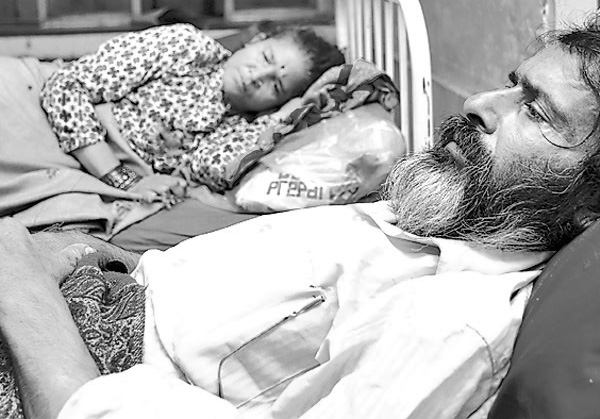
The ICJ is highly concerned by the deteriorating health of Nanda Prasad and Gangamaya Adhikari who are on hunger strike, protesting the failure of the state to investigate and prosecute the 2004 killing of their son Krishna by Maoist insurgents.
Ben Schonveld, the South Asia Director of ICJ said: ” Mr and Mrs Adhikari are just one of thousands of families in Nepal who are asking for something very simple: justice. They are not looking for more commitments or words. They are asking the State of Nepal to obey its own laws and investigate and punish very serious crimes (committed by both sides to the conflict) that violate international human rights law; laws that Nepal has repeatedly committed itself to uphold.”
Contact:
Ben Schonveld, South Asia Director, t: +977 9804596661; email: ben.schonveld(a)icj.org
Photo by eKantipur.com