Mar 1, 2019 | Advocacy, Non-legal submissions
The ICJ today delivered a joint oral statement to the UN Human Rights Council, addressing the abuse of counter-terrorism measures to repress human rights defenders and other civil society actors, and highlighting deep concerns about possible moves to allow Egypt a significant role over the UN’s independent expert on human rights and counter-terrorism.
The statement was delivered in an interactive dialogue with the UN Special Rapporteur on the promotion and protection of human rights and fundamental freedoms while countering terrorism. The ICJ made the statement jointly on behalf of Amnesty International, Article 19, Cairo Institute for Human Rights Studies, CIVICUS, Human Rights Watch, International Federation for Human Rights (FIDH), International Service for Human Rights (ISHR), and Privacy International.
The organisations had earlier sent a joint letter to all States’ delegations to the Council in Geneva, highlighting Egypts appalling record of abuse of counter-terrorism measures, and urging States to strongly oppose any attempts to weaken the mandate of the Special Rapporteur, whether by diluting or distorting it by importing the flawed Egyptian-led approach into the Mexican-led resolution for its renewal, or any moves by longstanding leader Mexico to share co-leadership of the mandate renewal resolution with Egypt or other States with such an appalling record in relation to the very issues the mandate is to address.
The joint oral statement to the Council read as follows (check against delivery):
“Madame Special Rapporteur,
Our organizations welcome your report on the impacts of counter-terrorism and counter-extremism measures against civil society and human rights defenders (A/HRC/40/52).
We strongly concur with your findings regarding the deliberate and targeted abuse of overly broad and vague definitions of terrorism and violent extremism to criminalize and otherwise suppress human rights defenders and other civil society actors. We also appreciate your highlighting the need to prevent indirect impacts on civil society.
Among those States with a particularly appalling record of deliberate and targeted abuse, Egypt, which is mentioned in your report (paras 53 and 56), is a prominent example. As Human Rights Watch recently stated: “Using counterterrorism as a guise to crush all forms of dissent could be Egypt’s hallmark of 2018… There’s simply not much room left to peacefully challenge the government without being detained and unfairly prosecuted as a ‘terrorist’.”[1] Other examples from the reports before the Council include Turkey (para 53), Saudi Arabia (A/HRC/40/52/Add.2 paras 21-29), and China particularly as regards Uyghurs and Kazakhs (paras 55 and 57).
We share your concern about the elements lost from the previous Human Rights Council and General Assembly resolutions on “protection of human rights and fundamental freedoms while countering terrorism” in their March 2018 merger with the deeply flawed Egyptian-led initiative on “effects of terrorism” (para 29). We reiterate our call from March 2018 for future versions of the resolution to address the relevant issues exclusively and comprehensively from the perspective of the effective protection of human rights.[2] We strongly oppose any attempts to dilute your mandate, including by importing the flawed Egyptian-led approach into the resolution for its renewal, or any sharing of co-leadership of the mandate renewal resolution with States that have such an appalling record in relation to the very issues the mandate is to address.
Madame Rapporteur, beyond the particular cases mentioned in your report (para 53), what are your views on the broader situation within Egypt in terms of abuse of counter-terrorism measures and what can States, the United Nations, civil society, and other stakeholders do to stop such abuses in the name of counter-terrorism in Egypt and other egregious situations?
Thank you.
[1] https://www.hrw.org/news/2019/01/17/egypt-new-moves-crush-dissent (17 January 2019). See also among others: Human Rights Watch World Report 2019, https://www.hrw.org/world-report/2019/country-chapters/egypt; EuroMed Rights, Egypt – Finding Scapegoats: Crackdown on Human Rights Defenders and Freedoms in the Name of Counter-terrorism and Security (Feb 2018) https://euromedrights.org/wp-content/uploads/2018/03/EuroMed-Rights-Report-on-Counter-terrorism-and-Human-Rights.pdf; Joint NGO Statement, Egypt: Civil society faces existential threat (23 June 2016) https://www.icj.org/wp-content/uploads/2016/06/Egypt-Advocacy-JointNGOStatement-2016.pdf.
[2] Joint NGO end-of-session statement (23 March 2018) https://www.icj.org/hrc37-endofsession/.”
The statement can be downloaded in PDF format here: HRC40-JointOralStatement-SRCTHR-2019-EN
For more information email un(a)icj.org.
Mar 1, 2019 | Events, Multimedia items, News, Video clips
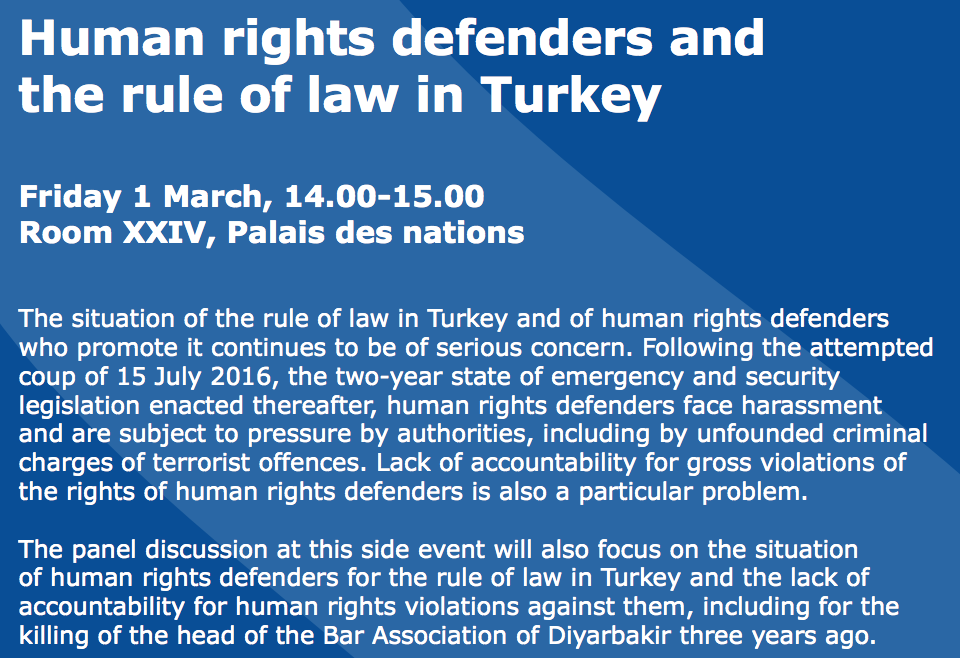
This event took place today at the Palais des Nations, United Nations, in Geneva. Watch it on video.
The situation of the rule of law in Turkey and of human rights defenders who promote it continues to be of serious concern.
Following the attempted coup of 15 July 2016, the two-year state of emergency and security legislation enacted thereafter, human rights defenders face harassment and are subject to pressure by authorities, including by unfounded criminal charges of terrorist offenses. Lack of accountability for gross violations of the rights of human rights defenders is also a particular problem.
The panel discussion at this side event will also focus on the situation of human rights defenders for the rule of law in Turkey and the lack of accountability for human rights violations against them, including for the killing of the head of the Bar Association of Diyarbakir three years ago.
The event is organized by the ICJ jointly with the International Bar Association’s Human Rights Institute.
Speakers:
– Michel Forst, UN Special Rapporteur on human rights defenders
– Feray Salman, Coordinator of the Human Rights Joint Platform (IHOP)
– Kerem Altiparmak, ICJ Legal Consultant
– Jurate Guzeviciute, International Bar Association’s Human Rights Institute
Chair:
Saman Zia-Zarifi, ICJ Secretary General
Event Flyer:
Turkey- HRD side event HRC40-News-Events-2019-ENG
https://www.facebook.com/ridhglobal/videos/795507517477571/
Feb 19, 2019 | News
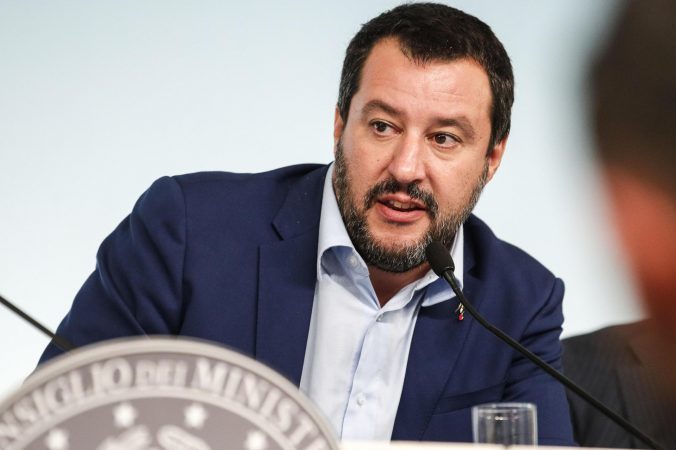
The ICJ today called for the Italian Senate to allow for the investigation of the Minister of Interior and Vice-President of the Council of Ministers, Matteo Salvini, for his role in the alleged arbitrary deprivation of liberty of some 177 persons, including potential refugees, held for five days on the “U-Diciotti” boat last summer.
The ICJ said that the Italian Senate’s Commission on Elections and Immunities should recommend the authorization of the criminal investigation to the full Senate, where Matteo Salvini also sits as a Senator.
“The decision on investigation of gross human rights violations such as mass and arbitrary deprivation of liberty should not be subject to political scrutiny but be left to the assessment of the judiciary,” said Massimo Frigo, Senior Legal Adviser for the ICJ Europe Programme.
The indictment for “kidnapping” against Minister Salvini has already been approved at the judicial stage by the Tribunal of Ministers of Catania, which affirmed that Minister Salvini is alleged to have abused his administrative power in this matter for the political goal of negotiating resettlements with other European countries.
“No human being should effectively be made hostage for the purpose of political negotiations,” said Massimo Frigo.
“It does not matter which country may have been primarily responsible for the rescue at sea. No authority may arbitrarily restrict of the right to liberty of 177 human beings,” he added.
The ICJ considers that it is highly problematic for the principle of the rule of law that the decision on prosecution for a crime underlying a gross violation of human rights, such as kidnapping, be entrusted to a political body.
This decision should be left to the judiciary based on legal and not political grounds.
Under international human rights law, including the European Convention on Human Rights and the International Covenant on Civil and Political Rights, States have an obligation to investigate, prosecute, try and, if found guilty, convict persons responsible of gross violations of human rights, among which counts the arbitrary deprivation of liberty.
This applies to all State officials, irrespective of their position of authority.
Contact
Massimo Frigo, ICJ Senior Legal Adviser, t: +41 22 979 38 05 ; e: massimo.frigo(a)icj.org
Background
The Italian “U. Diciotti” boat was at the centre of a political scandal last August when the Minister of Interior Matteo Salvini refused disembarkation of 177 people for several days in order to negotiate their resettlement with other European countries.
While the boat entered Italian waters on 20 August, they were eventually disembarked in the night between Saturday 25 and Sunday 26 August after some countries and the catholic church made some nominal declaration of resettlement or reception.
Minister Salvini was later accused of “kidnapping” for having arbitrarily deprived of their liberty the 177 persons on board the “U.Diciotti”. While the prosecutor in the case asked for the dismissal of the charges, the Tribunal of Ministers, composed of ordinary judges, that is responsible for the legal assessment of the indictment, held the indictment to be in accordance with the law and that sufficient suspicion existed to warrant an investigation.
According to article 96 of the Constitution and articles 8-9 of the Constitutional Law no. 1 of 16 January 1989, it is up to the Parliament to authorize the investigation and prosecution of a Minister. The decision would therefore be up to the Senate in the case of Minister Salvini, as he is a Senator. The Senate may refuse by absolute majority, if it considers “that the person has acted for the protection of a State interest that is constitutionally relevant or for the pursuance of a preminent public interest in the function of Government” (unofficial translation). No appeal is possible against this decision.
Reportedly, the President of the Council of Ministers, Giuseppe Conte, the Vice-President of the Council of Ministers, Luigi Di Maio, and the Minister Danilo Toninelli, have submitted observations to the Senate’s Committee holding that the decision in the case was the reflecting the line of the whole Government and not only of the Minister of Interior.
Feb 13, 2019 | Multimedia items, News, Video clips
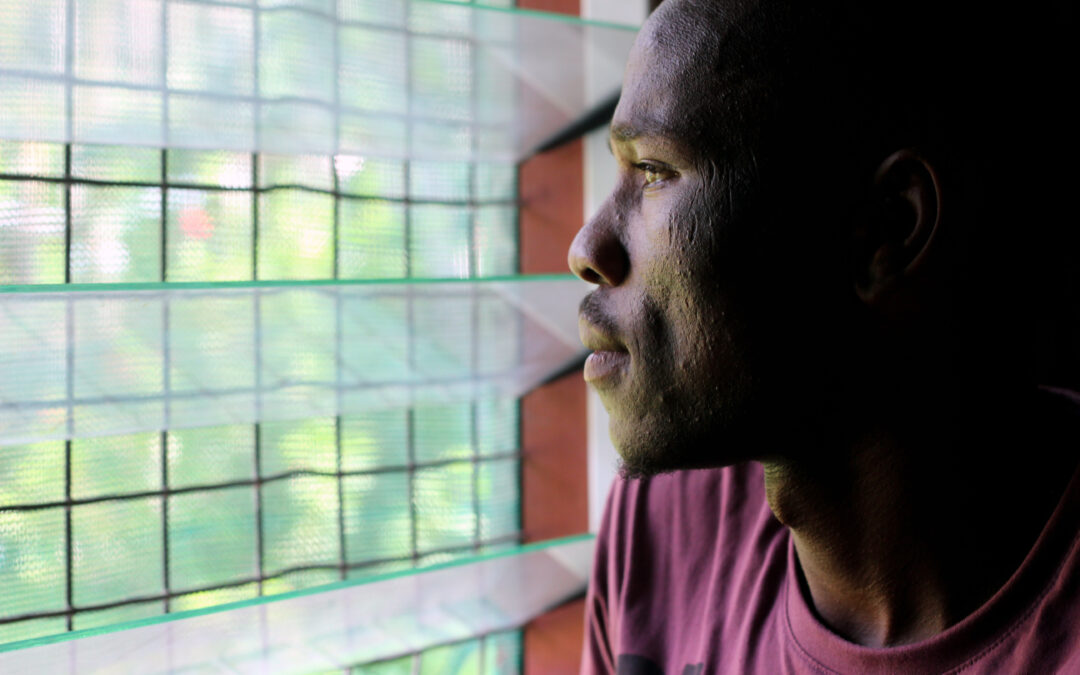
Sudanese refugee activist Abdul Aziz Muhamat is the 2019 Martin Ennals Award Laureate. He was among three finalists, selected last October by a jury of ten of the world’s leading human rights organizations, including the ICJ, together with Marino Cordoba Berrio (Colombia) and Eren Keskin (Turkey).
“This award sheds light on the very cruel refugee policy of the Australian Government. It also brings international attention to the dangers and ill-treatment faced by refugees all over the world, including in countries that claim they uphold the Refugee Convention,” said Abdul Aziz Muhamat.
The 2019 laureate was fleeing war in Darfour. In October 2013, he was forcibly transferred to the island of Manus (Papua New Guinea), as part of Australia’s “offshore” refugee policy, when the boat he was on was intercepted by the authorities.
More than five years on, he is still stranded on the island, like hundreds of refugees and asylum seekers, and subject to deprivation, harassment, humiliation and violence.
“This young man was only 20 when he first arrived on Manus island. Since then, he never stopped raising his voice for those who have been stripped of their most basic rights together with him. He showed extraordinary tenacity and courage, always resisting peacefully even after a police officer shot him in the leg,” said Dick Oosting, Chair of the Martin Ennals Foundation.
“The Australian Government must meet its international obligations and put an end to these inhumane practices,” he added.
Living conditions on Manus island have been denounced by human rights organizations.
“Men are dying, notably for lack of appropriate medical care. Some of them, including children, committed suicide. We need safety, we need freedom, we need hope. Opposing this cruel system helps preserve my self-esteem and my human dignity,” Abdul Aziz Muhamat said.
“I will continue to fight until all of us are safe and free,” he added.
The two other finalists of the 2019 Martin Ennals Award are Eren Kerskin (Turkey) and Marino Cordoba Berrio (Colombia).
A lawyer who has been engaged for over 30 years in advancing the rights of women, Kurds and LGBTI+ notably, Eren Kerskin was recently sentenced to twelve and a half years in prison for supporting the shuttered pro-Kurdish newspaper Özgür Gündem.
She has been accused of denigrating the Nation and insulting the President in her chronicles.
“Freedom of expression and freedom of thought are severely punished in Turkey nowadays. The government tolerates no dissenting voices. I know that by resisting we can change the world. Thank you for not forgetting us. Your solidarity and support give me the courage to continue the struggle,” she said.
Marino Cordoba Berrio is a leading figure within the Afro-Colombian community, which has been repeatedly stripped of its rights and lands.
For two decades, he has been struggling for the rights of his ethnic and other marginalized groups, at the risk of his own life in a country where more than 400 social leaders and human rights defenders have been killed in the past two years.
“Historically, we have suffered from political, economic and social exclusion. To seek and obtain justice for my people is crucial for our survival,” he said.
“Under the peace agreement and thanks to our efforts, ethnic groups’ rights are recognized and so is the need to protect them. It’s high time for the government of Colombia to meet its commitments and put an end to the escalating violence affecting our communities,” he added.
The Martin Ennals Award for human rights defenders is given out since 1994. It honours individuals who have shown outstanding commitment to the promotion and protection of human rights, despite the risks involved.
This award aims at shedding light on their situation and their work. It provides them with international recognition and protection, as well as financial support to pursue their activities.
The three finalists were honoured today during a ceremony organized by the City of Geneva.
The jury of the Martin Ennals Award comprises ten of the world’s leading human rights organizations: the ICJ, Human Rights Watch, Amnesty International, FIDH, Human Rights First, International Service For Human Rights, Brot für die Welt, Front Line Defenders, the World Organization Against Torture and HURIDOCS.
Contact:
Olivier van Bogaert, Director Media & Communications, ICJ representative in the MEA Jury, t: +41 22 979 38 08 ; e: olivier.vanbogaert(a)icj.org
Watch video of MEA Laureate 2019:
Watch the whole MEA 2019 Ceremony in Geneva:
Feb 12, 2019 | News
As the trial of twelve Catalan separatist leaders begins before the Spanish Supreme Court today in Madrid, the ICJ warns that their trial on broadly defined offences of rebellion and, possibly, sedition unduly restricts rights of freedom of expression, assembly and association.
“The very broad definition of the offence of rebellion being applied in this case risks unnecessary and disproportionate interference with rights of freedom of expression, association and assembly,” said Róisín Pillay, ICJ Europe and Central Asia regional Director.
The twelve political leaders – including high-ranking Catalan government officials – have been charged in connection with their part in the administration on 1 October 2017 of a referendum on Catalonian independence.
The referendum was conduced despite having been declared illegal by the Constitutional Court.
The voting process during the referendum was partially suppressed by the police, with credible reports of the use of unnecessary and disproportionate force in breach of Spain’s international law obligations.
“Interference with peaceful political expression and protest must be justified as strictly necessary and proportionate under international human rights law. Where peaceful protests or political actions, even if declared unlawul by the authorities, provoke an excessive response by the police, it is solely the police and other state authorities who should be held responsible for the violence,” Pillay said.
“It is crucial that the Supreme Court, in its consideration of these charges, takes full account of Spain’s obligations under international human rights law,” she added.
The ICJ is concerned that prosecutors, and the Supreme Court in admitting the indictment in the case, have ascribed an unduly broad meaning to the offence of “rebellion” under article 472 of the Criminal Code.
According to that article, the offence requires violent insurrection to subvert the constitutional order.
But the referendum organizers are not accused of using or advocating violence.
Rather, they are being tried on the basis that they should have foreseen the risk of intervention and the use of force by the police.
It is therefore alleged that the defendants were criminally responsible for the violence that ensued from their decision to carry on with the referendum, despite it being declared illegal.
Although the Supreme Court has held that the use of force by Spanish law enforcement authorities during the repression of the referendum of 1 October 2017 was “legitimate and, as such proportionate”, international observers have concluded that such use of force was excessive and disproportionate.
In accordance with international human rights law, the mere fact that the use of force is considered to be legal under national law, does not of itself mean that it can be considered to be necessary and proportionate.
The Supreme Court has further already accepted that, if the facts alleged by prosecutors are proven, they could amount to the offence of sedition, which is committed by those that that rise up publicly and in a tumultous way, by force or by unlawful means, to impede the implementation of laws or of authorities’ orders.
“Vague, broadly defined offences of sedition or rebellion risk violation of the principle of legality, as well as arbitrary and disproportionate interference with human rights,” said Róisín Pillay.
“In a highly sensitive and politicised case such as that of the Catalonian referendum, they would set a dangerous precedent for the targeting of peaceful independence movements and political dissent, not only in Spain but internationally,” she added.
Several of the accused have already been held in pre-trial detention for lengthy periods, further exacerbating the severity of the interference with rights to freedom of expression, association and assembly, and casting doubt on the proportionality of the response.
Contact
Róisín Pillay, Director, ICJ Europe Programme, t: +32 476 974263 ; e: roisin.pillay(a)icj.org
Background
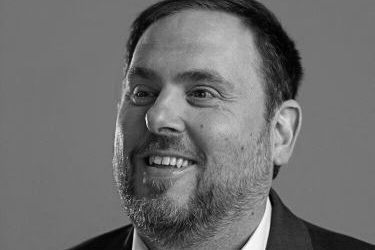
The 12 people on trial in connection with the October 2017 referendum include Oriol Junqueras (photo), former Catalan vice-president; Carme Forcadell, former Catalan parliament speaker; eight former ministers in the Catalan government – Jordi Turull, Raül Romeva, Joaquim Forn, Santi Vila, Meritxel Borràs, Dolors Bassa, Josep Rull, Carles Mundó -; Jordi Sànchez the former leader of the Catalan National Assembly (ANC); and Jordi Cuixart, former head of the independence organisation Òmnium Cultural.
The trial, which begins on 12 February in the Supreme Court in Madrid, is expected to last for several months.
Spain has obligations to protect freedom of expression, including political expression, under Article 10 of the European Convention on Human Rights (ECHR) and Article 19 of the International Covenant on Civil and Political Rights (ICCPR); and freedom of peaceful assembly and association under Article 11 ECHR and Article 21 and 22 ICCPR.
The Human Rights Committee in its General Comment on freedom of expression has affirmed that: “extreme care must be taken by States parties to ensure relating to national security, whether described as official secrets or sedition laws or otherwise, are crafted and applied in a manner that conforms to the strict requirements of paragraph 3 of article 19 ICCPR, which requires that restrictions on freedom of expression be provided for by law and must be necessary for a legitimate purpose, such as national security or public order .) Rights to participate in public life are protected under Article 25 ICCPR.