Jun 12, 2018 | Advocacy, Cases, Legal submissions
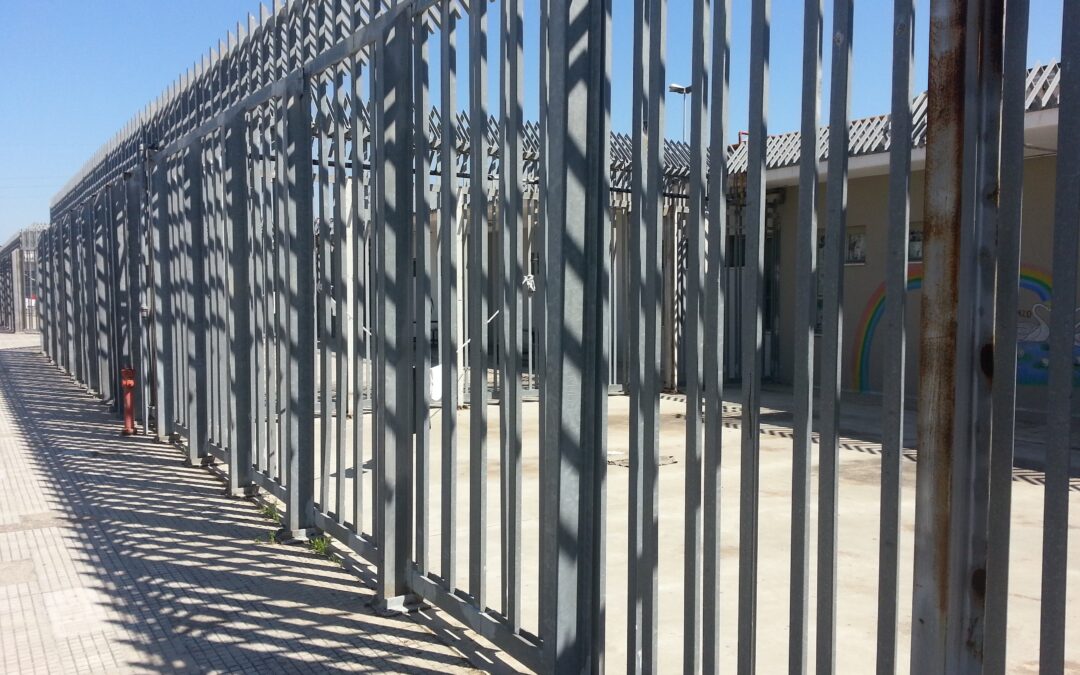
The ICJ and others intervened before the European Court of Human Rights in a case of thirteen undocumented children held in a hotspot in Italy.
The International Commission of Jurists (ICJ), the European Council on Refugees and Exiles (ECRE), the Dutch Council for Refugees and the AIRE Centre jointly intervened in the case of Trawalli and others v. Italy.
In this case, the European Court of Human Rights is called to rule, among other issues, on whether their detention and reception conditions were lawful and/or constituted an inhuman or degrading treatment under the European Convention on Human Rights.
In their third party intervention, the three human rights organizations submitted the following arguments:
a) Taking into consideration migrant children’s status as persons in situations of vulnerability and the principle of the best interests of the child, article 5 ECHR should be read in light of the rising consensus in international law towards a prohibition of detention of children on immigration grounds, in particular based on the consolidated and clear position of the UN Committee on the Rights of the Child. This applies to all instances of deprivation of liberty irrespective of their classification under domestic law.
b) In addition to the above, detention under article 5.1 ECHR will in any event be unlawful and arbitrary where it lacks a clear and accessible legal basis, outlining the permissible grounds of detention as well as the relevant procedural guarantees and remedies available to detainees, including judicial review and access to legal advice and assistance. In light of the obligations of EU Member States under EU law, the interveners submit that detention of asylum seeking children falling within the scope of the recast Reception Conditions Directive will result in a breach of the Convention standards also where it is not used as a measure of last resort, but rather is imposed without consideration of less onerous alternative measures and where the child’s best interests assessment has not been carried out and reflected in this decision.
c) Due to children’s extreme vulnerability, their detention for immigration purposes risks leading to a violation of Article 3 ECHR because of inadequate living conditions and/or to a violation of Article 8 ECHR because of a disproportionate and unnecessary interference with their development and personal autonomy, as protected under Article 8. In this sense, Article 8 must be regarded as affording protection from conditions of detention which would not reach the level of severity required to engage Article 3.
d) When the authorities deprive or seek to deprive a child of her or his liberty, they must ensure that he/she effectively benefits from an enhanced set of guarantees in addition to undertaking the diligent assessment of her/his best interest noted above. The guarantees include: prompt identification and appointment of a competent guardian; a child-sensitive due process framework, including the child’s rights to receive information in a child-friendly language, the right to be heard and have her/his views taken into due consideration depending on his/her age and maturity, to have access to justice and to challenge the detention conditions and lawfulness before a judge; free legal assistance and representation, interpretation and translation. The Contracting Parties must also immediately provide the child access to an effective remedy.
e) In order to fully comply with their obligations under the Convention, Contracting Parties must guarantee that asylum seeking children are accommodated in reception facilities which are adapted to their specific needs and provide adequate material conditions adapted to their age, condition of dependency and enhanced vulnerability. To do otherwise results in a failure by States to comply with their obligations under Article 3 ECHR and their specific obligations under EU law.
Italy-icj&others-Trawalli&others-Advocacy-legal submission-2018-ENG (download the intervention)
May 31, 2018 | News
The European Court of Human Rights has found that Romania and Lithuania violated the human rights of Abd al-Rahim al-Nashiri and Zayn al-Abidin Muhammad Husayn, also known as Abu Zubaydah.
The court underlined both countries’ complicity in the ill-treatment of the pair while they were held in US secret detention facilities in these countries.
The judgments are a key milestone in holding European governments accountable for their involvement in illegal CIA activities in the aftermath of the 11 September 2001 attacks.
“The US could not have operated the rendition and secret detention programme without its European allies. Today’s landmark rulings break the conspiracy of silence that has surrounded the presence of these secret sites in Lithuania and Romania, and publicly underlines European governments’ widespread complicity,” said Julia Hall, Amnesty International’s expert on counter-terrorism and human rights.
“The rulings are an important milestone of accountability for victims of these flagrantly illegal practices.”
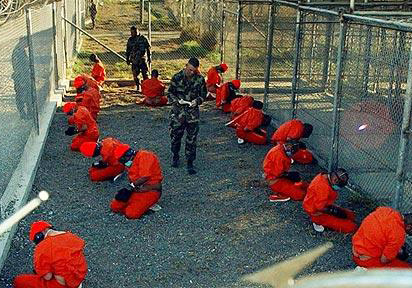
Al-Nashiri and Abu Zubaydah, currently in the US Guantánamo Bay detention facility, were subjected to enforced disappearance and torture as part of the rendition programme.
The European Court held that both governments are responsible for the men’s unlawful detention and ill-treatment in CIA ‘black sites’.
A December 2014 report by the US Senate Select Committee on Intelligence included details of al-Nashiri and Abu Zubaydah’s torture, but the names of the countries where people were held in secret sites were redacted. Courts in the USA have declined to hear cases related to the CIA operations deferring to US government claims that information about the sites should be protected as “state secrets”. There has been virtually no accountability for such abuses in the US.
“These rulings are a further step towards establishing the truth about European complicity in renditions and secret detentions, and holding European states accountable for their involvement. But the Lithuanian and Romanian governments were not alone. Many other European governments colluded with the US to illegally transfer, ‘disappear’ and torture people during rendition operations and must also be held accountable,” said Róisín Pillay, Director of the International Commission of Jurists’ (ICJ’s) Europe and Central Asia Programme.
Amnesty International and ICJ intervened in both proceedings (see Al-Nashiri and Abu Zubaydah). The organizations submitted evidence, context and expert opinion in light of precedents within the court and elsewhere.
On 13 March 2018, at the US naval base in Guantánamo Bay, Abd al-Rahim al-Nashiri began his 800th week in US custody. Abu Zubaydah is also imprisoned there, but has not been charged with any crime.
Amnesty International and ICJ have repeatedly called for the closure of the facility and the fair trial or release of those detained.
The judgments follow previous rulings against Poland, Italy, and the former Yugoslav Republic of Macedonia for their roles in the illegal rendition, torture, including waterboarding and mock execution, and enforced disappearance of alleged suspects at the hands of the CIA.
The Judgment
Based on numerous expert opinions and a 2014 US Senate Select Committee on Intelligence report on the CIA programme, the Court identified detention facilities “Detention Site Black” in Romania and “Detention Site Violet” in Lithuania.
The Court also held that both governments violated the prohibition on non-refoulement by allowing the men’s unlawful rendition to other countries despite the risk of further violations of the prohibition on torture and other ill-treatment.
In addition to the complicity in their unlawful detention and ill-treatment while detained in their respective countries, the Court held that both governments violated the prohibition on non-refoulement, which obliges states not to return anyone to a territory where they would be at risk of persecution or other serious human rights violations, by allowing the men’s unlawful rendition to other countries.
It found that Romania had violated its human rights obligations by assisting Al-Nashiri’s transfer out of Romania, despite the risk that he would face a flagrant denial of justice upon prosecution in a US Military Commission trial at Guantanamo Bay.
It also found that Romania violated Al-Nashiri’s right to life by facilitating his transfer despite the substantial and foreseeable risk that he would be facing the death penalty.
In both cases, the court held that neither state satisfied their obligation to carry out an effective investigation.
Contact
Olivier van Bogaert, Director Media & Communications at ICJ, t: +41 22 979 38 08 ; e: olivier.vanbogaert(a)icj.org
Europe-Renditions Rom & Lit-News-press release-2018-ENG (full story in PDF)
May 17, 2018 | Events, News
Today, the ICJ is co-sponsoring a conference in Copenhagen to mark the conclusion of the Danish Presidency of the Council of Europe, and take stock of its contribution to protection of human rights in the Council of Europe region.
The conference, Copenhagen, Elsinore and the Future of Europe: Assessing the Danish Chairmanship of the Council of Europe is organized by iCourts and the University of Copenhagen in collaboration with the Danish Chairmanship of the Committee of Ministers of the Council of Europe, the Danish Ministry of Foreign Affairs, the ICJ and the Danish Institute for Human Rights.
This conference will assess what has been achieved during the Danish Chairmanship – and what can still be achieved at the final high-level conference in Elsinore where the Ministers of Foreign Affairs of the 47 member states will meet and are scheduled to adopt a decision on the future of the Council of Europe. The conference will focus on the priorities of the Danish Chairmanship, including:
- Reform of the European Court of Human Rights and the Copenhagen Declaration
- Equal opportunities
- Involvement of children and young people in democracy
- Changing attitudes and prejudices about persons with disabilities
- Combating torture.
At the conference, the ICJ will present its analysis of the recent Copenhagen Declaration on the future of the European Convention on Human Rights system, and its recommendations for how its conclusions and recommendations should be taken forward.
The programme is available here: http://jura.ku.dk/icourts/calendar/copenhagen-elsinore-future-of-europe/
May 12, 2018 | Agendas, Events
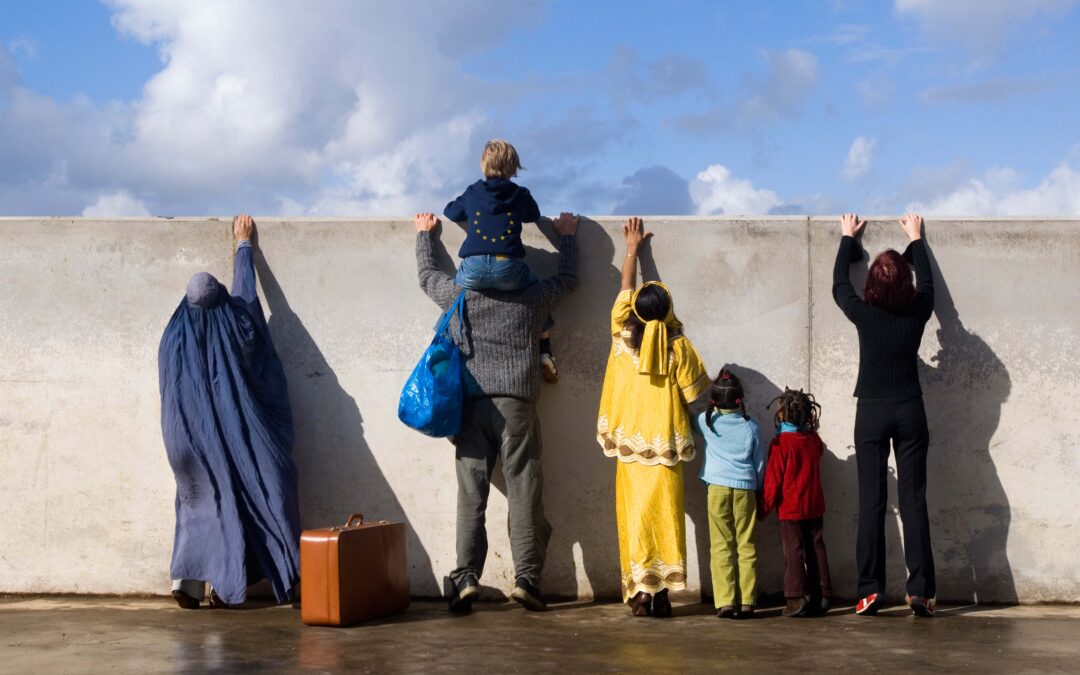
Today begins in Istanbul (Turkey) a two-day seminar for lawyers and CSO practitioners representing and working with migrants, refugees and asylum-seekers.
This event is organized by ICJ, in cooperation with its partners Refugee Rights Turkey, the European Council on Refugees and Exiles (ECRE), Mülteci-Der (MD) and ICJ-EI, as part of the EU co-financed project Fostering Access to Rights for Migrants, Refugees and Asylum-Seekers in Turkey.
40 lawyers and civil society practitioners – representing different bar associations and relevant organisations from the all over Turkey – are taking part in the seminar on 12 and 13 May.
The seminar aims to update lawyers and CSOs on the international law mechanisms in the United Nations and the Council of Europe, deputed to the protection of the rights of refugees, migrants and asylum-seekers . It aims at an effective implementation of the Turkish legal framework on asylum and migration.
The training will use as a basis the draft training materials prepared by the ICJ and its partners (to be published an the end of 2019) and, among other sources, the ICJ Practitioners Guide no. 6: Migration and International Human Rights Law.
The project “Fostering Access to Rights for Migrants, Refugees and Asylum-Seekers in Turkey” is funded by the European Instrument for Democracy and Human Rights (EIDHR) of the European Union.
Turkey-Seminar-Istanbul-MigrationAsylum-Agenda-2018-eng (download the agenda)
May 7, 2018 | News
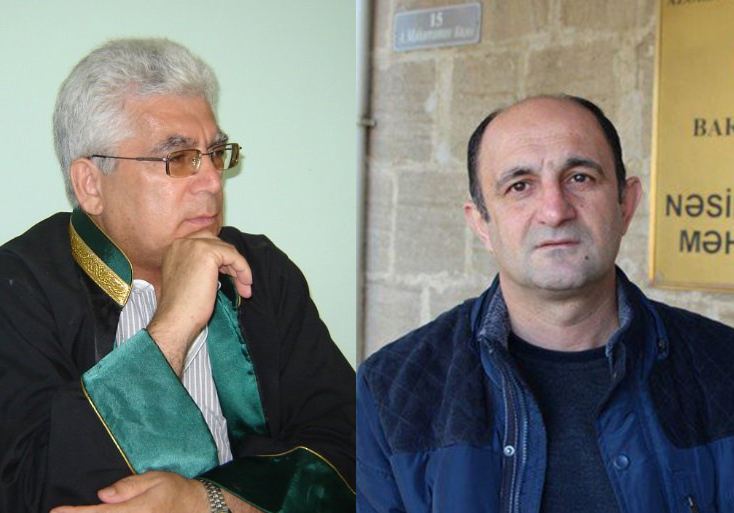
The ICJ today denounced the decision of the Presidium of the Azerbaijan Bar Association, of 23 April 2018, to suspend the licences of two Azerbaijan human rights lawyers Asabali Mustafayev (photo, on the left) and Nemat Karimli (photo, on the right).
The ICJ called on the Presidium to reverse their decision and allow the lawyers to resume their practice.
It stressed that disciplinary proceedings pending against the lawyers should be immediately terminated.
The ICJ said that the decision of the Presidium was contrary to international standards on the role of lawyers including the right to freedom of expression as guaranteed under international law.
The ICJ understands that the proceedings against the two lawyers, initiated following a submission of the Deputy Prosecutor General, were related to the critical statements made by the lawyers in the media, regarding high profile criminal cases.
Nemat Karimli, had stated in media interviews that his client Afgan Mukhtarli, an opposition activist convicted on charges of smuggling, had been illegally and forcibly transferred from Georgia to Azerbaijan and that his life could be at risk if he was returned to Azerbaijan.
The lawyer also complained of excessive searches and being prevented from communicating in private while visiting his client in detention.
The disciplinary proceedings against Asabali Mustafayev relate to allegations he made on social media that the prosecution of politician Gozal Bayramli, on a charge of smuggling, was politically motivated.
Both lawyers were charged with spreading false statements and slanderous information about investigative authorities.
The submission of the Prosecutor to the Bar Association, on 25 October 2017, alleged that lawyers Nemat Karimli and Asabali Mustafayev in their interviews to the media had “politicized” the criminal cases of Bayramli and Mukhtarli, tried to mislead the public and slandered investigative authorities. According to the information provided by the lawyers, no evidence had been attached to this submission.
Instead, the Disciplinary Commission collected evidence to submit to the Presidium of the Bar Association, which subsequently suspended the licence of the lawyers.
Furthermore, the lawyers state that, contrary to what is required by the Law on Lawyers and Advocates Activities, they have not received a copy of the opinion of the Disciplinary Commission submitted to the Presidium of the Bar Association.
The ICJ is concerned that the suspension of the lawyers’ licences, for comments which drew attention to possible violations of human rights, may violate the lawyers’ right to freedom of expression.
These comments appear to be within the bounds of lawyers professional responsibility to protect their clients in every appropriate way (UN Basic Principles, principle 13(b)).
The right to freedom of expression is protected under international treaties to which Azerbaijan is a party, including by Article 19 of the International Covenant on Civil and Political Rights (ICCPR) and article 10 of the European Convention on Human Rights (ECHR).
The UN Basic Principles on the Role of Lawyers specify that lawyers “…have the right to take part in public discussion of matters concerning the law, the administration of justice and the promotion and protection of human rights …”.
The European Court of Human Rights has emphasized that lawyers are entitled to comment in public on the administration of justice, provided that their criticism does not overstep certain bounds, based on principles of dignity, honor, integrity, and respect for the fair administration of justice.
The ICJ emphasizes that protection of lawyers’ freedom of expression, in particular as regards issues of the rule of law and the administration of justice, is not only important to the individuals in question, it also serves as an important safeguard for the protection of human rights.
Where lawyers are subject to disciplinary sanctions for such statements, the role of lawyers in upholding the rule of law in the administration of justice is undermined.
The ICJ therefore calls on the Azerbaijan Bar Association to lift the disciplinary sanctions that would unjustifiably interfere with lawyers’ freedom of expression.
The ICJ also calls on the Azerbaijan Bar Association to ensure that the lawyers subject to disciplinary proceedings obtain a copy of the opinion to be able to prepare their arguments and defence.
Background
Asabali Mustafayev represented Gozal Bayramli who was found guilty and sentenced to three years in prison for smuggling €12,000 ($13,400) in cash. Mustafayev had expressed his opinion about the arrest of Gozal Bayramli in his social media profile, alleging that it was politically motivated. He stated that when he shared this opinion he was not yet engaged as Gozal Bayramli’s lawyer.
Nemat Karimli represented Afgan Mukhtarli, an opposition activist based in Tbilisi, who was convicted of smuggling € 10,000, illegally crossing the border and resisting police arrest and was sentenced to six years in prison. Karimli in an interview stated that Mukhtarli was taken to Azerbaijan illegally and called on the Georgian authorities not to hand him to Azerbaijan authorities since it might endanger Mukhtarli’s life.