Oct 4, 2017 | Agendas, Events, News
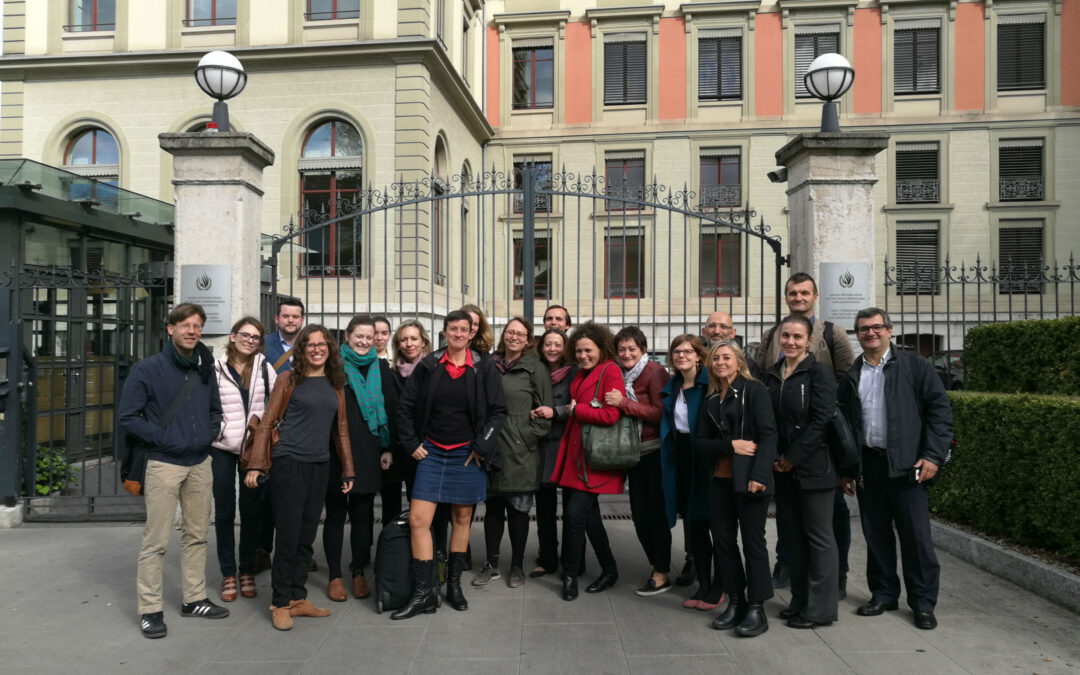
Today starts a five-day Strategic Litigation Retreat for lawyers in Ferney-Voltaire, France organized by the ICJ-EI as part of the EU and OSI funded FAIR project.
Twenty lawyers from Bulgaria, Germany, Greece, Italy, Ireland, Malta and Spain will be meeting with experts and among themselves in order to strategize about their cases of access to justice for migrant children and on accessing international human rights mechanisms.
The retreat is taking place from 4 to 8 October in a close proximity to Geneva, which allows for access to UN treaty bodies experts.
The group will meet with Members of the UN Committee on the rights of the child and the UN Committee on Economic, Social and Cultural Rights and experts from the treaty bodies’ secretariat on individual complaints and on inquiries.
The participants will also have a chance to discuss litigation strategies with experts from the European Court for Human Rights, experts from civil society organizations with long-standing experience in strategic litigation, such as the AIRE Center, ICJ, DCI Belgium or Child Rights Connect.
All the participating lawyers took part in the national trainings organized, through 2016 and 2017, by the ICJ and its national partners.
The trainings were focused on the right to be heard and procedural rights of migrant children, the right to family life, economic, social and cultural rights, detention and on how to access international human rights mechanisms in order to allow for effective access to justice for migrant children.
Out of all the participants, this Strategic Litigation Retreat, brings together three selected lawyers from each of the national trainings.
In the same time, the project management group of the FAIR project, composed of national partners and Child Rights Connect will meet and will contribute to some parts of the Retreat.
The Retreat will use as a basis the draft training materials prepared by the ICJ (to be published an the end of 2017) and the ICJ Practitioners Guide no. 6: Migration and International Human Rights Law.
The FAIR project co-funded by the Rights, Equality and Citizenship Programme of the European Union and OSIFE.
See more information about the national trainings on the rights of migrant children within the FAIR project here: Spain, Italy, Bulgaria, Malta, Greece, Ireland, Germany (photo)
Download the agenda here: Universal-StrategicLitigationRetreat-News-Events-Agendas-2017-ENG
Oct 3, 2017 | Advocacy, Cases, Legal submissions
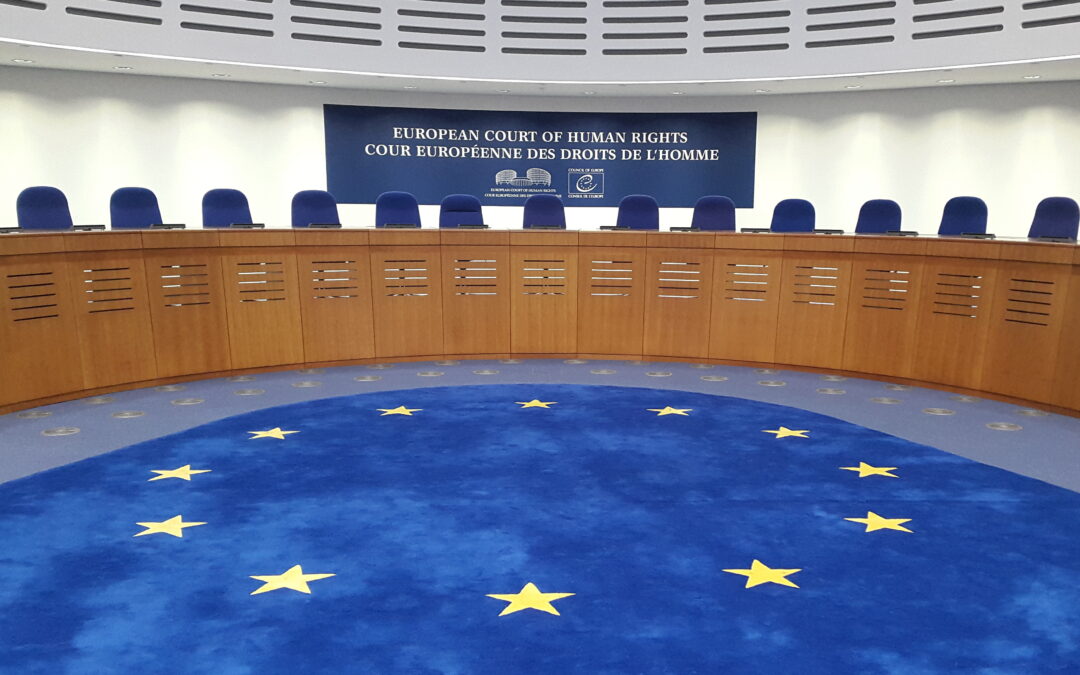
On 2 October, the ICJ and Amnesty International submitted an intervention before the European Court of Human Rights in the case Ecodefence and others v the Russian Federation, Application no. 9988/13 and 48 other applications, which concern labeling NGOs as foreign agents.
In this submission, the applicants provided the Court with an analysis, based on international law sources, of:
a) the scope of application of rights to freedom of expression and association guaranteed under Articles 10 and 11 of the European Convention on Human Rights (ECHR or the Convention) to restrictions on the activity of non-governmental organisations (NGOs);
b) application of the principle of legality to such restrictions;
c) the legitimacy of the aim, necessity and proportionality of measures regulating NGOs, including restrictions on funding, burdensome reporting requirements, sanctions and the stigmatizing effect of labelling NGOs as “foreign agents”; and
d) the scope of permissible restrictions under Article 18 of the ECHR, particularly the question of interferences used for purposes other than those which fall under Articles 10 and 11 of the Convention.
The submission addresses the obligations of State parties to the ECHR with account taken of the other international law obligations, such as those under the International Covenant on Civil and Political Rights (ICCPR) as well as other relevant standards under international law.
Russia-ECtHR-AmicusBrief-Ecodefence-legalsubmissions-2017-ENG (download the third party intervention)
Oct 2, 2017 | News
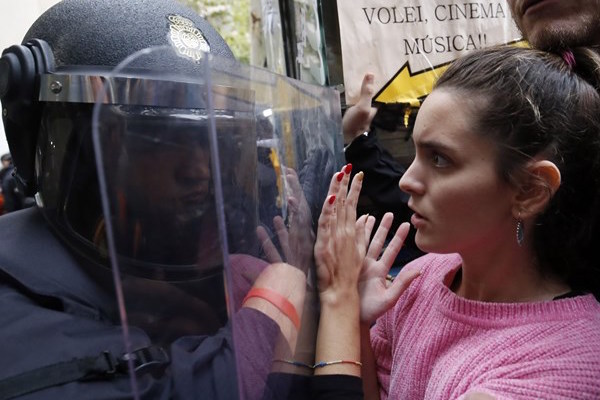
The ICJ today expressed concern at the apparently unlawful violence surrounding yesterday’s referendum in Catalonia, as Catalan authorities sought to hold a vote on the independence of the region. The Spanish Constitutional Court had ruled that the referendum was illegal.
The ICJ calls on all parties concerned to resolve the current crisis in accordance with international human rights law and in the framework of the rule of law.
The ICJ is particularly concerned at allegations of excessive use of force during police operations aimed at enforcing court orders to prevent the referendum being held.
International human rights obligations binding on Spain require that any use of force by agents of the State must be no more than is strictly necessary in the circumstances to meet a grave threat .
All aspects of police operations, including their planning and co-ordination, and the training, guidance and orders given to police officers on the ground, must be designed to minimize the use of physical force.
The ICJ calls for a thorough, prompt and independent investigation into the violence surrounding the referendum, and for those responsible for acts of violence in violation of human rights to be brought to justice.
Background
Spain has obligations to respect the right to life and the right to physical integrity of any person under its jurisdiction under articles 6 and 7 of the International Covenant on Civil and Political Rights, and articles 2, 3 and 8 of the European Convention on Human Rights.
Standards in this regard are re-enforced by the UN Code of Conduct for Law Enforcement Officials and the UN Basic Principles on the Use of Force and Firearms by Law Enforcement Officials.
Positive obligations under these provisions require that allegations of lethal or potentially lethal force, or force that could amount to cruel inhuman or degrading treatment or torture, be the subject of investigation that is independent and impartial, thorough and prompt.
The violence surrounding the referendum on Catalonia’s independence reportedly resulted in injuries to at least 844 civilians and 33 police offices.
Contacts:
Róisín Pillay, ICJ Europe Programme Director, t: +32 2 734 84 46 ; e: roisin.pillay(a)icj.org
Massimo Frigo, ICJ Senior Legal Adviser, t: +41 22 979 3805 ; e: massimo.frigo(a)icj.org
Sep 25, 2017 | Events, News
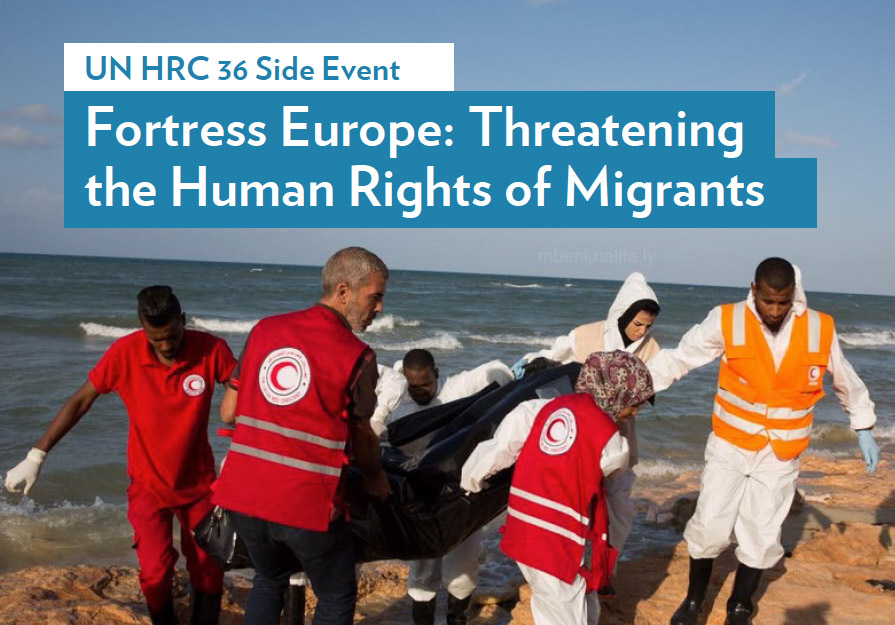
This side event at UN HRC 36 will take place on 26 September 2017, 11.00-12:30, Room XV, Palais des Nations, Geneva.
The side event, hosted by Lawyers for Justice in Libya and the Cairo Institute for Human Rights Studies, will discuss the role of European Union (EU) Member States in the migration crisis and how their policy on migration is threatening the human rights of migrants. The panel will discuss and make recommendations to EU Member States, Libya and the Human Rights Council to ensure accountability for human rights violations being committed against thousands of migrants.
Speakers:
Conor Kenny Doctors Without Borders
Elham Saudi Lawyers for Justice in Libya
Matteo De Bellis Amnesty International
Tareg Ben Ramadan Coalition of Libyan Human Rights Organisations
Chair:
Massimo Frigo International Commission of Jurists
Europe-Flyer side event-News-Event-2017-ENG (Flyer in PDF)
Sep 22, 2017 | Advocacy, Non-legal submissions
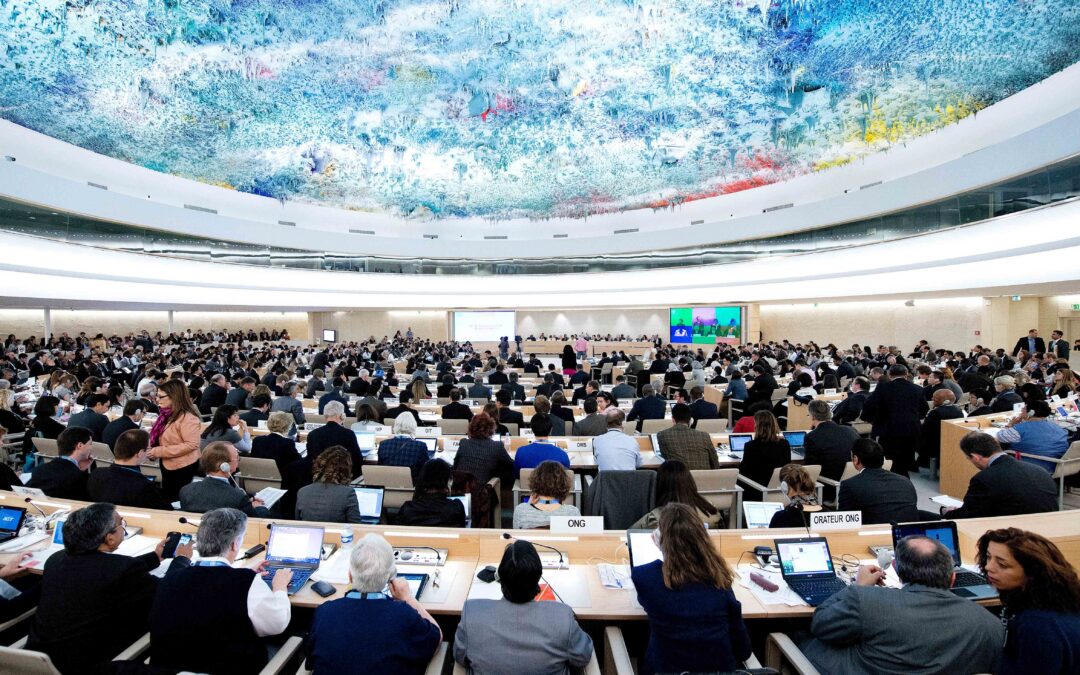
The ICJ spoke today at the UN, on behalf of its Dutch national section NJCM and the civic rights organization Kompass, addressing the need for the Netherlands to adopt concrete measures to implement commitments it has accepted under the Universal Periodic Review process.
The statement, delivered in the discussion by the UN Human Rights Council of the outcome of the third cycle UPR of the Netherlands, read as follows:
The ICJ makes this statement with the support of our Dutch section NJCM (Nederlands Juristen Comité voor de Mensenrechten) and civic rights organization Kompass, who together coordinated the report ‘Bringing Human Rights Home’ on behalf of 23 Dutch organizations that contributed to the UPR of the Netherlands.
Some aspects of the Netherlands’ engagement with the UPR have been positive: the Foreign Ministry as well as UPR-info organized valuable interactions in Geneva for NGOs and delegates. Dutch politicians attended the UPR sessions, setting an important precedent. The Dutch Parliament discussed the UPR process for the first time ever.
Other aspects have been disappointing. The Dutch Foreign Minister has used the term “check-box diplomacy” in reference to States that formally engage with the UPR in Geneva but do not take the necessary steps to implement human rights at home. We fear that, ironically, the phrase could well be applied to the Netherlands itself, where the Government’s “National Action Plan” does not accord with relevant OHCHR guidance, and is commonly referred to by Dutch civil society as the “No Action Plan”. Indeed, Dutch civil society have yet to see any new action by the Government designed to implement the UPR recommendations.
We therefore encourage the future Minister of Interior to put an end to this passive attitude and start investing in the national coordination of the implementation of human rights, including in relation to accepted UPR recommendations, and to engage with the Dutch Parliament on priorities and meaningful actions for the New National Action Plan.
National Action Plans and UPR recommendations are a means to an end, not an end in themselves. Human Rights and the UPR are about taking action and reforming laws, policies and practices at home, not paper pushing and bureaucracy. With the Netherlands’ accepted UPR recommendations now in hand, Dutch civil society’s message is (to paraphrase a saying from Rotterdam): “enough talk, let’s get to work!”
Responding to these and similar remarks from other stakeholders, the delegation of the Netherlands stated that the government would convene, in November, a multi-stakeholder conference on UPR follow up, consisting of plenary and workshop sessions to discuss how to follow up the process at the national level.
The delegation also noted in its final remarks that the Netherlands views this third cycle of the UPR as being about implementation, specifically referencing the ICJ/NJCM/Kompass statement, saying, “in other words, as one of the NGO speakers put it, let’s get to work!”
The statement may be downloaded in PDF format here: HRC36-OralStatement-UPR-Netherlands-2017