Jun 7, 2013 | News
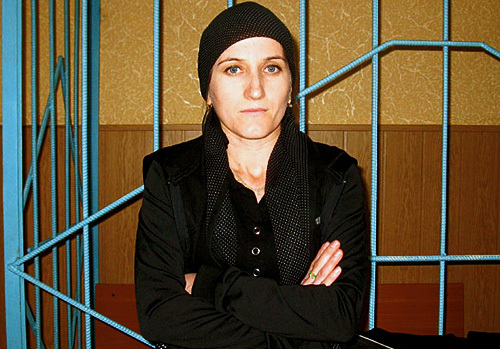
The ICJ today expressed its grave concern at death threats received by lawyers Sapiyat Magomedova and Musa Suslanov.
The authors of the threats demanded that the lawyers cease their involvement in a case alleging the murder of five individuals.
The ICJ called on the authorities to take urgent protective measures to ensure the safety of lawyers who received these threats.
On 8 May, Sapiyat Magomedova and Musa Suslanov took on a case to represent relatives of a local parliamentarian, Magomed Gamzatov, his brothers Osman, Yusup and Gazidibir and their cousin Magomed Omarov. The men were killed by firearms in the city of Kizlyar, Dagestan, on 18 March.
According to relatives, the shootings resulted from a conflict of a personal nature. A criminal case was opened and several people arrested in relation to the killing.
However, the relatives of the victims have alleged that they have been subjected to continuous surveillance and pressure. Witnesses reportedly now fear to testify in the case.
From the start the lawyers began to be subject to intimidation, which included threats that their professional offices would be set on fire or blown up with the lawyers inside. Such threats were delivered through acquaintances of the lawyers.
On 19 and 20 may, after the two lawyers had announced a more proactive intervention in the case, including by inviting information from additional witnesses, the lawyers received text messages warning them that they should drop the case which was “their chance to stay alive”.
Another message demanded that they drop their involvement in the case and “not butt into something they should not do”.
The ICJ considers that there is an imminent risk to the lives and physical security of lawyers, especially taking into account the recent case of murder of a lawyer in Dagestan.
On 20 January 2012, a lawyer in Dagestan was shot to death with the alleged involvement of security forces. According to the information received by the ICJ, the case has still not been properly investigated and no one has been held accountable.
The ICJ recalls that under international law and standards, Russia has an obligation to protect the right to life of individuals where there is a real and immediate risk to the life of an individual from the criminal acts of a third party.
The UN Basic Principles on the Role of Lawyers provide that “where the security of lawyers is threatened as a result of discharging their functions, they shall be adequately safeguarded by the authorities”.
Effective measures to protect the lawyers should include security measures as necessary, such as police monitoring and guards. This issuance of death threats constitutes criminal conduct.
The ICJ called on the Russian authorities to promptly and thoroughly investigate these threats and to bring the perpetrators to justice in fair trials.
Lawyer-deaththreats-Russia-eng (download the statement in English)
Lawyer-deaththreats-Russia-rus (download the statement in Russian)
Contact:
Róisín Pillay, Director, ICJ Europe Programme, t +41 22 979 38 30; e-mail: roisin.pillay(a)icj.org
Temur Shakirov, Legal Adviser, ICJ Europe Programme, t +41 22 979 38 32: e-mail: temur.shakirov(a)icj.org

May 30, 2013 | Agendas, Events
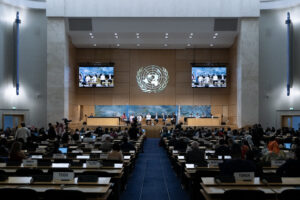
On Wednesday 29 May 2013, the ICJ co-sponsored a parallel event with Human Rights Watch and other NGOs during the Human Rights Council’s 23rd regular session held in Geneva.
The event, held in Room IX of the Palais des Nations, addressed key issues concerning the independence of judges and lawyers within the Russian Federation. The event was chaired by Róisín Pillay, Director of ICJ’s Europe Programme. Panelists were Gabriela Knaul, the UN Special Rapporteur on the independence of judges and lawyers; Tamara Morshchakova, ICJ Commissioner and former Deputy Chair of the Russian Consitutional Court; and Karinna Moskalenko, ICJ Commissioner and founder of the International Protection Centre.
May 28, 2013 | News, Publications
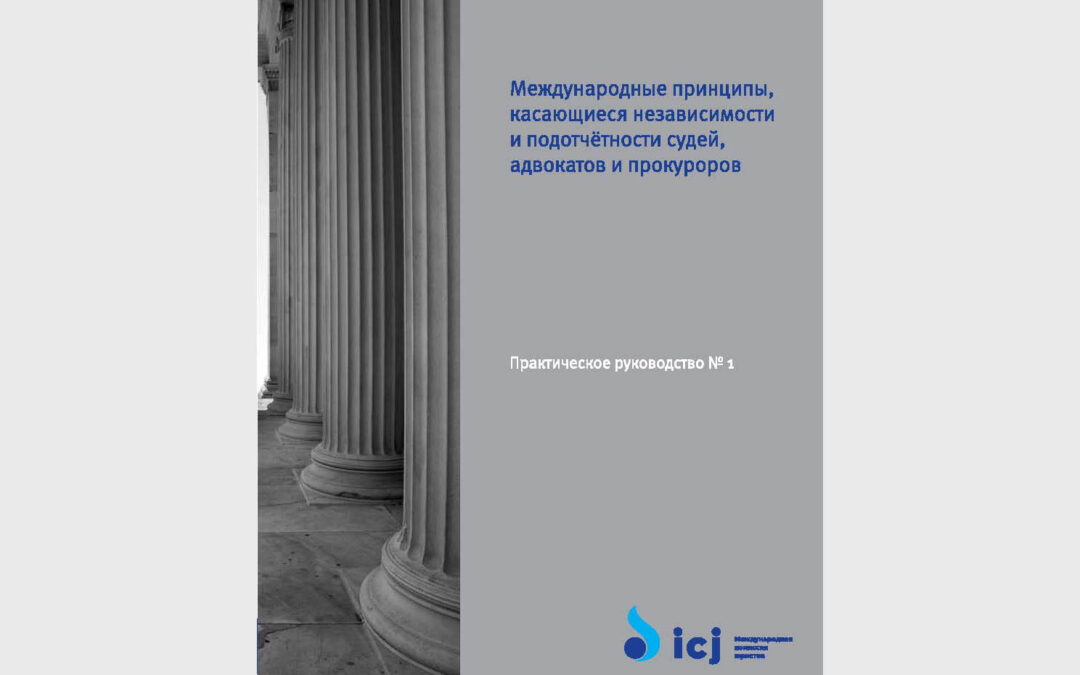
The ICJ has now published a translation of its Practitioner’s Guide, International Principles on the Independence and Accountability of Judges, Lawyers and Prosecutors.
This is the first comprehensive analysis of the existing standards and compilation of universal and regional instruments published in Russian. The Guide outlines the roles to be played by a strong legal profession, an independent judiciary and an impartial and objective prosecuting authority. References to international decisions, reports, texts of treaties and other international standards allow the Guide to be used as a reference book by legal practitioners and policy makers.
International-Principles-on-the-Independence-and-Accountability-of-Judges-Lawyers-and-Procecutors-(No.1)-Practitioners’ Guide series-2013-Rus (full text in pdf)
Apr 24, 2013 | Feature articles, News
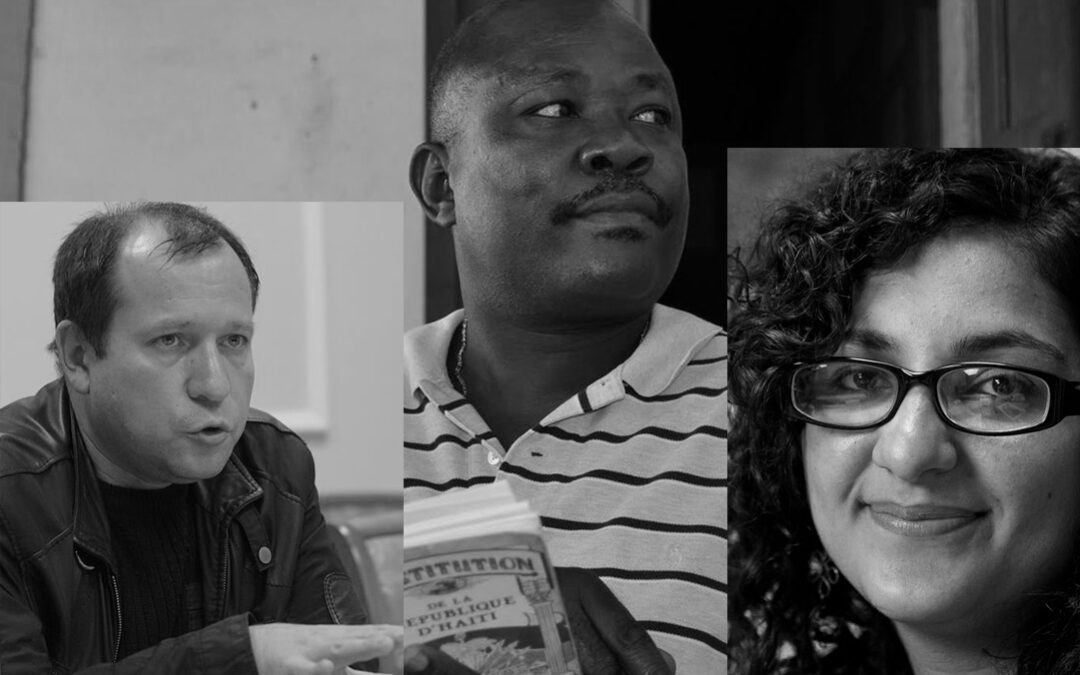
The three final nominees for the Martin Ennals Award for Human Rights Defenders are Mona Seif (Egypt), Joint Mobile Group (Russia) and Mario Joseph (Haiti). The ICJ is one of the ten members of the jury.
The Martin Ennals Award is given to Human Rights Defenders who have shown deep commitment and face great personal risk. The aim of the award is to provide protection through international recognition.
Selected by ten leading human rights organizations (ICJ, Amnesty International, Human Rights Watch, Human Rights First, International Federation of Human Rights, Front Line Defenders, HURIDOCS, Diakonie – German Protestant Welfare, World Organization Against Torture and International Service for Human Rights) it is the world’s most important Human Rights Prize.
The 2013 Award will be presented on Oct. 8th at a ceremony hosted by the City of Geneva.
Mona Seif (Egypt) is the core founder of the” No To Military Trials for Civilians”, a grassroots initiative which is trying to stop military trials for civilians.
Since February 25, 2011, Mona has brought together activists, lawyers, victims’ families, local stakeholders and started a nationwide movement against military trials.
As part of the recent crackdown on the Freedom of Speech in Egypt she has been charged along with other Human Rights activists.
She noted that “International solidarity, and I mean people’s support not governments, empowers us to continue our battle and stop military trials for civilians“.
After the murder of several human rights activists working in Chechnya, Igor Kalyapin started the Joint Mobile Group. To reduce the risk they send investigators on short missions to Chechnya to document Human Rights abuses.
This information is then used to publicise these abuses to seek legal redress. Igor Kalyapin speaking of the effect of international publicity said “… when the international community is watching us it is more difficult for the authorities to take steps against us…”
Mario Joseph, Haiti’s most important Human Rights lawyer, has worked on some of the most important cases in Haiti, including the current case against the former dictator Jean-Claude “Baby Doc” Duvalier.
His family received asylum in the United States in 2004, while he chose to return to Haiti. He has faced threats and harassment for much of his 20 years as a lawyer although it has intensified in recent months.
He says: “this recognition from the Ennals Award shines a vital spotlight on my work, and on the work of everyone who is fighting for human rights in Haiti. That spotlight will make our work safer and more effective.”
MEA-Short Summary-2013 (read the pdf)
MEA-MONA SEIF bio-2013 (read the pdf)
MEA-JOINT MOBILE GROUP bio-2013 (read the pdf)
MEA-MARIO JOSEPH bio-2013 (read the pdf)
Apr 12, 2013 | News
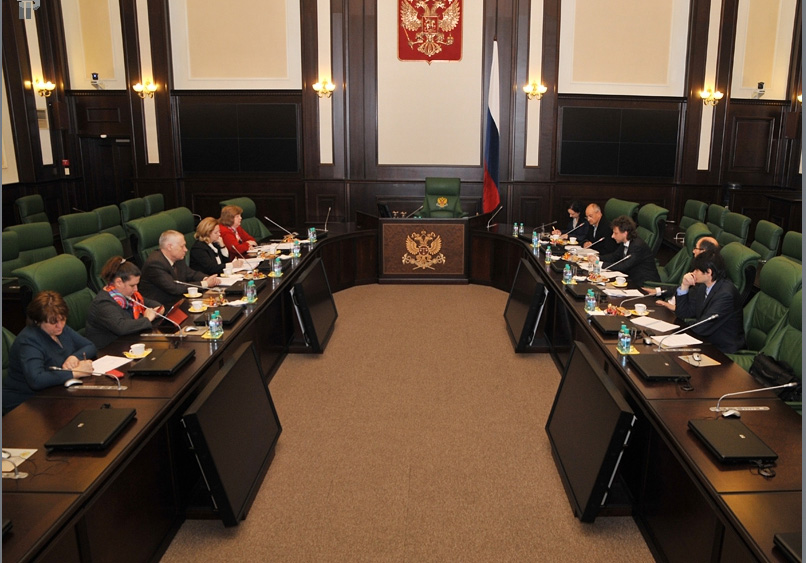
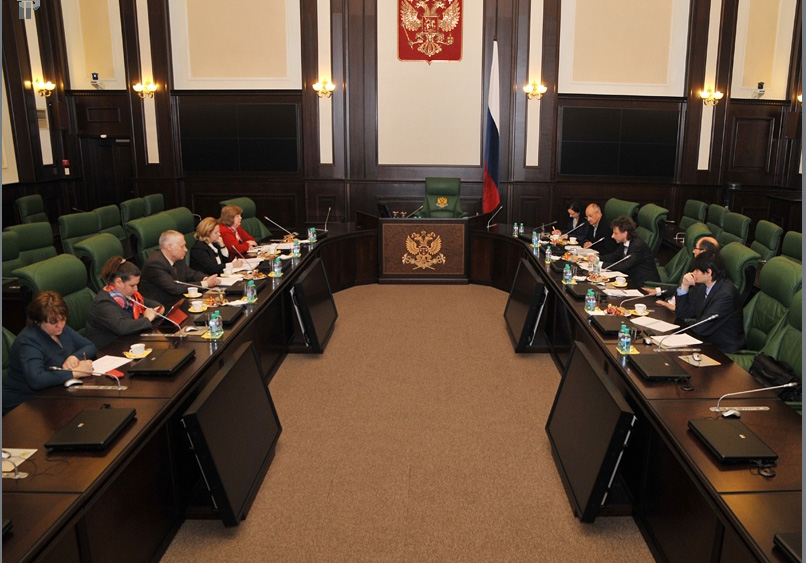 On Monday 15 April, the ICJ will hold a roundtable seminar with judges of the Russian Federation’s highest courts, on disciplinary action against judges in the Russian Federation.