Nov 21, 2019 | News
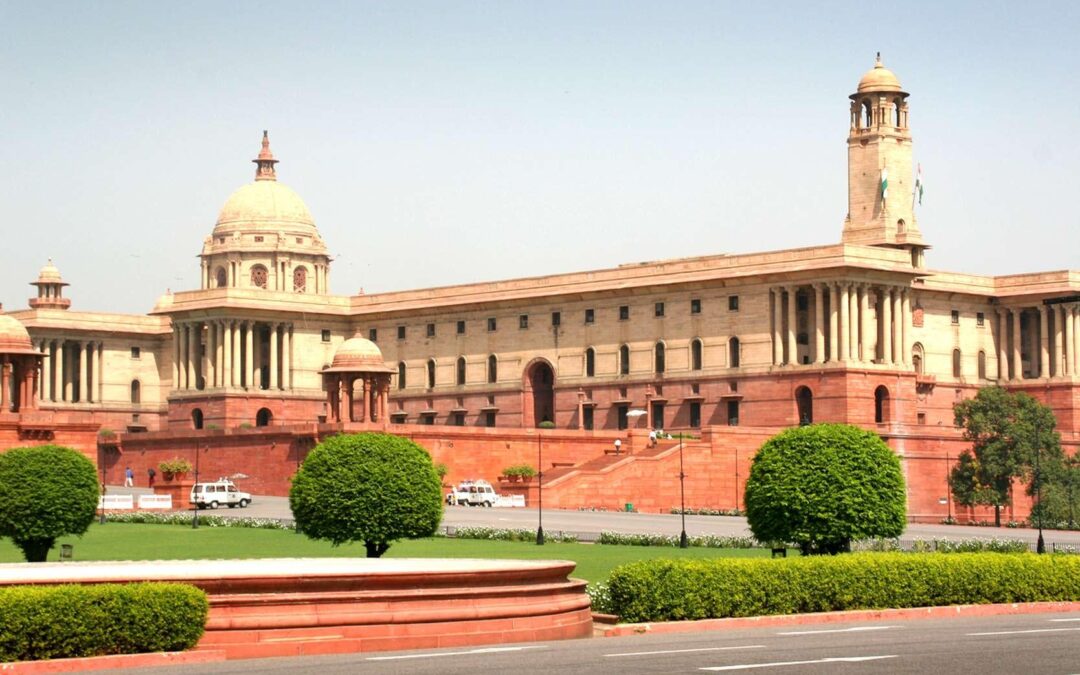
The Upper House of Parliament must revise the Transgender Persons (Protection of Rights) Bill, 2019, which was passed by the Lower House of Parliament on 5 August 2019.
The Bill does not adequately protect the rights of transgender people, and fails to comply with India’s constitutional and international human rights obligations, the ICJ said today.
The Government introduced the Transgender Persons (Protection of Rights) Bill, 2019, before the Parliament on 19 July 2019. It was passed by the Lok Sabha (the Lower House of Parliament) on 5 August, 2019, despite a lack of consultation with the transgender community and serious weaknesses in the Bill, which would be in violation of the Supreme Court’s NALSA judgment.
“If the Upper House of Parliament adopts the Bill in its current form, without any amendments, it will miss an important opportunity to introduce a law that respects, protects and fulfills the human rights of transgender people as required by the Supreme Court’s decision in NALSA v. UOI and India’s international obligations,” said Frederick Rawski, ICJ Asia Pacific Director.
The current draft, fails to address key concerns that have been repeatedly raised by the transgender community and human rights organizations.
Critically, the Bill appears to continue to mandate sex reassignment surgery for transgender people. This requirement would contravene the Supreme Court’s judgment in NALSA v. UOI, which guarantees the right to self-identification without the need for medical intervention. Further, the Bill does not make provision for affirmative action in employment or education despite the Supreme Court’s mandate in NALSA v. UOI.
Moreover, the Bill sets out lighter sentences for several criminal offences, such as “sexual abuse” and “physical abuse”, when they are committed against transgender people. In addition, the Bill does not adequately define these offences and retains provisions that could be used in a discriminatory manner to target transgender people for criminal prosecution. It also fails to address the lack of an effective mechanism to enforce the legal prohibition against discrimination on the ground of gender identity.
The ICJ has recommended the deletion of provisions that mandate sex reassignment surgery and that set out lighter sentences for criminal offences against transgender people. In addition, the ICJ recommends the inclusion of provisions addressing affirmative action for transgender persons in education and employment.
“We urge the Upper House of Parliament to address these deficiencies before passing the Bill into law, in accordance with India’s constitutional and international law obligations, and to ensure meaningful consultation with the transgender community” Rawski said.
Contact
Maitreyi Gupta (Delhi), ICJ International Legal Adviser for India, e: maitreyi.gupta(a)icj.org, t: +91 7756028369
Read also
ICJ 2019 Report on India Living with Dignity: Sexual Orientation and Gender Identity-Based Human Rights Violations in Housing, Work, and Public Spaces in India. The Report details human rights violations suffered by LGBTQ persons in their family homes, workplaces, and public spaces including streets, public toilets, public transport and shopping centres.
ICJ Briefing Paper on India: Legal and Jurisprudential Developments on Transgender Rights, SAATHII Vistaara Coalition. The paper analyses in detail the domestic judicial developments on transgender rights as well as the legislative process undertaken until the Transgender Persons (Protection of Rights) Bill, 2018 was passed on 17 December 2018.
ICJ Briefing Paper on The Transgender Persons (Protection of Rights) Bill, 2016, analyzes the 2016 Bill, its shortcomings, and India’s international obligations, as it is the basis of the 2018 Bill.
ICJ Briefing Paper on Implementation of NALSA Judgment discusses the 2014 April NALSA decision that affirmed that transgender people have the right to decide their self-identified gender. The paper analyses the responsibilities placed on Indian authorities, gaps in implementation, and India’s relevant international law obligations.
Nov 19, 2019 | News
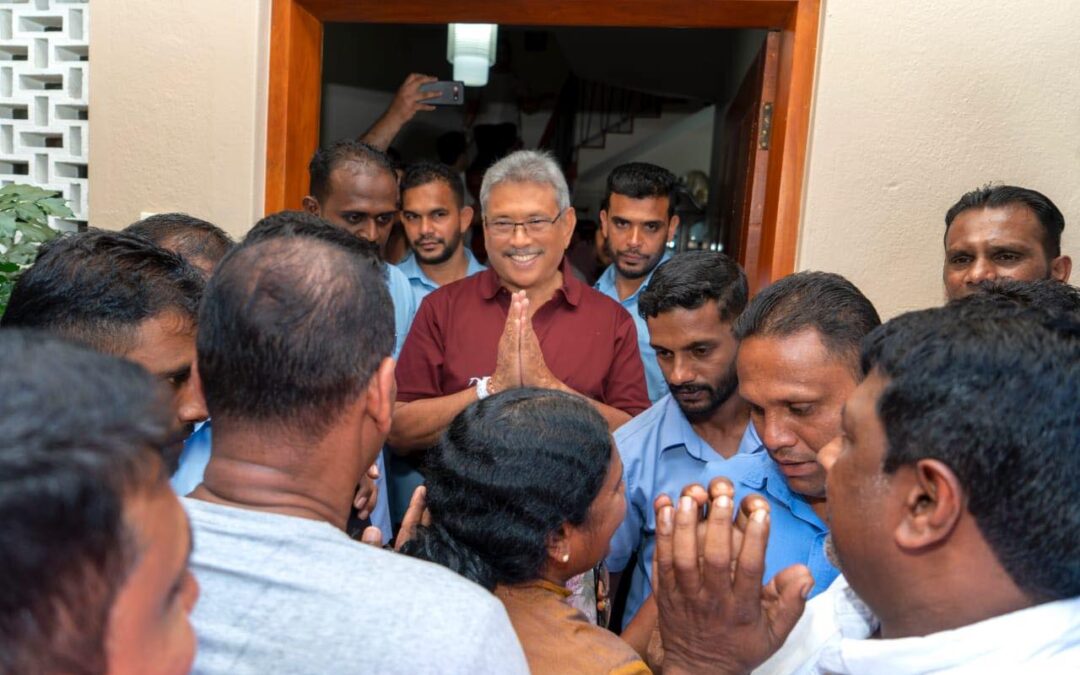
Sri Lanka’s newly elected president, Gotabaya Rajapaksa and his government must demonstrate that they will uphold human rights and rule of law, and ensure that Sri Lanka sustains its international obligations and commitments to justice and accountability, said the ICJ today.
Gotabaya Rajapaksa faces credible allegations of involvement in war crimes and crimes against humanity that took place during the country’s armed conflict.
“The election of Gotabaya Rajapaksa, after a highly polarizing campaign, has alarmed human rights defenders in Sri Lanka and abroad, who have little reason to believe that someone facing such serious allegations of perpetrating human rights violations can be relied upon to meet the country’s obligations under international law,” said Frederick Rawski, ICJ Asia Pacific Director.
Gotabaya Rajapaksa, who won the presidency with 52.25% of votes, served as Sri Lanka’s Secretary of the Ministry of Defence from 2005 to 2015 during the tenure of his brother Mahinda Rajapaksa, at the height of the armed conflict against the Liberation Tigers of Tamil Eelam (LTTE).
Both the military and LTTE perpetrated war crimes and gross human rights violations during the conflict, and particularly during its bloody final stages. As Defence Secretary, Gotabaya was accused of ordering the killing of surrendering LTTE fighters, ordering strikes on civilians and hospitals, and authorizing attacks on human rights defenders.
International condemnation of atrocities committed during the conflict led to the UN Human Rights Council demanding that the Sri Lankan government commit to a process of transitional justice, in view of the systematic failures of accountability mechanisms in Sri Lanka in the past, as documented by the ICJ in its submission to the Human Rights Council, and others. Despite commitments from the Sri Lankan government, the transitional justice process has effectively stalled and impunity has prevailed.
“The ICJ is deeply concerned that even the limited strides made over the past five years in Sri Lanka on transitional justice, positive constitutional amendments and institutional reform will be reversed,” said Rawski.
The ICJ urged the Government to deliver on its commitment to the transitional justice process, including by holding those responsible for human rights violations and abuses accountable, and complying with the obligations set out in United Nations Human Rights Council Resolutions 30/1, 34/1 and 40/1.
Contact:
Frederick Rawski, ICJ’s Asia Director, t +66 644781121; e: frederick.rawski(a)icj.org
Sep 30, 2019 | Advocacy, Non-legal submissions
The ICJ has made a submission to the UN Human Rights Committee in advance of its forthcoming examination of Pakistan’s follow-up report under International Covenant on Civil and Political Rights (ICCPR).
In its submission, the ICJ has brought to the Committee’s attention concerns in relation to the following issues:
- Shortcomings in the legal framework relevant to enforced disappearances;
- The continuing practice of enforced disappearances and, in this context, the ongoing impunity of law enforcement and security agencies;
- The promulgation of the Actions (in aid of civil power) Ordinance, 2019; and
- The ineffectiveness of the Commission of Inquiry on Enforced Disappearances.
The Human Rights Committee will examine Pakistan’s follow-up report during its 127th session, which will be held in Geneva from 14 October to 9 November 2019.
The UN Human Rights Committee issued its Concluding Observations in August 2017, following its review in July 2017 of Pakistan’s first periodic report. Among its many recommendations, for follow-up the Committee prioritized recommendations related to the death penalty; enforced disappearances and extrajudicial killings; and freedom of religion, conscience and belief.
The Committee requested Pakistan to provide information on the implementation on these recommendations within one year of the adoption of the Concluding Observations, which was due on in August 2018.
Pakistan submitted its follow up report to the Committee in May 2019.
Download
Pakistan-UNHCR submission-advocacy-non legal submission-2019-ENG(submission in PDF)
Sep 27, 2019 | Advocacy, Non-legal submissions
Today, at the close of the 42nd regular session of the UN Human Rights Council in Geneva, the ICJ and other NGOs highlighted key acheivements and failures.
The joint civil society statement, delivered by International Service for Human Rights (ISHR) on behalf of the group, read as follows (not all text could be read aloud due to time limits):
“The Council reaffirmed that reprisals can never be justified. Council members rejected attempts to weaken the text including attempts to delete the references to the roles of the Assistant Secretary-General and the Human Rights Council Presidents. The resolution listed key trends such as the patterns of reprisals, increasing self-censorship, the use of national security arguments and counter-terrorism strategies by States as justification for blocking access to the UN, acknowledged the specific risks to individuals in vulnerable situations or belonging to marginalized groups, and called on the UN to implement gender-responsive policies to end reprisals. The Council called on States to combat impunity and to report back to it on how they are preventing reprisals, both online and offline. The Bahamas and the Maldives responded to this call during the interactive dialogue and we encourage more States to follow their good practice. We also encourage States to follow the good practice of Germany and Costa Rica in raising specific cases of reprisals. The Council also welcomed the role of the Assistant Secretary-General and invited the General Assembly to step up its efforts to address reprisals and ensure a coherent system-wide response.
We welcome the creation of a Fact-Finding Mission (FFM) on Venezuela as an important step towards accountability for the grave human rights violations documented by the High Commissioner. We urge Venezuela to cooperate with the FFM and to honor the commitments they have made during this session, including by allowing OHCHR unfettered access to all regions and detention centers and implementing their recommendations. Cooperation and constructive engagement and measures for international accountability and justice should be seen as complementary and mutually reinforcing.
We welcome the renewal and strengthening of the mandate of the Group of Eminent Experts on Yemen, sending a clear message to parties to the conflict – and to victims – that accountability is at the center of the mandate, and providing a crucial and much-needed deterrent to further violations and abuses. States should support the recommendations made by the GEE in their recent report, including prohibiting the authorization of transfers of, and refraining from providing, arms that could be used in the conflict to such parties; and clarifying the GEE’s role to collect and preserve evidence of abuses.
We welcome the renewal of the mandate of the Special Rapporteur on Cambodia, but regret that calls to strengthen the mandate of the OHCHR to monitor and report on the situation have been ignored. We regret that the resolution fails to accurately depict the continuing crackdowns on civil society and the severity and scale of recent attacks on the political opposition.
We welcome the renewal of the mandate of the Commission of Inquiry on Burundi. Its work is vital as the country heads towards elections in 2020. The Burundian Government should desist from denial and insults, and should cooperate with the Commission and other UN bodies and mechanisms.
We welcome that the EU and OIC have jointly presented a resolution on Myanmar requesting the High Commissioner to report on the implementation of the recommendations of the Fact-Finding Mission at HRC 45. However, the international community needs to take stronger action to ensure accountability for and cessation of grave international crimes, in particular by referring Myanmar to the ICC and imposing a global arms embargo – and by acting on the FFM’s reports, including those on economic interests of the military and on sexual and gender-based violence in Myanmar and the gendered impact of its ethnic conflicts.
The joint EU/OIC resolution on Myanmar welcomes the FFM report on the military’s economic interests, which identifies companies contributing to abuses. The High Commissioner, however, has still not transmitted the database of companies facilitating Israel’s illegal settlements more than 2 and a half years after its mandated release. The High Commissioner pledged in March to fulfil the mandate “within the coming months”. The ongoing unexplained and unprecedented delays have become a matter of credibility, for both the High Commissioner and the HRC. Mr. President, we request that you confer with the High Commissioner and advise as soon as possible when this important Council mandate will be fulfilled.
‘Cautious optimism’ best defines our approach to Sudan. While this year’s resolution, which welcomes the peaceful popular uprising, renews the Independent Expert’s mandate, supports the opening of an OHCHR country office, and highlights the role and needs of civil society, is an improvement on 2018, significant challenges remain. Ensuring accountability for the perpetrators of grave human rights and humanitarian law violations should be a central priority for the new Government, and the Council should assist in this regard.
We regret the lack of Council action on Kashmir and urge the Council, as well as India and Pakistan, to act on all the recommendations in the report of the UN High Commissioner for Human Rights.
On terrorism and human rights, we are deeply disappointed that Mexico and other States have partially acquiesced in attempts by Egypt to dilute or distract the work of the Special Rapporteur on counter-terrorism away from its appropriate focus on human rights violations while countering terrorism and human rights of victims of terrorism. We regret that States have asked the Special Rapporteur to spend the limited time and resources of the mandate, to comment on the overbroad concept of the “effects” of terrorism, by which Egypt and some other States seem primarily to mean macroeconomic, industrial, and investment impacts, rather than the human rights of individual victims. The length to which States seem willing to put the existing Special Rapporteur’s mandate at risk, in the name of protecting it, while failing even to incorporate stronger consensus text on human rights issues included in the most recent merged parallel resolution at the General Assembly, suggests that the merger of the previous Mexican and Egyptian thematic resolutions no longer holds any real promise of positive results for human rights.
We welcome the adoption of the resolution on the question of the death penalty, which is an important reflection of the movement towards the international abolition of this cruel punishment. Significantly, this resolution reiterates and affirms the position of international law that the abolition of the death penalty is an irrevocable commitment and that an absolute prohibition exists to guard against its reintroduction. We also welcome the acknowledgement of the ‘most serious crimes’ threshold that acts to restrict the death penalty, in States that have yet to abolish it, only to crimes of extreme gravity; this resolution plainly identifies that criminal conduct that does not result directly and intentionally in death can never meet the threshold test and can never serve as a basis for the use of the death penalty. We are very pleased to acknowledge that the adoption of this resolution is complimentary to the General Assembly’s resolution calling for an international moratorium on the death penalty and, together, they serve to illustrate the advancing global commitment to abolition.
We welcome the Council’s renewed attention to the protection of the right to privacy in the digital age: fully integrating human rights into the design, development and deployment of Artificial Intelligence, machine learning technologies, automated decision-making, and biometric systems, is essential to safeguard not only the right to privacy, but also to freedom of expression, peaceful assembly, and association, and economic social and cultural rights.
On human rights in the administration of justice, we welcome the focus in this year’s resolution on concrete measures to prevent and respond to violence, death and serious injury in situations of deprivation of liberty, which illustrates the potential of thematic resolutions to set out specific practical, legal and policy steps that can be drawn on by governments, civil society, and other stakeholders to have real positive impact at the national level.
We commend Australia for its leadership on Saudi Arabia, as well as the other States who stood up for women’s rights activists and accountability. We urge more States to live up to their commitment to defend civil society and sign the statement in the coming 2 weeks.
We appreciate the attention paid by individual governments to the situation in China, including the dire situation facing Uyghurs and other Turkic Muslims; the crackdown on human rights defenders, including those working to draw attention to violations of economic, social and cultural rights; and the suppression of fundamental freedoms in Tibet. However, we deplore that the Council and many of its members have once again failed to take decisive action to ensure monitoring and reporting on the human rights situation in the country, especially Xinjiang, and press for access for the High Commissioner.
For five years since the last joint statement in March 2014, the Council has failed to hold Egypt accountable for continuing systematic and widespread gross human rights violations. In the latest crackdown on peaceful protests, reports indicate that more than 2000 people have been arrested in the past week. When will the Council break its silence and convene a Special Session to address the grave and deteriorating human rights situation in Egypt?”
Signatories:
- International Service for Human Rights (ISHR)
- DefendDefenders (the East and Horn of Africa Human Rights Defenders Project)
- Commonwealth Human Rights Initiative (CHRI)
- CIVICUS: World Alliance for Citizen Participation
- Cairo Institute for Human Rights Studies
- Asian Legal Resource Centre
- Asian Forum for Human Rights and Development (FORUM-ASIA)
- International Commission of Jurists (ICJ)
- Amnesty International
- Association for Progressive Communications (APC)
- Human Rights Watch
- International Federation for Human Rights (FIDH)

Sep 27, 2019 | News
ICJ today denounced the promulgation of the Khyber Pakhtunkhwa Actions (In Aid of Civil Power) Ordinance, 2019, by the Governor of the Khyber Pakhtunkhwa province on 5 August 2019.
The ICJ said that implementation of the Ordinance will lead to serious human rights violations and miscarriages of justice, contrary to the purported aims of the measures.
“The Ordinance is yet another example of Pakistan’s resort to ‘exceptional’ measures that are grossly incompatible with human rights protections, ostensibly to combat terrorism and other serious crime,” said Frederick Rawski, ICJ’s Asia Director.
“Pakistan must reject this dangerous, oppressive, and counter productive strategy and instead strengthen its judicial process and law enforcement in line with its domestic law and international human rights law obligations,” he added.
The Ordinance gives sweeping powers to members of the armed forces, including the power to detain people without charge or trial on a number of vaguely defined grounds where it appears that such “internment” would be expedient for peace. Individuals may be detained for an unspecified period without any right to be brought before a court of law or to challenge the lawfulness of detention before a court.
In addition to the vague and overbroad detention provisions, the Ordinance provides that statements or depositions by members of the armed forces shall on their own be sufficient for convicting the detainees if they are tried for any offence.
The Ordinance also provides wide immunity for armed forces for any action done, taken, ordered to be taken, or conferred, assumed or exercised by, before or after the promulgation of the Ordinance.
The Ordinance is incompatible with “fundamental rights” guaranteed by the Constitution of Pakistan, as well as Pakistan’s international legal obligations, including under the International Covenant on Civil and Political Rights (ICCPR), the ICJ said.
Article 9(4) of the ICCPR, for example, guarantees the right of all detainees to take proceedings before a court to challenge the lawfulness of their detention, and to be released if the court finds such detention unlawful.
The President of Pakistan passed similar regulations, namely, the Actions (In Aid of Civil Power) Regulations in 2011, which were applicable in the former Federally Administered Tribal Areas (FATA) and the Provincially Administered Tribal Areas (PATA). The Actions (in Aid of Civil Power) Regulations were extensively used as a legal cover for arbitrary detention and enforced disappearances.
In their review of Pakistan’s implementation of the ICCPR and the Convention against Torture (CAT), the UN Human Rights Committee and the UN Committee against Torture in 2017 expressed concern about the Regulations, and recommended that Pakistan “review the Actions (in aid of Civil Power) Regulation, 2011 with a view to repealing it or bringing it into conformity with international standards.”
“It is regrettable that not only did Pakistan flout these express recommendations of the UN Committees, but that it extended the scope of the regulations,” added Rawski.
“This step also calls into question Pakistan’s pledge for election to the UN Human Rights Council in 2017, where Pakistan ‘firmly resolved to uphold, promote and safeguard universal human rights and fundamental freedoms for all’,” Rawski said.
ICJ urges the Pakistan Government to immediately revoke the Khyber Pakhtunkhwa Actions (In Aid of Civil Power) Ordinance, and to review all national security legislation to ensure it is fully compatible with international human rights law and standards.
Contact
Frederick Rawski (Bangkok), ICJ Asia Pacific Regional Director, e: frederick.rawski(a)icj.org
Reema Omer, ICJ Legal Advisor (South Asia) t: +447889565691; e: reema.omer(a)icj.org
–
Full statement, with additional information: Pakistan-Khyber Pakhtunkhwa Actions Ordinance-Press releases-2019-ENG (PDF)