Jul 30, 2017 | News
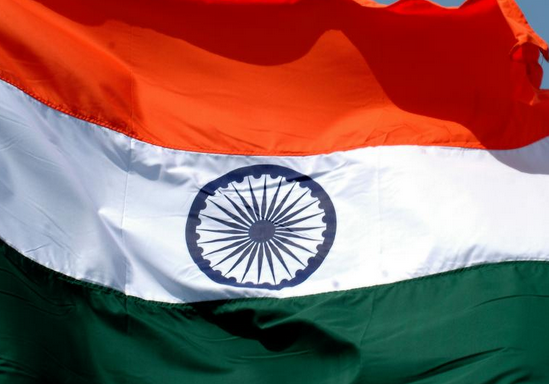
Indian authorities must ensure full compliance with the Supreme Court’s historic judgment directing independent investigations into alleged extrajudicial killings by the police and security forces in Manipur from 1979 to 2012, the ICJ said today.
The ICJ is calling for independent, impartial and thorough investigations into all cases, in line with international standards.
It is further calling on Indian authorities to ensure all accused are brought to justice in fair trials in ordinary civilian courts, and that the families of victims are accorded access to an effective remedy and reparation for any human rights violations.
“Through this judgment, the Indian Supreme Court has given fresh hopes to the victims of human rights violations in India who seek justice,” said Frederick Rawski, ICJ’s Asia Pacific Programme Director.
“This bold and principled decision should finally end the cynical attempts by Indian security forces and law enforcement agencies to shield themselves from criminal accountability,” he added.
On 14 July 2017, the Supreme Court ordered the Director of the Central Bureau of Investigations (CBI) to constitute a Special Investigation Team (SIT) within two weeks to go through the records of at least 85 cases of alleged extrajudicial killings that took place in Manipur between 1979 and 2012, lodge First Information Reports (FIRs), and complete investigations where required.
The Court also directed that the investigations must be completed by 31 December 2017.
The Court noted that the Manipur Police had not registered any FIR at the instance of the family members of the deceased.
It also held that the Manipur Police could not be expected to carry out impartial investigations as some of its own personnel were said to be involved in the “fake encounters”.
India has a legal obligation under Articles 2(3) and 6 of the International Covenant on Civil and Political Rights (ICCPR), to which it is party, to investigate allegations of violations of the right to life promptly, thoroughly and effectively through independent and impartial bodies and to ensure that those responsible are brought to justice.
On 27 July 2017, the CBI constituted a five-member Special Investigating Team in accordance with the Supreme Court’s directions.
“The CBI’s compliance with the Supreme Court’s directions through the prompt constitution of an investigation team is a welcome step,” added Rawski. “It must now ensure that investigations are thorough, independent, impartial and in line with international standards, including the ICCPR.”
The ICJ urged the State of Manipur and the Union of India to extend full cooperation and assistance to the Special Investigating Team to complete the investigations without any hurdles or delays.
Other allegations of human rights violations in the petition must also be investigated in line with international standards, the ICJ said.
Contact
Frederick Rawski, ICJ’s Asia Pacific Regional Director (Bangkok), e: frederick.rawski(a)icj.org
Background
Extrajudicial Execution Victim Families Association, Manipur (EEVFAM) and Human Rights Alert filed a petition in the Supreme Court of India in 2012, alleging that from 1979 to 2012 over 1,528 cases of fake “encounter killings” had taken place in Manipur.
They further alleged that the State government had not conducted proper investigations into the allegations of excessive use of force by the security forces and the police and requested the Court to constitute a special investigation team, comprising police officers from outside the state of Manipur, to conduct a probe into the alleged unlawful killings.
In July 2016, the Supreme Court emphasized the need for accountability for human rights violations by security forces, including under the Armed Forces Special Powers Act (AFSPA), and directed the petitioners to present detailed documentation in support of their allegations.
In April 2017, the Supreme Court dismissed the Central Government’s curative petition requesting the Court to reconsider its July 2016 judgment on the ground that it hampered the security force’s ability to respond to insurgent and terrorist situations.
The killings mentioned in the petition all took place in areas considered “disturbed” under AFSPA. Once an area is declared “disturbed”, armed forces are given a range of “special powers”, which include the power to arrest without warrant, to enter and search any premises, and in certain circumstances, use lethal force.
AFSPA has facilitated gross human rights violations by the armed forces in the areas in which it is operational.
Human rights organizations, including the ICJ, and several UN human rights bodies have recommended that the AFSPA be repealed or significantly amended.
Jul 27, 2017 | News
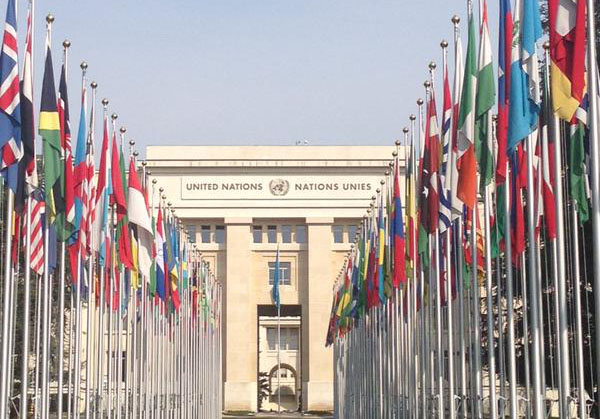
Pakistani authorities must implement the United Nations Human Rights Committee recommendations to ensure compliance with Pakistan’s human rights obligations under the International Covenant on Civil and Political Rights (ICCPR), the ICJ said today.
The Human Rights Committee, the treaty-monitoring body that oversees countries’ implementation of and compliance with the ICCPR, reviewed for the first time Pakistan’s human rights record under the Covenant on 11 and 12 July.
It issued its “Concluding Observations”, along with its recommendations, today, on 27 July.
“While it is encouraging to see Pakistan’s increased engagement with United Nations human rights mechanisms in recent years, it is deeply worrying that since ratifying the ICCPR, Pakistan’s human rights situation has worsened in a number of aspects, including with the restoration of the death penalty and the introduction of military trials for civilians,” said Livio Zilli, ICJ’s Senior Legal Adviser and UN Representative.
“It is of the utmost importance for Pakistan to reverse this trend, and make sincere efforts to implement the recommendations made by the Committee,” added Zilli.
The Committee’s recommendations include:
- Ensure the National Commission for Human Rights is able to carry out its mandate independently and effectively;
- Reinstate the moratorium on the death penalty;
- Abolish mandatory death penalty and ensure the death penalty is provided only for the “most serious crimes” involving intentional killing;
- Criminalize enforced disappearance and put an end to the practice of enforced disappearance and secret detention;
- Ensure that all allegations of enforced disappearance and extrajudicial killings are promptly and thoroughly investigated; all perpetrators are prosecuted and punished with penalties commensurate with the gravity of crimes;
- Review legislation relating to the military courts with a view to abrogating their jurisdiction over civilians as well as their authority to impose the death penalty;
- Reform the proceedings of military courts and bring them into full conformity with Articles 14 and 15 of the Covenant to ensure a fair trial;
- Ensure that all elements of the crime of torture are prohibited in accordance with article 7 of the Covenant;
- Repeal all blasphemy laws or amend them in compliance with the strict requirements of the Covenant; and
- Review policies and legislation on registration of international NGOs, including the vague grounds on which registrations can be cancelled.
This is the first time Pakistan’s human rights record is being reviewed by the Human Rights Committee since Pakistan ratified the Covenant in 2010.
Contact:
Livio Zilli, ICJ Senior Legal Advisor and UN Representative (Geneva), e: livio.zilli(a)icj.org
Reema Omer, ICJ International Legal Adviser for Pakistan (Lahore), t: +923214968434; e: reema.omer(a)icj.org
Background:
Pakistan ratified the International Covenant on Civil and Political Rights (ICCPR) in June 2010.
Following ratification/accession, every state party to the ICCPR is required to submit an initial “state report” containing information on the implementation of each provision of the treaty.
Pakistan submitted its initial state report to the Human Rights Committee in October 2015.
In light of the information provided in the State report, as well as information received from civil society, the Human Rights Committee then prepared a List of Issues containing particular issues of concern to the Committee, and asking whatever questions it sees fit in light of those concerns.
The answers provided by the State party to these questions, as well as other information submitted by civil society and others formed the basis of the “review” of the State’s compliance with the treaty, which was carried out on 11 and 12 July by the Human Rights Committee.
During the review, the Committee met with Pakistan’s delegation, headed by Federal Minister for Human Rights, Senator Kamran Michael, who presented answers to the List of Issues and responded to the Committee’s questions.
The Committee’s Concluding Observations issued today are highly authoritative, and highlight the Committee’s concerns and make recommendations to the State on improving the implementation of the ICCPR.
The ICJ made submissions to the Human Rights Committee in relation to the formulation of List of Issues in 2016 and the Review in 2017.
In its submissions, the ICJ raised concern about the inadequate legal framework on torture and other ill-treatment; the continuing practice and impunity for enforced disappearances; the incompatibility of military trials of civilians with the right to a fair trial; the incompatibility of Pakistan’s blasphemy laws with the rights to freedom of religion and belief, expression and fair trial; and the vaguely defined INGO policy.
The Human Rights Committee picked up ICJ’s concerns as its principle matters of concern and recommendations in its Concluding Observations.
Jun 22, 2017 | News
Pakistani authorities need to ensure a prompt, impartial and effective investigation into a barrage of assaults and threats against lawyers in the premises of the Lahore High Court, the ICJ, Human Rights Watch and Amnesty International said today.
The Government needs to defend the rule of law and prosecute those responsible for any criminal conduct.
On 20 June, during proceedings of a case involving the alleged abduction and subsequent “disappearance” of a 26-year old woman and her two-year old son, supporters of the accused, a prominent lawyer, physically assaulted the complainant’s counsel Shabbir Hussain and Usama Malik, and made abusive remarks and threats against another member of the complainant’s legal team, Noor Ejaz Chaudhry.
The attackers were mostly lawyers and members of the local bar association.
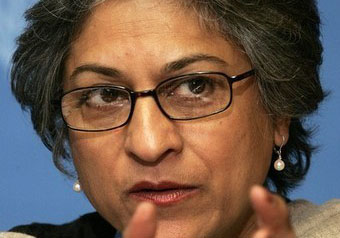
The attackers also made abusive and threatening remarks against Asma Jahangir (photo), a notable human rights lawyer, Honorary Commissioner of the ICJ, and former President of the Supreme Court Bar Association.
Asma Jahangir was not present in the court but was represented by her legal team comprising of Shabbir Hussain, Usama Malik, Mian Liaquat Ali and Noor Ejaz Chaudhry.
“The legal profession is one of the pillars of the administration of justice. It is deeply worrying that instead of discharging their responsibility to uphold the rule of law, certain lawyers would resort to threats and violence in a clear attempt to obstruct justice,” said Ian Seiderman, ICJ’s Legal and Policy Director.
Under international standards, including the UN Basic Principles on the Role of Lawyers, Pakistan has an obligation to ensure that lawyers are able to perform all of their professional functions without intimidation, hindrance, harassment or improper interference.
Where lawyers are threatened as a result of discharging their functions, authorities must ensure they are adequately safeguarded.
“Lawyers must be able to go to court without fearing violent assaults and abuse,” Brad Adams, Asia director at Human Rights Watch said. “That such assaults take place with increasing frequency in Pakistan and without accountability represents a serious failure of the Pakistani authorities to ensure rule of law.”
It is the responsibility of the bar councils and associations to ensure that allegations of professional misconduct against their members are promptly, independently and impartially investigated, and if lawyers are found in breach of their codes of conduct after a fair hearing, disciplinary action is taken against them.
Any disciplinary action must be subject to an independent judicial review.
Threatening and assaulting opposing counsel is not just against the law, but also in breach of lawyers’ professional code of ethics,” said David Griffiths, Amnesty International’s Senior Adviser on South Asia. “The respective Bar Councils must take notice of the allegations, and use this condemnable incident as an opportunity to tackle the culture of impunity which impacts even the legal profession in Pakistan.”
Background
In May 2017, Bilquis Zareena filed a habeas corpus petition in the Lahore High Court for the recovery of her daughter Ayesha and grandson Alyan Ali, who have allegedly been missing since November 2016.
According to Bilquis Zareena, her daughter had secretly been married to Maqsood Buttar, a prominent lawyer and member of the Pakistan Bar Council, the highest regulatory body for lawyers in the country.
Bilquis Zareena claims her daughter and grandson’s lives could be in danger as Maqsood Buttar had previously threatened and even attempted to kill Ayesha.
The next hearing in the case is on Friday, 23 June 2017.
Contact:
Ian Seiderman, ICJ Legal and Policy Director, e: ian.seiderman(a)icj.org
Reema Omer, ICJ International Legal Adviser (South Asia), e: reema.omer(a)icj.org
Jun 16, 2017 | News
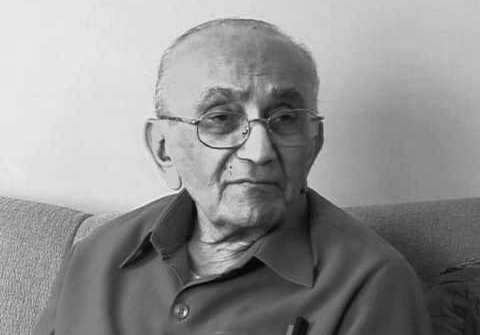
Justice Prafullachandra Natwarlal Bhagwati, former ICJ Commissioner and Honorary Member and Chief Justice of the Supreme Court of India, passed away at the age of 95, on 15 June 2017, following a brief illness.
“The International Commission of Jurists benefited greatly from Justice Bhagwati’s engagement and leadership. He was a giant of the human rights movement, dedicated to enlarging and ensuring access to justice for everyone, including those who couldn’t seek and receive justice due to their economic or social status,” said Sam Zarifi, ICJ’s Secretary-General.
“His dedication and ground-breaking approach to human rights accountability inspired many within and outside of the ICJ, and the values he represented will continue to inspire and inform our work,” he added.
Justice Bhagwati had a long history of promoting and protecting human rights, both at home and on the international stage, particularly for the most marginalized and vulnerable individuals and groups.
Former Chief Justice of India, Justice P.N. Bhagwati held a long and illustrious career within the Indian judiciary.
He introduced many innovative reforms within the Indian judicial system that increased access to justice for the poorest and most disadvantaged, including as a pioneer of public interest litigation and absolute liability.
Outside of India, Justice P.N. Bhagwati played a prominent role in the international human rights movement, for example as a member of the Committee of Experts of the International Labour Organization and Chair of the United Nations Human Rights Committee.
He was also actively involved in a number of non-governmental organizations, including the ICJ, where he committed to a high number of missions, seminars, publications and other activities on behalf of the organization.
He also served as a long-standing Chair of the Advisory Board for the ICJ’s Centre for the Independence of Judges and Lawyers.

Jun 5, 2017 | Advocacy, Non-legal submissions
The ICJ has made a submission to the UN Human Rights Committee in advance of its forthcoming examination of Pakistan’s initial report under International Covenant on Civil and Political Rights (ICCPR).
In its submission, the ICJ has brought to the Committee’s attention concerns in relation to the following issues:
- The compliance of Pakistan’s counter-terrorism laws with the State’s obligations under Articles 6, 9 and 14 of the Covenant, particularly in the context of its “military justice” system;
- Shortcomings in the legal framework relevant to torture and other ill-treatment;
- The continuing practice of enforced disappearances and, in this context, the ongoing impunity of law enforcement and military agencies;
- The compliance of Pakistan’s blasphemy laws with Articles 14, 18, and 19 of the Covenant; and
- The compatibility of Pakistan’s “International Non-Governmental Organizations Policy” with the State’s obligations under Article 22 of the Covenant.
The Human Rights Committee will examine Pakistan’s initial report during its 120th session, which will be held in Geneva from 3-28 July 2017.
Following the review, the Committee will adopt Concluding Observations setting out recommendations to the Pakistani Government.
Pakistan -ICCPR submission-Advocacy-non legal submission-2017-ENG (full text in PDF)