Sep 16, 2016 | Advocacy, Non-legal submissions
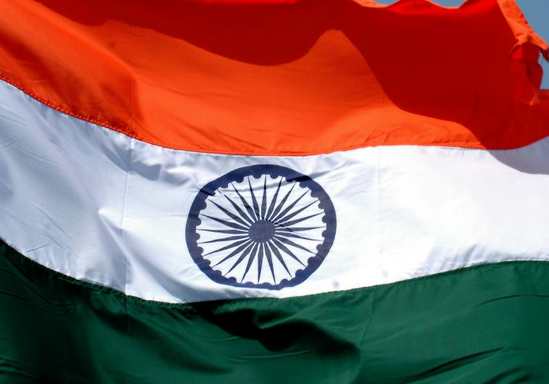
On 16 September 2016, the ICJ made a submission to the Universal Periodic Review of India.
The submission brings to the attention of the members of the Human Rights Council’s Working Group on the UPR issues concerning:
- discrimination and violence based on sexual orientation and gender identity;
- death penalty;
- impunity and accountability;
- freedom of speech, expression and association;
- ratification and implementation of international human rights instruments.
india-icj-upr-submission-advocay-non-legal-submission-2016-eng (full text in PDF)

Sep 15, 2016 | Advocacy, Non-legal submissions
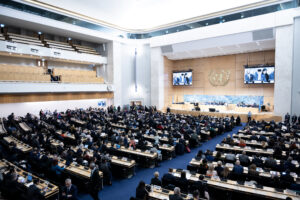
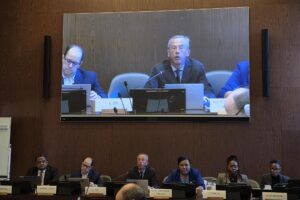
The ICJ, with support of the NGO the Human Rights Commission of Pakistan (HRCP), spoke at the UN Human Rights Council today on the continuing problem of enforced disappearances in Pakistan.
The statement was delivered during an interactive dialogue with the Working Group on Enforced or Involuntary Disappearances.
The ICJ, with support of the Human Rights Commission of Pakistan (HRCP), welcomed the Working Group’s follow-up report on recommendations from its 2012 visit to Pakistan, and stated further as follows:
The practice of enforced disappearance has persisted and expanded since the Working Group’s visit. Previously restricted mainly to Balochistan, the Federally Administered Tribal Areas and Khyber Pakhtunkhwa, enforced disappearances are now a nation-wide phenomenon.
In August 2015, Zeenat Shahzadi, a Pakistani journalist, went “missing” from Lahore, a rare case of alleged enforced disappearance of a woman.
Estimates of the overall number of cases of enforced disappearance vary. The official Commission of Inquiry on Enforced Disappearances has reported nearly 1,400 unresolved cases.
The HRCP, an NGO that documents human rights violations in 60 districts, has reported 370 cases of enforced disappearance since 2014.
Other NGOs claim between 5,000 to 18,000 cases. Even by the most conservative estimates, a significant number of enforced disappearances remain unresolved.
The Government has not brought perpetrators to account in even a single case of enforced disappearance. Rather than effective measures to prevent the practice or to strengthen existing accountability mechanisms, recent legislation actually facilitates enforced disappearances.
In January 2015, Pakistan empowered military courts to try civilians for terrorism-related offences. These courts have since sentenced at least 100 people to death, and at least 12 have been hanged, after grossly unfair trials without possibility of appeal to any civilian courts, including the Supreme Court.
Families allege that some of those tried had been subjected to enforced disappearance by military authorities, and military control over the proceedings leaves the family and victim without effective remedy.
Victims’ groups, lawyers, and activists working on enforced disappearance also continue to face security risks including attacks, harassment, surveillance, and intimidation.
The ICJ and HRCP commend the Working Group for its systematic follow-up, which can have a positive impact, and urge the Working Group to continue to monitor and report on the situation in Pakistan.
The statement may be downloaded in PDF format here: hrc33-oralstatement-disappearances-pakistan-15092016
Aug 29, 2016 | News
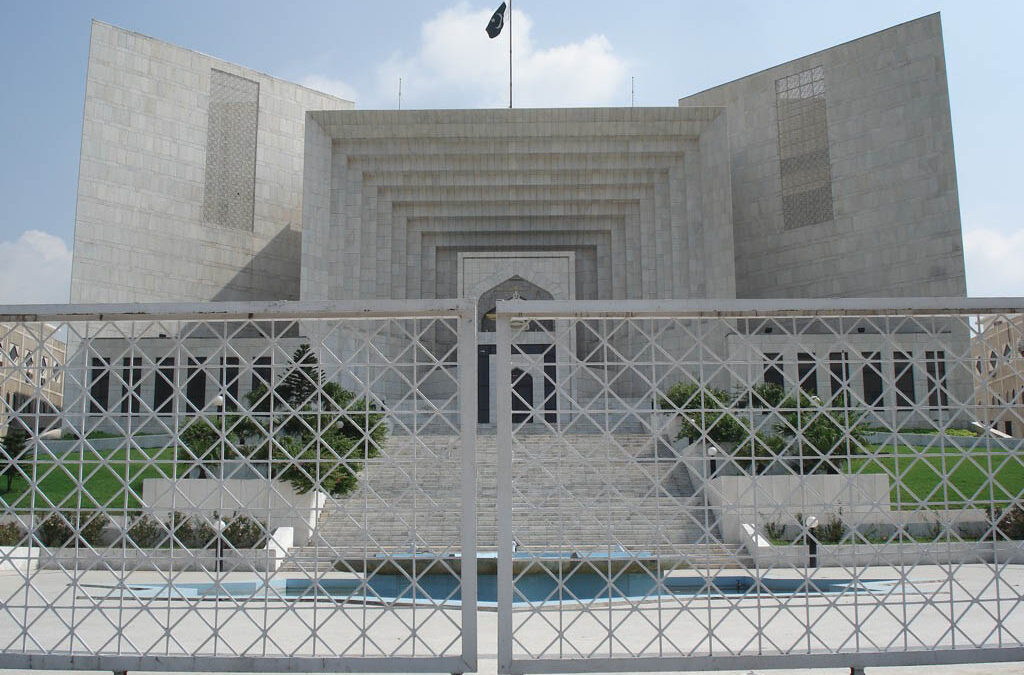
Pakistan’s Supreme Court’s rejection of petitions by families of 16 people sentenced to death who complained of unfair trials in the country’s military courts seriously set back respect for human rights and the rule of law, the ICJ said today.
“The Supreme Court failed to use an important opportunity to show that human rights protect all people, including those who are accused of terrorist acts or other heinous crimes,” said Sam Zarifi, ICJ’s Asia Director. “Pakistan’s very serious problem with terrorism can only be addressed with more respect for human rights and the rule of law, not less, and certainly not through deeply flawed military tribunals that provide neither justice nor truth.”
Families of sixteen civilians sentenced to death by military courts in secret proceedings challenged their convictions and sentences in the Supreme Court on fair trial grounds. In its 182-page judgment, a five-member bench Supreme Court headed by Chief Justice Anwar Zaheer Jamali held the petitioners had failed to prove the military violated their constitutional right to a fair trial. At convicts are now at imminent risk of execution.
The ICJ is calling on the government of Pakistan to desist from executing these or other convicts, and to reinstate a moratorium on the death penalty it held from 2008 to 2014.
“Trial of civilian suspects in military courts is anathema to human rights and international standards are clear that military courts should only have jurisdiction over military officers for military offences,” said Zarifi. “Pakistan’s military tribunals in particular offer nothing like a fair trial and should be immediately dismantled.”
As highlighted by the ICJ in a briefing paper released in June, proceedings before Pakistani military courts fall well short of national and international standards requiring fair trials before independent and impartial courts: judges are part of the executive branch of the State and continue to be subjected to military command; the right to appeal to civilian courts is not available; the right to a public hearing is not guaranteed; and a duly reasoned, written judgment, including the essential findings, evidence and legal reasoning, is denied. In addition, the procedures of military courts, the selection of cases to be referred to them, the location and timing of trial, and details about the alleged offences are kept secret.
“The ICJ supports the pursuit of justice for all victims of terrorism in Pakistan,” added Zarifi. “However, justice will not be done by subverting the foundational pillar of justice: the right to a fair trial for all suspects –regardless of how serious the offence.”
Since January 2015, when Pakistan empowered military courts to try civilians for terrorism-related offences, 11 military courts have been constituted to hear cases related to terrorism.
These 11 military courts have thus far concluded the trials of 128 people, finding the defendants guilty in 104 cases. A hundred people have been sentenced to death and four have been given life sentences. At least 12 people have been hanged after trials that are grossly unfair.
The ICJ has called on the Pakistan government to roll back the system of “military injustice”, and ensure that all terrorism suspects are guaranteed basic fair trial protections.
The ICJ has also urged that Pakistan reinstate a moratorium on executions with a view to abolishing the death penalty in law and practice, reflecting the call of an overwhelming majority of States in repeated UN General Assembly resolutions. The ICJ considers the death penalty to constitute a denial of the right to life and a from of cruel, inhuman and degrading punishment.
Contact:
Sam Zarifi, ICJ Asia Pacific Regional Director (Bangkok), t: +66 807819002; e: sam.zarifi(a)icj.org
Reema Omer, ICJ International Legal Adviser for Pakistan (Lahore), t: +923214968434; e: reema.omer(a)icj.org
Additional information
In January 2015, Pakistan empowered military courts to try civilians for terrorism-related offences as part of its 20-point “National Action Plan”, adopted by the Government following the horrific attack on the Army Public School in Peshawar.
The expansion of military jurisdiction over civilians was accomplished through the 21st Amendment to Pakistan’s Constitution and amendments to the Army Act, 1952. These amendments allow military courts to try offences related to “terrorism” committed by those who claim to, or are known to, belong to a terrorist organization “using the name of religion or a sect”.
Both amendments are set to expire on 6 January 2017 pursuant to a “sunset clause”, after which they will cease to be in effect, although there is a risk that they could be renewed.
In August 2015, the Pakistani Supreme Court upheld the constitutionality of the 21st amendment and the trial of civilians by military courts for terrorism-related offences.

Aug 29, 2016 | News
Tens of thousands of enforced disappearances in South Asia can only be addressed if all the region’s governments immediately criminalize this serious human rights violation, said today lawyers and activists from Bangladesh, India, Nepal, Pakistan and Sri Lanka.
The call came at a Conference on Enforced and Involuntary Disappearances, organized by the ICJ and Human Rights Commission of Pakistan (HRCP) on the eve of the International Day of the Victims of Enforced Disappearances.
South Asia has among the highest number of alleged victims of enforced disappearances in the world: tens of thousands of cases have been documented in Sri Lanka, Nepal, Pakistan and India, and since 2009, there has also been a surge in enforced disappearances in Bangladesh.
“Sri Lanka’s ratification of the Convention on Enforced Disappearance and its pledge to criminalize the practice is a welcome step,” said I. A. Rehman, Secretary General for the Human Rights Commission of Pakistan.
“Other States in the region should now follow suit and show that they are serious about their commitment to human rights by making enforced disappearance a specific crime in their domestic law,” he added.
Under international law, an enforced disappearance is the arrest, abduction or detention by State agents, or by people acting with the authorization, support or acquiescence of the State, followed by a refusal to acknowledge the detention or by concealing the fate or whereabouts of the “disappeared” person which places the person outside the protection of the law.
The UN General Assembly has repeatedly described enforced disappearance as “an offence to human dignity”.
At present, enforced disappearance is not a distinct crime in any South Asian country, which is one of the major hurdles to bringing perpetrators to justice.
In the absence of a legal framework on enforced disappearance, unacknowledged detentions by law enforcement agencies are considered “missing persons” cases.
On the rare occasions where criminal complaints are registered against alleged perpetrators, complainants are forced to categorize the crime as “abduction” or “kidnapping”.
These categories do not recognize the complexity and the particularly serious nature of enforced disappearance, and often do not provide for penalties commensurate to the gravity of the crime.
They also fail to recognize as victims relatives of the “disappeared” person and others suffering harm as a result of the enforced disappearance, as required under international law.
“Despite thousands of cases of enforced disappearance across South Asia, the governments have failed to follow their legal obligation to treat these crimes as the serious human rights violation they are,” said Sam Zarifi, ICJ’s Asia Director.
“South Asian governments have done very little to support the victims and survivors of enforced disappearance, or to ensure the rights of their family members to truth, justice and reparation,” he added.
Other barriers to bringing perpetrators to account are also similar in South Asian countries: military and intelligence agencies have extensive and unaccountable powers, including for arrest and detention; members of law enforcement and security forces enjoy broad legal immunities, shielding them from prosecution; and military courts have jurisdiction over crimes committed by members of the military, even where these crimes are human rights violations.
Victims’ groups, lawyers, and activists who work on enforced disappearance also face security risks including attacks, harassment, surveillance, and intimidation.
A comprehensive set of reforms, both in law and policy, is required to end the entrenched impunity for enforced disappearances in the region – criminalizing the practice would be a significant first step, said ICJ and the HRCP.
Contact
Sam Zarifi, ICJ Asia Pacific Regional Director (Bangkok), t: +66 807819002; e: sam.zarifi(a)icj.org
Read also
ICJ Practitioners’ Guides No. 9 Enforced Disappearance and Extrajudicial Execution: Investigation and Sanction and No. 10 Enforced Disappearance and Extrajudicial Execution: the Right of Family Members, which provide legal practitioners, activists and policy-makers with detailed and practical references on international standards on enforced disappearances and extrajudicial killings.
South Asia-International disappearances day statement-News-2016-ENG (full text in PDF)

Aug 8, 2016 | News
The ICJ has deplored a suicide attack at a hospital in Quetta, which killed dozens of people today, in the deadliest attack ever on lawyers in Pakistan and among the worst anywhere.
Many of those killed were lawyers, who had been gathered at a hospital in Quetta following the killing of former president of the Balochistan Bar Association, Bilal Anwar Kasi, in a shooting incident earlier in the day.
“This attack targeted mostly lawyers and intellectuals (many of them from the Pashtun community) who had gathered at the hospital to mourn the loss of one of their own,” said Sam Zarifi, ICJ’s Asia Director.
“As such, it constituted a serious loss for the legal community and increases existing pressure on the independence of the bar.”
The ICJ calls on the Pakistani Government to conduct an immediate, impartial and thorough investigation into the attack and to bring those responsible to justice, including anyone who ordered or was otherwise complicit the crime.
The ICJ also urges the Government to take urgent measures to guarantee the security of lawyers, which should include effective measures of protection against attempts on their lives and lives of their family members.
The UN Basic Principles on the Role of Lawyers affirm that“[w]here the security of lawyers is threatened as a result of discharging their functions, they shall be adequately safeguarded by the authorities.”
“If lawyers are under constant fear of violence, they cannot ensure the functioning of an independent and impartial legal profession – an indispensible requirement for rule of law,” Zarifi added.
Contact:
Sam Zarifi, ICJ Asia Pacific Regional Director (Bangkok), t: +66 807819002; e: sam.zarifi(a)icj.org
Reema Omer, ICJ International Legal Adviser for Pakistan (London), t: +44 7889565691; e: reema.omer(a)icj.org