Jul 18, 2016 | News
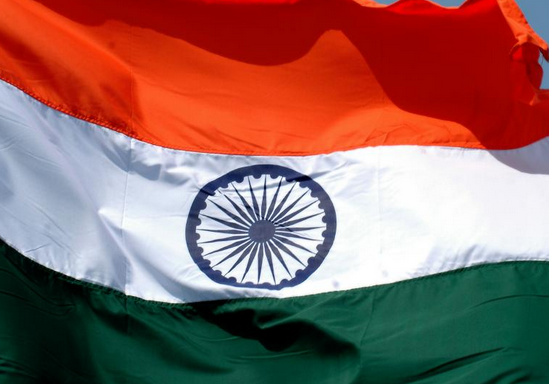
Indian authorities must immediately, independently and thoroughly investigate all incidents of excessive, particularly lethal, use of force in Kashmir over the past week, the ICJ said today.
Indian security forces have an obligation to comply with Government commitments to avoid using excessive force to quell protests, and must be held to account for any violations.
Violent clashes between protesters and security forces broke out in Kashmir after a popular Kashmiri militant leader, Burhan Wani, was killed, along with his two associates, by security forces on 8 July.
More than 35 people have been killed, including one security officer, and over 2000 injured. In some areas, protestors threw stones and attacked police stations. Security forces used tear gas, pellet guns and firearms.
“Security forces must respect the right to life at all times, and only use force when strictly necessary and in a manner proportionate to the legitimate performance of their duties,” said Sam Zarifi, ICJ Asia Director.
“The number of persons injured over the past week, as well as the nature of their injuries, indicates the urgent need for investigations. If security forces use any kind of weapon, they are governed by international standards that require force to be used as a last resort in self-defence or defence of others against an imminent threat of death or serious bodily injury, and in a manner to minimize injuries,” he added.
Indian security forces began using pellet guns routinely after 2010 following heavy criticism of their misuse of firearms against protesters.
But during the recent protests, the use of pellet guns, considered non-lethal weapons by security forces, has resulted in serious and potentially permanent health consequences for persons affected, including eye injuries and organ damage, which have required urgent treatment.
A recent report has suggested that at least a 100 people have sustained eye injuries. Pellet guns have also injured non-protestors, including children.
“Indian authorities should stop the use of pellet guns until they can assess whether these weapons can be used in a manner that is consistent with human rights standards on the use of force, including whether they are inherently inaccurate, indiscriminate and arbitrary; and ensure that the use of all non-lethal weapons is strictly regulated, because they have the capacity to cause serious and permanent injury,” Zarifi said.
Hospitals in Kashmir are struggling to cope with the high number of patients. There have also been reports that security forces have stopped ambulances carrying injured people, and disrupted the functioning of hospitals.
“All allegations of excessive use of force and other unlawful behaviour by the security forces must be investigated immediately. At the same time, protesters who resort to violence or injure other people must also be properly investigated and brought to justice by proper trials,” he added.
“Security forces absolutely must not interfere with access to health care. In addition to prompt, independent and effective investigations on this, the Government must proactively ensure that all injured persons are able to safely access necessary and quality health care,” he added.
Indian Prime Minister Narendra Modi has called on security forces in Kashmir to exercise “absolute restraint”.
The Chief Minister, Mehbooba Mufti, has committed to ensuring accountability in all cases where excessive force was used by security forces.
It is crucial that the Government follows through on this promise, and conducts thorough, independent and prompt investigations.
In the past, violations by security forces have largely enjoyed impunity in Kashmir for several reasons, including laws like the Armed Forces Special Powers Act that shield security forces from legal accountability for human rights violations.
For example, in 2010, clashes between protestors and security forces in Kashmir resulted in over 100 deaths. Very few, if any, of these have been credibly investigated to date.
Current events also cast doubt over whether the reforms introduced since have improved policing practices and made security forces more accountable.
The ICJ is therefore calling on Indian authorities to:
- Order that security forces desist from using excessive and unlawful force, comply with international human rights law, and only use force when strictly necessary and in a manner proportionate to the legitimate performance of their duty;
- Promptly, independently and effectively investigate all allegations of excessive and lethal uses of force by security forces, make the results of these investigations public, initiate prosecutions where appropriate, and ensure that all victims are provided with effective redress;
- Provide necessary and quality health care to injured persons, ensure they are able to access it, that hospitals are stocked and equipped to deal with the increased patient load, and that all allegations of security forces attacking ambulances and hospitals are immediately investigated.
Contact:
Sam Zarifi, ICJ Regional Director for Asia and the Pacific, t: +66807819002; e: sam.zarifi(a)icj.org
India-Kashmir statement-News-Press release-2016-ENG (full text in PDF)

Jul 18, 2016 | News
The Maldives must immediately commute the death sentence imposed on Hussain Humam Ahmed and reinstate the 60-year old moratorium on capital punishment with a view towards abolishing it in law, the ICJ said today.
The Maldives Supreme Court on 24 June 2016 upheld the death sentence of 22-year old Hussain Humam Ahmed, convicted in 2012 for the murder Afrasheem Ali, a Member of Parliament (MP).
The execution, which the Government has expressed its intention to carry out within thirty days of the ruling, would be the first in the country since 1953.
“The reintroduction of the death penalty after 60 years, even as an increasing majority of nations are moving towards its abolition, is a tremendous blow to the already weak human rights situation in the Maldives,” said Nikhil Narayan, the ICJ’s South Asia senior legal adviser.
“Maldivian authorities must immediately halt Humam’s and others’ imminent executions and reinstate the moratorium as a first step towards getting rid of it outright,” he added.
On 7 July 2016, just two weeks after upholding Humam’s death sentence, the Supreme Court upheld a second death sentence, this one against Ahmed Murrath, a 32-year old convicted for the 2012 murder of Ahmed Najeeb, a prominent lawyer.
Hussain Humam was first arrested in October 2012 for the stabbing death of Afrasheem Ali, an MP for the ruling Progressive Party of the Maldives (PPM).
The trial, conviction and Supreme Court decision come even as the prosecutor’s office has admitted that the investigation into the murder is still ongoing.
The Supreme Court ruling also ignored a last-minute request by the victim’s family to delay enforcement of the death sentence until the conclusion of the investigation.
Human rights groups and independent observers have highlighted a number of fair trial and due process irregularities in Humam’s investigation and trial.
Humam’s conviction was based solely on his “confession” at a May 2013 hearing, after initially pleading not guilty.
Humam later retracted the confession and claimed that the police had obtained it through coercion.
“Proceeding with Humam’s execution on the basis of a deeply flawed trial, particularly in a context in which the Maldivian Supreme Court and criminal justice system are already under considerable criticism for their lack of independence, impartiality and failure to adhere to international fair trial and due process standards, would amount to a further violation of his rights to life and human dignity,” said Narayan.
The ICJ opposes capital punishment in all cases without exception. The death penalty constitutes a violation of the right to life.
“The death penalty is the ultimate form of cruel and inhuman punishment, which cannot be reversed once carried out, and neither serves the interests of justice for victims nor as a deterrent against future crimes,” Narayan added.
Following the Supreme Court’s decision, on 30 June, the Maldivian Government amended regulations to enforce the death sentence by lethal injection.
The new regulations require the president to order Humam’s execution within three days of endorsement of the death sentence by a committee comprising of the chief prosecutor, the commissioner of prisons, and the chief justice.
The execution must then be carried out within seven days of the president’s order. The president may then only halt the execution on a direct plea from the victim’s family.
President Yameen’s administration has maintained its resolve to implement the death sentence within thirty days of the 24 June Supreme Court ruling.
The Maldives must immediately halt Humam’s and others’ imminent execution, reinstitute the moratorium on the use of the death penalty and take meaningful steps towards its eventual abolition in law and practice, the ICJ says.
Background:
The ICJ has previously detailed the human rights crisis in the Maldives, and the deep politicization of the Maldivian judiciary and criminal justice system, in its August 2015 fact-finding report.
The Maldives is party to most of the principal human rights treaties, including the International Covenant on Civil and Political Rights, which obliges the Maldives to respect the rights to life, human dignity, freedom from cruel, inhuman or degrading treatment or punishment, and to a fair trial.
In December 2014, the UN General Assembly adopted a resolution, for the fifth time since 2007, emphasizing that the use of the death penalty undermines human dignity and calling on those countries that maintain the death penalty to establish a moratorium on its use with a view to its abolition. A majority of 117 UN Member States voted in favor of a worldwide moratorium on executions as a step towards abolition of the death penalty.
Contact:
Nikhil Narayan, ICJ South Asia Senior Legal Adviser, t: +977-981-3187821, e: nikhil.narayan(a)icj.org.
Jul 12, 2016 | News
The Indian Supreme Court’s recent decision reiterating the importance of accountability for human rights violations by police and security forces, in particular where unnecessary or excessive force is alleged to have been used, is a welcome step and must be immediately implemented.
In the case of EEVFAM v Union of India, petitioners alleged that 1,528 killings by the police and security forces in the Indian state of Manipur had amounted to unlawful extrajudicial executions. Manipur is the site of a long-running armed insurgency.
In 2013, a court-appointed commission – the Santosh Hegde Commission – conducted an inquiry into six of the cases mentioned in the petition, and found all the six killings to be unlawful.
“This judgment is a strong signal from the Court that human rights violations by security forces will not be tolerated in the name of national security or anti-terror policies,” said Sam Zarifi, the International Commission of Jurists (ICJ) Asia Director.
“It’s crucial for the government now to follow through on this ruling to bring the families of the victims of these and other extra judicial executions mentioned in this petition closer to truth, justice and accountability”.
The killings mentioned in the petition all took place in areas considered “disturbed” under the Armed Forces Special Powers Act (AFSPA). Once an area is declared “disturbed” under the AFSPA, armed forces are given a range of “special powers”, which include the power to arrest without warrant, to enter and search any premises, and in certain circumstances, use force, to cause death.
Under the AFSPA, governmental permission, or sanction, is required before any member of the armed forces can be prosecuted for crimes in a civilian court, thus effectively shielding armed forces from accountability for human rights violations.
“These, and other allegations, of human rights violations under the AFSPA only reiterate the urgent need to repeal this draconian and undemocratic law,” Zarifi said. “The allegations in this case are evidence of the culture of impunity that the AFSPA has perpetuated”.
In the present judgment, the Supreme Court made some welcome observations:
- It emphasized the need for accountability for human rights violations by security forces, reiterating the principles laid down in previous landmark cases. It said “every death caused by the armed forces, including in the disturbed area of Manipur should be thoroughly enquired into if there is a complaint or allegation of abuse or misuse of power”.
- It dismissed the government’s argument that legal safeguards would not fully apply to anyone considered an “enemy” under Indian law. The Court held that at least all Indian citizens were equally entitled to the enjoyment of the fundamental rights in the Constitution, stating “If members of our armed forces are deployed and employed to kill citizens of our country on the mere allegation or suspicion that they are ‘enemy’, not only the rule of law but our democracy would be in grave danger”.
- It noted that it did not have sufficient information about each of the 1,528 cases mentioned in the petition. It has directed parties to present detailed information about the status of each case.
“This judgment references India’s obligations under international human rights law, which requires the government to respect and protect the right to life and ensure access to effective remedies,” Zarifi said. “Accountability for all human rights violations is a key aspect of these rights”.
The ICJ called for independent, impartial and thorough investigations into all the cases mentioned in the petition, in line with international standards.
It said that persons responsible should be brought to justice in fair trials in civilian courts, and the family of victims should be accorded an effective remedy and reparation for any violations.
The ICJ will continue to follow the case, which will continue in four weeks. Several key issues remain to be addressed, which the court will look at in subsequent hearings.
First, how should the specific cases be investigated? The petitioners have asked for the constitution of a Special Investigation Team, comprising police officers from outside the state of Manipur, to investigate the allegations, to ensure that the enquiry is fair, independent and thorough.
Second, in what forum should trials take place? The Indian Army Act allows for army personnel on active duty to be tried by a court martial (military court) instead of a civilian court for all offences, including gross human rights violations.
International standards call for military personnel accused of gross human rights violations to be put on trial before a civilian court. The Court has left this question open for the allegations in the present petition, stating: “The law is therefore very clear that if an offence is committed even by Army personnel, there is no concept of absolute immunity from trial by the criminal court”.
Third, the Court will also consider the efficacy of the National Human Rights Commission; in particular whether its guidelines are binding or only advisory. Under Indian law, the NHRC has limited jurisdiction where human rights violations by the armed forces are concerned.
Contact
Sam Zarifi, ICJ Asia Pacific Regional Director (Bangkok), t: +66 807819002; e:sam.zarifi(a)icj.org

Jun 30, 2016 | News
The Pakistani Government should not extend the oppressive and ineffective Protection of Pakistan Act (POPA), which is set to expire on 15 July 2016, said the International Commission of Jurists (ICJ) today.
POPA was enacted in July 2014 for a period of two years to combat “waging of war or insurrection against Pakistan” and to provide “speedy trial” for offences “threatening the security of Pakistan”.
Earlier this week, the Ministry of Interior confirmed that it planned to renew POPA for another two years.
“In these two years, not one suspect has been convicted under POPA, so we can conclude that the law doesn’t really protect people in Pakistan from terrorism and other violent acts, but instead it undermines their basic human rights protections,” said Sam Zarifi, ICJ’s Asia director.
“The Government’s plan to renew this hastily drafted law is a classic case of supposedly ‘temporary’ departures from normal legal processes and human rights protections on the basis of ‘exceptional” circumstances’ becoming a permanent part of the legal system.”
In a statement issued shortly after the Protection of Pakistan Act was enacted, the ICJ warned that POPA gives military and law enforcement authorities sweeping powers to detain individuals in contravention of Pakistan’s international human rights law obligations.
The law allows prolonged preventive administrative detention without adequate safeguards; retrospectively authorizes otherwise arbitrary or unlawful arrests or detentions; authorizes secret and unacknowledged detention; and gives law enforcement agencies broad powers to “shoot at sight”.
In addition, the law creates “special courts” to try scheduled offences under the Act. Procedures for the operation of these “special courts” allow for secret hearings and do not meet international standards for fair and public criminal proceedings before a competent, independent and impartial tribunal.
According to Government officials, the Ministry of Interior has cleared “hundreds of cases of peace disrupting elements” for trial before the “special courts” constituted under POPA.
The five “special courts” remained non-functional for many months because of lack of staff and other facilities. The courts are now functional, but have so far not concluded a single trial.
“POPA is not only an oppressive law, it has also proven to be completely ineffective,” added Zarifi. “Instead of renewing the law, the Government should focus on strengthening the existing criminal justice system, which is suffering because of years of neglect.”
Political groups, including the Muttahida Qaumi Movement (MQM) and the Pakistan People’s Party (PPP), have alleged that the unfettered powers given to civilian and military law enforcement agencies under POPA are being used to target their workers for political activity and association. They say the law has been used to arbitrarily detain dozens of their activists.
“Pakistan faces a genuine threat from militant groups engaging in acts of terrorism, and the Pakistani Government has an obligation to protect all people from such attacks,” said Zarifi. “International law gives governments reasonable flexibility to combat terrorism, without contravening human rights obligations, and claims of ‘threats to national security’ can never be used as a justification for the practice of extrajudicial killings, secret detention, and enforced disappearance.”
The ICJ urges the Pakistani authorities not to extend POPA.
It further calls on the authorities to review all national security legislation to ensure it is fully compatible with international human rights law and standards.
Contact:
Sam Zarifi, ICJ Asia Pacific Regional Director (Bangkok), t: +66 807819002; e: sam.zarifi(a)icj.org
Reema Omer, ICJ International Legal Adviser for Pakistan (London), t: +44 7889565691; e: reema.omer(a)icj.org
Jun 29, 2016 | Advocacy, Non-legal submissions
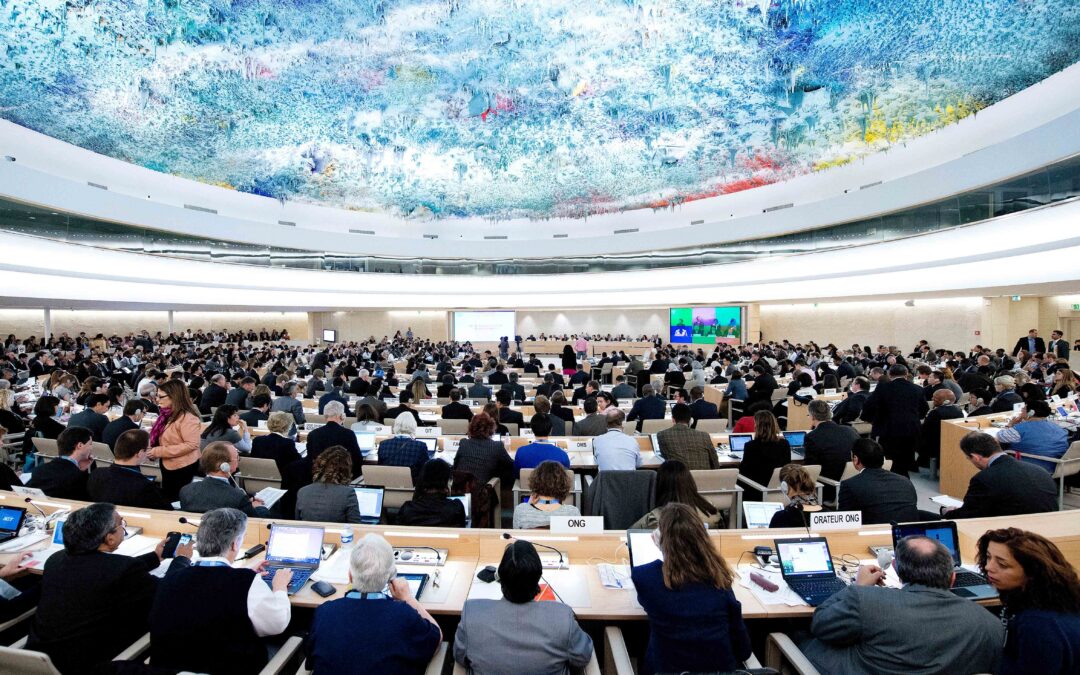
The ICJ, joined by FIDH, Franciscans International, and IMADR, today delivered a statement to the UN Human Rights Council.
The statement was on the situation of Rohingya Muslims in Myanmar, and on the need for active participation by international judges in the judicial mechanism to be adopted in Sri Lanka as part of the process of accountability and reconciliation.
The organizations stated, during general debate on an oral update on Sri Lanka from the High Commissioner for Human Rights, and the Commissioner’s report on the situation of Rohingya in Myanmar, that:
The Government of Myanmar has persecuted the Rohingya, refused to extend basic citizenship rights, and Parliament passed legislation entrenching discrimination such as the Race and Religion Protection laws. This has displaced thousands within Rakhine State and driven the Rohingya to sea and neighbouring countries. The ICJ, FIDH, Franciscans International and IMADR call on Myanmar:
- to repeal the 1982 Citizenship Law or amend it in accordance with the recommendations of the Special Rapporteur, to grant Rohingya full citizenship and accompanying rights;
- to develop a citizenship plan based on non-discrimination;
- to reject the Rakhine State Action Plan in its current form;
- to repeal laws that discriminate against ethnic and religious minorities;
- to diligently prosecute all acts of violence fuelled by discrimination, and hate speech that incites discrimination, hostility or violence; and
- to improve basic living conditions for the Rohingya and Arakanese in Rakhine State by enhancing protection of their economic, social, and cultural rights.
We welcome recent initiatives by the Government of Sri Lanka towards implementing Resolution 30/1, including the establishment of an Office of Missing Persons, and ratification of the Convention for the Protection of All Persons from Enforced Disappearance.
However, many of the commitments in the resolution remain unfulfilled. The other three transitional justice mechanisms envisioned by the resolution – an office of reparation, a truth-seeking commission, and a judicial mechanism – are yet to be established.
We call on Sri Lanka to implement, without delay, all elements of Resolution 30/1, including particularly the establishment of a credible judicial mechanism with full participation of international judges, prosecutors and lawyers. We agree that international participation is “a necessary guarantee for the independence and impartiality of the process in the eyes of the victims” (High Commissioner’s Oral Update, A/HRC/32/CRP.4, paragraph 32).
Rapid progress on this and other key elements of the resolution is essential to the credibility of the overall process of transition in Sri Lanka.
The statement can be downloaded in full, in PDF format, here: HRC32-OralStatement-SriLankaMyanmar-2016