Sep 14, 2015 | Advocacy, Non-legal submissions
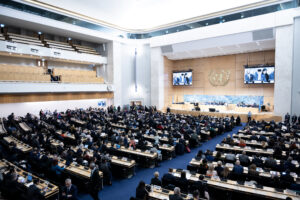
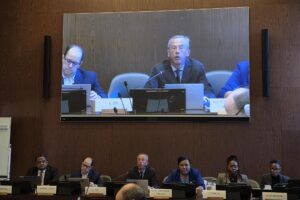
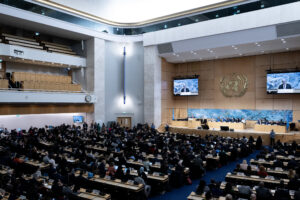
In advance of the UN Human Rights Council’s adoption of the outcome of its review of the Maldives’ human rights record as part of the Universal Periodic Review (UPR) process, the ICJ has submitted a written statement.
It highlights the Maldives’ failure to accept and implement a number of member states’ UPR recommendations.
In particular, the ICJ pointed out the urgent need for Maldives to accept and implement recommendations regarding the following issues, among others:
- Strengthening the independence and impartiality of the judiciary;
- Strengthening the independence and impartiality of the Judicial Service Commission;
- Strengthening the National Human Rights Commission, in accordance with the Paris Principles;
- Strengthening women’s representation in the judicial profession;
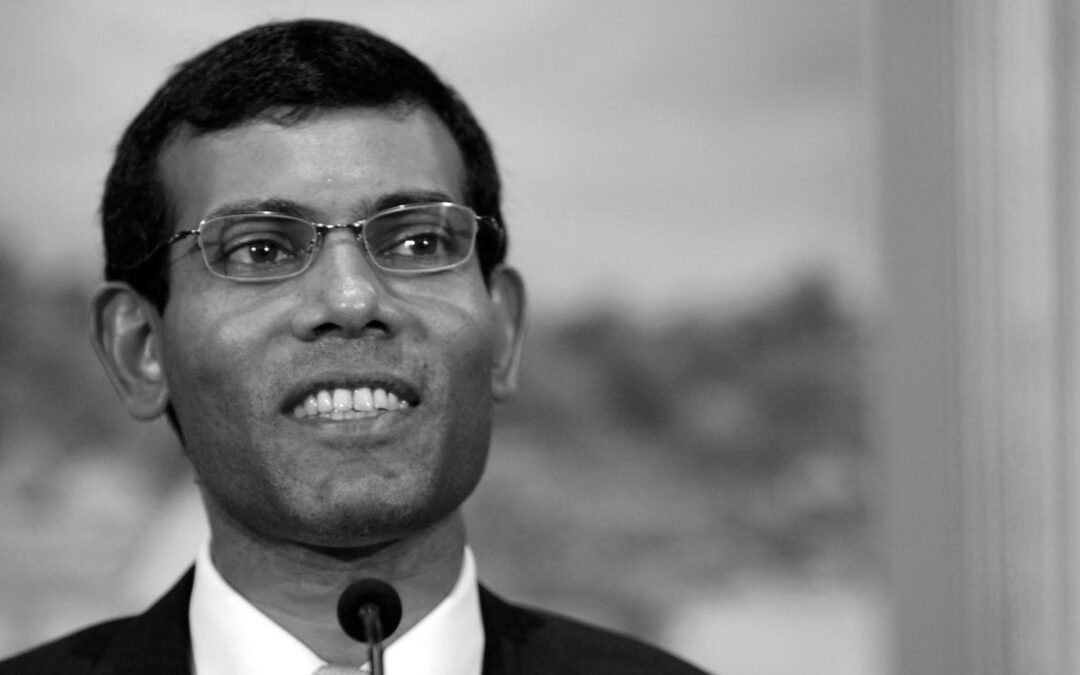
- Immediately releasing former president Mohamed Nasheed and other political prisoners, and ensuring the fairness of any further legal proceedings in such cases; and
- Safeguarding freedom of expression and media, association and peaceful assembly by investigating cases of human rights abuse and violations against journalists, civil society and human rights defenders, and taking effective measures to prevent further abuses
The Council will consider member states’ UPR recommendations for the Maldives during its 30th session on 24 September 2015, ahead of which the Maldives government will be expected to formally respond and indicate which of the recommendations it will commit to implement.

Sep 1, 2015 | News
Nepal’s Constituent Assembly must ensure that the new Constitution Bill contains strong and effective protections for all human rights in accordance with Nepal’s international legal obligations, said the ICJ today.
The Constituent Assembly endorsed a Constitutional Bill last week.
As per the CA Rules of Procedure, CA members have until 5 September to submit proposals for amendments.
“This draft includes some improvements from earlier versions, but it needs serious revisions to meet international standards regarding human rights protections,” said Nikhil Narayan, ICJ Senior Legal Adviser for South Asia.
“As an immediate matter, the Constituent Assembly must extend the 5 September deadline, and provide adequate time for public consultation and discussion of this essential legal text,” he added.
The ICJ released a detailed briefing paper in July 2015 analyzing provisions of the Draft Constitution on citizenship, fundamental rights and judicial independence, in light of Nepal’s international human rights obligations.
The ICJ also highlighted the non-inclusive and non-representative nature of the constitution-making process.
Many of those concerns still remain and must be addressed urgently, including:
- Non-citizens are excluded from key rights and protections. For example, Articles 18 (right to equality), 25 (right to property), 27 (right to information), 31 (right to education), 33 (right to employment), 35 (right to health), 36 (right to food), 37 (right to housing), and 43 (right to social security) are all restricted to citizens. These protections must be extended to all persons under Nepal’s jurisdiction, not only citizens, in accordance with Nepal’s international obligations;
- The right to gender equality under women’s rights (particularly in article 38) is not adequately protected. For example, the Constitution should include explicit guarantees for equal pay for work of equal value, and prohibit multiple, intersecting grounds of discrimination on basis of gender and sexual orientation, caste, religion, etc;
- Key economic, social and cultural rights – including in articles 33 and 34 (employment and labour), 35 (health), 37 (housing), and 43 (social security) – are not adequately protected;
- Restrictions and limitations on the rights to freedom of expression, association, assembly, movement, information and press freedom, are broad and vague and do not conform with international human rights standards (including articles 17 and 19 and 27);
- Provisions on remedy for human rights violations (articles 46 and 47) are inadequate;
- Provisions regarding the impeachment of judges (articles 101, 130 and 131) and composition of the Judicial Council (as in article 153, responsible for the appointment, disciplining and dismissal of judges) fail to safeguard judicial independence;
- Provisions on emergencies and consequent restriction of rights are overbroad (as in article 268(10)).
The ICJ noted some improvements in the current draft, such as:
- Making any person whose father or mother is a Nepali citizen eligible for citizenship through descent. Previous drafts required both parents to be Nepali citizens;
- Guaranteeing a broader range of women’s rights, including the right to reproductive health;
- Revising the understanding of victim’s rights to ensure that victims of crime are entitled to “justice including compensation and restitution”;
- Adding more rights to the list of those designated as non-derogable rights during emergencies – including the right to social justice (as contained in article 42 of the Constitution Bill, which amongst other things, guarantees the rights of marginalized groups to participate “in the state structure and public service on the basis of principle of proportional inclusion”), and the rights of dalits (as contained in article 40 of the Constitution Bill, which contains guarantees of equality and non-discrimination).
“While these amendments are welcome, more revisions are necessary,” said Narayan. “The CA must ensure that the constitution-making process is participatory and inclusive. It should provide enough time and opportunities to make necessary amendments and produce a Constitution that fully ensures human rights protections and judicial independence.”
Nepal’s major political parties have stated publicly that they hope to have the Constitution finalized and enacted in mid-September.
However, many political parities and communities have been protesting against the Constitution since the introduction of the new Bill.
On 9 August, three protestors were killed when police fired at protestors violating curfew in Birendranagar, Surkhet.
One protestor was killed and five others were injured when police opened fire during a strike on 18 August.
On 24 August, eight police officers were killed during protests in Kailali district, and over 40 members of the security forces were badly injured.
“The deadly violence that has accompanied escalating protests across Nepal against this Draft is a warning about the high stakes for the drafters of the Constitution,” said Narayan. “The new Constitution should be the platform for bringing the country together after years of conflict, not serve as a new cause for discontent and insecurity.”
The ICJ called on the government of Nepal to conduct prompt, impartial and thorough investigations into all protest-related deaths and injuries.
Where unlawful conduct is established, including by members of the security forces, those responsible must be brought to justice.
Contact:
Nikhil Narayan, Nepal Head of Office and ICJ Senior Legal Adviser, t: +977 9813187821, e: nikhil.narayan(a)icj.org
Aug 7, 2015 | News
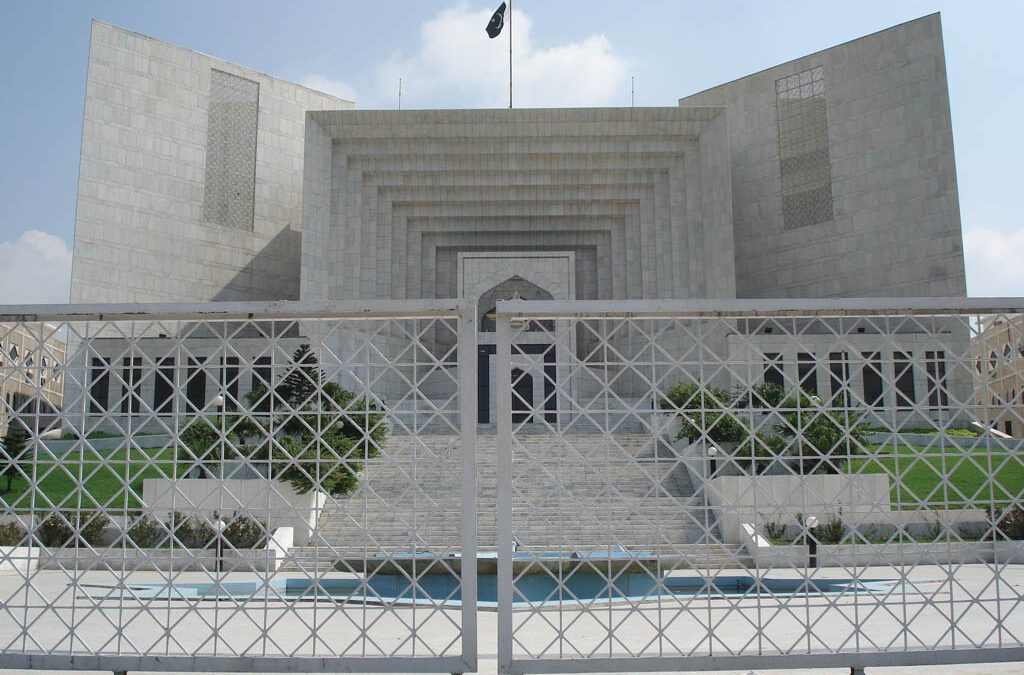
The SC’s decision to uphold the possibility of trial before military courts of individuals accused of committing terrorism related offences and belonging to “any terrorist group or organization using the name of religion or a sect” is a blow to human rights and the rule of law, said the ICJ.
In a split decision on the validity of the 21st amendment to the country’s Constitution, delivered on Wednesday, nine judges of the Supreme Court held that the trial of suspected terrorists, including civilians, by military courts was within the constitutional framework of the country and met principles of criminal justice.
The judges also ruled that individuals who claim to, or are known to belong to “any terrorist group or organization using the name of religion or a sect” constituted a valid classification allowing for differential treatment under the constitution.
Six dissenting judges expressed the view that the 21st constitutional amendment was incompatible with the right to a fair trial and independence of the judiciary. Two judges did not give an opinion on the merits, but suggested that the Supreme Court did not have the jurisdiction to review constitutional amendments.
The 902-page judgment also responds to challenges to the 18th amendment to the Constitution, including the procedure for judicial appointments.
“This judgment squarely puts Pakistan at odds with its international obligations and weakens the Supreme Court’s hard won reputation as the last resort for protecting the rights of Pakistani people,” said Sam Zarifi, ICJ’s Asia Director. “The Court has missed an important opportunity to reverse the militarization of justice in progress under the guise of combatting terrorism and to reinforce independence of the judiciary in the country.”
The trial of civilians in military courts for terrorism-related offences is incompatible with international standards, which require that those accused of any criminal offence are guaranteed a fair trial by an independent, impartial and competent tribunal.
ICJ’s briefing paper, published in April, provides a detailed assessment of the incompatibility of military trials in Pakistan with its international law obligations.
The Supreme Court, however, did not engage with international standards of fair trial and independence of the judiciary.
At least eight judges of the Supreme Court were of the opinion that it is for the Federal Government alone to ensure that their conduct “does not offend against the Public International Law or any International Commitment made by the State”.
“It is very disappointing that the Supreme Court has abdicated its primary role in acting with the other branches of the State to implement its obligations under international law,” added Zarifi. “International law is clear -all organs of the State, including the judiciary, must respect international human rights commitments, which include the right to a fair trial. Indeed, it is a core judicial responsibility to state what the law provides, whether the source of the law is international or domestic.”
The majority judgment also goes against previous Supreme Court rulings on military courts. In the past, the Court had reasoned that military courts do not meet the requirements of independence and impartiality; the establishment of military courts for trial of civilians amounts to creating a “parallel judicial system”; and that impeding the right to a fair trial cannot be justified on the basis of the public emergency or the “doctrine of necessity.
Military courts in Pakistan also have the power to award death sentences. On 2 April 2015, military courts convicted seven people of undisclosed offences in secret trials.
Of them, six were sentenced to death and one was sentenced to life in prison. The Supreme Court’s judgment has cleared the way for their execution.
Contact
Sam Zarifi, ICJ Asia Pacific Regional Director (Bangkok), t: +66 807819002; email: sam.zarifi(a)icj.org
Reema Omer, ICJ International Legal Advisor for South Asia (Lahore), t: +923214968434; email: reema.omer(a)icj.org
Read also:
ICJ denounces law permitting military trials of civilians
Trials of civilians before military tribunals a subversion of justice
HRCP, ICJ demand clarification on juveniles’ trial by military courts
Additional information
In a significant development, by a 13-4 majority the Supreme Court held it has jurisdiction to review constitutional amendments passed by Parliament on the touchstone of the “salient features” and the preamble of the Constitution. What those salient features are, however, was left unaddressed.
On 6 January 2015, less than a month after a terrorist attack on an army public school in Peshawar that killed nearly 150 people, most of them children, the Pakistani Parliament unanimously voted to amend the Constitution of Pakistan, 1973, and the Army Act, 1952, to allow military courts to try civilians for offences related to terrorism.
Military courts in Pakistan are not independent or impartial. Trials before military courts in Pakistan fall far short of national and international fair trial standards.
Pakistan has resumed executions since December 2014, in response to a spate of terrorist attacks in the country. At least 196 people on death row have already been executed. According to available data, only a small fraction – less than 10 pecent – of those executed were convicted of terrorist offences.
ICJ opposes capital punishment in all cases without exception. The death penalty constitutes a violation of the right to life and the right not to be subjected to cruel, inhuman or degrading punishment.
Aug 3, 2015 | News
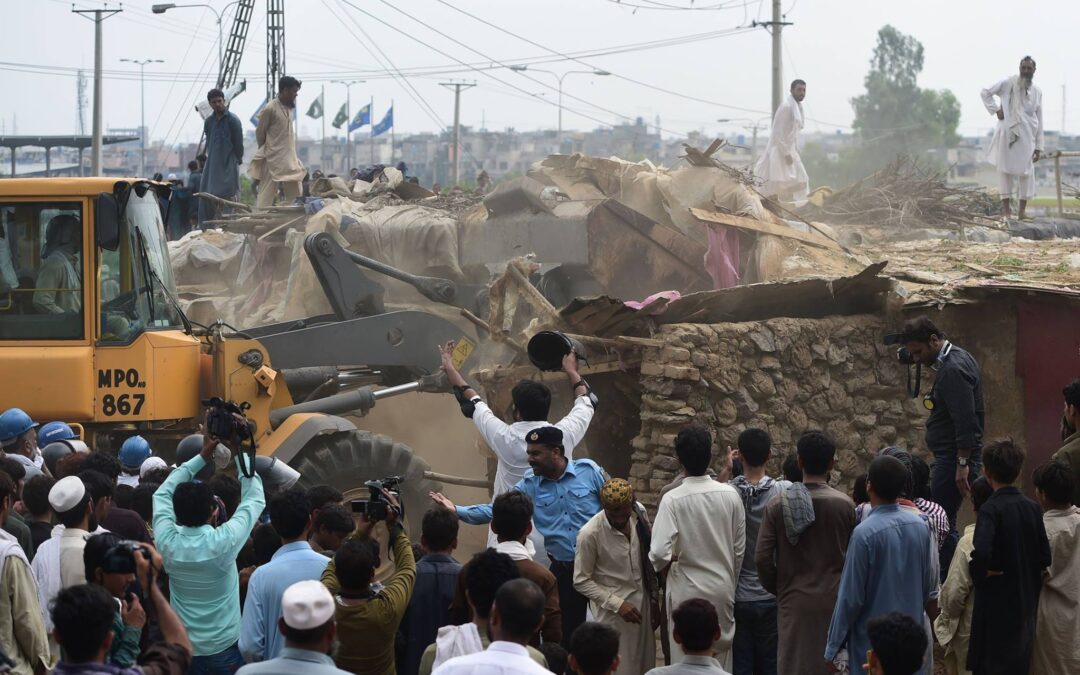
The ICJ is urging the Pakistani Government to immediately release, and drop all charges against, dozens of people arrested on 26 and 30 July in the context of a peaceful protest against forced evictions in Islamabad.
“This is yet another illustration of the Government using Pakistan’s counter-terrorism laws against peaceful protesters to clamp down on dissent,” said Sam Zarifi, ICJ’s Director for Asia and the Pacific.
“Peaceful protest is not an act of terrorism but a fundamental human right recognized by the Constitution as well as international human rights treaties that Pakistan is a party to,” he added.
The protest, forcibly dispersed by the police, was organized against the demolition of houses and the forceful eviction of over 8000 people residing in a slum in the city.
The Government alleges the slum is illegal and all residents are encroachers; the inhabitants claim that under Pakistani law, all informal settlements must either be formalized or the inhabitants must be provided alternate housing.
At least 66 individuals arrested were booked under Section 7 of the Anti-Terrorism Act, 1997 (ATA) for “obstructing the authorities”, “demonstrating force with a view to terrorizing citizens” and “creating mischief”.
Following a court order, they have been placed in police remand (custody of the police) for interrogation, where they may be at imminent risk of torture and other ill-treatment.
An anti-terrorism court released four of the detainees today. The rest, however, remain in police custody, and according to reports received by ICJ, many of them are being denied access to families and friends.
“The risk of abuse is inherent in the Anti-Terrorism Act, which defines terrorism in vague and overbroad terms. The Government must urgently amend the ATA to ensure it meets the internationally recognized tests of necessity, legality and proportionality,” Zarifi said.
Pakistan has a long history of using the ATA against political activists and human rights defenders.
In 2014, a dozen political activists, including Baba Jan, a prominent human rights defender from Hunza, were sentenced to life imprisonment by an anti-terrorism court for protesting against the government’s failure to assist victims of a landslide.
Before that, six power loom workers from Faisalabad were arrested in the context of a protest demanding minimum wage. In 2011, they were sentenced to 81 years in prison each under the ATA.
The International Covenant on Economic, Social and Cultural Rights, which Pakistan ratified in 2008, obligates States to recognize the right to an adequate standard of living, which includes housing.
The Human Rights Commission of Pakistan too has reminded the Government of its duty to provide shelter to the people of Pakistan and make arrangements to provide alternate housing to inhabitants of informal settlements.
“Forcibly evicting people from their homes without providing them any alternate housing can in itself be a human rights violation. Arresting peaceful protesters and denying their right to a fair trial even further adds to the culpability of the authorities,” Zarifi added.
Contact:
Sam Zarifi, ICJ Asia Pacific Regional Director (Bangkok), t: +66 807819002; email: sam.zarifi(a)icj.org
Reema Omer, ICJ International Legal Advisor, South Asia (London), t: +447889565691; email: reema.omer(a)icj.org
Additional Information:
Under Article 11(1) of the International Covenant on Economic, Social and Cultural Rights (ICESCR), which Pakistan ratified in 2008, States Parties recognize the right of everyone to an adequate standard of living, including adequate food, clothing and housing, and to the continuous improvement of living conditions.
States Parties are to take appropriate steps to ensure the realization of this right, recognizing to this effect the essential importance of international co-operation based on free consent.
The right to peaceful assembly is guaranteed under international human rights law, including Article 21 of the International Covenant on Civil and Political Rights (ICCPR), which Pakistan ratified in 2010 and is legally obligated to implement.
The UN Declaration on Human Rights Defenders also reiterates that everyone has the right to participate in peaceful activities against violations of human rights and fundamental freedoms, and obligates the State to take necessary measures to ensure the protection by the competent authorities of peaceful protestors against “any violence, threats, retaliation, de facto or de jure adverse discrimination, pressure or any other arbitrary action as a consequence of his or her legitimate exercise of the rights”.
Photo by Geo News

Jul 30, 2015 | News
The ICJ strongly condemned the execution of Yakub Memon, who was hanged in Nagpur Central Jail, India this morning.
“Yakub Memon’s execution is a distressing and regressive move, keeping India in the minority of countries which continue to carry out executions,” said Sam Zarifi, ICJ Asia Pacific Regional Director. “While Yakub Memon was convicted of terrible crimes, executing him was not the solution. India should immediately put in place a moratorium on the death penalty.”
A court set up under the Terrorist and Disruptive Activities (Prevention) Act (TADA) convicted and sentenced Yakub Memon to death for a range of offences, including conspiracy to commit terrorist acts, in connection with the deadly terrorist attacks in Mumbai in 1993.
These attacks killed more than 250 people and injured more than 700. The main accused in this case, including Yakub Memon’s brother Tiger Memon, have still not been apprehended or tried.
“In executing Yakub Memon, the Indian government has only fulfilled a desire for retribution and added to the disturbing trend of executions in the name of fighting terrorism in South Asia”, Zarifi added. “The death penalty has not been shown to have any deterrent effect on crime or terrorism anywhere in the world.”
The Indian Supreme Court had confirmed Yakub Memon’s conviction and sentence on appeal from the court set up under the TADA in March 2013.
The Indian government repealed the TADA in 1995, after sustained national and international criticism for its incompatibility with human rights law, particularly the right to fair trial.
Yakub Memon was tried under provisions of the TADA as it was the law in force in 1993, when the terrorist attacks in Mumbai occurred.
The Indian president rejected a first mercy petition on his case in April 2014.
He subsequently filed a review petition challenging his sentence before the Indian Supreme Court, which was rejected on 9 April 2015.
On 21 July 2015, the Indian Supreme Court dismissed his curative petition for the commutation of his death sentence.
A court had authorized his execution before his curative petition was dismissed.
Yakub Memon then approached the Indian Supreme Court challenging, both, the manner in which his curative petition was heard and dismissed, and the validity of the order authorizing his execution. However, the Supreme Court dismissed both these arguments yesterday.
Over the past week, Yakub Memon filed fresh mercy petitions to commute his death sentence before the Governor of the State of Maharashtra and the President of India. Both were rejected yesterday.
Yakub Memon’s lawyers challenged the rejection of the mercy petition, and asked the Indian Supreme Court to stay the execution as per the guidelines issued in the 2014 case of Shatrughan Chauhan v Union of India, for “safeguarding the interests of the death row convicts”.
These included ensuring a minimum period of 14 days “between the receipt of communication of the rejection of the mercy petition and the scheduled date of execution”.
But the Court – in a hearing early this morning – rejected this final plea.
Background:
This is India’s third execution in the past five years. India resumed executions in 2012, after a gap of eight years. Since November 2012, two other people have been executed, Ajmal Kasab and Afzal Guru.
They also were both charged and convicted for their role in terrorist attacks.
The ICJ expresses its solidarity with the victims of the 1993 attack, and their families.
India is a party to the International Covenant on Civil and Political Rights, which guarantees the right to a fair trial as well as the right to life and freedom from cruel, inhuman, or degrading treatment or punishment.
The UN Human Rights Committee, the supervisory authority for the ICCPR, has emphasized: “In cases of trials leading to the imposition of the death penalty scrupulous respect of the guarantees of fair trial is particularly important. The imposition of a sentence of death upon conclusion of a trial, in which the provisions of article 14 of the Covenant have not been respected, constitutes a violation of the right to life.”
In December 2014, the UN General Assembly adopted a resolution, for the fifth time since 2007, emphasizing that the use of the death penalty undermines human dignity and calling on those countries that maintain the death penalty to establish a moratorium on its use with a view towards its abolition. Some 117 UN Member States, a wide majority, voted in favor of a worldwide moratorium on executions as a step towards abolition of the death penalty.
The ICJ opposes capital punishment in all cases without exception. In line with the present international trend, the ICJ calls on India to impose an official moratorium on the death penalty, with a view to abolishing the death penalty.
Contact:
Sam Zarifi, ICJ Asia Pacific Regional Director (Bangkok), t: +66 807819002; email: sam.zarifi(a)icj.org