
Pakistan: ICJ denounces law permitting military trials of civilians
The Pakistan Parliament’s legislation allowing civilians to be tried by military tribunals is a serious blow to human rights and rule of law in the country, the ICJ said today.

The Pakistan Parliament’s legislation allowing civilians to be tried by military tribunals is a serious blow to human rights and rule of law in the country, the ICJ said today.

Pakistan should immediately halt carrying out the death penalty, said the ICJ today after two people were executed in the wake of the horrific attack on a school in Peshawar that killed 149 people, nearly all of them children

The Nepal government should ensure more victim participation and improve transparency when selecting candidates for two independent commissions on the country’s decade-long conflict, the ICJ and other groups said today.
The ICJ, Amnesty International, Human Rights Watch and five local human rights and conflict-era victims groups sent an open letter to Prime Minister Sushil Koirala.
The groups, reiterating concerns about the act, said Koirala should narrow the scope of the amnesty powers vested in the commissions and bring them in line with international standards.
The Truth and Reconciliation Commission and the Commission on Enforced Disappearances are being established under a 2014 law, the Commission on Investigation of Disappeared Persons, Truth and Reconciliation Act, 2071 (TRC Act).
“A consultative and transparent process for selecting commissioners is critical if the commissions are going to win the trust of conflict-era survivors as well as local and international observers,” the rights groups said in their letter. “The TRC Act is fundamentally flawed, and the government should take these steps to ensure that this important exercise in transitional justice remedies the flaws.”
Contact:
Sam Zarifi, ICJ Asia Pacific Regional Director (Bangkok), t: +66 807819002; email: sam.zarifi(a)icj.org
Nepal-TRCCommission-Advocay-Open Letter-2014-ENG (full text in PDF)
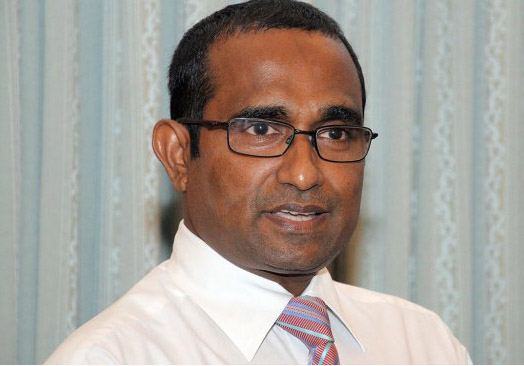
The arbitrary and unlawful removal of the Chief Justice Ahmed Faiz Hussain (photo) and Supreme Court judge Justice Muthasim Adnan, constitutes an assault on the independence of the judiciary, the ICJ said today.

On the eve of the 64th annual world Human Rights Day, the ICJ urges the Pakistani Government to promptly constitute a strong and effective National Human Rights Commission that is compliant with the UN Principles relating to the Status of National Institutions (Paris Principles).
“Independent and credible national human rights institutions can be helpful for protecting and promoting human rights,” said Sam Zarifi, ICJ’s Director for Asia and the Pacific. “The Pakistan Government has been inexplicably dragging its feet despite repeated promises to constitute the Commission.”
In South Asia, India, Sri Lanka, Nepal and Bangladesh have established National Human Rights Institutions (NHRIs), making Pakistan a regional exception.
“A properly constituted national human rights commission will not by itself fix any country’s human rights problems, but it can be part of the solution,” said Zarifi. “Pakistan can and should learn from the lessons of failed NHRIs in the region and constitute an institution that can address the real needs of all people in the country.”
Pakistan passed the National Commission for Human Rights Act in 2012. The law provides for an independent commission with broad powers to promote human rights and to investigate human rights violations.
However, the law significantly limits the Commission’s mandate where the armed forces are accused of committing human rights violations.
In such cases, the Commission is only authorized to seek a report from the Government, and make recommendations if it sees fit.
The law further emphasizes that the functions of the Commission “do not include inquiring into the act or practices of the intelligence agencies”.
“The proposed Commission’s restricted mandate over the armed forces, and especially the intelligence agencies, is of grave concern given that Pakistan’s military and intelligence services are accused of perpetrating gross human rights violations, including enforced disappearances, extrajudicial killings, and torture and ill-treatment,” Zarifi added.
“A human rights commission that does not have jurisdiction over abuses by these actors risks being toothless and ineffective—and worst, a cover for continuing government inaction in response to these violations.”
Contact:
Sam Zarifi, ICJ Asia Pacific Regional Director (Bangkok), t: +66 807819002; e: sam.zarifi(a)icj.org
Reema Omer, ICJ International Legal Adviser (London), t: +44 7889565691; e: reema.omer(a)icj.org
Background:
Section 3 (a) (ii) of the Paris Principles, which provide the minimum standards required by national human rights institutions to be considered credible and effective, states that a NHRI should have the power to hear a matter without higher referral over “any situation of violation of human rights which it decides to take up”.
Because of the proposed Commission’s limited mandate over the military, it is questionable whether the proposed National Human Rights Commission is compliant with the Paris Principles.
During its 2012 Universal Periodic Review, Pakistan accepted multiple recommendations to speedily operationalize the National Commission for Human Rights.
Over two years since the Review, there has been little progress in constituting the Commission, let alone amending the law establishing the Commission to ensure that it complies with the Paris Principles.
 El Salvador: Crimes against humanity within the framework of public security policy
 HRC61: Joint oral statement of The ICJ in the interactive dialogue with the Special Rapporteur on Counter-terrorism and Human Rights
 A Human Rights-Based Approach to Decriminalizing Conduct Associated with Poverty and Status
 HRC61: Oral statement of The ICJ in the interactive dialogue with the Special Rapporteur on the Rights of Persons with Disabilities