Feb 3, 2015 | News
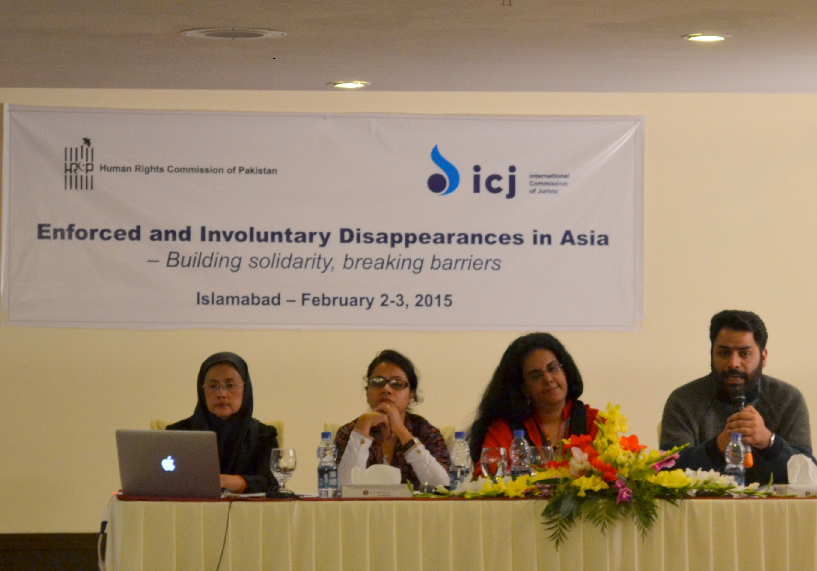
In partnership with the Human Rights Commission of Pakistan (HRCP), the ICJ convened a two-day conference in Islamabad on 2-3 February 2015.
The conference brought together civil society activists, lawyers and journalists from across Asia, including Thailand, the Philippines, Sri Lanka, India, Nepal and Pakistan with experience of working on enforced disappearances in the their national contexts as well as regional and international forums.
The participants expressed alarm at the continuing practice of enforced disappearances in the region and regretted that a culture of moral, political and legal impunity prevented perpetrators to be brought to justice.
They also urged their respective states to promptly ratify the International Convention for the Protection of all Persons from Enforced Disappearance, criminalize enforced disappearances, and meet their obligations under international law to provide remedy and reparations for human rights violations.
At the end of the two-day event, the participants of the conference adopted a resolution (download below) resolving to work together to address the common challenges and hurdles they encounter in their work on enforced disappearances.
Asia-Enforced disappearances Resolution final-Advocacy-2015-ENG (full text in PDF)
Asia-Enforced disappearances Resolution final-Advocacy-2015-URD (full text in PDF)

Jan 6, 2015 | News
The Pakistan Parliament’s legislation allowing civilians to be tried by military tribunals is a serious blow to human rights and rule of law in the country, the ICJ said today.

Dec 20, 2014 | News
Pakistan should immediately halt carrying out the death penalty, said the ICJ today after two people were executed in the wake of the horrific attack on a school in Peshawar that killed 149 people, nearly all of them children

Dec 19, 2014 | News
The Nepal government should ensure more victim participation and improve transparency when selecting candidates for two independent commissions on the country’s decade-long conflict, the ICJ and other groups said today.
The ICJ, Amnesty International, Human Rights Watch and five local human rights and conflict-era victims groups sent an open letter to Prime Minister Sushil Koirala.
The groups, reiterating concerns about the act, said Koirala should narrow the scope of the amnesty powers vested in the commissions and bring them in line with international standards.
The Truth and Reconciliation Commission and the Commission on Enforced Disappearances are being established under a 2014 law, the Commission on Investigation of Disappeared Persons, Truth and Reconciliation Act, 2071 (TRC Act).
“A consultative and transparent process for selecting commissioners is critical if the commissions are going to win the trust of conflict-era survivors as well as local and international observers,” the rights groups said in their letter. “The TRC Act is fundamentally flawed, and the government should take these steps to ensure that this important exercise in transitional justice remedies the flaws.”
Contact:
Sam Zarifi, ICJ Asia Pacific Regional Director (Bangkok), t: +66 807819002; email: sam.zarifi(a)icj.org
Nepal-TRCCommission-Advocay-Open Letter-2014-ENG (full text in PDF)
Dec 18, 2014 | News
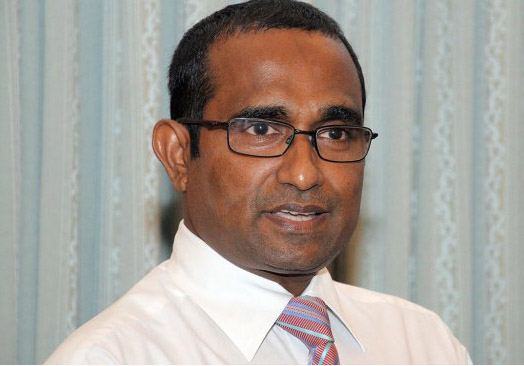
The arbitrary and unlawful removal of the Chief Justice Ahmed Faiz Hussain (photo) and Supreme Court judge Justice Muthasim Adnan, constitutes an assault on the independence of the judiciary, the ICJ said today.