Jul 18, 2017 | Advocacy, Analysis briefs, News
The ICJ today called on the Tunisian authorities to adopt and apply procedures for the Specialized Criminal Chambers (SCC) that are clear and comply with international human rights law and standards.
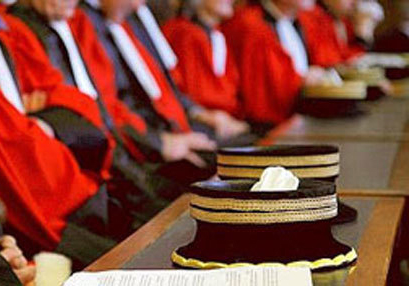
The statement came following a high-level mission to Tunisia from 12 to 15 July 2017 in which the ICJ engaged with senior judicial officials, including the President of the Cassation Court, members of the High Judicial Council, SCC judges, and other stakeholders.
An ICJ analysis, Procedures of the Specialized Criminal Chambers in light of international standards, was published at the end of the mission.
“While the Specialized Criminal Chambers have the potential to contribute to addressing impunity and deliver justice for victims in Tunisia, ambiguity about the procedures to be followed by these Chambers risks undermining their effectiveness,” warned Said Benarbia, Director of the ICJ Middle East and North Africa Programme.
As detailed in the ICJ analysis, the lack of clarity comes in part from the 2013 transitional justice Law, which is seen by many stakeholders as setting up a special regime, separate from the existing criminal justice system.
There is fear that the SCC may decide not to apply the existing ordinary criminal procedures, while at the same time no detailed procedures specific to the SCC have yet been adopted.
The creation of such a gap would risk serious breaches of international standards of fairness and justice.
For example, the 2013 Law seems to give the Truth and Dignity Commission (Instance Vérité et Dignité, IVD) exclusive power to refer cases to the SCC.
However, no procedures specific to the SCC implement the rights of an accused to examine witnesses interviewed by the IVD or to access all documents and evidence collected by the IVD in order to prepare his or her defence, as required by international standards and the ordinary code of criminal procedure.
The 2013 Law also fails to clarify the role of prosecutors and investigating judges in addressing such cases, including by making their own determination in relation to charges, standard of proof, and whether these cases should be brought before the SCC.
“Clarifying the procedures to be applied by the Specialized Criminal Chambers and ensuring their full compliance with international standards, including those relating to fair trial, are a prerequisite to fully establish the truth about human rights violations, hold those responsible to account, and ensure that the proceedings are fair to the victims and accused,” added Benarbia.
The ICJ set out a list of recommendations with a view to assisting the Tunisian authorities in their efforts in achieving these objectives, including by:
- Amending article 42 of the 2013 Law and related provisions to clearly provide victims of gross human rights violations with direct access to the SCC, including when victims did not submit a file to the IVD;
- Amending provisions of the IVD Guides to ensure that the review process and the possibility to challenge IVD’s decisions will apply to decisions not to transfer a case to the SCC and that such review be based on objective criteria for considering gross human rights violations in line with international standards;
- Establishing specialized prosecution services, investigating judges, and judicial police in line with international standards and with adequate resources to work in coordination with the SCC;
- Clarifying the relationship between the SCC and other ordinary criminal chambers and civil and other courts;
- Amending the legal framework to clearly provide that cases investigated by the IVD are to be transferred to specialized prosecutors who are to carry out their functions as defined in the CCP and in line with international standards;
- Ensuring that the IVD’s investigative function complements the role of the specialized judicial institutions in charge of the investigation and prosecution; and
- Amending the CCP and ensuring that any related provision of any other procedures adopted for the SCC fully respect fair trial guarantees.
Contact
Theo Boutruche, Legal Adviser of the ICJ Middle East and North Africa Programme, tel: +33 642837354, e-mail: theo.boutruche(a)icj.org
Tunisia-Memo on SCC Procedures-Advocacy-Analysis Brief-2017-ENG (full memo in English, PDF)
Tunisia-SCC procedures memo-News-2017-ARA (full story in Arabic, PDF)
Tunisia-Memo on SCC Procedures-Advocacy-Analysis Brief-2017-ARA (full memo in Arabic, PDF)
Mar 30, 2017 | News
The ICJ today called on the Tunisian President, Beji Caid Essebsi, to refrain from signing into law amendments to the law that regulates the country’s High Judicial Council (HJC). The amendments were adopted on Tuesday 28 March 2017 by the People’s Representatives Assembly.
The ICJ also urged the Head of the Cabinet, Youssef Chahed, to act, as a matter of highest priority, on the nominations by the Instance Provisoire de la Justice Judiciaire (IPJJ) with a view to filling the positions of the First President of the Cassation Court and its General Prosecutor.
The ICJ expressed concern that the amendments revising the country’s 2016 HJC law would weaken the effective functioning of the judiciary and the administration of justice in several respects
- The amendments would strip the IPJJ President of the authority to convene the HJC’s first meeting and instead provide the President of the Parliament with such power. This would constitute an inappropriate interference of the legislative branch into the management of the judiciary in clear violation of the principle of separation of powers and judicial independence.
- The amendments would explicitly exclude any possibility of challenge or judicial review of such action of the President of the Parliament. The ICJ considers that the judiciary must be able to review such decisions to ensure that they are not exercised arbitrarily or outside the law.
- The amendments would also reduce the quorum required for the validity of HJC meetings from one-half to one-third of its members. This could lead to situations where non-judicial members of the HJC have the power to take decisions over the judiciary, in contravention of international standards.
“Instead of using legislative tactics and procedures to weaken the independence and the effective functioning of the HJC, the Tunisian Head of Cabinet should act on the IPJJ’s nominations to fill the positions of the President and the Prosecutor General of the Cassation Court as a matter of urgency, and ensure that until the HJC is properly established, the IPJJ continues to fully exercise its competencies in overseeing and managing the judiciary,” said Said Benarbia, Director of the ICJ Middle-East and North Africa (MENA) Programme.
Indeed, irrespective of the amendments, the ICJ recalls that article 148(8) of the Constitution clearly states that the IPJJ is to carry out its mandate until the seats on the HJC have been filled. This is further affirmed under article 74 of the 2016 HJC Law and article 19 of the 2013 IPJJ Law. Both of these laws make the end of the exercise of the IPJJ’s functions dependent on two conditions, namely that the HJC be fully composed and established.
The ICJ considers that the delay in acting on the IPJJ nominations of senior judges risks undermining the effective functioning of the judiciary, as well as adversely affecting the functioning of other institutions that are essential to upholding the rule of law and protecting human rights in Tunisia. The adopted amendments are no answer to this problem.
“The ongoing crisis is political and not judicial,” Benarbia said.
“Solving it does not require the introduction of legislative amendments that erode the rule of law and judicial independence, but rather the compliance with existing laws and the Constitution,” he added.
Contact
Theo Boutruche, Legal Adviser of the ICJ Middle-East and North Africa Programme, t: +33 6 42837354, e: theo.boutruche(a)icj.org
Background
The amendments were introduced and adopted amid a continuing crisis and functional paralysis of the judiciary that also impact on the effective functioning of other State institutions, including the body in charge of reviewing the conformity of laws with the Constitution.
In particular, two key positions have been left vacant as neither the First President of the Cassation Court, nor its General Prosecutor, have been appointed, and both of these positions also serve as ex officio members of the HJC.
In October 2016, elections were organized to choose the members of the HJC. A swearing-in ceremony before the President of the Republic followed in 14 December 2016, in which not all the HJC Members participated.
In November 2016, the IPJJ proposed candidates including to fill these two positions. Under the Tunisian Law, the Head of the Cabinet must confirm these nominations.
Alternatively, this official may request new nominations from the IPJJ until agreement is reached, as provided for in article 12 and 14 of the IPJJ Law No.13 of 2013. So far, the Head of the Cabinet has failed to act on the IPJJ’s nominations and uncertainty prevails as to whether the HJC has been properly established.
Under the Tunisian Constitution and laws, the President of the Cassation Court is also the President of the Instance Provisoire de Contrôle de la Constitutionnalité des Projets de Loi, the body in charge of assessing the conformity of laws with the Constitution during the transition period.
When established, the HJC will be charged with appointing four members of the Constitutional Court.
Tunisia-Statement new HJC Law-News-Web stories-2017-ARA (full story in Arabic, PDF)
May 6, 2016
C. Principal subjects of concern and recommendations Forensic examinations as proof of sexual acts 41. The Committee notes with concern that consensual relations between persons of the same sex are criminalized in the State party and that persons suspected of being...

Mar 10, 2016 | Advocacy, Non-legal submissions
The ICJ today delivered an oral statement on counter-terrorism legislation in these countries, in an interactive dialogue at the UN Human Rights Council with the the Special Rapporteur on the promotion and protection of human rights and fundamental freedoms while countering terrorism.
The text of the statement follows:
COUNTER-TERRORISM LEGISLATION IN EGYPT, TUNISIA AND PAKISTAN
10 March 2016
Mr President,
The International Commission of Jurists (ICJ) welcomes the attention given by Special Rapporteur Ben Emmerson, to defective counter-terrorism legislation that facilitates violations of human rights, as reflected for example by communications on Egypt, Tunisia and Pakistan in the Communications Report of Special Procedures (A/HRC/31/79).
Numerous counter terrorism laws promulgated or applied in these and other countries include overly broad or imprecise definitions of terrorism-related offences. These extend the laws’ reach beyond acts of a truly terrorist character. Such laws can be and are abused or misapplied to criminalize the legitimate and peaceful exercise of fundamental rights and freedoms.
Further, these laws provide sweeping immunities that contribute to pervasive impunity for unlawful killings by security forces.
These laws also facilitate violations of the right to liberty and fair trial rights and insufficiently safeguard against abuses in detention. In Tunisia a person can be held in police custody without being brought before a judge for up to 15 days. In Pakistan, suspects can be held in preventive detention without charge, and without being brought before a judge, for up to 90 days.
Egypt and Pakistan continue to use military courts to conduct unfair trials of civilians in terrorism cases, contrary to international standards. At least eight civilians sentenced to death in secretive trials by military courts in Pakistan have been hanged since January 2015. “Expedited” procedures in terrorism circuit courts in the Egyptian civilian system also give rise to fair trial concerns.
The ICJ invites the Special Rapporteur to comment on measures or mechanisms that states, inter-governmental organisations, and civil society can take to help ensure that states such as Tunisia, Egypt and Pakistan repeal or amend counter-terrorism legislation to bring it into line with their international human rights obligations and commitments.
Jan 14, 2016 | News
As today marks the fifth anniversary of the toppling of Ben Ali’s regime, the ICJ calls on Tunisian authorities to adopt key legal and policy reforms to combat impunity and to deliver justice to victims of past human rights violations.
Under Ben Ali’s regime, thousands of human rights violations, including torture and other ill-treatment, unlawful killings, enforced disappearances, and arbitrary arrests and detentions, were committed by law enforcement and other security officers.
Numerous similar violations were also committed during the December 2010 to January 2011 uprising and some of them continue today.
“The political and institutional reforms introduced in Tunisia over the past 5 years should not be the sole yardstick to measure the success of the transition,” said Said Benarbia, Director of the ICJ Middle East and North Africa Programme.
“Victims of human rights violations, in particular under Ben Ali’s rule, and during the uprising still await justice,” he added.
Despite several cases being brought before Tunisian courts, in particular military courts, these proceedings have yet to establish the truth about violations, ensure that all those who are responsible are held to account, and fulfill the rights of victims to effective remedies and reparation.
“Until their rights to effective remedies and reparation are realized, including by holding the perpetrators to account, the transition will remain incomplete,” Benarbia said.
Indeed, despite numerous legal and policy reforms, including the adoption of the “Transitional Justice Law”, and the establishment of the Truth and Dignity Commission (Instance Vérité et Dignité), the ICJ is concerned that justice for victims remains mostly elusive.
Obstacles that impede victims’ access to justice and effective remedies include current weaknesses in the Tunisian criminal procedures, such as the broad discretion of the public prosecutor to dismiss cases without providing specific reasons (and the lack of ability of victims effectively to challenge such decisions), the lack of effective measures for the protection of victims and witness, inadequate laws on the definition of crimes and superior responsibility, and the use of military courts to address human rights violations.
“Key reforms both in law and practice are needed for Tunisia to properly address past abuses in Tunisia, end pervasive impunity and provide victims with justice,” Benarbia said.
Contact:
Theo Boutruche, Legal Adviser of the ICJ Middle East and North Africa Programme, tel: +96 170 888 961, e-mail: theo.boutruche(a)icj.org
Tunisia-Anniversary-News Press Release-2016-ARA (Arabic version, in PDF)