Mar 18, 2016 | Advocacy, Non-legal submissions
The ICJ today joined an oral statement on the role of judges, lawyers, and prosecutors, as well as the threats they face, and the Universal Periodic Review of the UN Human Rights Council.
The statement, delivered by the Director of the International Bar Association’s Human Rights Institute, Dr Phillip Tahmindjis, read as follows:
“The International Bar Association’s Human Rights Institute (IBAHRI) released this week its report on the ‘Role of the UPR in advancing human rights in the administration of justice’. The report assesses more than 38,000 recommendations made between 2008 and 2014 for references to the legal profession.
The report’s key findings include:
UPR recommendations still insufficiently address the role of judges, lawyers and prosecutors, or the threats they face, as extensively documented by the Special Rapporteur on the Independence of Judges and Lawyers. Significantly, these recommendations often make no reference to relevant UN standards.
Recommendations relating to the independence of judges are often too vague to be an effective response to the shortcomings of any given jurisdiction. Serious issues in the appointment and removal of judges are mostly ignored.
The independence of lawyers was considered in fewer than 100 of the 38,000 UPR recommendations.
Prosecutorial independence is addressed in less than 10 per cent of the recommendations calling upon States to effectively investigate or prosecute rights violations.
Guarantees for legal professionals’ rights to freedom of expression, assembly and association are barely addressed. This fails to reflect the key role that self-governing organisations of legal professionals should play in upholding human rights and the rule of law, the independence of the legal profession and law reform processes.
As international organisations of legal professionals, we foster the engagement of the legal profession in UN human rights mechanisms and in monitoring the implementation of UPR recommendations.
We call upon the Human Rights Council, as well as States, to ensure that in the third cycle of the UPR, the role of judges, lawyers, and prosecutors receives the heightened attention that it is due, as recognised by the UN Basic Principles on the independence of the judiciary, the UN Basic Principles on the role of lawyers and the UN Guidelines on the role of prosecutors.”
The following organisations endorsed the statement:
- Commonwealth Magistrates’ and Judges’ Association
- Commonwealth Lawyers Association
- International Bar Association’s Human Rights Institute
- International Commission of Jurists
- Judges for Judges
- Lawyers for Lawyers
- Southern Africa Litigation Centre
The statement can be downloaded in PDF format here: HRC31-JointOralStatement-UPRLegalProfessions-2016
The IBAHRI report on ‘The role of the UPR in advancing human rights in the administration of justice’ is available at : http://tinyurl.com/gr525sq

Mar 11, 2016 | Advocacy, Non-legal submissions
The ICJ today made an oral statement at the UN Human Rights Council, on negotiations for a treaty on business and human rights.
The statement welcomed the report of the Chairperson Rapporteur of the first session of the Intergovernmental Working Group on a Legally Binding Instrument on Transnational Corporations and other Business enterprises and Human Rights, and thanked Ambassador Espinosa for her effective leadership of the process.
The ICJ reiterated its support to the process of elaboration of an international legally binding instrument. A treaty, together with other existing instruments and coupled with effective and robust national action, has the potential of significantly contributing to advance the protection of human rights in the context of global business operations. The ICJ called on States to ensure that the process results in an instrument that addresses the most pressing challenges in legal accountability of both national and transnational businesses and access to justice and also provides for the crucial international supervisory and monitoring mechanisms to enhance its effectiveness.
Hundreds of civil society organizations, mostly from the grassroots level, participated in the first session of the IGWG and are active in the whole process. The ICJ urges the United Nations and member States to facilitate civil society participation, including from the global south. Despite the significant participation of many States and business associations, the ICJ believes that more should be done to encourage broad and active stakeholder participation. The ICJ calls on states that are home to large transnational corporations to take part in the deliberations of the working group.
The ICJ believes a legally binding instrument will be the necessary complement to the Guiding Principles on Business and Human Rights, and other instruments. The drafting process should build on some of the accepted key principles and processes, including on the results of the OHCHR project on Corporate Accountability and Access to remedy, cover the conduct of all business enterprises and also contain provisions which address the particular regulatory and jurisdictional challenges pertaining to transnational companies.
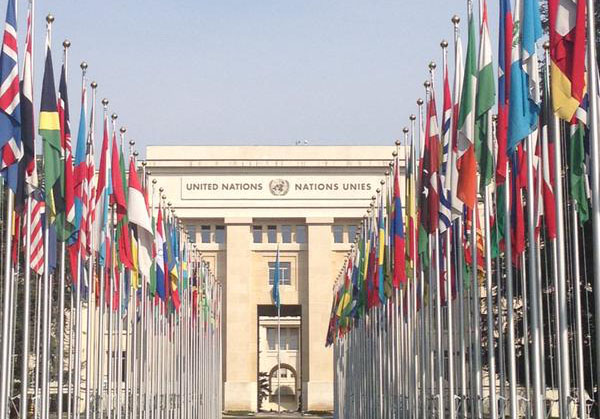
Mar 8, 2016 | Advocacy, Non-legal submissions
The ICJ spoke today at the UN Human Rights Council, addressing the human rights impacts of tax evasion and avoidance, and on women’s access to food and the right to food.
The statement was made in an interactive dialogue with the Independent Expert on the effects of foreign debt, and the Special Rapporteur on the right to food.
The statement addressed the following points, among others:
Welcoming the report of the Independent Expert, the ICJ highlighted that tax evasion and tax avoidance are forms of business’ misbehaviour that are facilitated by inadequate legislation and lack of international frameworks and cooperation in tax matters, and as such need to be tackled by the international community. This is all the more important now that the private sector has been assigned a greater role in the achievement of the 2030 development goals. In this regard, the recommendations by these Special Procedures should receive careful consideration.
The ICJ also welcomed the report on Women’s access to food by the Special Rapporteur on the Right to Food. The report highlights the legal barriers in domestic law that prevent women from fully realizing their right to food, including property rights, land rights and intellectual property rights. The report also highlights the negative impact of certain economic and market models as well as agribusiness corporations in enhancing women’s difficulties in accessing food and achieving food security.
The full statement may be downloaded in PDF format here: HRC31-OralStatement-IEforeigndebt-2016