

ICJ welcomes UN expert report on military tribunals
The ICJ welcomes the report of the UN Special Rapporteur on the independence of judges and lawyers presented to the UN General Assembly today.
The report calls for the adoption by the Human Rights Council of the draft principles governing the administration of justice through military tribunals, known as the ‘Decaux Principles’.
“This is a major step forward towards the establishment of universally applicable minimum standards to regulate the use and operation of military courts and tribunals”, said Alex Conte, Director of the ICJ’s International Law and Protection Programmes.
“The investigation and prosecution of alleged offences involving serious human rights violations is in many countries undertaken by military courts for the purpose of avoiding the accountability of perpetrators of such acts. It is therefore significant that the UN Special Rapporteur has reaffirmed that the jurisdiction of ordinary courts should prevail in such cases,” he added.
“It is also important that the Special Rapporteur has reiterated the recommendation of many human rights experts that the trial of civilians in military courts should in principle not occur and should be limited to strictly exceptional cases,” Conte further said.
The ICJ closely followed and contributed to the development of the Decaux Principles and has repeatedly called for their adoption and implementation by all States.
These principles were elaborated in 2006 in consultation with human rights experts, jurists and military personnel from throughout the world, and include specific provisions relating to the establishment and functioning of military tribunals.
They are based on the principle that military justice should be an integral part of the normal judicial system and should operate in a way that guarantees full compliance with human rights, including the need to ensure accountability for perpetrators of human rights violations.
Contact:
Alex Conte, ICJ International Law and Protection Programmes Director (Geneva), t: +41 79 957 2733; email: alex.conte(a)icj.org
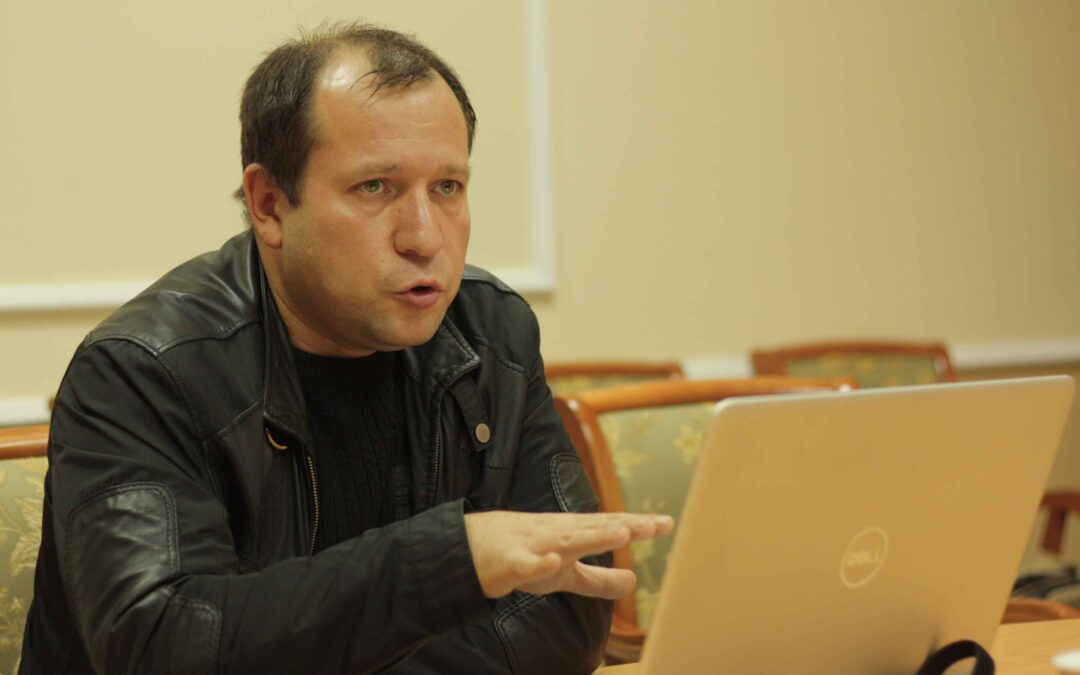
And the winner is…Joint Mobile Group
The Joint Mobile Group was selected as the 2013 Laureate Martin Ennals Award. The ICJ is one of the ten members of the jury.
The Award is given by the International Human Rights Community to Human Rights Defenders who have shown deep commitment and face great personal risk.
The aim of the award is to provide protection through international recognition.
Strongly supported by the City of Geneva, the Award was presented here today.
After the murder of several human rights activists working in Chechnya, Igor Kalyapin (photo) started the Joint Mobile Group.
To reduce the risk they send investigators on short missions to Chechnya to document Human Rights abuses.
This information is then used to publicize these abuses to seek legal redress.
Igor Kalyapin speaking of the effect of international publicity said: “When the international community is watching us it is more difficult for the authorities to take steps against us.”
Micheline Calmy-Rey, Chair, Martin Ennals Foundation said: “The choice of the Jury has again shown that human rights defenders are the most crucial actors and can make a difference on the ground.”
The Jury also selected two recipients of the New Martin Ennals Prizes: Mario Joseph, who is referred to as Haiti’s most important Human Rights lawyer and has worked on some of the most important cases in Haiti, including the current case against the former dictator Jean-Claude “Baby Doc” Duvalier; and Mona Seif, from Egypt, core founder of the “No To Military Trials for Civilians” national movement.
The main award of the human rights movement, the Martin Ennals Award for Human Rights Defenders (MEA) is a unique collaboration among ten of the world’s leading human rights organizations to give protection to human rights defenders worldwide. The Jury is composed of the following NGOs: ICJ, Human Rights Watch, Amnesty International, World Organisation Against Torture, FIDH (International Federation for Human Rights), HURIDOCS, Human Rights First, Front Line Defenders, International Service for Human Rights and German Diakonie.
Watch the MEA movie on Joint Mobile Group

ICJ addresses experts on the impact of business activities on women’s human rights
On 2 and 3 October 2013, the Office of the High Commissioner for Human Rights held a workshop on business and gender with the Human Rights Council’s Working Group on Discrimination against Women.
The ICJ participated in the workshop, addressing some of the ways in which business actors may be involved in women’s rights abuses and how States may fail to discharge due diligence obligations in this context. The ICJ’s presentation had a particular focus on accountability and the right to redress, and also explained the relevance to those issues of States’ extraterritorial obligations in respect of economic, social and cultural rights.
ProgrammeAgenda-BusinessAndGenderWorkshop (download the programme agenda for the workshop)

ICJ welcomes OSCE/FBA Handbook for Monitoring Administrative Justice
The ICJ today welcomed the launch of the OSCE/FBA Handbook for Monitoring Administrative Justice as a tool able to contribute to the open administration of justice.
Noting that trends throughout the world see administrative cases dealt with in a manner that lacks transparency and fails to comport with the open administration of justice, the ICJ expressed the hope that the tool will be used by practitioners and officials to make an impact on the ground. The ICJ pointed to several reasons why the open administration of justice, in all forms of proceedings, is important to human rights and the rule of law:
- As a starting point, it is widely recognised, including by the UN Human Rights Committee in its General Comment on the right to a fair trial, that the open and transparent administration of justice is an important safeguard for the interests of both the individual and society at large.
- The conduct of administrative and other proceeds in an open and transparent manner helps to ensure the integrity of such proceedings and protect against potential abuse.
- Publicly accessible documentation, including timely and reasoned decisions, protects individuals from being subject to arbitrary decisions.
- Transparency and openness contributes to accountability by enabling parties to determine the viability of any appeal or review, including the possibility of taking a case to regional or international mechanisms.
- In all these ways, the open administration of justice also helps guarantee the right of individuals and society to access justice, including remedies and reparation.
The Handbook is a publication arising from a joint initiative of the Folke Bernadotte Academy (FBA) Rule of Law Unit and the OSCE Office for Democratic Institutions and Human Rights. Work began on the Handbook in May 2011. The ICJ participated in expert meetings on the development of the Handbook in 2011 and 2012.
Recent News
 Thailand: Draft Domestic Violence Act should be revised in line with international standards04 Mar 2026
 HRC61: ICJ Statement on attacks against the rule of law and independent legal professionals — highlighting situations in Afghanistan and Guatemala02 Mar 2026
 Iran/United States/Israel: Unlawful attacks must cease01 Mar 2026
 The Use of Anti-Terrorism Courts to Suppress Dissent in Venezuela27 Feb 2026