Dec 11, 2013 | News
The ICJ has now published a translation of its Practitioner’s Guide, International Principles on the Independence and Accountability of Judges, Lawyers and Prosecutors in both traditional and simplified Chinese.
This is the first comprehensive analysis of the existing standards and compilation of universal and regional instruments published in Chinese.
The Guide outlines the roles to be played by a strong legal profession, an independent judiciary and an impartial and objective prosecuting authority.
References to international decisions, reports, texts of treaties and other international standards allow the Guide to be used as a reference book by legal practitioners and policy makers.
To access and download it please click here.

Nov 29, 2013 | Advocacy, Non-legal submissions
The ICJ’s Director of the International Law and Protection Programmes, Alex Conte, today delivered the keynote address at the launch of the OSCE manual on Human Rights in Counter-Terrorism Investigations.
Responding to the challenges faced by some OSCE participating States in operationalizing human rights when conducting counter-terrorism investigations, the OSCE Office for Democratic Institutions and Human Rights (ODIHR) and the OSCE Secretariat’s Transnational Threats Department / Strategic Police Matters Unit jointly developed a manual on Human Rights in Counter-Terrorism Investigations. The manual adopts an operational approach to different phases of counter-terrorism investigations and linking them to relevant human rights standards.
The keynote address focussed on the link between human rights protection and effective counter-terrorism practices; and on how human rights are themselves useful tools to successfully prevent and counter terrorism. It identified five law, policy and practical reasons that human rights compliance is required and/or contributes to the prevention and countering of terrorism:
- Human rights compliance while countering terrorism is an international obligation, recalling that States’ right and duty to combat terrorism is part of international and regional human rights law stemming from the duty of States to protect individuals under their jurisdiction from interference with their enjoyment of human rights, including the rights to life and security;
- Human rights compliance at the investigative stage of counter-terrorism cases means that there will be an exponentially greater chance that the precious resources dedicated to terrorist investigations will result in the admissibility of evidence;
- Human rights compliance at the investigative and pre-trial stages of counter-terrorism cases (considering the impact of prolonged detention without trial or without charge) gives rise to a greater prospect of achieving a sound conviction;
- Bringing perpetrators of terrorist acts to justice through effective (i.e. human rights-compliant) investigation and prosecution contributes to the realisation for victims of terrorism of their rights to truth and reparation; and
- Human rights compliance not only assists the short-term objectives of effective counter-terrorism investigations and prosecutions, but is also the essential basis for a sustainable, long-term approach to the countering of terrorism by avoiding further conditions conducive to the spread of terrorism.
ICJ-OSCE-ManualOnHumanRightsInCounterTerrorismInvestigations-LaunchEvent-KeynoteAddress-NonlegalSubmission-2013 (download keynote address in PDF)
OSCE_HRCT_Manual (download manual on Human Rights in Counter-Terrorism Investigations in PDF)
Nov 27, 2013 | News
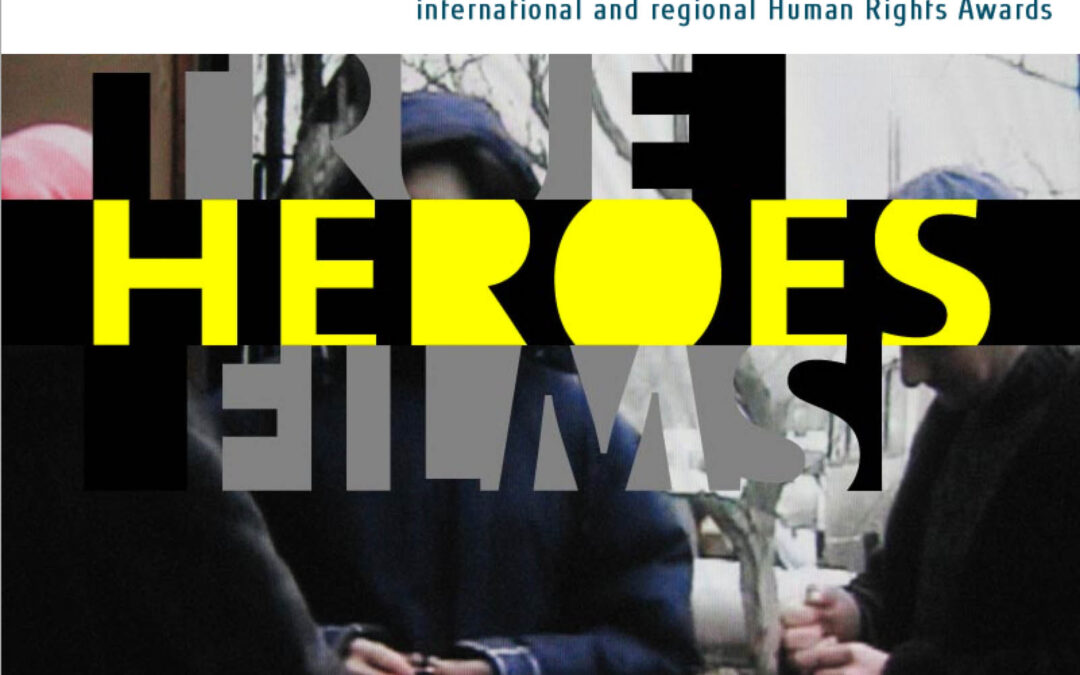
Today, the True Heroes Foundation (THF), a work partner of ICJ, launched the first-ever digest of human rights awards on www.trueheroesfilms.org.
The number of human rights awards has surged with over 50 new awards created in just the last 13 years.
The THF Digest brings together in a searchable manner 117 such awards with key information on each of them and links to their websites.
The Digest provides for the first time an overview of hereto scattered information and gives a unique tool to those who want to make nominations.
Going back over 100 years, it covers for the moment only international and regional awards. National awards are (not yet) included.
For more information on the content of the Digest (what is covered and how) read carefully the section “About the Digest” on www.trueheroesfilms.org
For additional information: jhrp.oxfordjournals.org
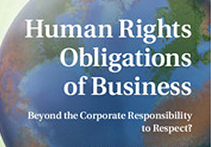
Nov 25, 2013 | Agendas, Events
This is the title of a book to be launched on Monday 2 December at the UN in Geneva, in partnership with the Permanent Mission of Ecuador, and the ICJ.
Do the ‘Respect, Protect, and Remedy Framework and the Guiding Principles on Business and Human Rights adequately address the challenges concerning the human rights obligations of business?
This book engages critically with these important developments. The chapters in the book revolve around four key issues: the process and methodology adopted; the source and justification of corporate human rights obligations; the nature and extent of such obligations; and the implementation and enforcement thereof.
In addition to highlighting several shortcomings of the Framework and the Guiding Principles, the contributing authors also outline a vision for the twenty first century in which companies have obligations to society that go beyond the responsibility to respect human rights.
Ian Seiderman, ICJ’s Legal and Policy Director, will be one of the discussants.
Invitation UNOG Business-event-2013 (full text in pdf)

Nov 7, 2013 | Events, News
The ICJ addressed the 15th Meeting of the European Network of Contact Points for investigation and prosecution of genocide, crimes against humanity and war crimes.
The meeting, which took place in the Hague, had a focus on criminal responsibility of corporations and business persons for serious international crimes and congregated a number of European public prosecutors and investigators.
In its presentation, Carlos Lopez, Senior Legal Adviser at ICJ, addressed ways to overcome difficulties in prosecuting business corporations.
He focused on three cases that are among the ones most advanced in the investigation and prosecution stage of business corporations for crimes under international law: the Riwal/Lima Holding, the Amesys and the Lundin Petroleum cases.
They illustrate the acute dilemmas that public prosecutors are likely to face in these kind of cases and how difficult to solve them it may be.
The full ICJ presentation and the agenda of the meeting can be downloaded in pdf format below.
The Hague Meeting-Prosecuting corporations-Presentation-analysis brief-2013
The Hague Meeting-Prosecuting corporations-Agenda-2013