Apr 20, 2017 | News
Nepali authorities should immediately take effective steps to enforce the landmark Kavre district court murder verdict for the 2004 torture and killing of teenage Maina Sunuwar, the ICJ, Amnesty International, and Human Rights Watch said today.
On 16 April 2017, the Kavre district court sentenced three army officers to life imprisonment for the murder of Maina Sunuwar, a 15-year-old girl (photo) who was tortured in army custody and died as a result in February 2004.
Maina’s killing took place during the decade-long armed conflict between the Maoists and government forces that ended in 2006.
A court martial in 2005 found that Maina had died in army custody, convicted the three officers of torture and murder, but only sentenced the three perpetrators to six months’ imprisonment for minor offences, and promptly released them on grounds that they had already served the six months while confined to army barracks during the period of investigation.
“These convictions are an important development in Nepal’s slow-paced justice system’s ability to deal with grave conflict-era human rights abuses,” said Sam Zarifi, the ICJ’s Secretary General.
“What we need now is for the government to demonstrate its commitment to the rule of law and enforce them,” he added.
The trial before the Kavre district court took place in the absence of any of the four accused, despite repeated court summonses, including an arrest warrant, to notify them of the charges and compel them to appear in court.
The three accused army officers who were convicted of Maina Sunuwar’s murder, Bobi Khatri, Amit Pun and Sunil Adhikari, are no longer in the army and are believed to have fled abroad after the court martial proceedings.
The fourth accused, who was acquitted, Major Niranjan Basnet, is still in the army and was repatriated to Nepal from a UN peacekeeping assignment in Chad in 2009 due to the indictment against him.
Maina Sunuwar’s case has become emblematic of the shortcomings in Nepal’s justice system that have repeatedly frustrated efforts of Nepali conflict victims to secure justice for wartime abuses.
Maina Sunuwar’s mother first filed a report with the police in November 2005.
Since then, there have been numerous procedural and political hurdles, and a lack of cooperation by the military as it sought to protect its own.
An arrest warrant issued in 2008 was never enforced by Nepali authorities, with the police telling the court they were unable to trace them.
“Maina Sunuwar’s case was a true test case for the Nepal criminal justice system, but the government has a habit of simply ignoring court orders,” said Brad Adams, Asia director of Human Rights Watch. “This is the first sign of hope for victims after more than ten years since the end of the conflict—and now we need to see all those convicted of murder behind bars.”
The human rights organizations expressed concern that the government might refuse to seek to take measures to enforce the Kavre court’s verdict given its prior record on this and thousands of other conflict-era cases.
In a disturbing example, the police have yet to implement a 13 April 2017 Supreme Court order to arrest Bal Krishna Dhungel, a Maoist politician convicted of a 1998 murder.
Dhungel has yet to serve out his life sentence handed down by the courts.
The court gave the police a week to execute its order and present Dhungel before it.
“The Kavre district court has done its job, reaffirming the independence of the judiciary from political and military pressure, and holding perpetrators of serious crimes committed during the conflict to account,” said Biraj Patnaik, Amnesty International South Asia Regional Office Director. “Now the authorities must do their job by breaking with the practice of successive past governments that ignore and undermine the courts’ decisions. We expect the government to promptly implement this week’s ruling.”
Contact
Nikhil Narayan, ICJ’s South Asia Senior International Legal Adviser, e: Nikhil.narayan@icj.org
Sam Zarifi, ICJ’s Secretery General, e: sam.zarifi@icj.org

Feb 22, 2017 | News
The Pakistan Government must not bring back military courts to try civilians for terrorism-related offences, the ICJ said today.
An earlier law giving military courts authority to try civilians lapsed after two years on 6 January 2017.
The use of military courts to try civilians is inconsistent with international standards, the ICJ recalled.
“Evidence from practice clearly shows that not only have military trials of civilians been blatantly unjust and in violation of the right to a fair trial, they have also been ineffective in reducing the very real threat of terrorism in Pakistan,” said Sam Zarifi, ICJ’s Asia Director.
According to media reports, the draft amendment, if adopted, would extend the “exceptional” use of military courts for another three years. The ICJ fears that repeated extensions risk making the practice effectively permanent.
It would also give military courts jurisdiction over any offence considered to be an act of terrorism, a broader mandate than 2015 constitutional amendment, which was applicable only to “terrorism motivated by religion or sectarianism” and where the accused were “members of proscribed organizations”.
“Bringing back military courts deflects attention from the real issue: the Government’s complete failure to enact necessary reforms to strengthen the criminal justice system in the two years military courts were in operation,” Zarifi said.
“The Government must account for its failure to deliver on the promise of delivering justice for the victims of terrorism and other abuses in Pakistan instead of once again extending the “exceptional” use of military courts for civilian trials,” he added.
The Government has scheduled a meeting with opposition parties on 23 February in an attempt to achieve consensus over a constitutional amendment to restore military courts.
Constitutional amendments require a two-thirds majority vote in both houses of parliament to be enacted.
While the ruling party has the requisite majority in the National Assembly (lower house), it appears to lack the numbers in the Senate (upper house) to pass the amendment.
The Pakistan Parliament must stand up to the executive in defense of the rights of all people in Pakistan, instead of allowing the administration to bring back—and even expand—a discredited and abusive process, the ICJ says.
Pakistan passed the 21st amendment to the Constitution in January 2015, authorizing military courts to try civilians for terrorism-related offences for a period of two years. The 21st amendment lapsed on 6 January 2017.
Military courts have convicted 274 people in the two years since they have been used to try civilian terror suspects. . One hundred and sixty-one people were sentenced to death and 113 people were given prison sentences. At least 12 people given death sentences have been executed by hanging.
The ICJ has documented serious fair trials violations in the operation of military courts including: denial of the right to counsel of choice; failure to disclose the charges against the accused; denial of a public hearing; failure to give convicts copies of a judgment with evidence and reasons for the verdict; and a very high number of convictions based on “confessions” without adequate safeguards against torture and ill treatment.
The ICJ unequivocally opposes the use of the death penalty as a violation of the right to life and freedom from cruel, inhuman or degrading punishment.
Contact
Sam Zarifi, ICJ Asia Pacific Regional Director (Bangkok), t: +66 807819002; e: sam.zarifi(a)icj.org
Reema Omer, ICJ International Legal Adviser for Pakistan (Lahore), t: +923214968434; e: reema.omer(a)icj.org
Feb 16, 2017 | Agendas, Events, News, Training modules
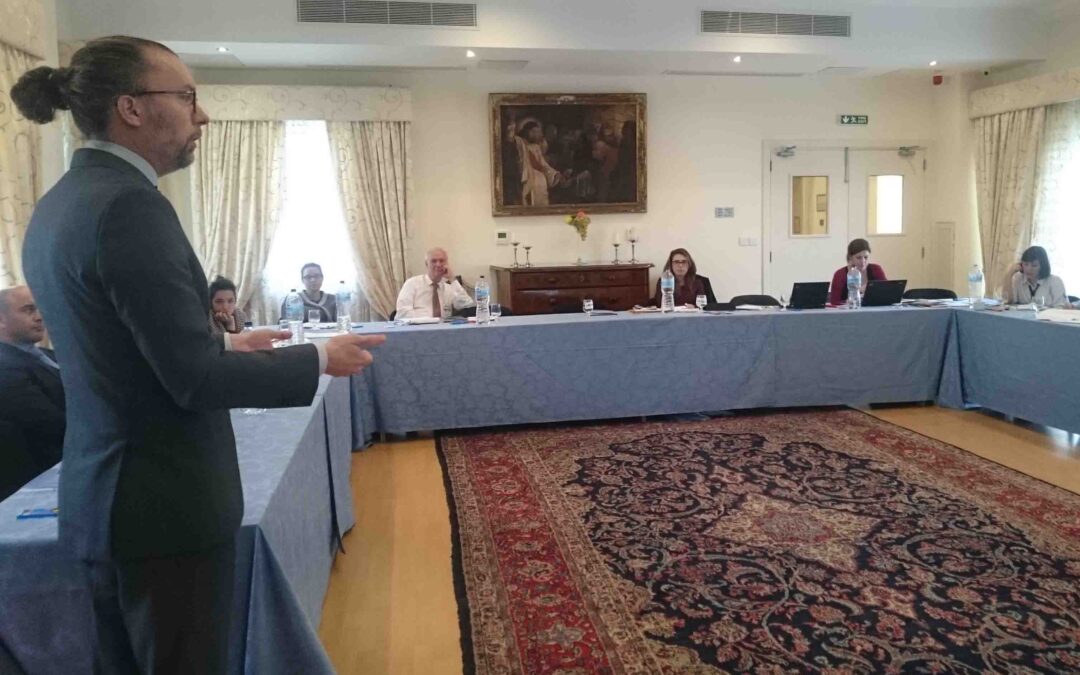
Today, the ICJ and Aditus are holding a training for lawyers on the rights of migrant children and on accessing international human rights mechanisms in Valetta.
The training aims to support the strategic use of national and international mechanisms to foster migrant children’s access to justice.
The training will take place over the course of two days 16-17 February 2017.
The training will focus on accessing the international mechanisms in order to protect and promote the rights of migrant children, the child’s right to be heard and economic, social and cultural rights.
A practical case analysis will be part of the training. Trainers include experts from the ICJ and the Hague University.
The training is based on draft training materials prepared by the ICJ (to be published in the second half of 2017) and the ICJ Practitioners Guide no. 6: Migration and International Human Rights Law.
It is organized as part of the FAIR project co-funded by the Rights, Equality and Citizenship Programme of the European Union and OSIFE.
As part of the project, this training follows the trainings on the rights of migrant children in Spain, Italy and Bulgaria, trainings in Germany, Greece and Ireland will follow this year.
Download the agenda in English here:
Malta-FAIR training-News-Agenda-2017-ENG

Feb 13, 2017 | News
The ICJ today announces the establishment of an expert panel of jurists to study and provide guidance on the effectiveness of grievance procedures provided by businesses to address and remedy harms arising from their operations.
The Panel, composed of senior retired judges, academics and legal practitioners, will work with the support of a wider group of civil society organizations, lawyers, academic institutions and the legal profession.
Many large business enterprises and projects have their own internal procedures and mechanisms to address concerns affecting individuals and local communities that arise from their operations. Known as operational-level grievance mechanisms, these are an integral part of responsible business practices and a way to remedy real or perceived wrongs.
The use of operational-level grievance mechanisms is recommended by the United Nations Guiding Principles on Business and Human Rights and global institutions, such as the World Bank.
However, poor design and/or implementation of these grievance mechanisms can result in further problems, aggravating the harm to individuals and communities and impacting on the company’s or project’s own sustainability.
The ICJ initiative has been prompted by concerns about recent cases where people the mechanisms were meant to help have been unaware of their very existence, the procedures have been unfair or unclear and outcomes have been inadequate for the kind of harm experienced.
Most importantly some grievance mechanisms seem to stand in the way of meaningful access to justice for adversely affected people.
The panel members
The expert Panel is the think tank of the ICJ initiative. Besides holding wide consultations and site visits to specific projects, the Panel will advise the ICJ on preparation of a report and a guidance to support the work of practitioners and human rights defenders working in this field.
The members of the Panel, five of whom are ICJ Commissioners, are:
- Justice Ian Binnie (retired) formerly of Canada’s Supreme Court
- Sheila Keetharuth, Lawyer in Mauritius and currently UN special rapporteur on the human rights in Eritrea
- Justice John O’Meally (retired) formerly of the District Court of New South Wales and the Dust Diseases Tribunal in Australia
- Alejandro Salinas Rivera, lawyer and former legal advisor to the Government of Chile
- Professor Marco Sassoli, professor of international law at the University of Geneva
- Justice Ajit Prakash Shah (retired), formerly of the High Court of Delhi and presently Chair of the Law Commission in India
The Panel and the ICJ will receive advice for this work from a wider Consultative Group of practitioners and members of the legal profession.
The Consultative Group includes individuals of long-standing experience and recognised expertise on the functioning of grievance mechanisms at the project or operations level.
This initiative adds to the growing attention paid to remedy systems available to individuals and communities affected by business operations.
The final outcome of this initiative will be to provide guidance to making effective the remedial procedures systems available in cases of business-related human rights abuses in way that truly helps victims attain justice.

Feb 7, 2017 | News
Cambodian authorities should immediately drop the politically motivated criminal investigation of human rights defenders Am Sam-at and Chan Puthisak, the ICJ, Amnesty International and Human Rights Watch said today.
Cambodian officials have accused Sam-at, a respected human rights monitor at the Cambodian League for the Promotion and Defense of Human Rights (LICADHO) for nearly 20 years, and Puthisak, a land rights activist from Boeung Kak Lake and former prisoner of conscience, of instigating violence at a 10 October 2016 demonstration.
Para-police forces, who are regularly used to suppress demonstrations, violently dispersed what had been a peaceful protest in Phnom Penh.
When Puthisak attempted to prevent para-police from confiscating a drum that was being used by a demonstrator, four or five para-police attacked him, repeatedly beating him on the head with their fists, according to a video of the incident.
When Sam-at tried to stop the assault, the para-police attacked him, also beating him on the head. Both men sustained injuries that needed medical attention.
“The investigation of Sam-at and Puthisak by the Cambodian authorities is a typically absurd and undisguised case of judicial harassment,” said Champa Patel, Southeast Asia and Pacific Director at Amnesty International.
“As usual, unnecessary and excessive use of force by the para-police goes unpunished, and those who work to promote and protect human rights find themselves subject to criminal proceedings.”
On 4 November, two members of the para-police filed a complaint with the Phnom Penh Court of First Instance, alleging that they were injured during the dispersal of the demonstration.
The authorities are investigating Sam-at and Puthisak for instigating intentional violence, under Articles 27 and 217 of Cambodia’s Criminal Code, which carry penalties of up to three years in prison.
Both men are due for questioning on 8 February by Phnom Penh Court of First Instance Deputy Prosecutor Ngin Pich.
There has been no indication that complaints filed against para-police by Sam-at and Puthisak after the incident on 10 October 2016 are being investigated.
The 10 October demonstration involved approximately 150 participants peacefully calling for respect for housing and land rights in Freedom Park, an area designated for demonstrations.
The protestors were marching on a street adjacent to the park when the incident took place.
Videos of the incident establish that the demonstration was peaceful and that Sam-at was wearing a blue human rights monitor vest when the para-police attacked him.
The case investigation of the two falls within a wider pattern of judicial intimidation in Cambodia.
There are currently as many as 26 human rights and political activists in prison on charges which have all the hallmarks of being politically motivated.
This includes 14 political activists who were jailed following a demonstration in July 2014, when para-police violently clashed with participants.
No efforts have been reported of the authorities’ efforts to bring to justice the para-police responsible for the unlawful use of force.
“The case against Sam-at and Puthisak is part of an extensive effort by the Cambodian authorities to discredit the legitimate work of human rights organisations and to make clear the threat of prison for everyone working to promote and protect rights in the country,” said, Phil Robertson, Asia Deputy Director at Human Rights Watch.
“This campaign of intimidation against rights advocates has to stop now.”
Para-police, often referred to as “district security guards,” are auxiliary security forces that are regularly used to violently suppress demonstrations in Cambodia.
No single legal document sets out the rules governing their functions and powers. Rather, their legal basis and the rules governing their activities are set out in a confusing combination of government statements and policies, and by instructions from the Ministry of Interior.
They work in tandem with police, under the authority of district governors.
“The Cambodian government should be commending people like Sam-at and Puthisak for their work to promote and protect human rights rather than trying to intimidate them,” said Kingsley Abbott, Senior International Legal Advisor at the ICJ.
“The case should be immediately and formally closed and a genuine investigation initiated into wrongful use of force by the para-police.”