Feb 1, 2017 | News
The ICJ today launched a new global initiative focussed on redress and accountability for gross human rights violations.
In all regions of the world, perpetrators of gross human rights violations enjoy impunity while victims, especially the most vulnerable and marginalized, remain without effective remedies and reparation.
Governments of countries in transition and/or experiencing a wider rule of law crisis often seek to provide impunity for perpetrators of gross violations of human rights, or make no effort to hold them to account, or misuse accountability mechanisms to provide arbitrary, politically partial justice.
Yet international law requires perpetrators to be held accountable and victims to be provided with effective remedies and reparation, including truth and guarantees of non-recurrence.
This is reinforced by the 2030 Sustainable Development Agenda, which recognizes the need to build peaceful, just and inclusive societies that provide equal access to justice, are based on the rule of law and respect for human rights, and provide for accountability.
“Impunity and lack of redress dehumanizes victims and acts as an impediment to the cementing of democratic values and the rule of law”, said Alex Conte, coordinator of the ICJ initiative.
Lack of accountability and claims for justice dominate national debates, frequently leading to a paralysis or reduced functioning of the institutions of the State and detracting from the pursuit of other rule of law and development initiatives.
Impunity threatens a nascent democracy by rendering its constitution hollow, weakening its judiciary and damaging the political credibility of its executive.
Public institutions often act in ways that bring them into disrepute and undermine the public confidence in them that is required for sustainable transition, for example through the legislature enacting laws providing for impunity, through law enforcement and the judiciary acting on a selective basis or without independence, and/or through the executive ignoring rule of law based judgments by higher courts.
A failure to guarantee redress and accountability has too often also resulted in former structures of power, to the extent that they enjoy impunity, transforming into criminal and hostile elements that may perpetuate violence and conflict.
The ICJ’s new initiative, generously sponsored by the Finnish Ministry of Foreign Affairs, currently focuses on seven countries (Cambodia, Mozambique, Myanmar, Nepal, Tajikistan, Tunisia and Venezuela) aims to combat impunity and promote redress for gross human rights violations.
It concentrates on the transformative role of the law, justice mechanisms and justice actors, seeking to achieve greater adherence of national legal and institutional frameworks with international law and standards so as to allow for effective redress and accountability; more independent justice mechanisms capable of dealing with challenges of impunity and access to redress; and judges, lawyers, human rights defenders, victims and their representatives that are better equipped to demand and deliver truth, justice and reparation.
The initiative will commence with the production of baseline studies on the situation in each focus country concerning accountability, access to justice/redress and the independence and accountability of judges and lawyers.
These will form the basis for tailored plans of action for each country identifying interventions and capacity building activities that can best drive the brining to justice of perpetrators of human rights violations and the access of victims to effective remedies and reparation.
Implementation of those activities will follow, alongside the production of global manuals and guides on key challenges for redress and accountability.
GRA Initiative Factsheet
Feb 1, 2017 | News
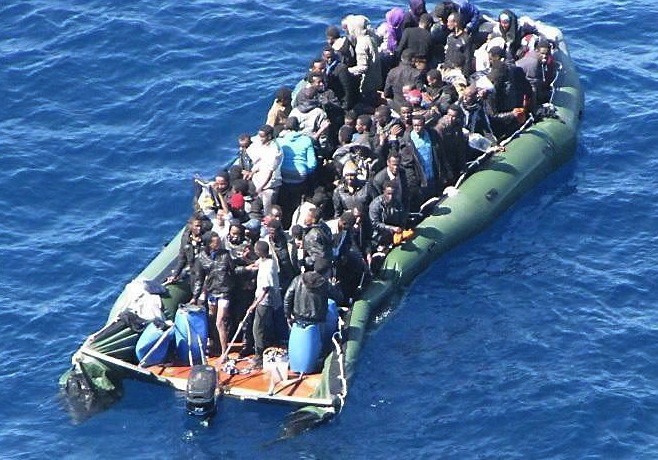
The ICJ, the European Council on Refugees and Exiles, Refugee Rights Turkey, Mülteci-Der and the ICJ-European Institutions begun today a two-year project to enhance access to justice for migrants, refugees and asylum-seekers in Turkey.
The project, which also aims to ensure protection of their rights, at the national and international levels, is co-funded by the European Union.
More information here: Turkey-ICJ project migrants-News-2017-ENG
Jan 21, 2017 | Agendas, Events, News, Training modules
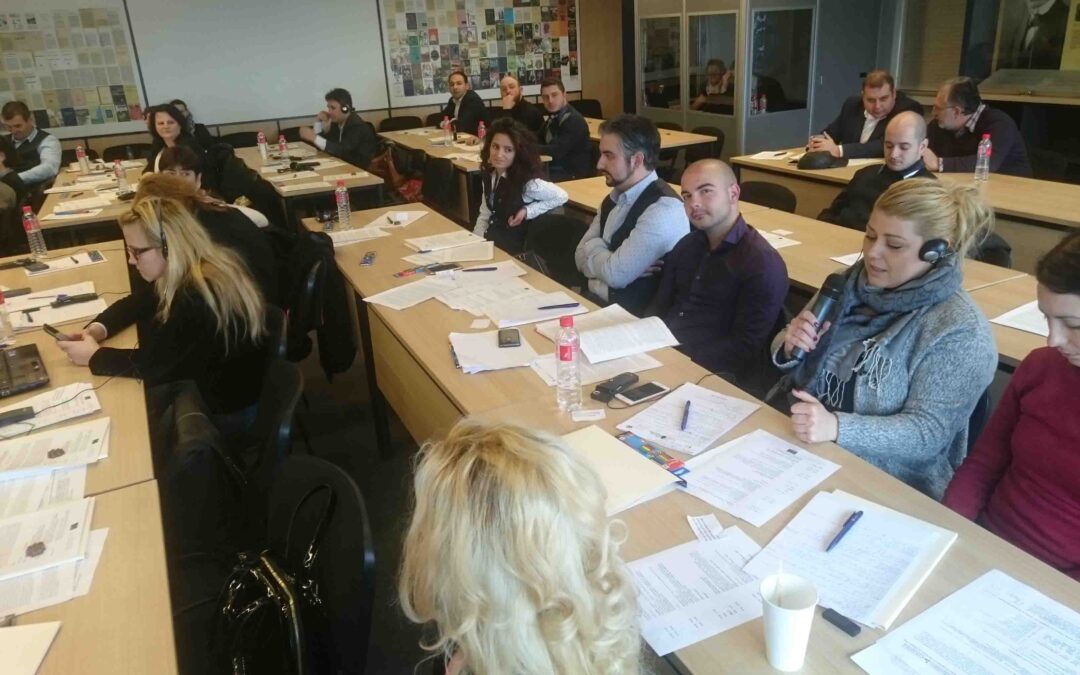
Today, the ICJ and Legal Clinic for Refugees and Immigrants are holding a training for lawyers on the rights of migrant children and on accessing international human rights mechanisms in Sofia.
The training aims to support the strategic use of national and international mechanisms to foster migrant children’s access to justice.
The training will take place over the course of two days from 21-22 January 2017.
The training will focus on accessing the international mechanisms in order to protect and promote the rights of migrant children, the child’s right to be heard and the best interests of the child principle.
A practical session on communication with child clients for lawyers as well as practical case studies will be part of the training.
Trainers include experts from the ICJ, Child Law Clinic of the University College Cork and Foundation for Access to Rights.
The training is based on draft training materials prepared by the ICJ (to be published in the second half of 2017) and the ICJ Practitioners Guide no. 6: Migration and International Human Rights Law.
It is organized as part of the FAIR project co-funded by the Rights, Equality and Citizenship Programme of the European Union and OSIFE.
Download the agenda in English here: Bulgaria-FAIR training-Events-Agenda-2016-ENG

Jan 6, 2017 | News
As Pakistani military courts once again cease to have jurisdiction over civilians for terrorism-related offences, the Government must urgently reform the country’s criminal justice system, the ICJ said today.
Perpetrators of terrorist attacks must be brought to justice pursuant to fair credible trials and in accordance with due process, the human rights organization added.
The 21st Amendment and corresponding amendments to the Army Act 1952 are scheduled to lapse today, as their respective two-year sunset clauses expire. So far, the Pakistani Government has not proposed any legislation to extend the jurisdiction of military courts to conduct trials of civilians, the ICJ says.
The Geneva-based organization has published an updated list of people convicted by military courts, the charges against them, and their alleged organizational affiliations.
“The lapse of the jurisdiction of military courts over civilians is a step in the right direction, but unsurprisingly, there is no sign of the promised reforms to strengthen the ordinary criminal justice system to effectively handle terrorism-related cases,” said Sam Zarifi, ICJ’s Asia Director.
The National Action Plan envisioned military courts as a short-term “exceptional” measure to try “terrorists”, to be operational only for a two-year period during which the Government would bring about necessary “reforms in criminal courts system to strengthen the anti-terrorism institutions.”
“The Pakistani Government must not re-enact legislation to continue secret military trials of civilians, nor resort to more short-term, short-sighted security measures that are contrary to human rights protections,” Zarifi added.
Instead, the Government should urgently invest in enhancing the capacity and security of judges, investigators and prosecutors to make the regular criminal justice system more effective in conducting fair, credible terrorism trials and bringing perpetrators to account, the ICJ says.
According to military sources and ICJ’s monitoring of military trials in Pakistan since January 2015, military courts have convicted 274 people for their “involvement” in terrorism-related offences, 161 of whom have been sentenced to death.
Twelve out of the 161 people sentenced to death have been hanged, 113 people have been given prison sentences. Details of only seven people given life imprisonment have been made public. The names, charges, and duration of prison terms for the remaining 106 people have not been disclosed.
Contact
Sam Zarifi, ICJ Asia Pacific Regional Director (Bangkok), t: +66 807819002; e: sam.zarifi(a)icj.org
Reema Omer, ICJ International Legal Adviser for Pakistan (Lahore), t: +923214968434; e: reema.omer(a)icj.org
Read also
Pakistan: stop military trials for civilians
Pakistan: ICJ urges Government not to extend oppressive counter-terrorism law
Additional information
At least 159 out of 168 people (95 per cent) whose convictions have been publicly acknowledged by the military had allegedly “admitted” to the charges, raising serious questions about the possibility of torture or other coercive measures being used to secure these confessions.
The ICJ’ 2009 global study on state responses to security threats examined in detail the dangers of the “exceptionalism doctrine”, which justifies a departure from the normal legal processes and human rights protections on the basis of the “exceptional” character of the threat.
In time, many of these measures became permanently incorporated into ordinary law, blinding governments to the actual reasons behind the lack of accountability for terrorism and serious crime.
Dec 15, 2016 | News
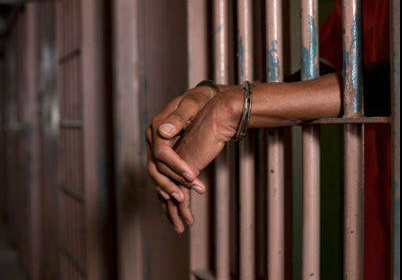
The Pakistani Government must not extend legal provisions that empower military courts to try civilians for terrorism-related offences, the ICJ said today.
The 21st Amendment and corresponding amendments to the Army Act, 1952, are scheduled to lapse on 6 January 2017, when their respective two-year sunset clauses expire.
“These military trials of civilians has been a disaster for human rights in Pakistan,” said Sam Zarifi, ICJ’s Asia Director.
“The conduct of these tribunals over the last two years has demonstrated that military trials are secret, opaque, violate even basic fair trials rights —and don’t do anything to protect people from acts of terrorism,” he added.
In a question-and-answer briefing paper released today, the ICJ provides answers to key questions regarding the conduct of military courts and the issues that have arisen in their operation.
The military has acknowledged the convictions of at least 144 people by military courts for their “involvement” in terrorism-related offences, 140 of whom have been sentenced to death.
Twelve out of the 140 people sentenced to death by military courts have been hanged.
The military has announced that least four people have been given life imprisonment sentences, but the actual number could be much higher.
Some 135 out of 144 people (94 per cent) convicted by military courts had allegedly “confessed” to the charges, raising serious questions about the possibility of torture or other coercive measures being used to secure these convictions.
The ICJ has documented how proceedings before Pakistani military courts fall short of national and international standards requiring fair trials before independent and impartial courts:
- Judges are part of the executive branch of the State and continue to be subjected to military command;
- The right to appeal to civilian courts is not available;
- The right to a public hearing is not guaranteed;
- A duly reasoned, written judgment, including the essential findings, evidence and legal reasoning, is denied;
- The procedures of military courts, the selection of cases to be referred to them, the location and timing of trial, and details about the alleged offences are kept secret; and
- The death penalty is implemented after unfair trials.
In addition to these concerns, the ICJ has also received reports that suspects tried by military courts have been subjected to torture and ill-treatment in detention and their family members have been harassed and intimidated by military authorities.
Allegations of torture and ill-treatment are not effectively investigated and information alleged to have been obtained by means of torture or other ill-treatment is not excluded as evidence in trial, the ICJ says.
In at least two cases, the petitioners have also alleged that the convicts were children under the age of 18 at the time they were arrested by law enforcement agencies.
Military courts were empowered to try civilians pursuant to the National Action Plan against terrorism, in contravention of international standards.
The National Action Plan envisioned military courts to be a short-term “solution” to try “terrorists”, to be operational only for a two-year period during which the Government would bring about necessary “reforms in criminal courts system to strengthen the anti-terrorism institutions”.
With less than one month left before military courts cease to be in effect, there is little sign of the promised reforms to strengthen the ordinary criminal justice system to effectively handle terrorism-related cases, the ICJ adds.
“Pakistan has not used the period of using military courts to reform and strengthen the criminal justice system,” said Zarifi.
“On the contrary, military courts have only further undermined the legitimacy of the ordinary courts and weakened the rule of law in Pakistan.”
The ICJ urges the Pakistan Government to not extend the 21st Amendment and ensure that all counter-terrorism laws and procedures are in accordance with Pakistan’s human rights obligations.
Contact
Sam Zarifi, ICJ Asia Pacific Regional Director (Bangkok), t: +66 807819002; e: sam.zarifi(a)icj.org
Reema Omer, ICJ International Legal Adviser for Pakistan (Lahore), t: +923214968434; e: reema.omer(a)icj.org
pakistan-military-courts-qa-advocacy-2016-eng (full Q& A on Military Courts, in PDF)
pakistan-list-of-convicted-advocacy-2016-eng (full list of convicted people, in PDF)