Dec 15, 2016 | Advocacy
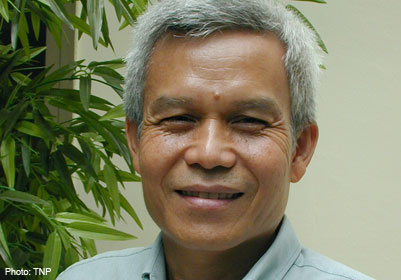
On the fourth anniversary of the enforced disappearance of prominent Lao civil society leader Sombath Somphone, the ICJ and other organizations condemn the government’s ongoing failure to conduct an effective investigation with a view to determining his fate.
The full statement can be downloaded here:
Laos-sombath4years-advocacy-2016-eng (in PDF)
Dec 2, 2016 | Agendas, Events, News
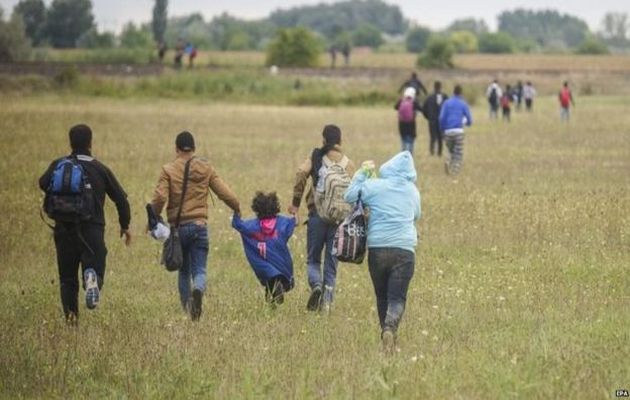
Today, the ICJ and Scuola Superiore Sant’Anna are holding a training for lawyers on the rights of migrant children and on accessing international human rights mechanisms in Pisa (Italy).
The training aims to support the strategic use of national and international mechanisms to foster migrant children’s access to justice. The training will take place over the course of two days from 2-3 December 2016.
The training will focus on accessing the international mechanisms in order to protect and promote the rights of migrant children, the child’s right to family life and the best interests of the child principle. A moot court exercise will be held on the second day of the training.
Trainers include experts from the ICJ and Scuola Superiore Sant’Anna, the Italian Court of Cassation and the University of Milan.
The training is based on draft training materials prepared by the ICJ (to be published in the second half of 2017) and the ICJ Practitioners Guide no. 6: Migration and International Human Rights Law.
It is organized as part of the FAIR project co-funded by the Rights, Equality and Citizenship Programme of the European Union and OSIFE.
Download the agenda in Italian here:
italy-rights-migrant-children-training-agenda-2016-ita
Nov 11, 2016 | Agendas, Events
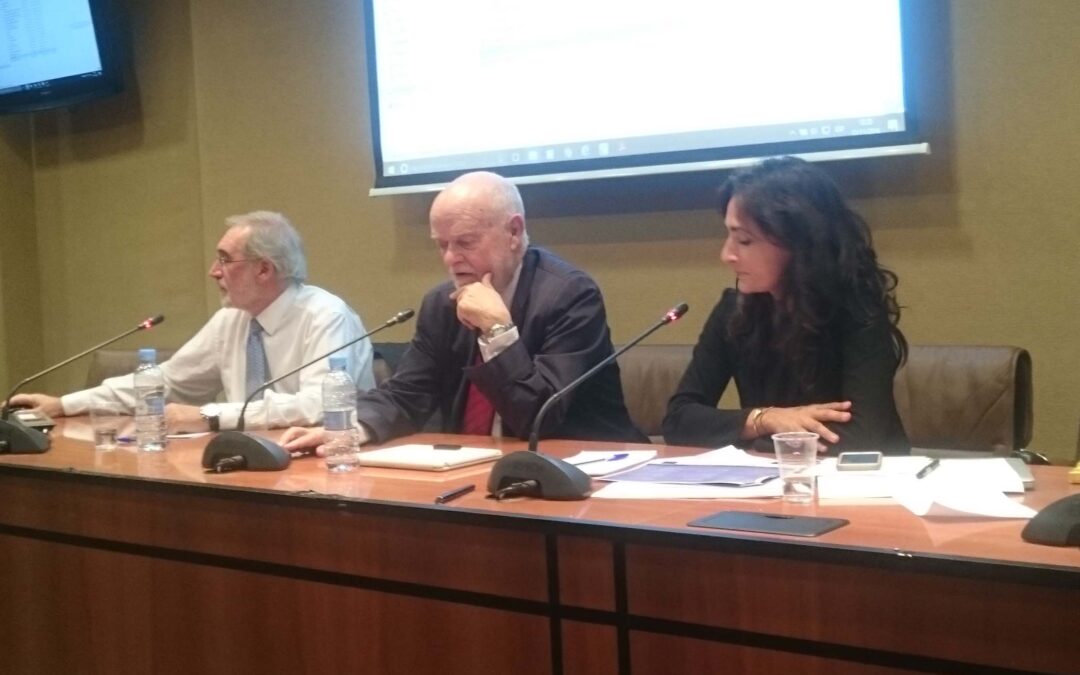
The ICJ and Foundation Raices are holding a training on the rights of migrant children and on accessing international human rights mechanisms from 11 to 12 November in Madrid (Spain).
The training aims to support the strategic use of national and international mechanisms to foster children’s access to justice.
The training will focus on accessing the international mechanisms in order to protect and promote the rights of migrant children, the child’s right to be heard and related procedural rights, the best interests of the child, age assessment and the presumption of minority.
Trainers will include representatives of the ICJ and Foundation Raices, as well as experts from the Committee on the Rights of the Child, the Spanish Constitutional Court and the office of the Spanish Ombudsman.
The training is based on draft training materials prepared by the ICJ (to be published in the second half of 2017) and the ICJ Practitioners Guide no. 6: Migration and International Human Rights Law.
The training is organized as part of the FAIR project co-funded by the Justice and Equality Programme of the EU and OSIFE.
Download the agenda of the training here:
spain-fair-training-events-agenda-2016-eng (in PDF)
Nov 9, 2016 | News
The ICJ welcomes the judgment of the European Court of Human Rights in Schukurov v Azerbaijan, finding that the right to petition the Court had been violated by the search of a lawyer’s premises and seizure of documents.
The ICJ submitted a third party intervention in the case, outlining international law and standards relevant to legal professional privilege and the seizure of legal documents.
The case files were seized as part of a criminal investigation opened against the lawyer, Intigam Aliyev, who was representing the applicants in the case. The Court found that the search and seizure by the Azeri authorities had violated article 34 of the Convention, which stipulates that States must not hinder in any way the effective exercise of the right of individual application to the Court.
The ICJ notes that the Court’s judgment follows its earlier finding of a violation of article 34 in the case of Annagi Hajibeyli v Azerbaijan, which arose from the same incident.
The ICJ stresses that these searches of lawyers’ premises are contrary to international standards on the role of lawyers. It is particularly worrying that they form part of a pattern of harassment of lawyers in Azerbaijan, including abusive disciplinary proceedings and criminal prosecutions. Such harassment damages the ability of lawyers to protect human rights through the judicial process, and undermines the independence of the legal profession.
The decision of the Court should now be fully and promptly executed, the ICJ said.
Oct 22, 2016 | Advocacy
South Africa’s announced withdrawal from the International Criminal Court (ICC) is a slap in the face for victims of the most serious crimes and should be reconsidered, African groups and international organizations with a presence in Africa said today.
The groups urged other African countries to affirm their commitment to the ICC, the only court of last resort to which victims seeking justice for mass atrocities can turn.
“South Africa’s intended withdrawal from the ICC represents a devastating blow for victims of international crimes across Africa,” said Mossaad Mohamed Ali of the African Center for Justice and Peace Studies. “As South Africa is one of the founding members of the court, its announcement sends the wrong message to victims that Africa’s leaders do not support their quest for justice.”
South Africa publicly announced on October 21, 2016, that it has notified the United Nations secretary-general of its intent to withdraw from the ICC.
However, there are significant questions as to whether South Africa abided by its domestic law in withdrawing without approval of its own parliament, the groups said.
“Modern day South Africa is testament to the importance of struggle for international justice, given the history of people of South Africa supported by the international community in defeating the scourge of apartheid and systematic racism. It is inconceivable that this country is now at the forefront of efforts aimed at undermining the international framework to tackle impunity,” said Arnold Tsunga, Director of ICJ’s Africa Regional Programme.
“We call on the government of South Africa to reconsider taking this enormous backwards step in the struggle for justice and to restore its place as a leader in promoting accountability for the most serious crimes and human rights abuses,” he added.
“South Africa’s purported withdrawal – without parliamentary approval or public debate – is a direct affront to decades of progress in the global fight against impunity,” said Stella Ndirangu, from the Kenyan section of the International Commission of Jurists.
“We call on the South African government to reconsider its rash action and for other states in Africa and around the world to affirm their support for the ICC.”
“We do not believe that this attempt to withdraw from the ICC is constitutional and it is a digression from the gains made by South Africa in promoting human rights on the continent,” said Jemima Njeri of the Institute for Security Studies’ International Crime in Africa Program.
“The South African government is sending a signal that it is oblivious to victims of gross crimes globally.”
South Africa’s announcement that it will withdraw from the ICC comes after the country’s court of appeal concluded the government violated its international and domestic legal obligations in not arresting ICC fugitive Sudanese President Omar al-Bashir in June 2015, when he visited South Africa.
A government appeal was pending, but on October 21, 2016, the government indicated that it has withdrawn the appeal.
“The decision by Pretoria to withdraw from the Rome Statute is a response to a domestic political situation,” said George Kegoro of the Kenya Human Rights Commission.
“Impervious to the country’s political history and the significance of the ICC to African victims and general citizenry, the South African leadership is marching the country to a legal wilderness, where South Africa will be accountable for nothing.”
South Africa is the first country to notify the UN secretary-general of withdrawal from the ICC.
Contact:
Arnold Tsunga, Director of ICJ’s Africa Regional Programme, t: +27-716-405-926 ; e: arnold.tsunga@icj.org
south-africa-withdrawal-of-icc-advocacy-2016-eng (full text in PDF)