Jan 20, 2021 | News
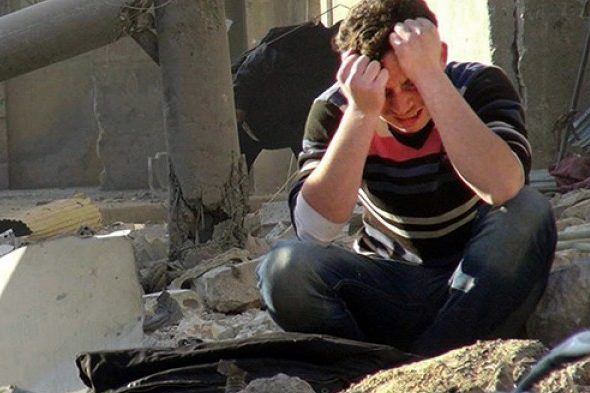
Justice for serious human rights violations requires more effective evidence collection and prosecution, said victims and experts, at a conference organized by the Kingdom of the Netherlands and the ICJ, today.
Keynote speakers included the Prosecutor of the International Criminal Court, Fatou Bensouda, UN Assistant Secretary General for Human Rights, Ilze Brands Kehri, and victim representatives from Myanmar and Yemen.
“The quest for global accountability has progressed tremendously since the ICJ began working nearly 70 years ago,” said Sam Zarifi, Secretary General of the ICJ.
“Over the last three decades in particular we have seen increasing efforts to seek justice at the international level as well as through national courts.”
“We now have to ensure these efforts are more coherent and are able to gather and preserve evidence critical for the successful prosecution of crimes under international law,” he added.
The ICJ has dedicated a Global Accountability Initiative to combat impunity and promote redress for serious human rights violations around the world through the entrenchment of the rule of law.
The Initiative works at the national, regional, and global level to facilitate victims’ access to justice.
“All over the world, perpetrators of serious human rights violations still go unpunished,” said Stef Blok, Foreign Minister of the Kingdom of the Netherlands.
“But this climate of impunity cannot be allowed to continue,” he added.
Impunity for serious human rights violations remains a significant challenge for a variety of reasons including when certain countries obstruct the work of the International Criminal Court.
In response, UN Bodies, including the Human Rights Council and General Assembly, are increasingly being called upon to establish innovative accountability mechanisms often with an evidence collection and preservation function.
Examples include Syria, Myanmar and Yemen where the lack of an UN Security Council referral to the International Criminal Court led the UN General Assembly and Human Rights Council to take action.
At the same time, accountability mechanisms have indicated challenges, including failures of political support, lack of international cooperation, and difficulties in securing the necessary resources and staffing in the amount and time required to effectively fulfill their mandates within the mandate period.
Mr Blok opened today’s online event, in which over 30 countries, numerous NGOs and victim’ advocacy groups discussed how best to enhance these various efforts. The event was moderated by Sam Zarifi.
Fatou Bensouda, Prosecutor of the International Criminal Court
Radya Al-Mutawakel, President of the Mwatana Organization for Human Rights
Ambia Perveen, Vice chairperson of the European Rohingya Council
Omar Alshogre, Syrian refugee and human rights activist
The full video of the conference can be viewed here.
Contact
Kingsley Abbott, Director of Global Accountability and International Justice, kingsley.abbott(a)icj.org
Jan 18, 2021 | News
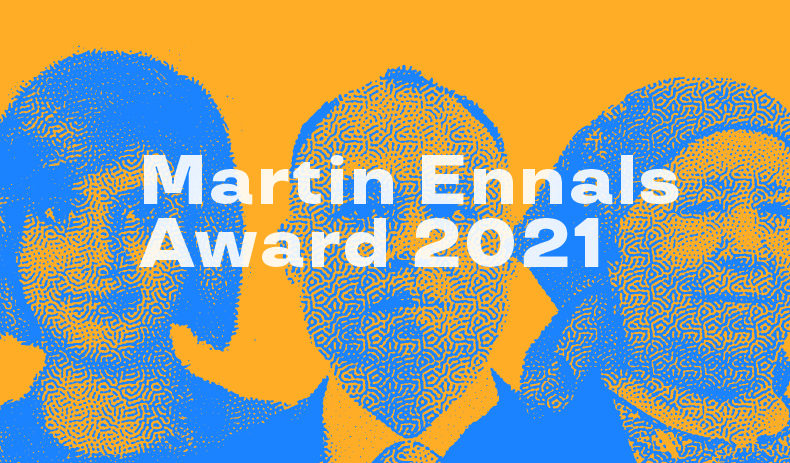
Soltan Achilova, Loujain AlHathloul and Yu Wensheng, three outstanding human rights defenders based in authoritarian states are nominated for the 2021 Martin Ennals Award for Human Rights Defenders. The ICJ is member of the MEA Jury.
In isolated Turkmenistan, Soltan Achilova documents human rights violations and abuses through photojournalism.
Imprisoned in Saudi Arabia, Loujain AlHathloul is a leading advocate for gender equality and women’s rights.
A lawyer, Yu Wensheng defended human rights cases and activists before his conviction and imprisonment in China.
The Finalists distinguish themselves by their bravery and deep commitment to the issues they defend, despite the many attempts to silence them by respective governmental authorities.
“Every year thousands of human rights defenders are persecuted, harassed, imprisoned, even killed. The Martin Ennals Foundation is honored to celebrate the 2021 Finalists, who have done so much for others and whose stories of adversity are emblematic of the precarity faced by the human rights movement today,” said Isabel de Sola, Director of the Martin Ennals Foundation.
“Authoritarian states tend to believe that by jailing or censoring human rights defenders, the world will forget about them. During the COVID-pandemic, it seemed like lockdowns would successfully keep people from speaking out. This year’s Finalists are a testament to the fact that nothing could be further from the truth,” added Hans Thoolen, Chair of the Jury.
Nothing can stop us from celebrating human rights defenders
Each year, the Martin Ennals Award honors human rights defenders from around the world who distinguish themselves by their strong commitment to promoting our fundamental rights – often at the risk of their own lives.
The 2021 Martin Ennals Award Ceremony will celebrate their courage on 11 February during an online ceremony hosted jointly with the City of Geneva which, as part of its commitment to human rights, has for many years supported the Award.
The 2021 Finalists
In Turkmenistan, one of the world’s most isolated countries, freedom of speech is inexistant and independent journalists work at their own peril. Soltan Achilova (71), a photojournalist, documents the human rights abuses and social issues affecting Turkmen people in their daily lives. Despite the repressive environment and personal hardships, she is one of the very few reporters in the country daring to sign independent
In Saudi Arabia, women still face several forms of gender discrimination, so much so, that the Kingdom ranks in the bottom 10 places according to the World Economic Forum’s Global Gender Gap Report 2020. Loujain AlHathloul (31) was one of the leading figures of the Women to drive movement and advocated for the end of the male guardianship system. She was imprisoned in 2018 on charges related to national security together with several other women activists. Tortured, denied medical care, and subjected to solitary confinement, Loujain was sentenced to 5 years and 8 months in prison on 28 December 2020.
In China, more than 300 human rights activists and lawyers disappeared or were arrested in 2015 during the so called 709 Crackdown. A successful business lawyer, Yu Wensheng (54) gave up his career to defend one of these detained lawyers, before being arrested himself. Detained for almost three years now, Yu Wensheng’s right hand was crushed in jail and his health is failing.
Contact
Olivier van Bogaert, Director Media & Communications, ICJ representative in the MEA Jury, t: +41 22 979 38 08 ; e: olivier.vanbogaert(a)icj.org
Chloé Bitton, Communications Manager, Martin Ennals Foundation, t +41 22 809 49 25 e: cbitton(a)martinennalsaward.org
MEA Finalists Bios-2020-ENG (full bios of finalists, in PDF)
MEA Finalists Bios-2020-ARA (full story and bios of finalists in Arabic, PDF)
Dec 17, 2020 | News
The ICJ and the Human Rights Joint Platform released today a joint statement, calling attention to a variety of obstacles faced by those seeking access to justice for human rights violations in Turkey.
The statement includes 13 recommendations to the Turkish government to ensure the justice system can uphold human rights.
In Turkey, victims of human rights violations remain unable to access justice, particularly effective remedies and reparation for violations of their rights, and there is little accountability of the State or State authorities for what are often serious violations.
Access to Justice has suffered by the immense damage done to the justice system in Turkey in recent years. The systematic undermining of judicial independence, and of the work of prosecutors and lawyers, through the widespread practice of arbitrary arrest and detention, unfounded prosecutions and dismissals of legal professionals as well as other human rights defenders, have fatally undermined the capacity of the justice system to provide reliable protection for human rights.
The Joint Statement is the fruit of three years of intensive work on access to justice for human rights violations in Turkey by the ICJ and IHOP.
During the last three years, the two organizations had the opportunity to gather the views of a wide range of stakeholders, including civil society, judges, lawyers, prosecutors, government officers, international experts, international organizations, human rights defenders and victims of human rights violations. The conclusions by ICJ and IHOP are a reflection of these opinions.
Drawing on this work and their decades-long experience in access to justice, the ICJ and IHOP have outlined the measures needed to begin to restore effective access to justice in Turkey.
The Joint Statement is part of the REACT project: implemented jointly by ICJ and IHOP, this project seeks to support the role of civil society actors in turkey in ensuring effective access to justice for the protection of human rights. This project is funded by the European Union. The views portrayed here do not necessarily reflect the opinion of the EU.
ICJIHOP-JointStatement-2020-ENG (download the statement in English)
ICJIHOP-JointStatement-2020-TUR (download the statement in Turkish)
Dec 10, 2020 | News
ICJ’s 16 Days of Activism Against Gender-Based Violence underscores the need for justice systems to be more responsive.
The campaign commenced on 25 November, International Day for the Elimination of Violence against Women, and ended today on Human Rights Day. The campaign presented “an impact story” poster series, Facebook live interviews and opinion pieces on gender-based violence in Africa, Asia, Latin America, Middle East and North Africa.
The campaign underscored that harmful traditional norms and gender stereotypes provide the backdrop for the systematic and widespread abuse of women and girls’ human rights across the globe; it also emphasized the need to maintain essential services for survivors of gender-based violence (GBV) during COVID-19 lockdowns, including ensuring a continuum of adequate criminal justice response.
“Violence against women and girls around the world has increased in this global pandemic. Governments have a duty to ensure that their response to Covid-19 includes preventing such violence. For instance, all hotline services for reporting domestic violence must remain open during lockdowns and be considered part of essential services. The police must likewise be ready to act speedily if required. They must be made aware that women and girls are especially vulnerable at this time,” said ICJ Commissioner Ambiga Sreenevasan from Malaysia.
Throughout the campaign, the ICJ also underscored the ongoing need to support civil society organizations’ and women human rights defenders’ response to GBV, as well as the need to strengthen the judiciary’s capability to respond to GBV by enhancing its reliance on international human rights law and standards.
“The authorities have turned a blind eye to gender-based violence for far too long and it is time to prioritize combatting the phenomenon effectively, including through legislative reform and awareness raising,” said ICJ Commissioner Marwan Tashani from Libya.
Poster Series
Imrana Jalal (ICJ Commissioner, Fiji)
Mikiko Otani (ICJ Commissioner, Japan)
Ambiga Sreenevasan (ICJ Commissioner, Malaysia)
Marwan Tashani (ICJ Commissioner, Libya)
Kaajal Ramjathan-Keogh (ICJ Africa Regional Programme Director)
Saïd Benarbia (ICJ MENA Programme Director)
Carolina Villadiego Burbano (ICJ Legal and Policy Adviser, Latin America)
Sexual Violence & Criminal Law in Zimbabwe
Amy Alabado Avellano (Family Court Judge, Philippines)
Savithri Wijesekera (Executive Director of Women In Need, Sri Lanka)
Nahla Haidar (ICJ Commissioner, Lebanon)
Saman Zia-Zarifi (ICJ Secretary General)
Tshabalala v S (South African Constitutional Court judgment on the doctrine of common purpose applied to rape)
Infographic
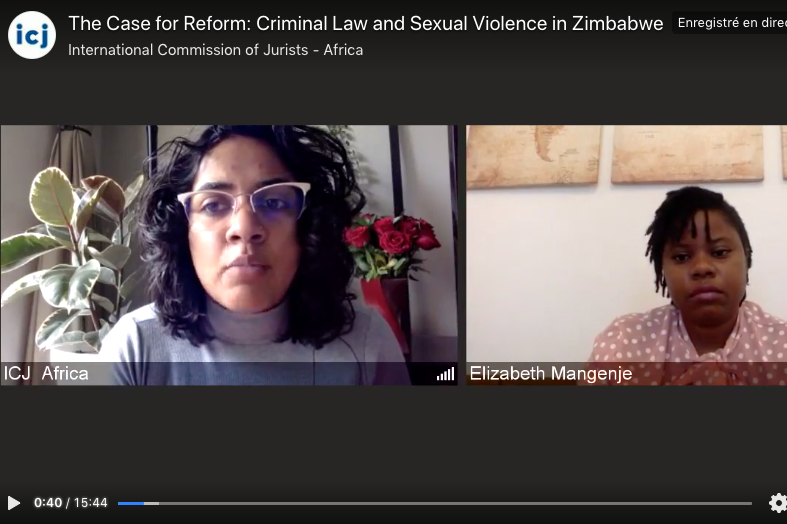
The Case for Reform: Criminal Law and Sexual Violence in Zimbabwe
Facebook Live Interviews
The Case for Reform: Criminal Law and Sexual Violence in Zimbabwe with Elizabeth Mangenje (ICJ Legal Adviser, Africa Regional Programme)
The State of GBV in the Middle East and North Africa Region with Nahla Haidar El Addal (ICJ Commissioner, Lebanon)
Women’s Access to Justice – What does justice mean for women in the context of COVID-19? (Joint initiative of ICJ, UN Women, and OHCHR)
Women’s Access to Justice – What does justice mean for women prisoners? (Joint initiative of ICJ, UN Women, and OHCHR)
Op-eds
Mujeres, justicia y pandemia, by Carolina Villadiego Burbano
Yet another treaty aims to protect African women. But how will it be enforced? by Nokukhanya Farisè and Tanveer Rashid Jeewa
Nov 29, 2020 | News
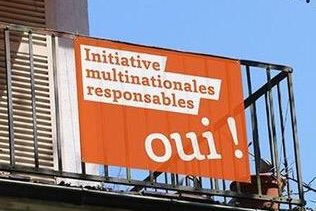
The ICJ and its Swiss section (ICJ-CH) regret the results of the vote yesterday in Switzerland rejecting the popular initiative for responsible businesses. While the majority of the popular vote approved the initiative, there was no majority of voters in a majority of Cantons.
Under the Swiss constitution, to be approved, such initiative amending the constitution needs the majority of both the popular vote in Switzerland and in a majority of Cantons part of the Swiss Confederation.
“The strong support gathered by this initiative, expressed in the majority of the popular vote, is encouraging, and a strong message that the Federal Parliament and the Federal Council must take into account in the process of the implementation of the legislative counter-proposal and in further legislation,” said Marco Sassòli, ICJ commissioner.
A counter-proposal prepared by the Federal Council is now approved by default. This counter-proposal foresees due diligence obligations for some sectors and reporting obligations, but no specific legal liability.
The proposed initiative would have required multinationals based in Switzerland to respect human rights also abroad, and to carry out human rights due diligence to identify and prevent potential human rights abuses.
It would also have clarified the multinational’s legal responsibility for violations of internationally recognized human rights and environmental norms by enterprises that it controls and operate abroad.