Nov 27, 2017 | News
Today, the ICJ called on the Royal Government of Cambodia (RGC) to end the escalating repression of civil society in Cambodia and reverse the rapidly deteriorating rule of law and human rights crisis in the country.
Yesterday, it was reported that Prime Minister Hun Sen called for the shut down of one of Cambodia’s leading, independent NGOs, Cambodian Centre for Human Rights (CCHR), and directed the Ministry of Interior to investigate CCHR for its alleged engagement with “foreigners”.
The Prime Minister’s statement appeared to allude to alleged involvement of CCHR in a supposed foreign-backed “colour revolution” to overthrow the government.
“The Cambodian Center for Human Rights plays an essential, independent role in promoting and protecting human rights in Cambodia and must be able to continue its important work without fear of retaliation, reprisal or other unjustified interference,” said Kingsley Abbott, the ICJ’s Senior International Legal Adviser for Southeast Asia.
“Everyone has the right to form and participate in organizations established to work on human rights, and States have a corresponding duty to protect the ability of such organizations and their participants to carry out their work to promote and defend human rights,” he added.
This latest development comes amidst a severe clampdown by the RGC on perceived dissenting voices including civil society, activists, the independent media and political opposition including through the recent dissolution of the major opposition party, the Cambodia National Rescue Party (CNRP), in what appeared to be a highly politicized Supreme Court proceeding, and the arrest and detention of its leader, Kem Sokha.
“This new, targeted focus on the Cambodian Center for Human Rights by the Government should make it clear that the human rights and rule of law crisis gripping Cambodia is not showing any signs of abating and requires the urgent attention of the international community,” said Abbott.
“All legal, political and economic options should be on the table,” he added.
Contact
Kingsley Abbott, Senior International Legal Adviser, ICJ Asia Pacific Regional Office, t: +66 94 470 1345, e: kingsley.abbott(a)icj.org
Background
CCHR was founded by Kem Sokha in 2002 before he left the organization in 2007 to pursue a career in politics.
Yesterday, CCHR released a statement “reaffirming its absolute non-partisanship and independence from all political parties” and emphasizing “strict independence” as a core value of its organization. CCHR also asserted in its statement that an “independent and impartial investigation would find no wrongdoing whatsoever on the part of the organization” and called for “meaningful dialogue” with the RGC.
Articles 19 and 22 of the International Covenant on Civil and Political Rights (ICCPR), to which Cambodia is a State Party, guarantees the rights of all persons to freedom of expression and opinion and to freedom of association with others.
The UN Declaration on Human Rights Defenders, adopted by a consensus of States at the UN General Assembly, including Cambodia, affirms the right of everyone to form and participate in NGOs to promote and protect human rights. The Declaration further dictates that states should take all necessary measures to protect human rights defenders from retaliation and other forms of arbitrary action as a consequence of their legitimate work.
On 18 October 2017, the ICJ released a report which found that the RGC was increasingly “weaponizing” the law to restrict dissent and attack democracy. The report recorded that the “single largest problem facing the Cambodian justice system is the lack of independent and impartial judges and prosecutors,” which includes “an endemic system of political interference in high-profile cases and an equally entrenched system of corruption in all others”.
On 23 October 2017, the 26th anniversary of the 1991 Paris Peace Conference on Cambodia, the ICJ, together with 54 other organizations, issued an open letter to the United Nations Secretary-General and the Conference’s co-chairs calling for the reconvening of the members of the Conference and other concerned stakeholders for an emergency summit to address the human rights crisis in the country.
Nov 24, 2017 | News
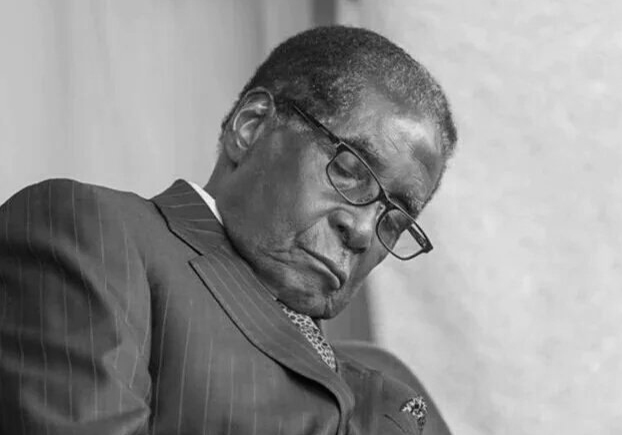
As Zimbabwe prepares to swear in Emmerson Mnangagwa following the resignation of long time Zimbabwe President Robert Mugabe, the ICJ today called on the incoming authorities to immediately act to restore the rule of law and ensure the full observance of human rights in the country.
“As the events of the past few days propel Zimbabwe away from decades of authoritarian rule replete with human rights violations, the incoming administration must side with the people of Zimbabwe and seize this unique opportunity to ground its governance in the rule of law,” said Arnold Tsunga, Director of ICJ’s African Regional Programme.
The ICJ indicated that it is particularly concerned at the intrusion of armed forces in the political process and governance, which is prohibited by the Zimbabwean Constitution and contravenes core rule of law principles concerning the respective functions of the military and civilian authorities.
Emphasizing that the rule of law and respect for the national Constitution remain paramount even as Zimbabweans decide on their future, the ICJ called on the Zimbabwean National Army (ZNA) to refrain from any further activity that intrudes into functions of governances that are within the proper purview of civilian authorities.
“It amounts to setting a dangerous precedent for Zimbabwe and the region to allow or excuse such incursions at the whim of armed forces,” Tsunga added.
Under the African Charter on Democracy, Elections, and Governance adopted by African Union Member States, Zimbabwe is required to “institutionalize constitutional civilian control over the armed and security forces to ensure the consolidation of democracy and constitutional order”.
The ICJ further expressed concern at emerging reports of usurpation of police duties by the ZNA, which has allegedly carried out a series of arbitrary arrests and detention of civilians.
“Due process guarantees and fair trial rights are particularly vulnerable when armed forces decide to assume police functions,” Tsunga said.
Recalling that international law does not allow or encourage impunity for serious human rights violations that constitute crimes, such as torture and extra-judicial killings, the ICJ stressed the importance of ensuring accountability for human rights violations as Zimbabwe transits to into a new era of governance.
Contact:
Arnold Tsunga, ICJ-Director Africa Regional Programme, t: +27716405926, or +254 746 608 859 ; e: arnold.tsunga(a)icj.org
Solomon Ebobrah, Senior Legal Advisor, ICJ Africa Regional Programme, t: +234 8034927549 ; e: Solomon.ebobrah(a)icj.org
Nov 23, 2017 | News
Today, the ICJ and Amnesty International submitted recommendations to the Ministry of Justice that changes be made to a new law under consideration by the Cabinet, in order to bring it in line with Thailand’s international legal obligations.
The submission came in response to a request by the Ministry for feedback on the Draft Prevention and Suppression of Torture and Enforced Disappearances Act (‘Draft Act’).
The ICJ and Amnesty International welcome the Thai government’s commitment to criminalize torture and enforced disappearances.
The Draft Act currently addresses many existing gaps in Thailand’s current legal framework.
However, the organizations consider that further amendments are needed to address significant shortcomings in the Draft Act and ensure Thailand’s compliance with international treaties on torture and enforced disappearance and international standards.
Recommendations by the ICJ and Amnesty International addressed the following concerns:
- The absence within the Draft Act of key elements of the crimes of torture and enforced disappearance, as defined by international law;
- The absence of provisions concerning cruel, inhuman and degrading treatment or punishment (CIDT/P);
- The inadequacy of provisions establishing the inadmissibility of statements and other information obtained by torture, CIDT/P and enforced disappearance as evidence in legal proceedings;
- The inadequacy of provisions relating to modes of liability for crimes described in the Draft Act; and
- The shortcoming of provisions concerning safeguards against torture, CIDT/P and enforced disappearances.
The ICJ and Amnesty International urge Thailand to make it a top priority to address these and other concerns, and once they are addressed, to enact the law as soon as possible.
The urgent need to amend and enact the Draft Act is underscored by several NGO reports documenting the persistent use of torture and other ill-treatment by state security forces and the continued failure of the Thai authorities to hold accountable perpetrators of torture, other ill-treatment and enforced disappearances.
The ICJ and Amnesty International remain committed to providing any necessary assistance to the Thai government in amending the Draft Act or otherwise acting to prevent torture and enforced disappearances in Thailand.
In a letter accompanying the submission, the ICJ and Amnesty International also emphasized the crucial importance of maintaining sections within the current Draft Act providing that the prohibitions on torture and enforced disappearances apply in all circumstances, including states of emergency, and prohibiting the forcible transfer of persons to territories where they would face a real risk of torture or enforced disappearances (refoulement).
Background
Thailand is a state party to the International Covenant on Civil and Political Rights and the Convention against Torture and other Cruel, Inhuman or Degrading Treatment or Punishment, and has signed, but not yet ratified, the International Convention for the Protection of All Persons from Enforced Disappearance.
The UN expert bodies overseeing the implementation of these treaties have consistently called upon states parties to criminalize torture and enforced disappearance as specific crimes.
On 15 November 2016, Thailand replied to a List of Issues, identified by the UN Human Rights Committee’s noting that it was in the process of passing the Draft Act which would “provide clear definition and set up specific offence on torture to be in line with the terms set forth under CAT” and “serve as an implementing legislation for ICPPED.”
It also asserted that the Draft Act “aims to strengthen the prevention, suppression, and prosecution mechanism and to ensure remedy for victims as well as address the problem of misuse, and abuses of power by government authorities with regard to torture and enforced disappearances.”
In February 2017, the National Legislative Assembly (NLA) announced it would not enact the Draft Act, which was produced by the Ministry of Justice in consultation with non-governmental organizations and other civil society actors.
In March 2017, at the UN Human Rights Committee’s review of Thailand’s compliance with the ICCPR, Thailand confirmed that the Draft Act “had been submitted to the National Legislative Assembly, which had requested the Cabinet to further review the bill, with a view to introducing amendments and launching a public consultation process.”
Contact:
Kingsley Abbott, ICJ Senior International Legal Adviser for Southeast Asia, t: +66 94 470 1345 e: kingsley.abbott@icj.org
Read also
Joint Letter to the Thai Government
Download
Thailand-Torture and ED-Advocacy-nonlegal submission-ENG (Submission in English, pdf)
Thailand-Torture ED Bill-News-THA (statement in Thai, pdf)
Thailand-Torture and ED-Advocacy-nonlegal submission-THA (Submission in Thai, pdf)

Nov 20, 2017 | Advocacy
The ICJ, with 35 other human rights organizations, today called on members and observers of the UN Human Rights Council to convene a special session on the deteriorating human rights situation in Myanmar.
In open letter to member and observer States of the Human Rights Council, delegations are urged to support holding a special session of the Council against the backdrop of serious reports of human rights violations, including crimes against humanity, committed by Myanmar security forces in northern Rakhine state.
The letter also sets out key elements that should be included in the text of a resolution adopted by the Human Rights Council at such a session, considering action that should be taken by the Government of Myanmar, as well as by neighbouring and other States and by human rights mechanisms.
The ICJ on the same day released a briefing note, entitled Questions & Answers on Human Rights Law in Rakhine State, clarifying national and international law and standards applicable to the crisis.
Myanmar Joint Civil Society Letter 20 November 2017 (download open letter in PDF format)
For a copy of the ICJ’s Q&A briefing, go to ‘Myanmar: rule of law must drive responses to Rohingya crisis’
Nov 1, 2017 | News, Publications, Reports, Thematic reports
The arrest of absconding murder convict Bal Krishna Dhungel, a senior Maoist leader, highlights the weaknesses, as well as the promises, for victims seeking accountability through Nepal’s judicial system, said the ICJ as it released a report on accountability mechanisms in the country.
The ICJ’s report Achieving Justice for Gross Human Rights Violations in Nepal concludes that impunity for gross human rights violations is one of the major obstacles to the creation of a stable and legitimate democratic government and lies at the heart of the rule of law crisis in Nepal.
It found that a lack of commitment by Nepal’s political leadership to address past and ongoing human rights violations continues to allow perpetrators to escape justice and undermines victims’ right to effective remedies and reparation.
“In the past, the promise to shield perpetrators for human rights violations has been used as a bargaining chip to garner political support and build political alliances,” said Frederick Rawski, Director of the ICJ’s Asia Pacific Regional Programme.
“It is imperative that accountability for human rights violations remains a priority for Nepal’s political leadership after Parliamentary elections, and that alliances between political parties are not once again used as an excuse to undermine Nepal’s human rights obligations,” added Rawski.
Attempts to thwart justice have also included the cynical manipulation of justice sector actors, from the police to the Attorney General’s office, in a way that threatens the independence and credibility of the institutions responsible for safeguarding human rights and the rule of law in Nepal, the report highlights.
This pattern of impunity persists despite demands for accountability by civil society and victims’ organizations, as well as the National Human Rights Commission and Nepal’s Supreme Court.
“In many ways, the Supreme Court of Nepal has emerged as a beacon of hope for victims of human rights violations,” said Rawski.
“The Court has given domestic effect to Nepal’s obligations under international law and has set high standards for accountability, remedy and reparations,” he added.
However, the Government’s disregard of key judgments has limited the impact of the Supreme Court’s jurisprudence, the report says.
Attacks on the independence of the judiciary, as demonstrated by the impeachment motion against former Chief Justice Sushila Karki, also indicate a worrying trend.
The ICJ’s report found that the mandate and operation of transitional justice mechanisms fall short of international standards despite the repeated reinforcement of such standards by the Supreme Court.
Though ostensibly formed to provide a measure of public accountability, the practice of forming ad hoc commissions of inquiry to investigate rights violations has promoted impunity by diverting investigations from the criminal justice process – where they belong – into parallel mechanisms that are established by means that make them vulnerable to political interference and manipulation.
The ICJ’s report also concludes that gross human rights violations in Nepal are not a thing of the past, but are ongoing.
Notably in the Terai region, the State has responded to the Madhesh movement with excessive use of force, extrajudicial killings, and torture and other ill-treatment.
Political expediency has trumped calls for justice and accountability and the Government continues to use State machinery to shield perpetrators rather than serve the interests of justice.
“In a seemingly perpetual cycle, the weak rule of law in the country contributes to impunity for human rights violations, and this culture of impunity further erodes the rule of law,” said Rawski.
“The search for truth and justice in Nepal will not be realized unless this cycle is ended,” he added.
Additional information
Dhungel had been absconding since the Supreme Court upheld his conviction for murder in 2010. The arrest comes after a contempt of court petition was filed before the Supreme Court against the Inspector General of Police for failing to implement multiple Supreme Court orders directing Dhungel’s arrest.
Contact
Frederick Rawski, ICJ Asia Pacific Regional Director, t: +66 64 478 1121, e: frederick.rawski@icj.org
Alex Conte, ICJ Global Redress and Accountability Initiative, t: +41.79.957.2733; e: alex.conte@icj.org
Download
Nepal-GRA Baseline Study-Publications-Reports-Thematic reports-2017-ENG (full report in PDF)
Read also
ICJ Discussion Paper Nepal’s Transitional Justice Process: Challenges and Future Strategy (August 2017)
ICJ Report Authority without Accountability: The struggle for justice in Nepal (October 2013)