Nov 1, 2017 | News
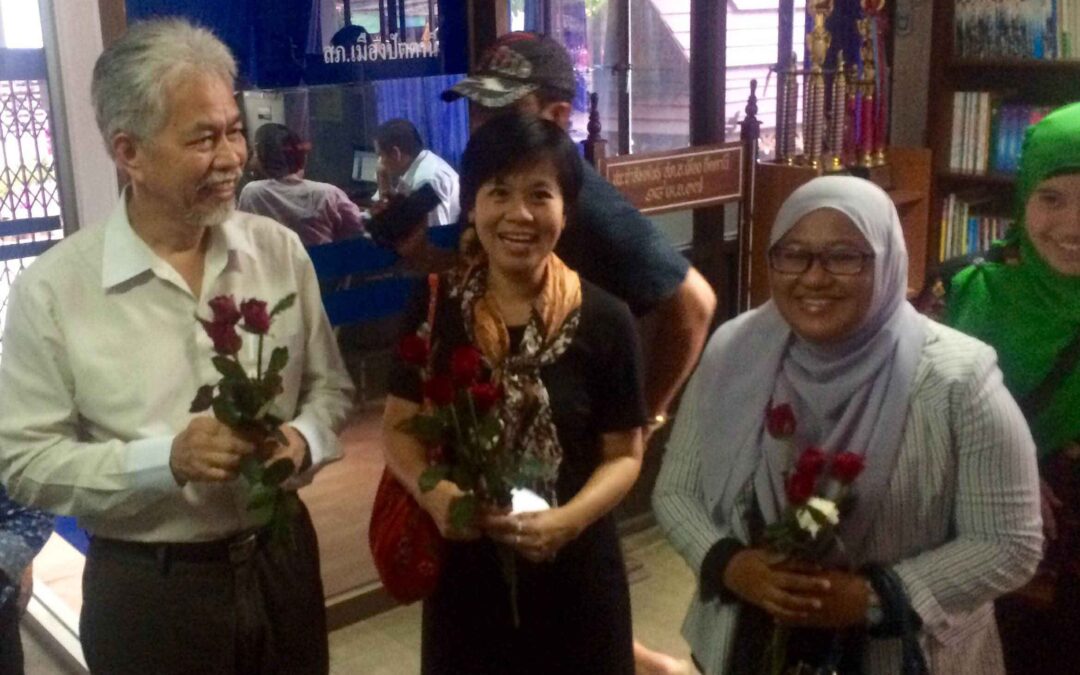
The ICJ welcomes the Pattani Provincial Prosecutor’s decision to end the criminal prosecution of three prominent human rights defenders who raised allegations of torture in Thailand’s restive deep South: Ms Pornpen Khongkachonkiet, Mr Somchai Homlaor, and Ms Anchana Heemmina.
On 24 October 2017, the Region 9 Senior Expert Public Prosecutor, on behalf of the Pattani Provincial Prosecutor, informed the Superintendent of the Muang District Pattani Police Station of the decision to end the prosecution of the three defenders for criminal defamation and violation of the Computer Crime Act.
The ICJ has previously expressed concern that the prosecutions were unwarranted and abusive and were aimed at chilling the exercise of critical human rights work in Thailand.
“While we welcome the decision to end these prosecutions, they have already caused a tremendous amount of damage to complainants of serious human rights violations like torture and ill-treatment, civil society, and the local community in the deep South that must now be repaired,” said Kingsley Abbott, the ICJ’s Senior International Legal Adviser for Southeast Asia.
“An important first step would be to pass legislation which criminalizes torture and ill-treatment and provides meaningful protections for those who wish to come forward with allegations of violations,” he added.
On 28 February 2017, the UN Office of the High Commissioner for Human Rights announced that it had been informed that the Thai National Legislative Assembly (NLA) would not enact legislation then under consideration criminalizing torture and enforced disappearance, the Draft Prevention and Suppression of Torture and Enforced Disappearance Act (Draft Act).
The following day, an NLA official speaking to BBC Thai confirmed that the Draft Act would be “returned [to the Thai Cabinet] for more consultations… with Interior officials, police authorities, the national security sector, military authorities and prosecutors.”
The Draft Act remains with the Thai Cabinet.
“It is long past time for Thailand to make good on its repeated commitments on the international stage to pass this essential piece of legislation in accordance with its international human rights obligations,” added Abbott.
Contact
Kingsley Abbott, Senior International Legal Adviser, ICJ Asia Pacific Regional Office, t: +66 94 470 1345, e: kingsley.abbott(a)icj.org
Background
On 10 February 2016, three Thai organizations, the Cross Cultural Foundation (CrCF), Duay Jai Group (Hearty Support Group), and the Patani Human Rights Organization (HAP), issued a report that documented 54 cases of alleged torture and ill-treatment by the Thai security forces in the deep South since 2004.
In response, the Internal Security Operations Command (ISOC) Region 4 (Forward Command) – created to resolve the situation in the deep South – made complaints of criminal defamation against the three co-editors, Pornpen Khongkachonkiet (Director of the CrCF), Somchai Homlaor (Senior legal advisor to CrCF and Hearty Support Group), and Anchana Heemmina (founder and Director of the Hearty Support Group).
On 26 July 2016, the Thai police charged the three defenders with criminal defamation by means of publication under Article 326 and 328 of the Penal Code, and importing false information to a computer system under Article 14 (1) of the Computer-Related Crime Act B.E. 2550 (2007).
On 7 March 2017, the ISOC 4 Forward Command announced its intention to drop the complaints at a press conference in Bangkok.
Thailand is a State party to the International Covenant on Civil and Political Rights (ICCPR), the Convention against Torture and other Cruel, Inhuman or Degrading Treatment or Punishment (CAT) and has signed, but not yet ratified, the International Convention for the Protection of All Persons from Enforced Disappearance (ICPPED).
Further reading on these criminal proceedings
Thailand: ICJ welcomes dropping of complaints against human rights defenders but calls for investigation into torture
Thailand: stop use of defamation charges against human rights defenders seeking accountability for torture
Thailand: immediately withdraw criminal complaints against human rights defenders
Further reading on the Draft Prevention and Suppression of Torture and Enforced Disappearance Act
Thailand: ICJ commemorates international day in support of victims of enforced disappearances
Thailand: pass legislation criminalizing enforced disappearance, torture without further delay
Thailand-News-Pressreleases-humanrightsdefenders-2017-THAI (full press release in Thai, pdf)
Oct 31, 2017 | News, Publications, Reports, Thematic reports
Effective measures to end impunity for crimes of torture in detention are needed to tackle the systematic recourse to torture and other ill-treatment of detainees in Tajikistan, the ICJ concluded in a report released today.
The ICJ report, Achieving Justice for Gross Human Rights Violations in Tajikistan, finds that although Tajikistan’s criminal procedure law is often in line with international law, including fair trial and other relevant guarantees, in practice it does not lead to effective protection of human rights.
The system is in practice unable to remedy or establish accountability for the serious human rights violations that occur systematically in detention, the report says.
Even where complaints of torture are made, it appears that very few lead to investigation, prosecution or conviction.
“The systematic recourse to torture and ill-treatment in detention undermines the integrity of the criminal justice system in Tajikistan, as well as notions of fairness and justice and the operation of the rule of law in the country,” said Temur Shakirov, Senior Legal Adviser at the ICJ’s Europe Regional Programme.
“Torture must always be treated as one of the most serious crimes. International human rights law requires that allegations of torture must be independently, promptly and thoroughly investigated and, where those responsible are identified, they must be brought to justice,” added Shakirov.
An effective system of prevention of torture and other ill-treatment in detention and for the provision of effective remedies and reparation for such violations is needed to tackle the systematic recourse to their use, the report finds.
The ICJ’s report identifies numerous factors that foster the widespread use of torture and other ill-treatment in Tajikistan, including:
- the lack of independence of the judiciary;
- the judges’ failure to uphold equality of arms between the defence and prosecution;
- the frequent failure by courts to inquire into allegations of torture or other ill-treatment raised by the defence;
- the tendency of courts to accept prosecution denials of such treatment without question; and
- courts’ regular failure to exclude evidence obtained by torture.
With heavy reliance by judges on self-incriminating statements made by suspects in the first hours of detention, the presumption of innocence remains to a large extent illusory, the report adds.
The report also demonstrates that a lack of guarantees for confidential lawyer-detainee meetings prevents detainees from effectively exercising their right to qualified legal assistance and to complain about ill-treatment if necessary.
“Systemic torture cannot be effectively eradicated unless lawyers are both individually and institutionally independent of the executive, are protected in carrying out their duties, and have unimpeded access to their clients in the first hours of detention, as required by international law and standards”, Shakirov said.
The report provides a comprehensive list of recommendations following a detailed analysis of applicable laws and practices in Tajikistan, including based on the findings and recommendations of different bodies of the United Nations human rights system.
Contact
Temur Shakirov, Senior Legal Adviser, Europe Programme, t: +41.22.979.3832; e: temur.shakirov(a)icj.org
Alex Conte, ICJ Global Redress and Accountability Initiative, t: +41.79.957.2733; e: alex.conte(a)icj.org
Tajikistan-GRA Baseline Study-News-Press-Release-2017-RUS (Press Release, Russian PDF)
Download
Tajikistan-GRA Baseline Study-Publications-Reports-Thematic reports-2017-ENG (full report in PDF, English)
Read also
ICJ Report ICJ Recommendations on the Independence of the Legal Profession in the Republic of Tajikistan (February 2016)
ICJ legal submission Alternative Report to the UN Human Rights Committee on the Second Periodic Report of Tajikistan under the International Covenant on Civil and Political Rights (June 2013)
Oct 5, 2017 | News
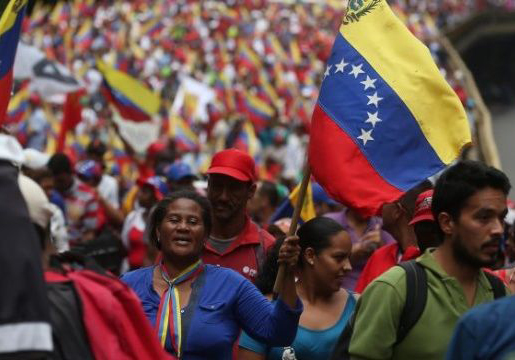
The ICJ calls for Venezuela to accept long-standing requests for country visits by UN Special Procedures whose mandates are most relevant to the rule of law and human rights crisis in the country.
The ICJ takes note of the announcement by the Venezuelan Government that it is inviting the UN Independent Expert on the promotion of a democratic and equitable international order, Mr. Alfred de Zayas, to visit the country.
This announcement, together with a recent invitation to the Special Rapporteur on the right to development is significant. For more than a decade, the Venezuelan Government has denied or left unanswered requests for visits to the country by numerous other of the independent experts (known as “Special Procedures”) of the United Nations. The last mission to Venezuela by a special procedure was the Special Rapporteur on Torture in 1996.
However, the breakdown of the rule of law and the extremely serious human rights situation in Venezuela make visits by other United Nations Special Procedures of urgent relevance.
“In the course of this year, extrajudicial and arbitrary executions, torture and ill-treatment of detainees, arbitrary detention, trial of civilians by military tribunals, and persecutions and attacks against opponents, dissidents and human rights defenders have become systematic and generalized practices in Venezuela, said Federico Andreu Guzman, ICJ South America Representative.
“It is therefore difficult to see why the Government of Venezuela would not respond to long-standing requests from Special Procedure mandates relevant to these violations in favour of proactively inviting other UN experts”, Andreu Guzman added.
The ICJ therefore calls on the Government of Venezuela to invite to visit the country the Working Group on Arbitrary Detention and the Special Rapporteurs on extrajudicial, summary or arbitrary executions; the independence of judges and lawyers; torture and other cruel, inhuman or degrading treatment or punishment; the rights to freedom of peaceful assembly and association; the promotion and protection of the right to freedom of opinion and expression; and on the situation of human rights defenders. All of these UN experts have long-standing requests to visit Venezuela, some for many years, which the Venezuelan Government has failed so far to accept.
“Under the Charter of the United Nations, Member States have the obligation to cooperate with the UN Special Procedures on human rights. This duty is of particular importance when the State is a member of the Human Rights Council, as is the case with Venezuela”, said Andreu Guzman.
The ICJ also calls on the Government of Venezuela to accept the request for a visit to the country that, since 2004, has been repeatedly issued by the Inter-American Commission on Human Rights.
Background
For several years, the following Special Procedures of the UN Human Rights Council have made requests to visit Venezuela: the Special Rapporteur on extrajudicial, summary or arbitrary executions; the Special Rapporteur on the situation of human rights defenders; the Working Group on Arbitrary Detention; the Special Rapporteur on the independence of judges and lawyers; the Special Rapporteur on the rights to freedom of peaceful assembly and association; the Special Rapporteur on violence against women, its causes and consequences; the Special Rapporteur on torture and other cruel, inhuman or degrading punishment; the Special Rapporteur on the promotion and protection of the right to freedom of opinion and expression; the Working Group on the issue of human rights and transnational corporations and other business enterprises; the Special Rapporteur on adequate housing as a component of the right to an adequate standard of living; and the Special Rapporteur on the right to food.
At the regional level, although it denounced the American Convention on Human Rights in September 2012, Venezuela is still a State party to three Inter-American human rights treaties (Inter-American Convention to Prevent and Punish Torture; Inter-American Convention on Forced Disappearance of Persons; and Inter-American Convention on the Prevention, Punishment and Eradication of Violence Against Women). However, Venezuela has systematically ignored recommendations of the Inter-American Commission on Human Rights (IACHR) and has also denied IACHR requests to visit the country, made since 2004.
Contacts
Federico Andreu-Guzmán, ICJ South America Representative, tel: +57 311 481 8094; email: federico.andreu(a)icj.org
Carlos Ayala Corao, ICJ Commissioner (Venezuela), tel: +57 414 243 4872; email: cayala(a)cjlegal.net
Alex Conte, ICJ Global Redress and Accountability Initiative, tel: +22 979 3802; email: alex.conte(a)icj.org
Sep 28, 2017 | Advocacy, Uncategorized
The ICJ today called on the UN Human Rights Committee and a group of UN Special Procedure mandates to take urgent follow up action on Venezuela in light of the grave and ever deteriorating human rights situation in the country.
In a letter to the UN Human Rights Committee, the treaty body responsible for monitoring implementation by States parties to the International Covenant on Civil and Political Rights (ICCPR), the ICJ called for urgent action by the Committee, either through its established follow-up procedure and/or through requesting a special interim report. The Committee’s follow-up procedure was referenced in the Committee’s Concluding Observations on Venezuela’s fourth periodic report under the ICCPR. Special interim reports may be requested by the Committee under Article 40(1)(b) of the ICCPR.
The ICJ also called for urgent action to be taken by the following UN Special Procedure mandates: the Working Group on Arbitrary Detention, the Special Rapporteur on freedom of opinion and expression, the Special Rapporteur on freedom of assembly and of association, the Special Rapporteur on the independence of judges and lawyers and the Special Rapporteur on torture and other cruel, inhuman or degrading treatment. This group of Special Procedure mandates had on 4 August 2017 issued a joint statement on the human rights situation in Venezuela.
The ICJ’s letters draw attention to several critical areas of concern:
- The rapidly deteriorating human rights situation;
- The lack of accountability of perpetrators of human rights violations;
- The lack of effective remedies and reparation for victims of human rights violations;
- The lack of independence of the judiciary;
- The institutional crisis arising from decisions of the Supreme Court of Justice;
- The unconstitutional election of the new National Constituent Assembly;
- The dismissal of the former Attorney General;
- The recent establishment of a ‘Truth Commission’;
- The intended revision of Venezuela’s Constitution; and
- Venezuela’s failure to notify its state of emergency under the ICCPR.
ICJ-Correspondence-VenezuelaFollowUp-HRCttee-2017-09-28 (download letter to the Human Rights Committee, in PDF)
ICJ-Correspondence-VenezuelaFollowUp-SPs-2017-09-28 (download letter to the Special Procedure mandates, in PDF)
ICJ reports:
Venezuela: the Supreme Court of Justice has become an arm of an authoritarian executive
Venezuela: rule of law and impunity crisis deepens
Venezuela: dismissal of Attorney General a further blow to the rule of law and accountability
Venezuela: Human rights and Rule of Law in deep crisis
Strengthening the Rule of Law in Venezuela
Sep 27, 2017 | News
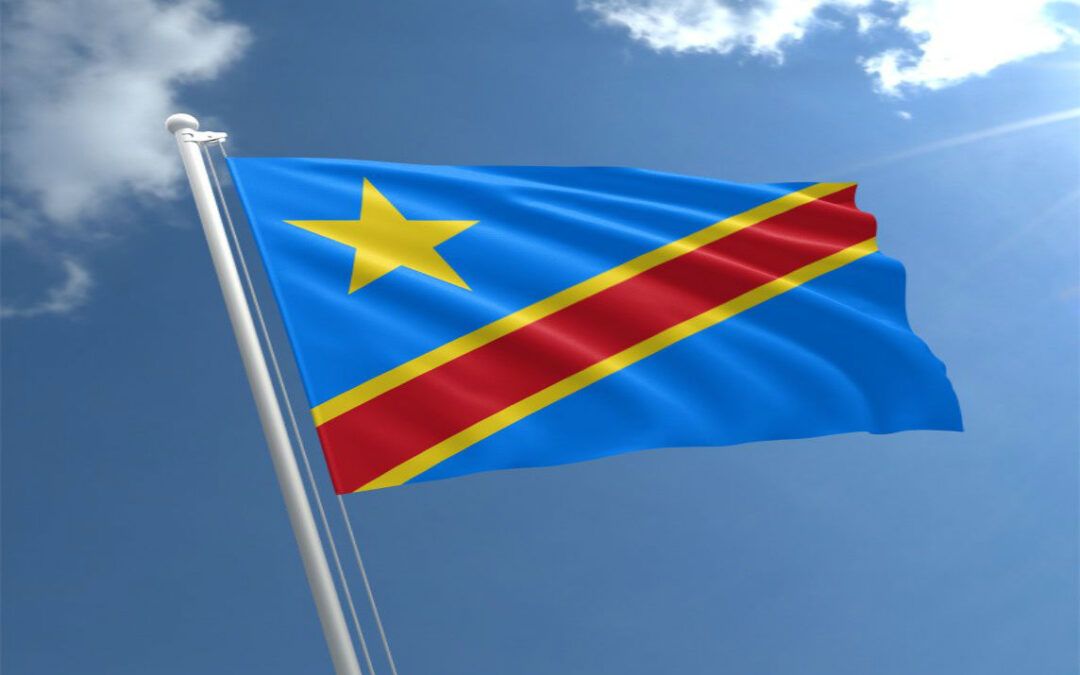
The ICJ has welcomed the recent decision of the African Commission on Human and Peoples’ Rights (ACHPR) on a recent decision found the Democratic Republic of Congo (DRC) responsible for the massacre of 70 people in Kilwa in 2004.
In its decision, the Commission not only urges the DRC State to pay 2.5 million US dollars compensation to eight victims and their families but also urges the DRC to prosecute Anvil Mining’s personnel involved in the massacre.
The African Commission also acknowledged the involvement of mining company Anvil Mining, an Australian-Canadian company (later bought by the Chinese company MinMetals) operating a copper and silver mine in Dikulushi, located 50 kilometers from Kilwa, that would
have provided logistical support to soldiers who bombarded civilians.
This decision sheds light on the corporate legal responsibility for human rights abuses, particularly in the extractive
industry sector, and suggests legal avenues for action against Anvil for alleged abuses.
Universal-KilwaMassacre-News-2017-ENG (full pdf ENG)