Mar 23, 2017 | News
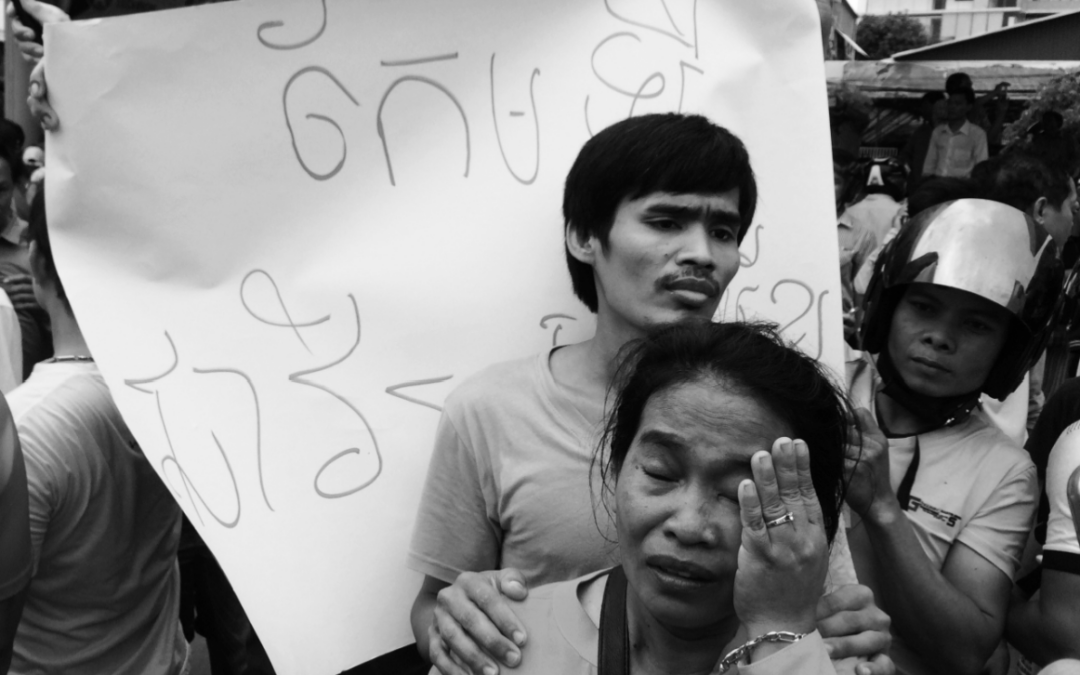
Cambodia should continue to investigate the killing of prominent political commentator Kem Ley in order to address key aspects of the case that appear to have been inadequately investigated, said the ICJ, Amnesty International, and Human Rights Watch today.
On 23 March 2017, the Phnom Penh Municipal Court found Oeuth Ang guilty of the premeditated murder of Kem Ley on 10 July 2016 and sentenced him to life imprisonment.
Prior to the half-day trial, which took place on 1 March 2017, the authorities released almost no information about the investigation.
“The trial revealed that the investigation appeared to be deficient in several important respects,” said Kingsley Abbott, the ICJ Senior International Legal Adviser who observed the trial.
“Until there is an independent, impartial and effective investigation to establish whether anyone else was involved in the killing, the victims of this serious crime, including Kem Ley’s wife and children, will be unable to obtain justice,” he added.
Even the very identity of the defendant was at issue. At trial, Oeuth Ang maintained he is 39-years-old, unmarried, and named “Chuob Samlab” – which translates in English as “Meet to Kill” – from Banteay Meanchey province.
However, the prosecutor submitted that based on the fingerprint on the ID card of Oeuth Ang, he is satisfied that the defendant is in fact Oeuth Ang, married, born in 1972, from Siem Reap province.
“The proceedings may have established that Oeuth Ang pulled the trigger, but the investigation does not seem to have considered whether someone else loaded the gun,” said Champa Patel, the Amnesty International Director for Southeast Asia and the Pacific. “It is clear that the authorities want to close the book on this case and move on but failures in the investigation of this heinous act can only serve to compound the injustice already suffered by the family of Kem Ley”.
The hearing commenced at 8:40 and concluded at 13:00. After Oeuth Ang gave evidence, ten witnesses gave oral testimony including two Caltex workers, seven officials who were involved in the investigation in different capacities, and a doctor who examined Kem Ley’s body at the scene of death.
Official reports and the statements of several witnesses were also read into evidence, and the prosecution played eight videos from different locations, including one captured by a closed circuit television (CCTV) camera inside the Caltex station where Kem Ley was killed.
Kem Ley’s widow, who was named as a civil party, did not appear at the trial but her civil party statement was read into evidence.
“The authorities’ failure to investigate so many clear gaps in the defendant’s story and the court’s unwillingness to examine them suggest that a quick conviction rather than uncovering all involved was the main concern,” said Phil Robertson, Deputy Asia Director at Human Rights Watch. “Kem Ley’s family have been outspoken in their disbelief that Oeuth Ang was solely responsible for the murder, and the trial’s conduct lends credence to their skepticism.”
Contact
Kingsley Abbott, ICJ Senior International Legal Adviser for Southeast Asia, t: +66 94 470 1345 ; email: kingsley.abbott(a)icj.org
Cambodia-KemLey Verdict-News-Press releases-2017-ENG (full story, in PDF)
Mar 9, 2017 | News
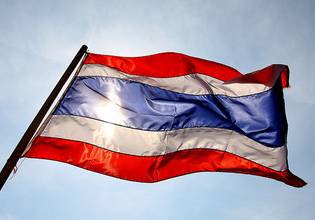
Amnesty International and the ICJ regret the decision of Thailand’s National Legislative Assembly (NLA) to further delay the passage of essential legislation criminalizing torture and enforced disappearances.
Our organizations call on the Thai government to cease its stalling measures and instead prioritize the amendment of the Draft Prevention and Suppression of Torture and Enforced Disappearance Act (Draft Act) in order to bring it into line with international law. The government should then ensure its passage into law without undue delay.
On 28 February, the Office of the High Commissioner for Human Rights announced that it had been informed that the NLA would not enact the Draft Act. The following day, an NLA official speaking to BBC Thai confirmed that the draft would be “returned [to the Thai Cabinet] for more consultations… with Interior officials, police authorities, the national security sector, military authorities and prosecutors.”
The Draft Act is the result of years of effort by government authorities, including by Ministry of Justice officials who consulted with our organizations and took account of many of our recommendations in elaborating it. The draft was approved by Thailand’s Cabinet in May 2016.
The recent decision by the NLA has indefinitely delayed the enactment of this important piece of legislation, which would represent a significant step towards preventing torture and enforced disappearances in Thailand.
The slow-tracking of this law in the face of all the commitments Thailand has made over the years right up to last year is extremely disappointing, especially for the victims of torture and enforced disappearances who have struggled to obtain justice in the absence of a clear legal framework.
The most recent version of the Draft Act addresses many existing gaps in Thailand’s current legal framework and could support Thailand’s compliance with its obligations under international human rights law. However, further amendments are needed to address significant shortcomings in the Draft Act.
In particular, the Draft Act omits key elements from the definitions of torture and enforced disappearances, does not criminalize acts of cruel, inhuman or degrading treatment, and fails to define enforced disappearance as a continuing crime. Additionally, the Draft Act does not extend criminal liability beyond the direct commission of the act and fails to unequivocally bar the use as evidence in court proceedings of statements obtained by torture.
Thailand should make it a top priority to address these and other concerns and to enact the law as soon as possible. The urgent need to amend and enact the Draft Act is underscored by recent reports alleging the use of torture and other ill-treatment by state security forces and the continued failure to hold accountable perpetrators of torture, other ill-treatment and enforced disappearances.
Our organizations remain committed to providing any necessary assistance to the Thai government in amending the Draft Act or otherwise acting to prevent torture and enforced disappearances in Thailand.
Background
Thailand is a state party to the International Covenant on Civil and Political Rights (ICCPR), the Convention against Torture and other Cruel, Inhuman or Degrading Treatment or Punishment (CAT), and has signed, but not ratified, the International Convention for the Protection of All Persons from Enforced Disappearance (ICPPED).
The expert UN bodies overseeing the implementation of these treaties have consistently called upon states parties to criminalise torture and enforced disappearance as specific crimes.
On 13 and 14 March 2017, the UN Human Rights Committee will review Thailand’s compliance with the ICCPR.
In Thailand’s 15 November 2016 reply to the Committee’s List of Issues,[1] it noted that it was in the process of passing the Draft Law which would “provide clear definition and set up specific offence on torture to be in line with the terms set forth under CAT” and “serve as an implementing legislation for ICPPED.”
It also noted that the Draft Act “aims to strengthen the prevention, suppression, and prosecution mechanism and to ensure remedy for victims as well as address the problem of misuse, and abuses of power by government authorities with regard to torture and enforced disappearances.”
It concluded by noting that “[o]n 24 May 2016, the Cabinet approved the draft Act in principle. The draft has been reviewed by the Council of State and is currently waiting to be submitted to the legislative branch for consideration.”
[1] Human Rights Committee, “Replies of Thailand to the List of Issues,” U.N. Doc. CCPR/C/THA/Q/2/Add.1, para 51.
Thailand-Joint Statement-Torture Legislation-News-2017-ENG (Press release in PDF)
Contact
Kingsley Abbott, Senior International Legal Adviser for Southeast Asia, Tel: +66 94 470 1345, E-mail: Kingsley.abbott(a)icj.org
Mar 3, 2017 | News
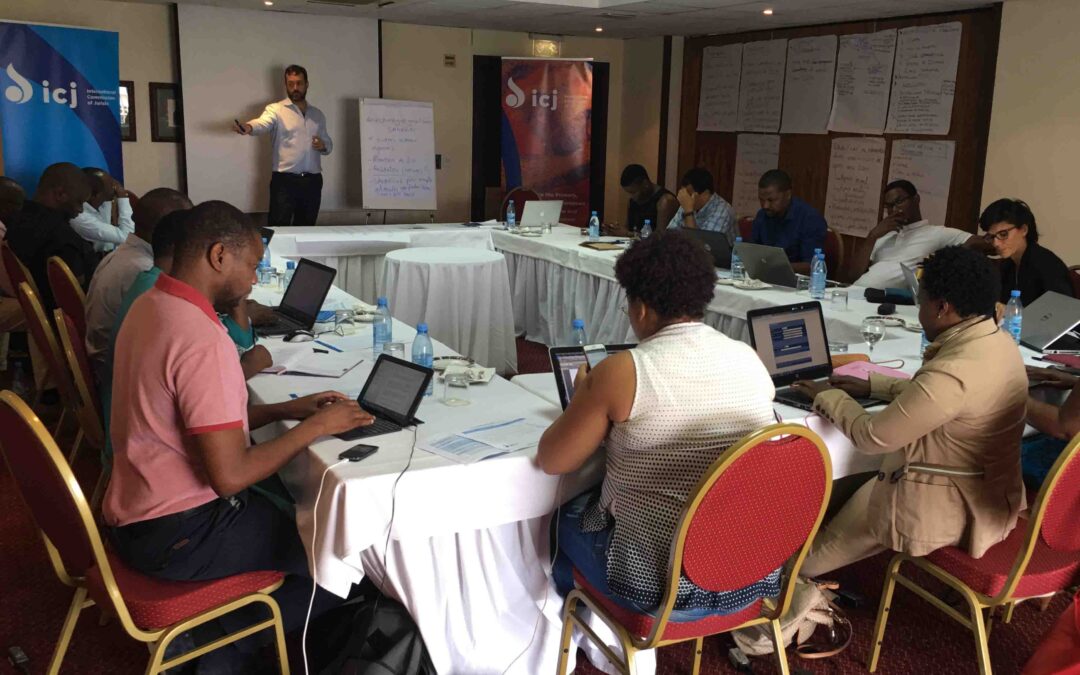
15 HRDs from Mozambique, including lawyers and journalist working in different provinces and towns of Mozambique including Nampula, Manica, Tete, Sofala and Beira held a strategy meeting for the protection of human rights defenders (HRDs) in Maputo from 2-3 March 2017.
The meeting was facilitated by the ICJ in collaboration with the Southern Africa Human Rights Defenders Network (SAHRDN) supported by the Open Society Foundations (OSF) and Open Society Institute of Southern Africa (OSISA).
Participants reflected on the state of human rights in Mozambique with a focus on prevailing political and economic conditions requiring urgent multi-pronged interventions to support HRDs.
The participants developed practical steps for legal protection of HRDs, enhancing a HRDs network, the nature of services and safety mechanisms required to protect HRDs including in violent conflict. In addition, ideas on how to address business and human rights violations were explored.
The use of strategic litigation at the domestic and international level to protect human rights was looked at and specific situations mapped as requiring some attention.
Linkages to regional and international human rights mechanisms for protection purposes and challenging impunity were discussed and some initial measures to take at the African Commission on Human and Peoples Rights were identified.
Contact
Arnold Tsunga, ICJ Regional Director for Africa, t: +27 716405926, e: arnold.tsunga(a)icj.org

Feb 27, 2017 | News, Publications, Reports, Thematic reports
The Government of Myanmar should impose a moratorium on the development of Special Economic Zones (SEZs) until it can ensure SEZs can be developed inline with international human rights laws and standards, said the ICJ at a report launch held today in Yangon.
The 88-page report, entitled Special Economic Zones in Myanmar and the State Duty to Protect Human rights, assesses the laws governing Myanmar’s SEZs and finds that the legal framework is not consistent with the State’s duty to protect human rights.
For example, a case study examining the Kyauk Phyu SEZ in Rakhine State shows that the land acquisition process initiated in early 2016 lacks transparency, does not comply with national laws on land acquisition, and risks violating the rights of 20,000 residents facing displacement.
“The SEZ Law undermines the protection of human rights, and critical legal procedures are often poorly implemented, so the Kyauk Phyu project risks repeating the rights violations that have been associated with SEZs in the past,” said Sam Zarifi, the ICJ’s Asia Director.
“The NLD-led Government can make a break from the past by ensuring economic development projects benefit Myanmar’s people, rather than rushing to facilitate projects which result in human rights violations and ultimately undermine sustainable development,” he added.
Myanmar’s legal framework for SEZs is based on the 2014 SEZ Law and incorporating national laws governing land, labour and the environment.
The report shows that while national laws require Environmental Impact Assessments and the application of international standards on involuntary resettlement, the SEZ Law does not establish clear accountabilities for the implementation of these procedures.
This has contributed to human rights violations and abuses in each of Myanmar’s three SEZs, the report says.
“It has been encouraging that government officials have emphasized their commitment to protecting human rights in SEZs in line with the rule of law,” said Sean Bain, the ICJ’s Legal Consultant in Myanmar and lead author of the report.
“The legal reforms recommended in this report will be critical to meet these commitments while fulfilling the State’s duty to protect human rights in SEZs. We also suggest that investors take heightened due diligence measures to ensure they are not complicit in rights violations,” he added.
The report was based on extensive legal research as well as interviews with over 100 people, from affected communities to investors and government officials, during 2016.
Key recommendations to the Government of Myanmar
- Protect human rights in Myanmar’s SEZs by amending the SEZ Law, through meaningful public consultation in accordance with international standards.
- Order a moratorium on the development of SEZs, and on entering related investment agreements, until the SEZ Law has been amended to ensure conformity with international human rights law and standards.
- Commission a Strategic Environmental Assessment for the Kyauk Phyu SEZ, in line with Myanmar’s environmental conservation laws. This would involve consultation to inform decision-making on the Kyauk Phyu SEZ and related projects, by identifying cumulative environmental and social impacts of all the developments in Kyauk Phyu, while considering conflict dynamics and economic development in Rakhine State.
- Suspend land acquisition in Kyauk Phyu until after the completion of a resettlement plan that is in line with international standards, as required in the EIA Procedure.
Contact
Sean Bain, ICJ Legal Consultant in Myanmar, t: +95 9263533230 ; e: sean.bain(a)icj.org
Myanmar-SEZ assessment-Publications-Reports-Thematic reports-2017-ENG (full report, in PDF)
Myanmar-SEZ assessment SUMMARY-Publications-Reports-Thematic reports-2017-ENG (executive summary of the report, in PDF)
Myanmar-SEZ assessment full-Publications-Reports-Thematic reports-2017-BUR (Burmese version of full report, in PDF)
Myanmar-SEZ assessment-Publications-Reports-Thematic reports-2017-BUR (Burmese version of the executive summary, in PDF)
Feb 23, 2017 | News
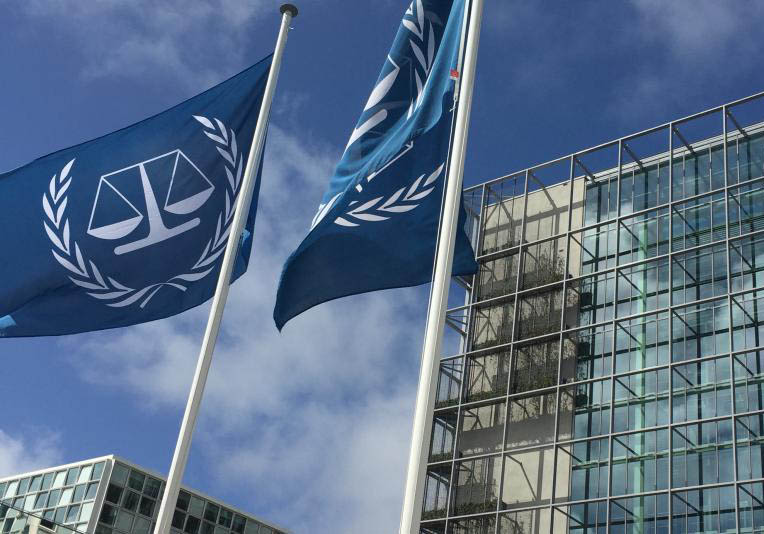
The ICJ has welcomed the decision by The Gambia to rescind their notice of withdrawal from the International Criminal Court (ICC), as well as a decision of the South African High Court to nullify a similar withdrawal notice by South Africa.
On 16 February 2017, The Gambia filed a notice with the United Nations (UN) Secretary General that it was withdrawing its previous notice of denunciation from the Rome Statute for the ICC made last year by the Government of former President Yahya Jammeh.
The South African High Court ruled on 22 February 2017 that the withdrawal by South Africa was unconstitutional and invalid, as the Government had bypassed the Parliament in taking its decision. The ICJ urges the South African government to promptly comply with the High Court order and to abandon any further moves at withdrawal.
The ICJ also calls on government Burundi to reverse similar moves to withdraw Burundi from the jurisdiction of the ICC
“The ICC is a bedrock component of the architecture developed by the international community over decades to tackle impunity for the most serious crimes and gross human rights violations occurring throughout the world,” said Arnold Tsunga, Director of the ICJ Africa Program.
“African States have been the largest bloc of support for the ICC. Notwithstanding recent public rhetoric at the African Union, African States are in a position to show global leadership and reaffirm their commitment to the ICC and international justice,” he added.
The ICJ considers that while there are aspects of the ICC that require reform, there is at present no viable framework to combat impunity for genocide, war crimes, crimes against humanity and aggression other than the ICC.
“African Member States have a great potential to push for appropriate reform of the ICC with a view to tackling impunity globally,” said Arnold Tsunga.
Contact
Arnold Tsunga, t: +27716405926 ; e: arnold.tsunga(a)icj.org