Jul 7, 2016 | News
Following reports that Saif al Islam Gadhafi has been released from prison in Libya, the ICJ today called for him to be promptly arrested and surrendered to the International Criminal Court (ICC).
Saif al Islam Gadhafi was convicted by the Tripoli Criminal Court in July 2015 and sentenced, along with eight other former officials of the Moammar Gadhafi regime, to the death penalty.
At the time, the ICJ expressed its concern that the trial had not been fair, expressed its opposition to the death penalty, and called on the Libyan authorities to surrender Saif al Islam Gadhafi to the ICC.
In 2011, the ICC issued an arrest warrant for Gadhafi, who faces two counts of Crimes against Humanity including murder and persecution of civilians, allegedly conducted as part of an orchestrated campaign against demonstrators during the uprising in Libya in 2011.
Gadhafi was reportedly released from a prison in Zintan in April 2016, following instructions from the Minister of Justice to the city’s chief prosecutor. The instructions were reportedly based on a general amnesty law that was promulgated by the Libyan House of Representatives in August 2015.[1]
“Granting amnesty for crimes such as those for which Saif al Islam Gadhafi was allegedly responsible is totally incompatible with the rule of law, the right of victims to justice, and Libya’s international human rights obligations”, said Said Benarbia, Director of the MENA programme at the International Commission of Jurists.
“Instead of shielding him from accountability, the Libyan authorities should ensure that all those responsible for past and ongoing gross violations of international human rights law and serious violations of international humanitarian law are brought to justice in fair and effective criminal trials. A first step in this direction would be for the Libyan authorities to arrest Saif al Islam Gadhafi and surrender him to the ICC as a matter of urgency.”
The ICJ believes that impunity for gross human rights violations and war crimes, including impunity resulting from amnesties, is not conducive to peace, political stability and national reconciliation in Libya.
Indeed, such impunity may be perceived by those who continue to systematically violate rights and freedoms as a signal that they may never be criminally held to account.
At the same time, the ICJ absolutely opposes the death penalty, which it considers inherently to violate the right to life and the right not to be subjected to cruel, inhuman or degrading punishment.
Gadhafi would not face the death penalty in any ICC trial.
Saif al Islam Gadhafi’s lawyer has reportedly indicated that he will argue to the ICC that it should drop its proceedings, on the basis of article 20 of the Statute of the ICC, which addresses the circumstances in which a person who has already been tried for certain conduct by another court, may subsequently be tried by the ICC.
The ICJ stresses that any hearing to consider such arguments should not in any way suspend Libya’s obligation immediately to implement the ICC arrest warrant and to surrender Saif al Islam Gadhafi to the ICC.
“Libya should comply with its obligations under international law and dismantle the structural impunity that continues to prevail in the country, including by putting an end to politicized judicial proceedings and ensuring that prosecutors carry out their functions independently, impartially, and in defence of human rights,” added Benarbia.
[1] Law No. 6 of 2015
Contact
Doireann Ansbro, Associate Legal Adviser, ICJ Middle East and North Africa Programme, t: +216 71 841 701, e: doireann.ansbro(a)icj.org
Libya-Saif al Islam Gadhafi-News-Press Releases-2016-ARA (full press release in Arabic, PDF)
Jun 22, 2016 | Advocacy
The ICJ and other human rights groups issued a joint statement on the 10th anniversary of the Optional Protocol to the Convention against Torture.
It can be downloaded here: Universal-OPCAT+10 Joint Statement-Advocacy-2016-ENG (full text in PDF)
Jun 21, 2016 | News
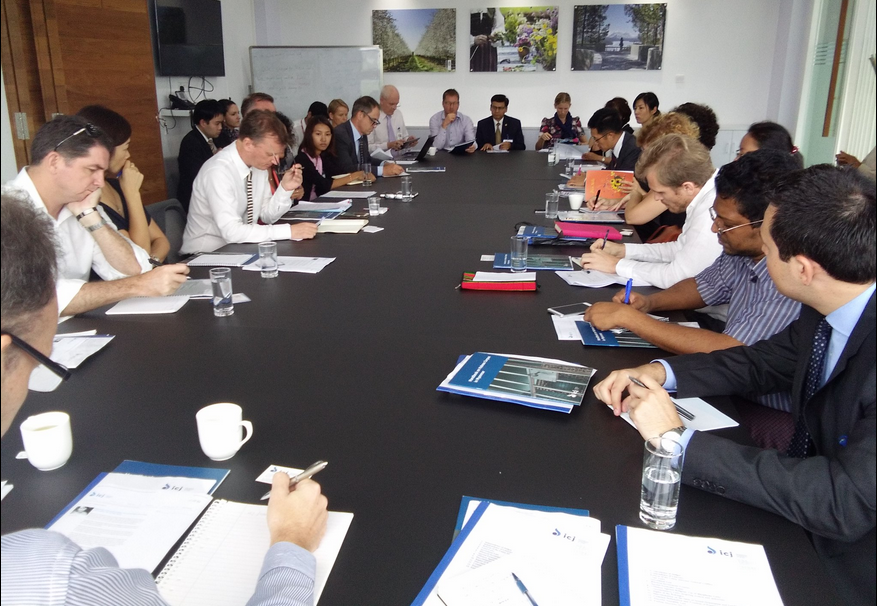
The ICJ urged the diplomatic community in Myanmar to assist, and assess, the new government’s efforts to improve the protection and promotion of human rights in the country at a diplomatic dialogue today.
The ICJ shared its 14 General Recommendations to the new Government and Parliament, with ambassadors and high-level diplomatic representatives, and discussed specific, actionable recommendations to the Government to effectively address human rights violations immediately and in the long term and to provide redress to those whose rights have been violated.
Access to justice for victims of human rights violations has been severely curbed in Myanmar during decades of military rule.
Most of the population has been consistently denied access to the courts and effective remedies as a result of unfair and discriminatory laws and poor court decisions.
With an improper regulatory regime for investment and environmental protection, and an ineffective judiciary to enforce laws and provide access to justice, economic development has risked undermining human rights protection and negatively impacting on economic, social and cultural rights.
Vani Sathisan, ICJ’s International Legal Adviser for Myanmar, stated that while the new government is more receptive than its predecessor to international human rights laws and standards, it should urgently establish a clear plan on strengthening rule of law reform and that all legislation must be guided by the principles of non-discrimination, greater accountability, transparency and justice.
Among the key recommendations the ICJ shared are:
- Supporting the committing of resources to the judiciary as well as the Attorney General’s Office to improve the state of legal education, court facilities, and safeguards to prosecutors to undertake investigations independently;
- Pushing for the passage of new land laws in consultation with civil society modeled on international standards and best practices;
- Ensuring that a new investment law conforms to the new land law that protects all forms of land tenure and provides access to justice when human rights occur;
- Seeking more clarity on the Government’s ability to monitor and regulate the conduct of businesses and their impacts on human rights;
- Supporting and strengthening the capacity of the Myanmar National Human Rights Commission to undertake investigations on human rights violations independently and impartially;
- Repealing or amending laws that are abused to violate the right to freedom of expression and opinion; and
- Encouraging the Government to consult and engage more closely with civil society and the international human rights community.
The diplomatic dialogue aimed to provide the international human rights organizations with an opportunity to clarify their various policy guidelines and provide updates to assist the diplomatic community with their multilateral lobbying efforts in Myanmar with the Executive, Legislative and Judiciary, and civil society.
The Embassy of Denmark hosted the event. Members of the diplomatic community included those from the EU, UK, Canada, Denmark, Sweden, Finland, Australia, The Philippines and Bangladesh.
The ICJ was joined in a panel by the Office of the High Commissioner for Human Rights and Human Rights Watch.
Jun 13, 2016 | Events
Who judges the judges?
Accountability for judicial corruption and judicial complicity
Side Event Tuesday 14 June 2016, 14:00 – 16:00
Room XXIII, Palais des Nations, Geneva.
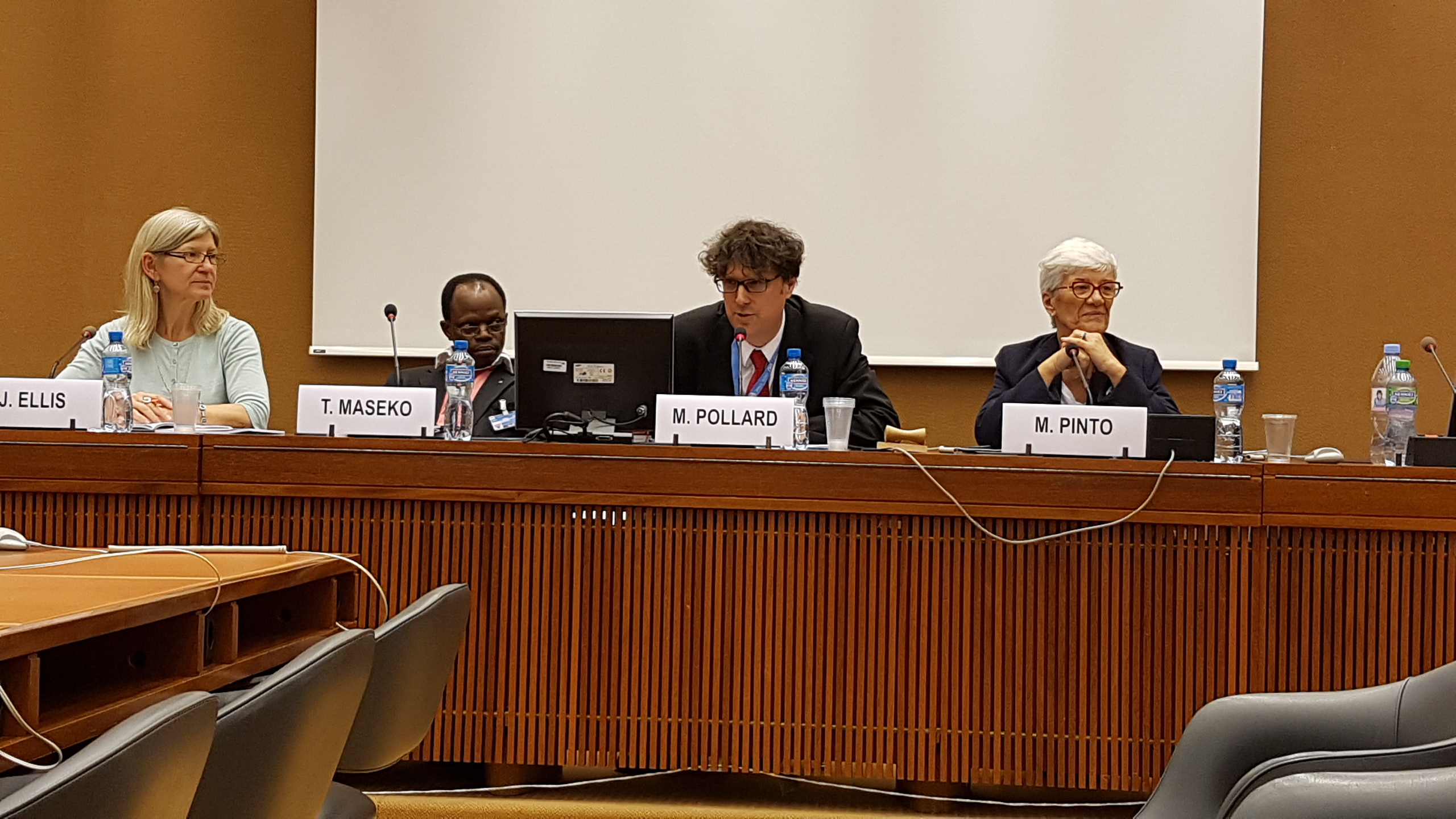
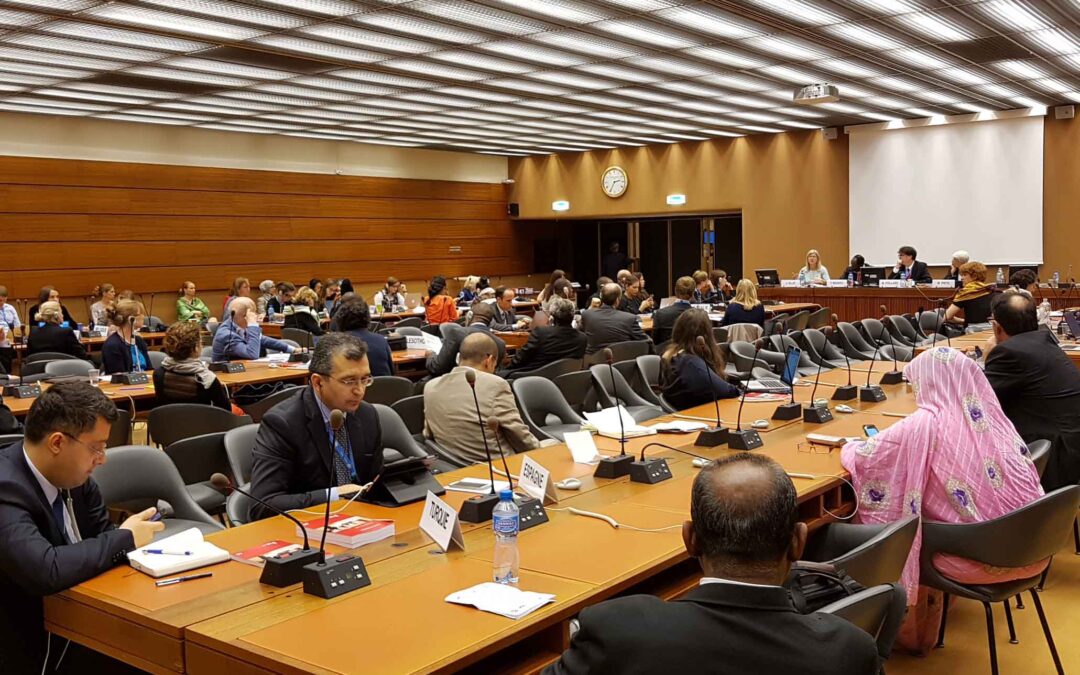
The International Commission of Jurists (ICJ) and the International Bar Association (IBA) organised a side event to the 32nd session of the Human Rights Council, on the topic of accountability for judicial corruption and judicial involvement in human rights violations.
The well-attended event considered the need for judicial accountability, and different options for effective mechanisms and procedures of accountability. Recommendations for ordinary situations were complemented with reflections on circumstances of transitions where the judiciary have been deeply implicated in the violations of the previous regime, as well as particular challenges in developing countries.
At the event the ICJ launched its new Practitioners’ Guide on Judicial Accountability, and the IBA presented the recent report of its Judicial Integrity Initiative on Judicial systems and Corruption. Print copies of both publications were distributed.
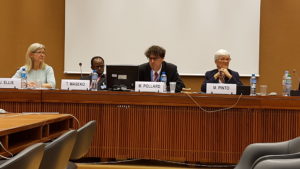
A panel discussion also featured the UN Special Rapporteur on the independence of judges and lawyers, as well as Thulani Maseko, a lawyer from Swaziland who was subjected to prolonged arbitrary detention and imprisonment by judges in Swaziland, for speaking publicly about judicial misconduct in the country.
Speakers:
- Mónica Pinto Special Rapporteur on the independence of judges and lawyers
- Thulani Maseko Lawyer, Swaziland
- Jane Ellis, Director, Legal & Policy Research Unit, International Bar Association
- Matt Pollard, Centre for the Independence of Judges & Lawyers, International Commission of Jurists
In addition to the ICJ and IBA, side event co-sponsors included:
- The Permanent Mission of Hungary to the UN
- Commonwealth Magistrates’ and Judges’ Association
- Commonwealth Lawyers Association
- Rechters voor Rechters (Judges for Judges), Netherlands
- International Legal Assistance Consortium
The ICJ Practitioners’ Guide on Judicial Accountability, and the research and consultations on which it is based, was made possible with the financial support of the Republic and Canton of Geneva and the Ministry of Foreign Affairs of Finland.
For more information, please contact Matt Pollard.
ICJ Practitioners’ Guide No. 13 on Judicial Accountability
The ICJ’s Practitioners’ Guide No. 13 on Judicial Accountability aims to help practitioners ensure accountability for serious judicial misconduct, such as corruption or complicity in human rights violations, while preserving the independence of the judiciary.
It focuses on international standards on accountability mechanisms and procedures, illustrated by practical examples. It addresses not only the accountability of individual judges, and the accountability of judiciary as an institution, but also State responsibility under international law, particularly in relation to harm caused to victims of violations by judges.
The Guide was greatly informed by discussions among eminent judges and lawyers from around the world, convened by the ICJ Centre for the Independence of Judges & Lawyers, in Tunisia in October 2015 , and in Geneva in December 2015.
Among the topics covered by the new ICJ Guide are:
- The obligation to ensure an independent, impartial and accountable judiciary.
- The forms of judicial accountability, including:
- Remedy and reparation for victims,
- The responsibility of the State,
- Removal from office, disciplinary sanctions, and other administrative measures,
- Criminal responsibility, and
- The right to the truth.
- The structure and elements of accountability bodies, such as:
- Review of decisions through appeal or judicial review,
- Judicial councils,
- The ordinary courts,
- Parliamentary procedures,
- Ad hoc tribunals,
- Anti-corruption bodies,
- Civil society monitoring and reporting,
- National human rights institutions,
- Professional associations,
- International accountability mechanisms.
- Procedural issues, including:
- Necessary powers for accountability mechanisms,
- Procedural rights of the judge,
- Procedural rights of complainants and victims,
- Publicity and transparency,
- Procedures for lifting judicial immunity,
- Temporary suspension during proceedings, and
- Selective enforcement for improper purposes.
- Mechanisms in exceptional circumstances, such as transitions from undemocratic or authoritarian regimes, including:
- Truth commissions,
- Vetting, and
- Mass removal and re-application.
- Particular challenges in relation to developing countries.
May 31, 2016 | News
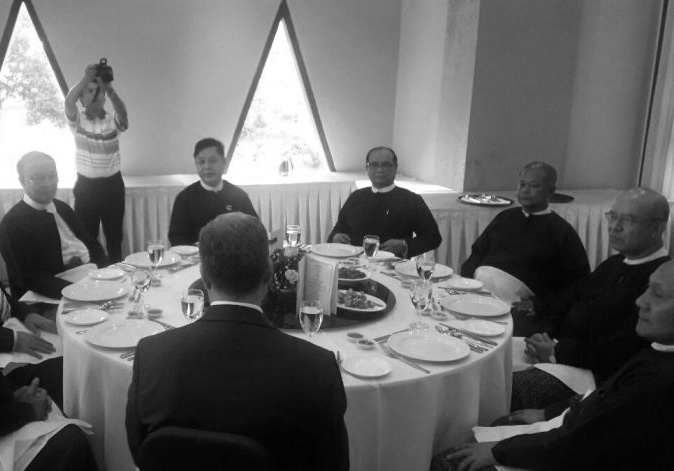
Myanmar’s Supreme Court engages in 2nd High Level Dialogue with the ICJ on Drafting and Implementing a New Judicial Code of Ethics and Accountability.
The ICJ, the United Nations Development Program and the Office of the Supreme Court of the Union (OSCU) held a High Level Dialogue on “Implementing a Code of Judicial Ethics” in Nay Pyi Taw on 30-31 May 2016.
This dialogue followed a commitment by the OSCU to draft a code and to ensure it is informed by and implemented in accordance with international best practice. The OSCU’s Judicial Ethics Review Committee, Supreme Court and High Court Judges and other senior court administrators participated in the dialogue.
Building on the previous dialogue’s focus on the contents of a code of ethics, the participants and their international counterparts from the ICJ and UNDP discussed international standards for accountability and implementation mechanisms to accompany a code of ethics.
In opening the dialogue, the Honourable Supreme Court Justice of the Union, U Mya Thien explained that the new code reflected international standards and would enhance public trust and promote accountability in the Judiciary.
In his opening remarks, ICJ Commissioner and Justice of the Supreme Court of South Africa, Azhar Cachalia, explained the importance of the code as a basis for legitimacy and independence.
He stressed that the judiciary must become accountable to the public.
“Myanmar has an historic opportunity to make decisions that will shape the judiciary for generations to come,” he said.
During the dialogue, the UNDP’s Elodie Beth outlined research on regional judicial accountability and its lessons for Myanmar.
Sam Zarifi, the ICJ’s Regional Director shared experience and international standards on implementing a code of ethics Zarifi explained that “in order for it to be effective, the Supreme Court must establish mechanisms and institutions to hold judges accountable to the code of ethics.”
All participants agreed that implementing a proper code of ethics would strengthen the accountability and independence of Myanmar’s judiciary.
Both the UNDP and the ICJ congratulated the OSCU for following its Strategic Plan for 2015-2018 and engaging in a dialogue designed to further this process.
Both expressed willingness to continue working with Myanmar’s judiciary on the issues of judicial independence, the rule of law and human rights.