May 30, 2016 | News
The ICJ commends the victims of the former Chadian president Hissene Habre for their relentless pursuit of justice that resulted in Habre’s conviction of crimes against humanity.
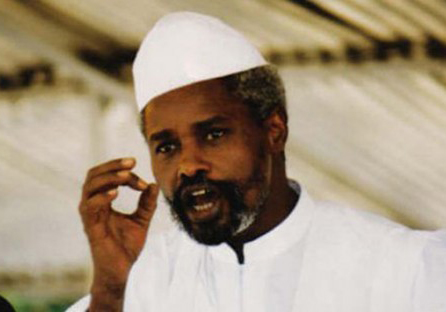
Today Hissene Habre (photo) was convicted for the murders, summary executions and torture of over 40,000 people, which were committed during his rule from 1982-1990 until he was deposed by the current president Idriss Deby Itno.
For over two decades victims and survivors groups have been campaigning with human rights organizations for an end to the lack of accountability and impunity that enabled Habre to spend years in exile before prosecution.
Speaking after the handing down of the judgement by the Extraordinary African Chambers, Wilder Tayler, ICJ’s Secretary General, reminded the African Union of the “need to enhance effectiveness of the African Court on Human and Peoples’ Rights to ensure that crimes against humanity can be addressed in a timely way that ensures the provision of remedies to victims of human rights violations.”
Further, Tayler urged other countries that have housed war criminals to reconsider their attitude towards international human rights and criminal law, and to ensure that international jurisdiction and prosecution requirements to end impunity are met.
In conclusion, the Secretary General, expressed his hope that “this event mark the beginning of the end of the African continent being perceived as an epicentre of impunity.”
Contact
Arnold Tsunga, ICJ Regional Director for Africa, t: +27 73 131 8411, e: arnold.tsunga(a)icj.org
May 30, 2016 | News
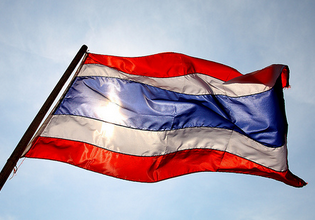
The ongoing criminal trial in the Loei Provincial Court, where a verdict is awaited tomorrow, is an important test of Thailand’s commitment to hold those responsible for criminal offences against human rights defenders to account, the ICJ and Protection International said today.
On 31 May, the Loei Provincial Court will render its verdict following the trial of retired Royal Thai Army officer, Lt Gen Poramet Pomnak, and his son, Royal Thai Army officer, Lt Col Poramin Pomnak, on criminal charges related to their alleged participation in a violent attack by a group of over 100 armed men against members of the Khon Rak Ban Kerd Group (KRBKG) in Nanonbong village in Loei and other villagers.
The victims were assaulted and held captive for over seven hours during the attack in the evening of 15 May 2014.
More than 20 people were injured, with seven requiring hospitalization for serious injuries.
KRBKG is a community-based group protesting what they allege is the damaging impact of mining operations on their health and their environment.
Most of KRBKG’s activities have focused on stopping the operations of the Phuthapfa gold mine operated by Thai company, Tungkum Ltd., situated in Loei Province.
“This case has become emblematic of the human rights abuses faced by human rights defenders trying to protect their communities in Thailand,” said Sam Zarifi, ICJ’s Asia Director. “Many people are looking at this case to see whether the Thai government will follow through on its commitment to protect human rights defenders.”
The attack on Nanonbong village occurred after KRBKG and local residents barricaded the road to the gold mine, which passes through the village.
During the attack, the barricade was destroyed and at least 13 trucks were reportedly seen transporting materials from the mine site.
Partly based on the villagers’ testimony that Lt Col Poramet Pomnak and Lt Col Poramin Pomnak were involved in the 15 May violence, the two were indicted on several charges, including offences of ‘injury to the person causing bodily harm’ and ‘false imprisonment’ (or illegal deprivation of liberty), under articles 295 and 309 of the Thai Criminal Code.
“Given credible reports that a group of over 100 armed men were involved, the ICJ is concerned that only two people have been indicted for the attack, and we are therefore calling on the Thai authorities to re-open investigations and ensure all those responsible are held to account and redress is provided for the victims concerned,” Zarifi added.
The case against Lt Col Poramet Pomnak and Lt Col Poramin Pomnak comes against a background of disputes between KRBKG and Tungkum Ltd.
The company filed at least 19 criminal and civil lawsuits against 33 members of KRBKG and other villagers in the past seven years.
One of those cases includes claims of criminal defamation against a 15-year old girl who allegedly made negative statements about the company’s activities on a television program.
Members of KRBKG have joined as plaintiffs in the criminal case and are demanding compensation from the two defendants.
Background
Lt Col Poramet Pomnak and Lt Col Poramin Pomnak were formally indicted on the following charges of the Thai Penal Code: articles 295 (‘injury to the person causing bodily harm’) and 296 (sentencing for bodily harm), 309 (‘false imprisonment’ or ‘illegal confinement’) and 310 (sentencing for false imprisonment), 358 (‘offence of mischief’ or ‘damage to property’) 371 (‘offence of bearing arms’), 376 (‘offence of discharging a firearm’), 391 (sentencing for acts of violence not amounting to bodily harm) taken together with articles 32, 33, (‘forfeiture of property used in the commission of an offence’) 83, 84, (principals and accomplices, accessories or conspirators) 91, (articles 90 and 91 set out provisions for sentencing when an act constitutes multiple offences. Sentences can be awarded for each offence consecutively, but with a maximum time as prescribed by article 91); and articles 4, 7, 8bis, 72, 72bis of the Firearms, Ammunition, Explosives, Fireworks, and the Equivalent of Firearms Act B.E.2490 (1947); article 3 of the Firearms, Ammunition, Explosives, Fireworks, and the Equivalent of Firearms Act (No.3) B.E.2501 (1958); No. 3, 6, 7 of the Order of the Announcement of the National Administrative Reform Council no.44 dated 21 October 1976.
Thailand has a legal obligation to protect all human rights defenders from retaliation for the legitimate and lawful exercise of their rights. On 17 December 2015, Thailand joined 126 other States at the UN General Assembly in adopting one of the latest UN resolutions on human rights defenders. General Assembly resolution 70/161 recognizes the importance of States’ protection of human rights defenders, in particular from being prosecuted for peaceful activities and against other threats, harassment and intimidation; and encourages States to investigate allegations of intimidation and reprisals, and to bring perpetrators to justice.
Thailand-Loei case-News-2016-THA (full text in Thai, PDF)
May 13, 2016 | News
Nepal’s leading political parties should not bargain away justice for victims of serious human rights abuses as part of an agreement to form a new coalition government, the ICJ, Human Rights Watch, and Amnesty International said today.
A new agreement between the ruling parties threatens to entrench impunity for those who planned and carried out killings, enforced disappearances, torture, and other crimes in Nepal’s civil war, just as the country’s long delayed transitional justice process is finally about to get under way.
On May 5, 2016, presumably in a bid to retain the support of the United Communist Party of Nepal (Maoist) (UCPN-M) for the Communist Party of Nepal-Unified Marxist Leninist (CPN-UML) coalition government of Prime Minister K.P. Sharma Oli, the two ruling coalition partners agreed to a nine-point deal containing provisions that aim to shield perpetrators of abuses in Nepal’s decade-long civil war.
Provision 7, which directs the authorities to withdraw all wartime cases before the courts and to provide amnesty to alleged perpetrators, is particularly problematic.
“This political deal between the ruling parties is extremely damaging to the credibility of an already deeply politicized and flawed transitional justice process in the eyes of Nepal’s victims,” said Sam Zarifi, ICJ Asia-Pacific Director.
“Moreover, it flies in the face of Nepal’s international human rights obligations and the rulings of its own Supreme Court by trying to wash away the crimes of the conflict by attempting to coopt pending criminal cases and provide blanket amnesty to alleged perpetrators,” he added.
The Supreme Court of Nepal has in several instances reaffirmed the principle under international law that amnesties are impermissible for serious international crimes.
However, Nepal authorities have consistently ignored the orders from the country’s highest court.
Nepal has an obligation under international law to investigate and, where sufficient evidence exists, prosecute crimes under international law, including torture and other ill-treatment, enforced disappearance, extrajudicial executions, war crimes, and crimes against humanity.
Article 2 of the International Covenant on Civil and Political Rights (ICCPR) and Article 14 of the Convention against Torture and Other Cruel, Inhuman and Degrading Treatment or Punishment (CAT) – both treaties to which Nepal is a party – require states to ensure the right to an effective remedy and reparation for victims of human rights violations.
“The political deal by the ruling parties to grant amnesty to those responsible for conflict-era human rights abuses is a callous attempt to disregard Nepal’s international treaty obligations by violating victims’ right to an effective remedy,” said Brad Adams, Asia Director at Human Rights Watch. “Nepal’s political deal jeopardizes the war victims’ last best hope for justice and accountability.”
The applicability of this international obligation under Nepali law was reaffirmed by the Nepal Supreme Court in its 2015 decision in the Suman Adhikari case, striking down provisions of the Investigation of Disappeared Persons, Truth and Reconciliation Commission Act, 2014 (TRC Act) that it ruled were inconsistent with international law and ordering the government to amend the TRC Act, the May 2014 legislation creating the two transitional justice mechanisms, the Commission on Investigation of Disappeared Persons (COID) and the Truth and Reconciliation Commission (TRC).
The Supreme Court ruled in the same decision that criminal cases already before the judiciary could not be transferred to the two commissions, confirming that the judiciary and not the commissions had the authority to determine the criminality of conflict-era human rights violations.
“Nepal’s ruling parties cannot bargain away victims’ rights to truth, justice, and reparation by using the commissions as a substitute for their legal obligations to investigate and prosecute human rights abuses through the criminal justice system,” said Champa Patel, South Asia Regional Office Director at Amnesty International.
The ICJ, Human Rights Watch, and Amnesty International, along with Nepali civil society, victims’ groups, the United Nations, and the international diplomatic community, have consistently called for the Nepal government to amend the TRC Act in line with Nepal’s international obligations as well as the Supreme Court’s jurisprudence, in order to ensure a credible transitional justice process that safeguards victims’ rights and conforms to rule of law principles.
In a flagrant display of deliberate disregard for the rule of law, however, the ruling parties’ deal to amend the TRC Act by attempting to reinforce the same amnesty provision that has been repeatedly struck down by the Supreme Court ignores both the country’s international legal obligations and the binding judgments of its own apex court, and further threatens the prospects for post-war justice and accountability in Nepal.
The ICJ, Human Rights Watch, and Amnesty International therefore call upon the Nepal government to take immediate and effective steps to safeguard victims’ rights to truth, justice, and reparation through a credible transitional justice process that is free of any political interference or any forms of pressure or intimidation.
Contact
Sam Zarifi, ICJ Asia-Pacific Director, t: +66-807-819-002; e: sam.zarifi(a)icj.org
Nikhil Narayan, ICJ Senior Legal Adviser, t: +977-981-318-7821 (mobile); e: nikhil.narayan(a)icj.org
Apr 21, 2016 | News
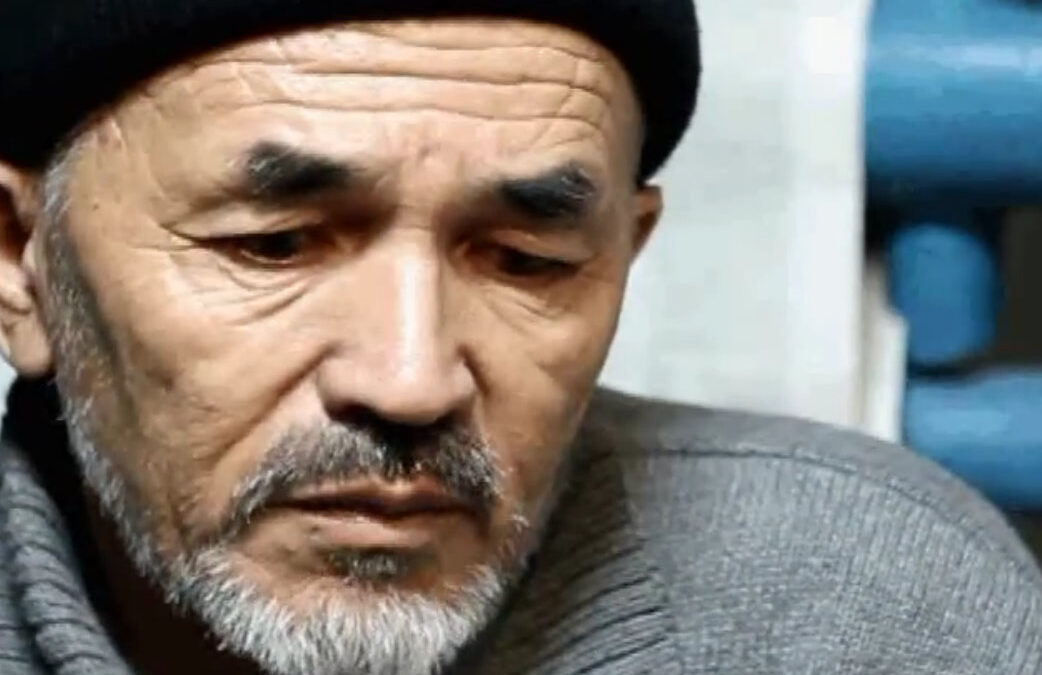
The ICJ welcomed today’s decision of the UN Human Rights Committee in the case of Azimzhan Askarov, a Kyrgyz human rights activist, sentenced to life imprisonment in Kyrgyzstan.
The Committee found multiple violations of Azimzhan Askarov’s human rights related to his arrest, detention and trial, including violations of Articles 7 (freedom from torture), Article 9 (prohibition of arbitrary detention); Article 10 (right to humane treatment in detention), Article 14 (right to a fair trial) of the International Covenant on Civil and Political Rights.
Azimzhan Askarov, a prominent human rights defender working in the South of Kyrgyzstan, was convicted in December 2015 of serious crimes, including the murder of a police officer, which took place during the violent ethnic clashes in the South of Kyrgyzstan in June 2010.
The ICJ observed the appeal hearing in the case before the Supreme Court on 20 December 2011. Based on the results of the mission as well as the documents of the case, the ICJ published a detailed Report on the arrest, detention and trial of Azimzhan Askarov.
The report established multiple violations of human rights in the arrest and trial of Azimzhan Askarov.
The decision of the UN Committee is an important step in providing a legal framework to remedy the violations in the case.
The ICJ calls on the relevant authorities of the Kyrgyz Republic to take urgent measures to implement the decision of the Human Rights Committee.
In particular, in accordance with the decision of the Committee, the Kyrgyz Republic must now immediately release Azimzhan Askarov; quash his conviction and provide him with adequate compensation.
Kyrgyzstan-Askarov-CCPR-Statement-2016-RUS (download the statement in Russian)
Apr 5, 2016 | News
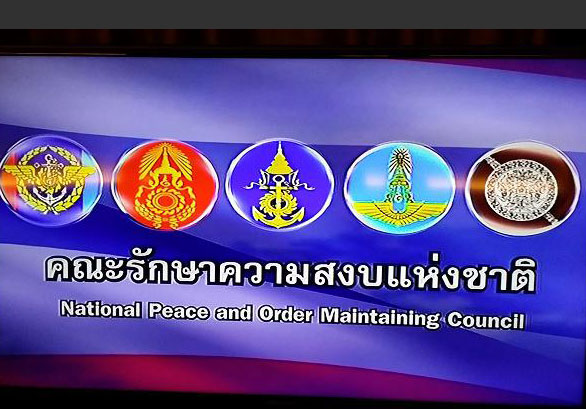
Thailand must immediately revoke National Council for Peace and Order (NCPO) Order 13/2016 which confers sweeping powers on the Royal Thai Armed Forces in contravention of human rights and the rule of law, said today the ICJ and other human rights groups.
On 29 March 2016, pursuant to Article 44 of the Interim Constitution, General Prayuth Chan-o-cha, Head of the NCPO, issued Order 13/2016 which provides appointed “Prevention and Suppression Officers” and their assistants, drawn from the commissioned ranks of the Armed Forces, including the paramilitary Ranger Volunteers, with wide-ranging powers to prevent and suppress 27 categories of crimes including against public peace, liberty and reputation, immigration, human trafficking, narcotics, and weapons.
“The implementation of Order 13/2016 will almost certainly lead to violations of Thailand’s international human rights obligations and the rule of law and must be revoked immediately,” said Wilder Tayler, ICJ’s Secretary General.
“We have observed a steady erosion of human rights protections in Thailand since the military coup of 22 May 2014 and this Order signifies another, jarring, movement in the same direction,” he added.
The Order raises numerous human rights concerns say the ICJ, Human Rights Watch (HRW), Amnesty International (AI), Asian Forum for Human Rights and Development (FORUM-ASIA), FIDH (International Federation for Human Rights), and Fortify Rights (FR). These concerns include:
1. Grants a form of immunity from prosecution to those acting under the Order, leading to impunity contrary to the principle of accountability required by the rule of law.
“Instead of paving the way for a return to democratic rule, the Thai junta has broadened its powers to do almost anything it wants, including committing abuses with total impunity,” said Brad Adams, Asia Director at Human Rights Watch. “Repression becomes a daily reality as Thailand descends further into military dictatorship.”
2. Actions taken under the Order are not subject to judicial review, contrary to the rights to effective remedy, to judicial control of deprivation of liberty, and to a fair trial, as for instance recognized under Articles 2, 9 and 14 of the International Covenant on Civil and Political Rights (ICCPR).
“The Order is yet another example of the pernicious removal of powers from the judicial system to review the military’s actions, to the detriment of rights protection and the rule of law,” said Champa Patel, Interim Director, South East Asia and Pacific Regional Office, Amnesty International.
3. Provides untrained military officials with broadly and ambiguously worded powers of law enforcement likely to lead to abuse, inconsistent with human rights standards including the UN Code of Conduct for Law Enforcement Officials and the UN Basic Principles on the Use of Force and Firearms by Law Enforcement Officials.
“The Order provides law enforcement powers to military officials who do not have law enforcement experience or protocols to summon, search, and arrest persons,” said Evelyn Balais-Serrano, the Executive Director of FORUM-ASIA.
“This makes the absence of judicial oversight all the more concerning. The fact that this may lead to an abuse of power and the disproportionate use of force by military officials in violation of international laws and standards including the UN Code of Conduct for Law Enforcement Officials and the UN Basic Principles on the Use of Force and Firearms by Law Enforcement Officials is very worrying. There is a real risk the Order may be used to restrict the legitimate rights of people such as the rights to freedom of expression, assembly and association,” she added.
4. Authorizes the deprivation of liberty of persons for up to seven days in unrecognized places of detention, without judicial oversight, which increases the risk of further human rights abuses, including torture and enforced disappearance.
“Despite its pretense to suppress criminal activities, this Order is likely to result in the commission of very serious crimes that are prohibited under human rights instruments that Thailand has either signed or ratified,” said FIDH President Karim Lahidji.
5. In practice, the Order is open to abuse to repress and silence those perceived as dissenters, including human rights defenders, in violation of international human rights law and standards.
“This Order stands to fuel the fire of retaliation against human rights defenders in Thailand,” said Amy Smith, Executive Director of Fortify Rights. “Thailand has an obligation to protect human rights defenders, but this Order could easily be used to target and obstruct their legitimate work.”
Contact
Wilder Tayler, ICJ’s Secretary General, t: +41 (0) 229793800 ; e: wilder.tayler(a)icj.org
Thailand-NCPO Order-News-Press releases-2016-THA (full text, in PDF, Thai version)
Thailand-NCPO Order unof trsl-Advocacy-2016-ENG (unofficial translation of the Order, PDF)